Why One-Shot AI Fails Structural Design (and What to Do Instead)
The draft was strong but needed a sharper 'Practitioner' edge—moving away from slightly passive phrasing toward a more direct, opinionated tone. I tightened the transition between the concept of 'friction' and the practical reality of studio workflows.
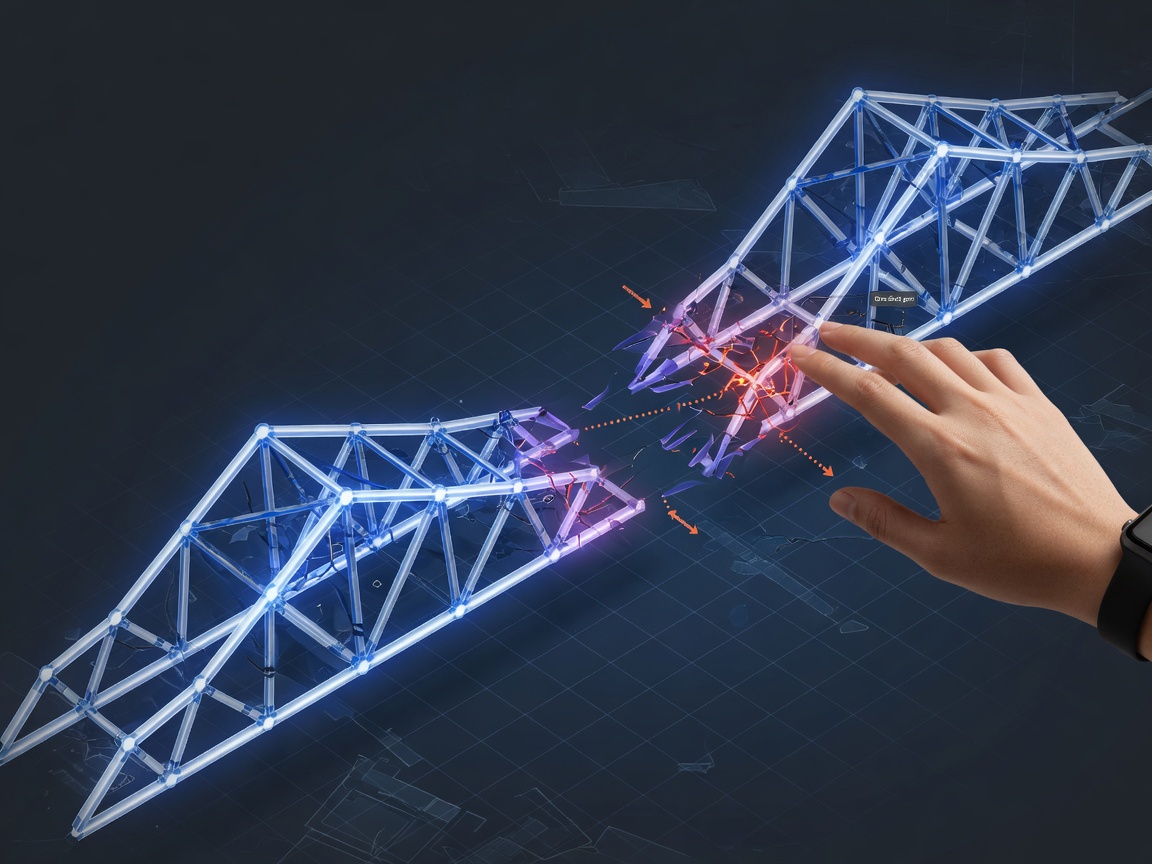
Automation needs a narrow first win
The best first AI workflow is usually a repeated task with a clear input, clear output, and a human approval step.
Generative AI is currently obsessed with removing friction, but for professional designers, removing friction is often the wrong goal. When a user provides a prompt and an AI returns a final answer, the system treats design as a destination rather than a process of negotiation. In fields like structural design—where the work exists at the intersection of architecture and physics—the value isn't in the final output alone, but in the iterative navigation of competing constraints.
Why One-Shot Answers Fail Professional Design
Structural design is not a simple optimization problem where you input requirements and expect a finished bridge. It is a creative discipline concerned with ensuring building systems safely and efficiently resist applied loads while simultaneously satisfying architectural, spatial, material, environmental, and construction requirements. This involves a constant negotiation between form and force.
When we talk about the "art" of structural design, we are talking about a creative synthesis of what Billington calls the three E’s: efficiency, economy, and elegance. Current generative AI models often fail here because they aim for workflow automation—getting the user to the finish line as quickly as possible. But in a professional studio, the "work" is the struggle to balance these three E’s against real-world physics. If an AI agent generates a final answer based on a single prompt, it bypasses the critical exploration phase where designers actually discover how to make a structure both beautiful and viable.
Worth a look
Phugialy Picks

GMKtec K15 AI Mini PC Oculink Intel Ultra 5 125U 32GB DDR5 512GB SSD | Desktop Computer AI Boost, 3X M.2 2280 Storage Expansion, Dual NIC...

Screen Mom Screen Cleaner Spray (16oz)
We'd buy this if: You've been wiping your monitor with your shirt sleeve.
We'd skip this if: You already have a cleaning routine sorted.
Anker USB-C to USB-C 60W Fast Charging Cable (2-Pack)
We'd buy this if: You need a reliable spare charging cable that won't fray in a month.
We'd skip this if: You already have enough cables lying around.
Some Phugialy Picks use affiliate links. If you buy through one, Phugialy may earn a commission. It doesn't change what we recommend. Full disclosure →
Moving Toward Constrained Co-Creation
We don't need a black box that outputs a finished model; we need "constrained co-creation." This shift requires AI agents to support designers in navigating domain-grounded constraints rather than trying to solve the entire problem in one go.
In this model, the AI's role is exploration augmentation. It handles the repetitive modeling friction—the tedious calculations of load distribution or material properties—while leaving the high-level creative synthesis to the human. Instead of a single-objective optimization that produces a "correct" answer, the goal is to explore different structural forms. This allows the designer to remain in the driver's seat, using the AI to see what happens when they tweak a specific constraint, effectively using the AI to expand the boundaries of what they can explore rather than narrowing their options to whatever the model happened to generate first.
The Gap Between Benchmarks and Production Reality
The reality is that current AI evaluations are almost entirely disconnected from how design actually happens in a studio. A model might score highly on "creativity" because it generates novel shapes, but that doesn't tell you if it can handle the messy, non-linear feedback loop of a real-world project. In practice, we need to stop looking for models that "complete" a task and start looking for systems that "negotiate" a space.
We should be skeptical of how easily these "co-creation" prototypes translate to large-scale production where the constraints aren't just mathematical, but also regulatory and social. If the AI can't handle the friction of a human designer refining an idea against a specific building code or a unique material limitation, it’s just another sophisticated paintbrush, not a collaborator. We need to see how these systems hold up when the "friction" is actually the most important part of the job.
Got a question about how this applies to you? →
Keep reading
Follow the thread
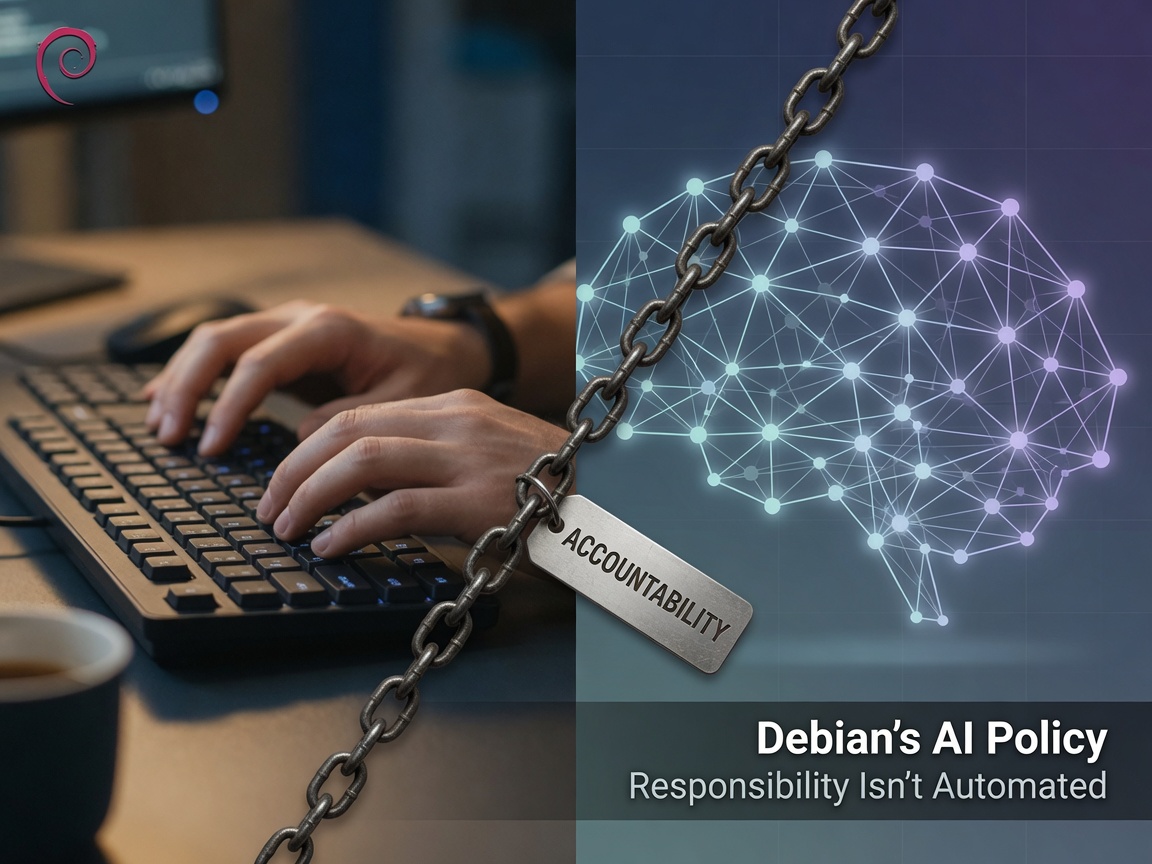
Debian’s AI Policy: Responsibility Isn't Automated
If you can't defend every line an LLM spat out, you have no business hitting 'merge'.
Read this noteSame lane, different angle
The Technical Debt of Unconsented Training Data
For anyone building in the AI space, the line between 'human-made' and 'machine-output' isn't just a philosophical debate—it’s becoming a massive trust and scalability problem. We recently saw a creator with a 20-year ha
OpenJDK’s AI Policy: Why Your Copilot Output is a One-Way Street
Oracle just dropped a reality check on how we use AI in the OpenJDK ecosystem. As the corporate sponsor, they’re drawing a hard line: you can use AI as a personal power tool, but you can't let it do the heavy lifting in