OpenJDK’s AI Policy: Why Your Copilot Output is a One-Way Street
Oracle just dropped a reality check on how we use AI in the OpenJDK ecosystem. As the corporate sponsor, they’re drawing a hard line: you can use AI as a personal power tool, but you can't let it do the heavy lifting in
Automation needs a narrow first win
The best first AI workflow is usually a repeated task with a clear input, clear output, and a human approval step.
Oracle just dropped a reality check on how we use AI in the OpenJDK ecosystem. As the corporate sponsor, they’re drawing a hard line: you can use AI as a personal power tool, but you can't let it do the heavy lifting in the public repo.
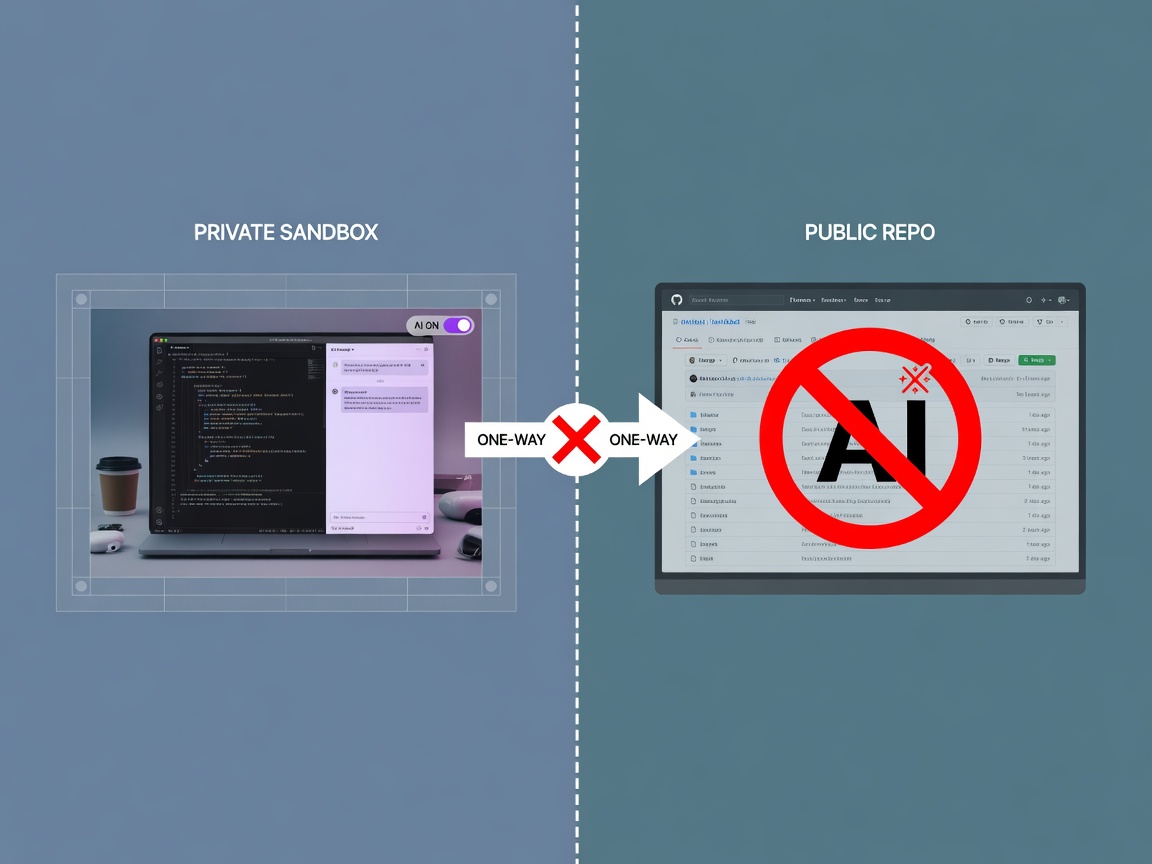
The "Private Use" Sandbox
The interim policy is clear: content from LLMs, diffusion models, or similar deep-learning systems is banned from OpenJDK repositories, pull requests, emails, wikis, and JBS issues. But don't panic—they aren't banning the tech itself. You’re still cleared to use generative AI privately for comprehension, debugging, reviewing code, and research. Think of it as a private sandbox. You can use the tool to wrap your head around a complex stack or hunt down a bug in your local environment, but you can't copy-paste its output directly into the project’s public-facing infrastructure. Standard non-LLM features like spell-checking and grammar-checking? Those are still fair game.
Worth a look
Phugialy Picks

The Pragmatic Programmer: 20th Anniversary Edition, 2nd Edition: Your Journey to Mastery

AI Engineering: Building Applications with Foundation Models
A practical guide to building real-world applications with foundation models and LLMs.

Open (Source) for Business: A Practical Guide to Open Source Software Licensing - Third Edition
Some Phugialy Picks use affiliate links. If you buy through one, Phugialy may earn a commission. It doesn't change what we recommend. Full disclosure →
The Reviewer Burden and IP Liability
Why the crackdown? It comes down to two things every maintainer feels at scale: reviewer fatigue and legal risk. When AI spits out "plausible-looking but incorrect" code, it turns a standard review into a forensic audit. Maintainers have to verify every single line for logic errors that might not be immediately obvious, which is a massive drain on human resources.
Then there’s the legal side. Because LLMs are trained on massive datasets, there’s a real risk of intellectual property violations under the Oracle Contributor Agreement (OCA). By banning AI-generated submissions, Oracle is essentially creating a "clean room" for contributions. They need to ensure every line of code in OpenJDK remains legally defensible and human-verified.
The Accountability Gap
The real story here isn't a "ban" on progress; it's about the accountability gap. For a developer, the friction point is this: what happens when you use an LLM to refactor a complex module and then try to justify that change in a PR? If the logic is sound but the "style" or "structure" bears the hallmarks of an LLM, you risk a rejection based on a maintainer's suspicion.
This policy highlights the shift from "AI-assisted coding" to "AI-verified engineering." While these tools speed up your personal comprehension, the burden of proof stays with you. If a bug hits the repo because an AI-suggested fix was poorly vetted, the responsibility doesn't shift to the model—it stays with the contributor. For high-stakes open-source work, the "easy button" of generative AI requires a much more rigorous manual audit than it does in a private hobby project.
Got a question about how this applies to you? →
Keep reading
Follow the thread
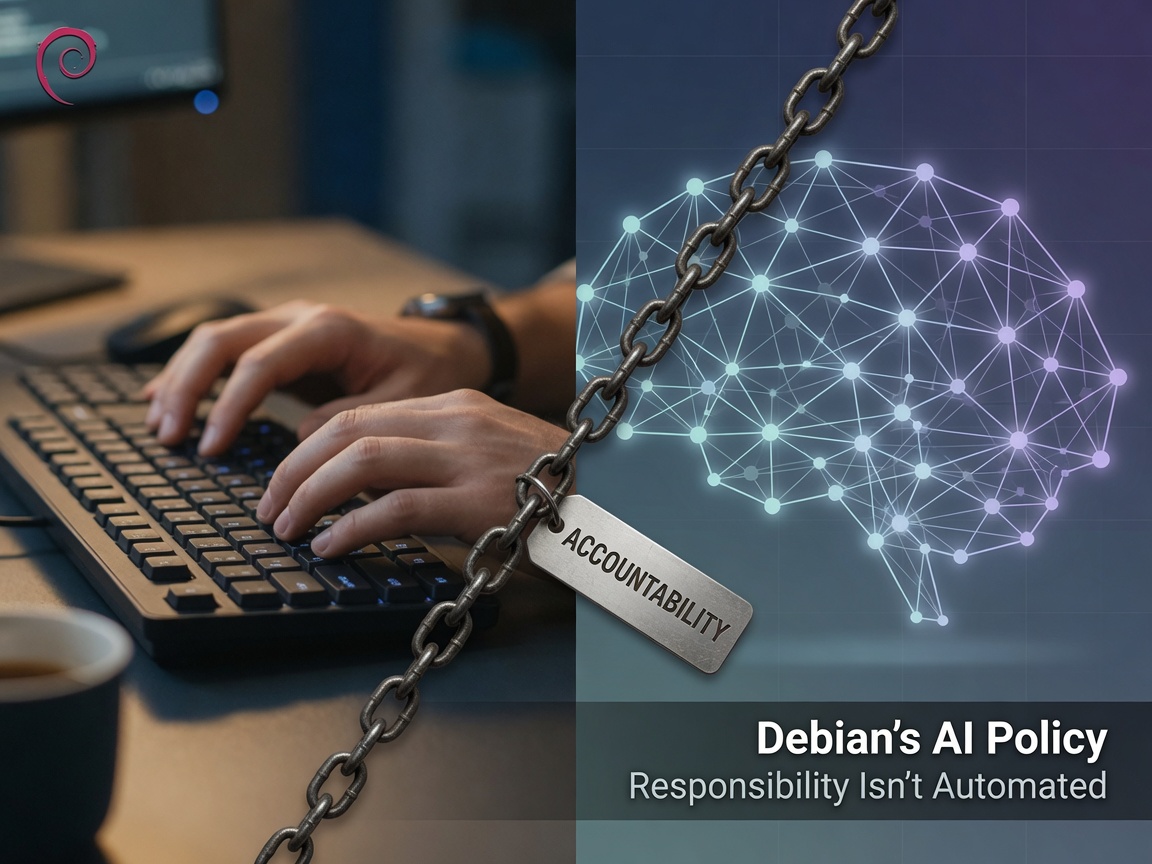
Debian’s AI Policy: Responsibility Isn't Automated
If you can't defend every line an LLM spat out, you have no business hitting 'merge'.
Read this noteSame lane, different angle
From Prototype to Production: Mastering the Engineering Superpower in the AI Era
Let’s be real: the 'blank page' problem is officially on life support. We’ve all been there—staring at a blinking cursor, trying to figure out where the boilerplate ends and the actual magic begins. Well, thanks to AI, t
The Technical Debt of Unconsented Training Data
For anyone building in the AI space, the line between 'human-made' and 'machine-output' isn't just a philosophical debate—it’s becoming a massive trust and scalability problem. We recently saw a creator with a 20-year ha