The Quadratic Wall: Why Brute-Force AI is Hitting a Ceiling
Generative AI is hitting a wall of physical and economic reality. While the hype focuses on what models like ChatGPT and Claude can do, the engineering reality is a "brute-force" approach that is becoming fundamentally u
Automation needs a narrow first win
The best first AI workflow is usually a repeated task with a clear input, clear output, and a human approval step.
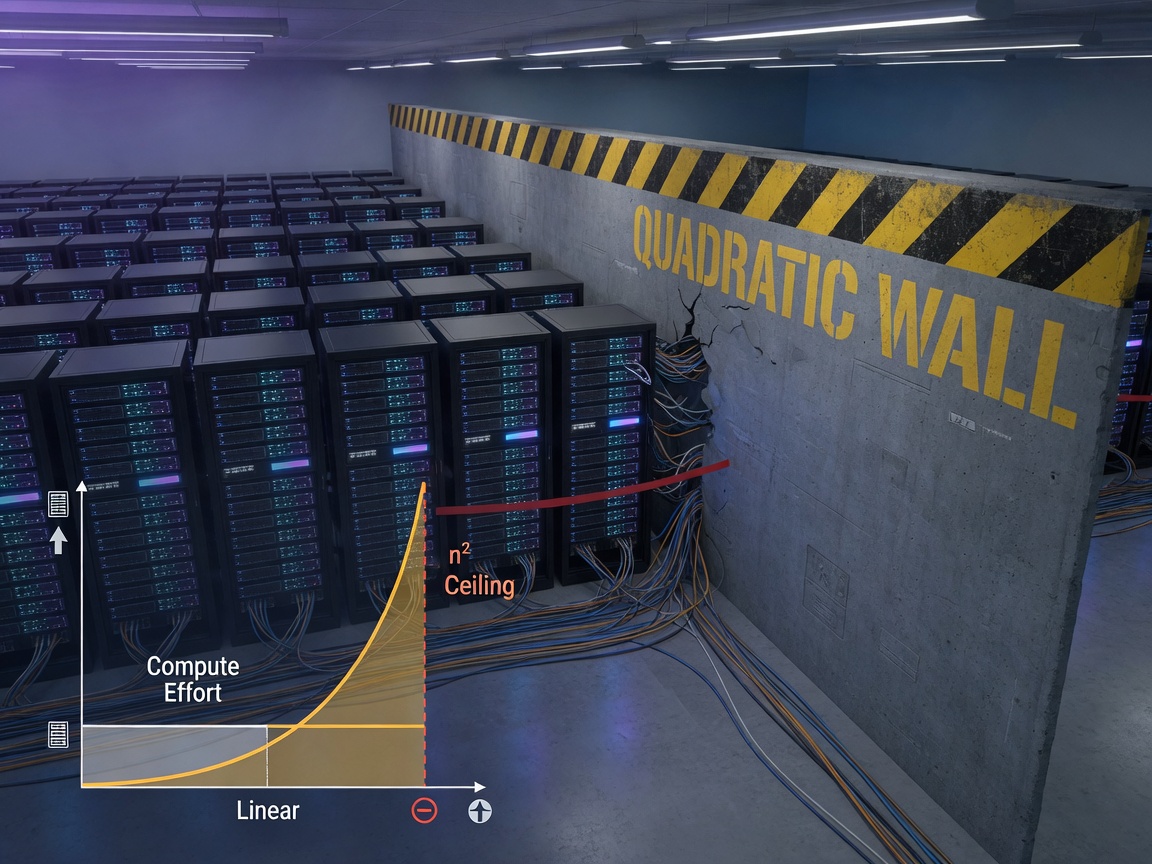
Generative AI is hitting a wall of physical and economic reality. While the hype focuses on what models like ChatGPT and Claude can do, the engineering reality is a "brute-force" approach that is becoming fundamentally unsustainable. We’re moving past the era of cheap, rapid growth into a phase where hardware physics and the mathematics of scaling are creating significant friction. The industry is essentially trying to outrun the laws of thermodynamics with more silicon.
The Hardware Bottleneck and Supply Chain Strain
The volume of hardware required to train and run these models is distorting global markets. Tech companies may be purchasing 70 percent of the world’s supply of high-end computer memory, creating a supply squeeze that hits everyone else. We're seeing the fallout in real-time: hard drives that cost $350 two years ago jumped to $800 in weeks, and laptop prices have spiked by as much as 50 percent. These aren't just side effects of the AI boom; they are the direct results of a concentrated demand for high-end memory that is effectively cornering the market. When a handful of players control the majority of the "fuel" for the AI revolution, the cost of entry for everyone else skyrockets.
Worth a look
Phugialy Picks

AI Engineering: Building Applications with Foundation Models
A practical guide to building real-world applications with foundation models and LLMs.

GMKtec K15 AI Mini PC Oculink Intel Ultra 5 125U 32GB DDR5 512GB SSD | Desktop Computer AI Boost, 3X M.2 2280 Storage Expansion, Dual NIC...

GEEKOM IT15 AI Mini PC, Intel Ultra 9 285H(99 Tops), 32GB DDR5, 1TB SSD | The Most Powerful Workstation,Arc 140T GPU,WiFi 7,8K Business D...
Some Phugialy Picks use affiliate links. If you buy through one, Phugialy may earn a commission. It doesn't change what we recommend. Full disclosure →
The Mathematics of Quadratic Growth
The industry’s reliance on scaling laws is facing a crisis of diminishing returns. Currently, generative AI models scale quadratically rather than logarithmically. This means that as models grow—moving from 175 billion parameters in 2020 to over 1 trillion today—the resource requirements and costs increase exponentially. This brute-force method of imitating millions of examples is fundamentally different from simulating human mental processes. Instead of building a "brain" that learns to reason, we are building a massive library that can predict the next word. The current trajectory suggests that simply throwing more compute at the problem will eventually hit a point of economic unviability where the cost to train a model exceeds its market utility.
The Pivot to Efficiency over Scale
The real story here is a necessary pivot in architecture. The fact that researchers are already exploring "tiny recursive models" suggests the industry knows the brute-force era has limits. It’s difficult to justify moving away from products currently accruing trillion-dollar valuations, but the reliance on massive foundational models is reaching a breaking point. We are moving toward a period where the only way forward is to achieve more with less—shifting away from raw data ingestion toward more efficient, smaller-scale alternatives. The next winners won't be the ones who can buy the most memory; they will be the ones who can build the most intelligence with the least amount of it.
Got a question about how this applies to you? →
Keep reading
Follow the thread
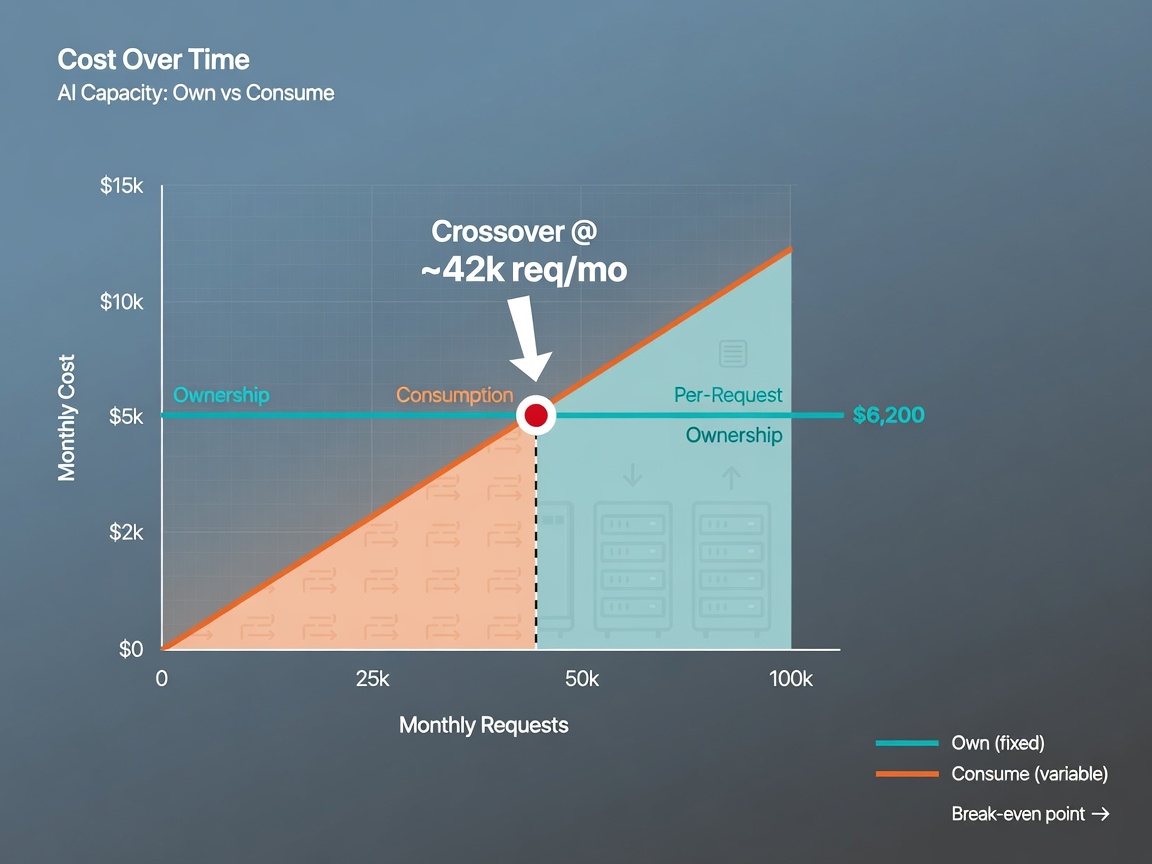
Owning AI Capacity vs Consumption Pricing: When It Pays
Every organization has a crossover point where owning AI capacity becomes cheaper than paying per request — and there is no universal number for where that line sits. That's the core claim of a recent analysis on AI econ
Read this noteSame lane, different angle
TimEE: Time Series Classification With Zero Real Training Data
A time series is just a list of numbers measured over time - heartbeats, sensor readings, stock prices - and classifying one usually means training a new model from scratch for every single dataset. TimEE, a new 4.5M-par
Your Playlists Are a Privacy Leak: Inferring PII From Spotify
Researchers have built a deep learning tool that infers sensitive personal information — age, gender, country, drinking and smoking habits, even Big Five personality scores — from nothing but a user's public Spotify play