The Power Problem in AI Drug Discovery: Lessons from BMS
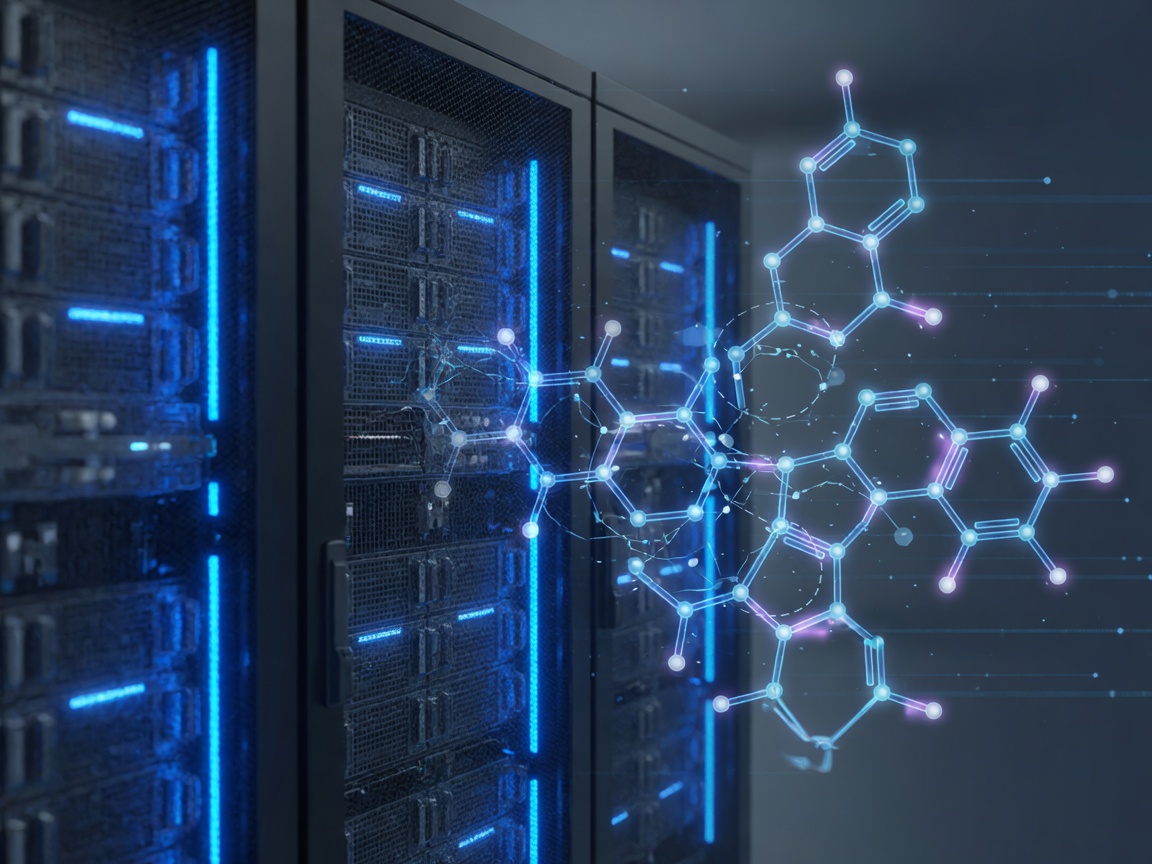
Bristol Myers Squibb (BMS) is moving into Nvidia’s Vera Rubin architecture with a new DGX SuperPOD to support its drug discovery and development operations. This move marks BMS as the first life sciences group to acquire
Automation needs a narrow first win
The best first AI workflow is usually a repeated task with a clear input, clear output, and a human approval step.
Bristol Myers Squibb (BMS) is moving into Nvidia’s Vera Rubin architecture with a new DGX SuperPOD to support its drug discovery and development operations. This move marks BMS as the first life sciences group to acquire infrastructure based on this specific architecture, signaling a shift toward more specialized, high-performance computing in the pharmaceutical space. But this isn't just a hardware refresh; it’s a strategic effort to centralize proprietary model training and large-scale scientific predictions into a unified environment.
Breaking Down Research Silos
The new infrastructure consists of eight DGX Vera Rubin NVL72 systems, combining Nvidia Vera CPUs and Rubin GPUs. While the raw specs are impressive, the real value lies in the integration. By combining these with an older SuperPOD into a shared computing environment, BMS is effectively institutionalizing its learnings. Instead of data and insights remaining trapped in individual research pockets across different sites, researchers worldwide can now access a shared pool of resources. This includes Nvidia’s BioNeMo Agent Toolkit for protein-structure prediction, molecular generation, and genomics. The goal is clear: move away from fragmented "lab-scale" compute toward a shared corporate infrastructure that ensures every scientist is working from the same foundational models.
Worth a look
Phugialy Picks

The Agentic AI Bible: The Complete and Up-to-Date Guide to Design, Develop, and Scale Goal-Driven, LLM-Powered Agents that Think, Execute...

OMOTON C2 Adjustable Aluminum Phone Stand
We'd buy this if: You want your phone upright on your desk for calls/notifications without a cable getting in the way.
We'd skip this if: You never keep your phone on your desk.
Screen Mom Screen Cleaner Spray (16oz)
We'd buy this if: You've been wiping your monitor with your shirt sleeve.
We'd skip this if: You already have a cleaning routine sorted.
Some Phugialy Picks use affiliate links. If you buy through one, Phugialy may earn a commission. It doesn't change what we recommend. Full disclosure →
Scaling From Feasibility to Throughput
The practical goal of this investment is to prioritize synthesis and reduce manual research overhead. By using predictions to optimize the synthesis of molecules with multi-parameter optimization, BMS aims to ensure that laboratory experiments are only performed on molecules with the highest probability of success. The company reports that this approach has already reduced some manual research work by 20% to 30%, with a target of reaching 50% in the coming years. This shift is best summarized by the transition from being able to process "10" items to processing "dozens." It represents a move away from small-scale feasibility testing toward a production-grade pipeline where compute power allows for a broader sweep of the chemical space while maintaining a high degree of selection accuracy.
The Reality of the Power Bill
The most telling detail in this announcement is the focus on performance per megawatt. BMS notes that the new cluster is expected to deliver up to 10 times the performance per megawatt of the infrastructure it replaces. This is a grounded acknowledgment of a harsh reality: "Electricity is not getting cheaper." For anyone who has actually deployed large-scale AI, you know that the biggest bottleneck is often not the raw chip speed, but the power availability and the cost of cooling. By highlighting a 10x efficiency gain, BMS is signaling that they are navigating the transition from "compute at any cost" to "sustainable compute." The real story here isn't just that they can predict more molecules; it's that they are building a system designed to survive the economic and physical constraints of modern data centers. It’s a move toward production-scale maturity where energy density is just as important as FLOPs.
Got a question about how this applies to you? →
Keep reading
Follow the thread
AI Tutors Work Only If Students Use Them: Trial
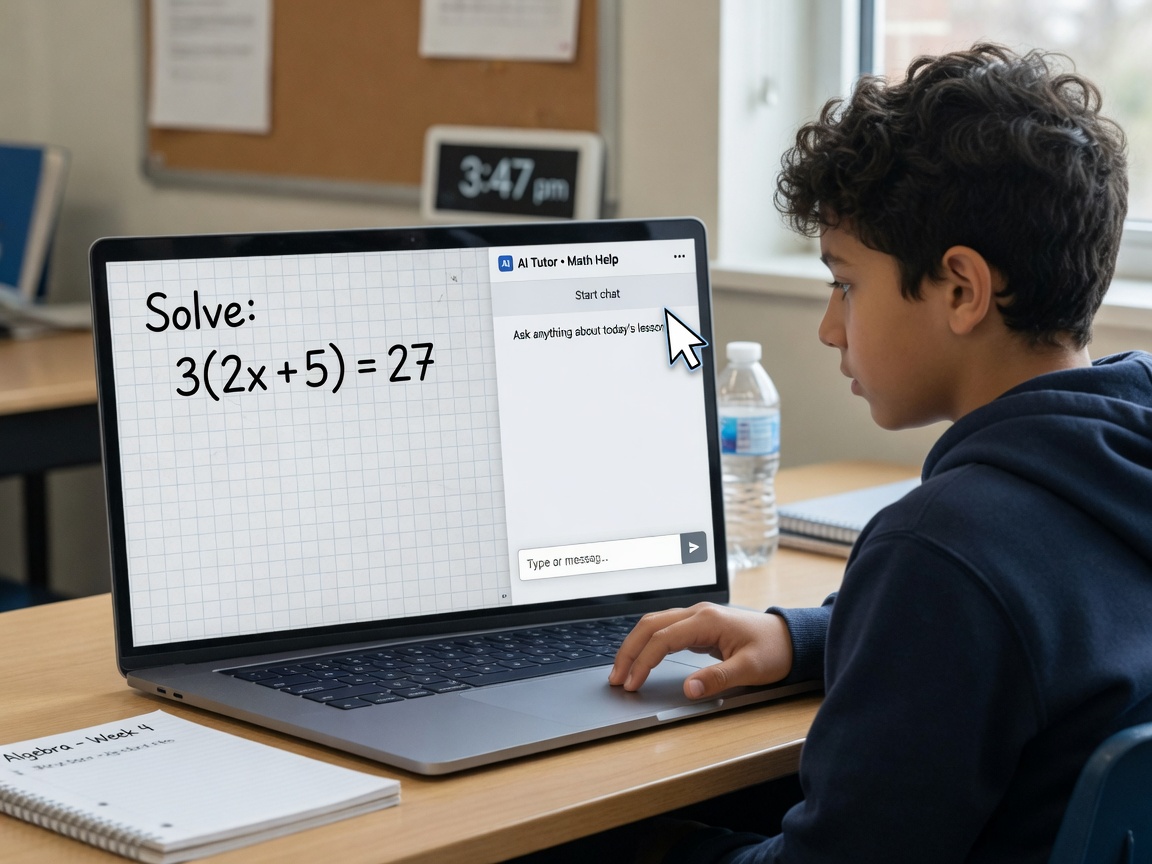
A two-year trial across 18 middle schools found Khan Academy's AI tutor raised math scores modestly - but here's the catch: the gains looked just like those from practice without any AI at all. The real story isn't whether AI tutoring works; it's that 96% of students tried it and almost none used it when they actually needed help.
Read this noteSame lane, different angle
Spectral Attacks Reveal a Hidden Weak Spot in Vision-Language Models
Researchers found a way to attack vision-language models using the model's own internal geometry — aligning representations with the subspaces the model cares about least. It beats existing baselines, and the same insight could make these models tougher.
SPEAR Turns Any Unreal Project Into an Embodied AI Simulator
A new open-source library exposes over 14,000 Unreal Engine functions to Python at no wrapper cost — turning any UE project into candidate training infrastructure for embodied AI at 73 fps photorealistic rendering.