The Great Leveling: Why AI is a Productivity Power-Up for Newcomers
Imagine a world where the most daunting part of starting a new career—the mountain of routine research, the tedious drafting, and the repetitive data sorting—is handled by a digital partner before you even sit down. This
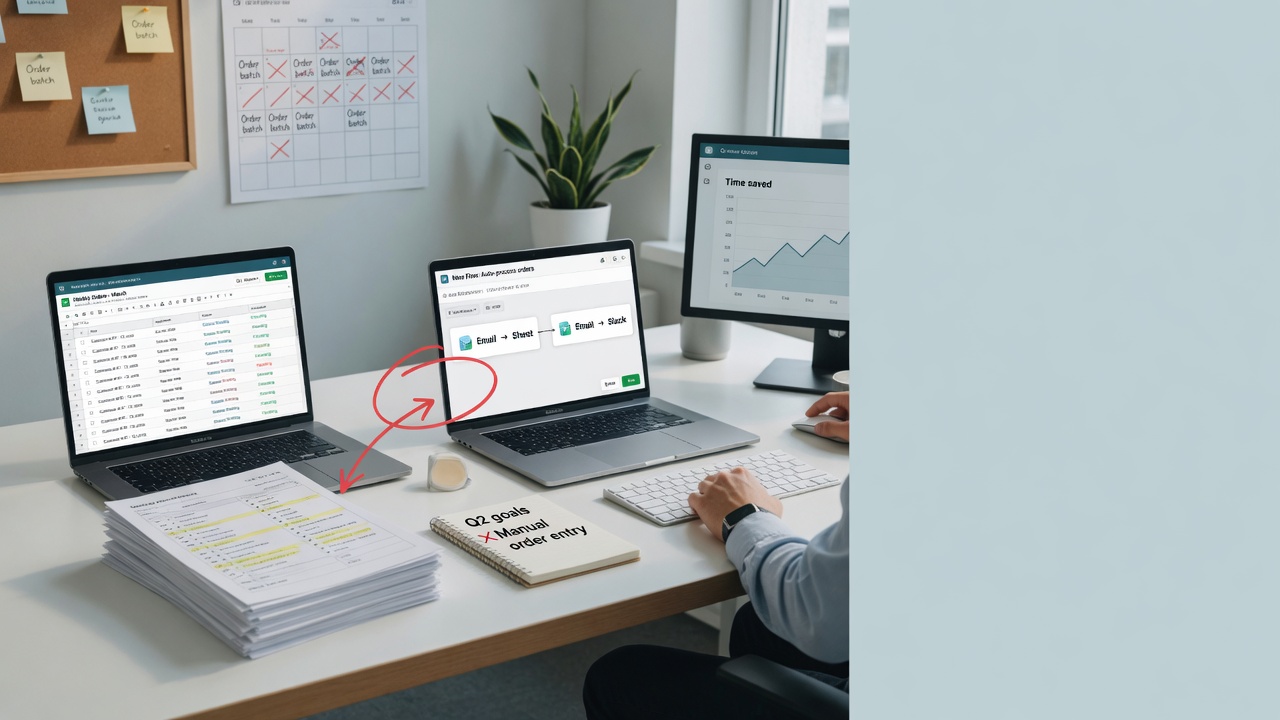
Automation needs a narrow first win
The best first AI workflow is usually a repeated task with a clear input, clear output, and a human approval step.
Imagine a world where the most daunting part of starting a new career—the mountain of routine research, the tedious drafting, and the repetitive data sorting—is handled by a digital partner before you even sit down. This isn't some sci-fi fever dream; it’s the reality of how AI is currently reshaping the labor market. While the headlines love to scream about a total "job apocalypse," the actual data tells a much more nuanced, and frankly, way more exciting story about what it means to work in an AI-augmented era.
A Productivity Superpower for Every Worker
One of the most compelling takeaways from recent research is how AI tools are acting as a massive equalizer. While aggregate productivity gains are sitting at about 15 percent, the real story is in the concentration of those gains. For less experienced and lower-performing workers, the productivity jump is a staggering 30 percent. This is the "what if" we should be talking about: what if AI becomes the ultimate onboarding tool?
Instead of a junior employee spending months learning to perform basic research or drafting, they can leverage AI to jump straight into high-value output. It’s not just about doing work faster; it’s about lowering the barrier to entry for complex tasks, allowing people to contribute meaningfully from their very first day on the job. We're talking about a massive democratization of expertise where the "learning curve" gets a serious shortcut.
Worth a look
Phugialy Picks

AI Engineering: Building Applications with Foundation Models
A practical guide to building real-world applications with foundation models and LLMs.

GMKtec K15 AI Mini PC Oculink Intel Ultra 5 125U 32GB DDR5 512GB SSD | Desktop Computer AI Boost, 3X M.2 2280 Storage Expansion, Dual NIC...

GEEKOM IT15 AI Mini PC, Intel Ultra 9 285H(99 Tops), 32GB DDR5, 1TB SSD | The Most Powerful Workstation,Arc 140T GPU,WiFi 7,8K Business D...
Some Phugialy Picks use affiliate links. If you buy through one, Phugialy may earn a commission. It doesn't change what we recommend. Full disclosure →
Navigating the "Canary in the Coal Mine" Reality
Of course, this shift comes with real-world friction. The research highlights a tougher environment for recent graduates, with some new grad unemployment rates projected to hit 5.6 percent by early 2026. Why? Because AI is increasingly capable of handling the "routine" junior tasks that traditionally served as the training grounds for young professionals.
We see evidence that AI's impact is manifesting more as role consolidation and hiring avoidance rather than a mass wave of job losses. While employment grew by 10 percent in the two years following AI adoption, the nature of those roles is evolving. We are moving away from a model where "junior" means "doing the routine," toward a model where "junior" means "managing the tools that do the routine." The "canaries in the coal mine" are showing us that the ground is shifting, but it’s shifting toward a world where human creativity is amplified by a massive, automated baseline of productivity.
From Grunt Work to Creative Orchestration
The real story here isn't just about who is losing or gaining tasks; it’s about the democratization of expertise. By handling the heavy lifting of research and writing, AI allows humans to move up the value chain toward strategy, oversight, and creative direction much faster than was previously possible. This quietly solves the "training gap" problem that has plagued many industries for decades.
It suggests that the most important skill of the future won't be the ability to execute a routine task, but the ability to orchestrate the tools that do. Give this a year or two, and we will likely see a fundamental shift in how we train the next generation of leaders. We aren't just replacing tasks; we are accelerating the human ability to move from "doing" to "directing." It's time to stop worrying about the robots taking the jobs and start getting excited about humans finally getting to do the work that actually matters.
Got a question about how this applies to you? →
Keep reading
Follow the thread
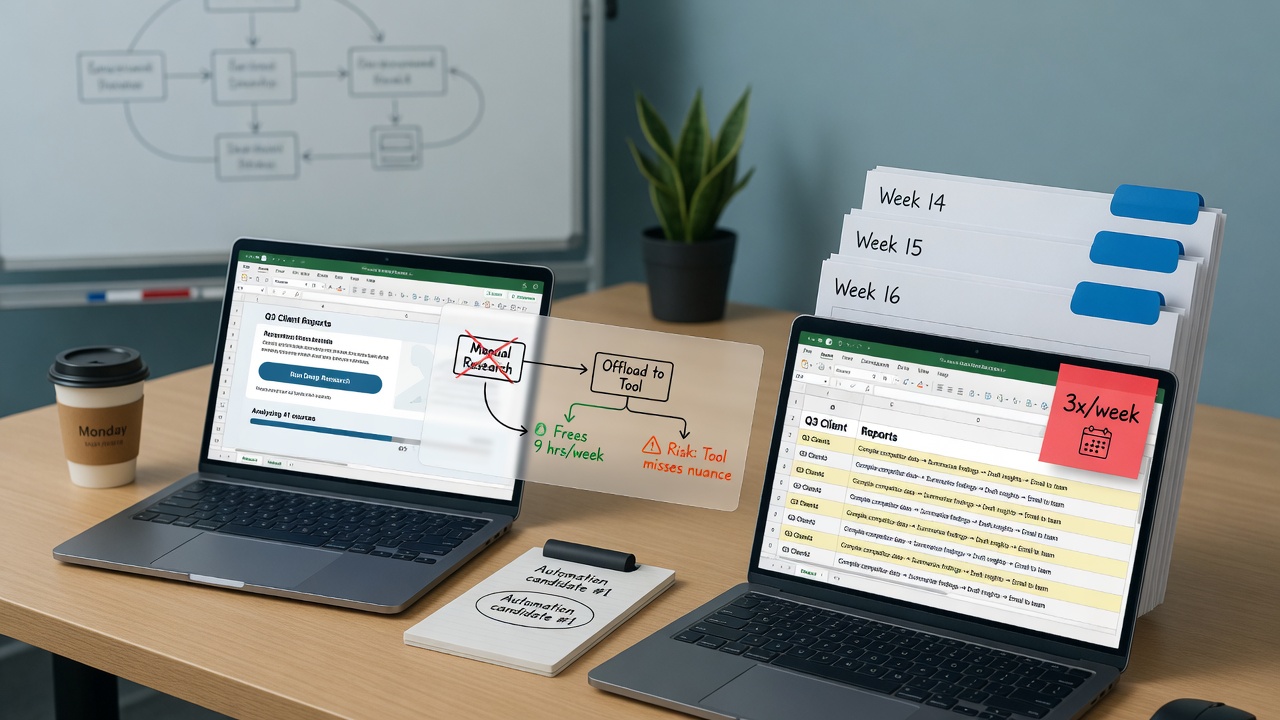
The Production Risk of Offloading Reasoning to Deep Research Tools
Deep Research tools from Google and OpenAI are fundamentally shifting the unit economics of information gathering. We’re moving from a world where complex research took days to one where it happens in minutes. For develo
Read this noteSame lane, different angle
SciReasoner: One Model Reasons Across Proteins, Molecules, Crystals
Proteins, molecules, and crystals share almost nothing on the surface - different representations, different tools, different vocabularies entirely. What if one model could reason natively across all three? That's the pr
Testing Gemini 3.6 Flash for Counterfeit Cosmetics Detection
Gemini 3.6 Flash spotted fake Rhode lip tints from photos alone — typos, mismatched distributors, even a known counterfeit batch code (112505). It also mistook camera glare for a printing error, which tells you exactly how far this actually gets you.