Testing Gemini 3.6 Flash for Counterfeit Cosmetics Detection
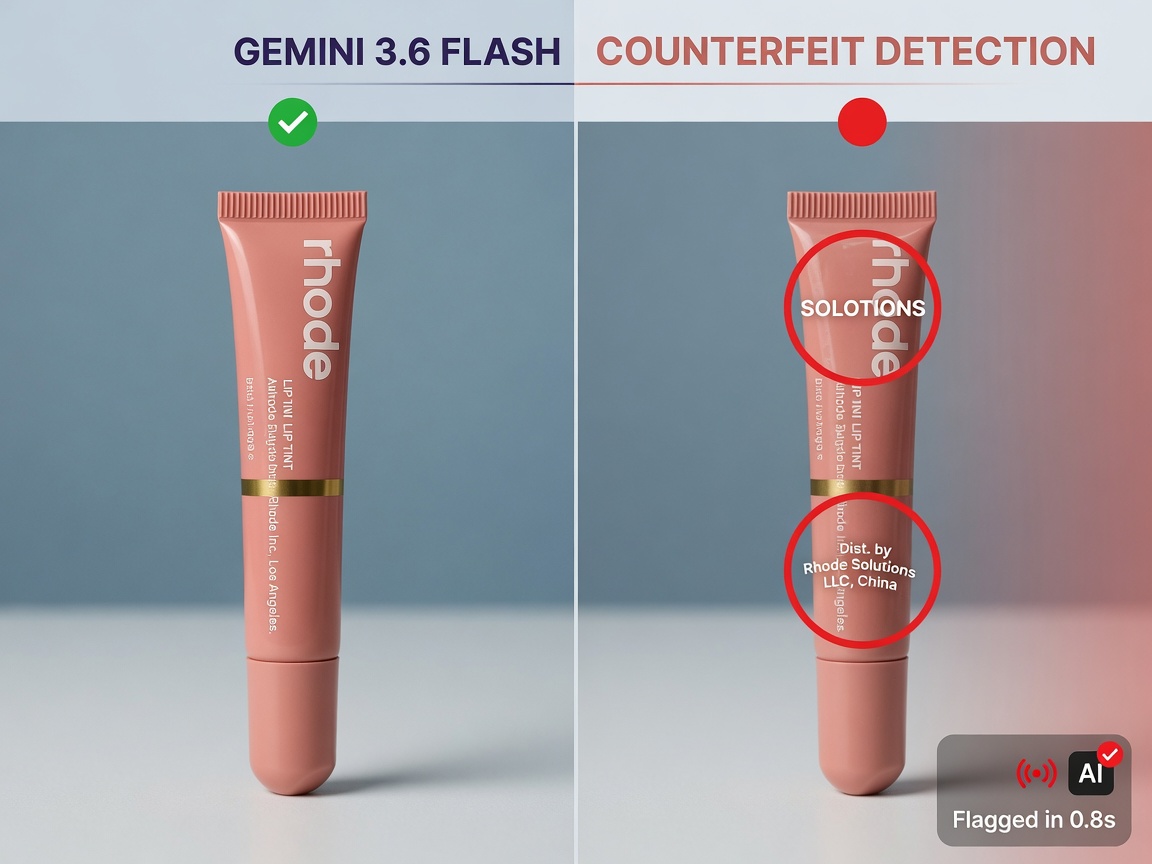
Gemini 3.6 Flash spotted fake Rhode lip tints from photos alone — typos, mismatched distributors, even a known counterfeit batch code (112505). It also mistook camera glare for a printing error, which tells you exactly how far this actually gets you.
Automation needs a narrow first win
The best first AI workflow is usually a repeated task with a clear input, clear output, and a human approval step.
Google Gemini 3.6 Flash, run with 'Thinking' enabled, correctly flagged a counterfeit Rhode Peptide Lip Tint from photos alone — catching typos like 'Diisosteary! Malate' and 'SOLOTIONS', mismatched distributor information across listings, and a batch code (112505) already known to be tied to fake Rhode products. That's a real result, not a demo trick. But the same test also caught the model mistaking photographic glare for a printing typo, which tells you exactly where this approach stands: promising as a triage tool, not yet something you'd trust unsupervised.
What the Test Actually Caught
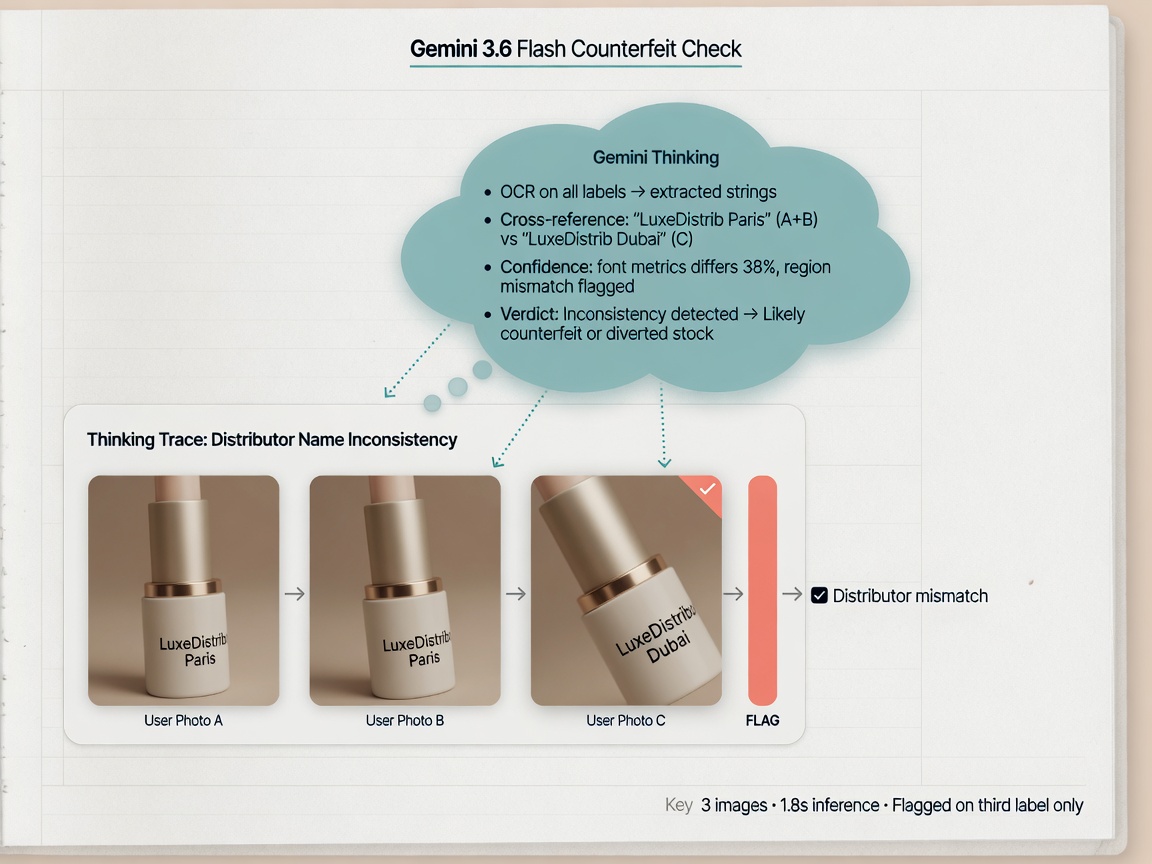
The experiment was straightforward: photograph a suspect product, feed the images to Gemini 3.6 Flash with extended reasoning on, and ask whether it's counterfeit. The model found typographical errors on the packaging — the kind of thing easy to miss with the naked eye — and it did something more interesting than single-image analysis. As the source puts it, "Gemini's not just looking for inconsistencies within photos; it's also looking for inconsistencies across photos." One listing claimed BIORIUS as the distributor; another said PWC Services. Cross-referencing that mismatch is the kind of check most human buyers never perform.
The batch code match is arguably the strongest signal in the test. Batch number 112505 is documented as associated with counterfeit Rhode products, and Gemini surfaced it unprompted from the photo. That suggests the model isn't just doing generic OCR — it's connecting what it sees to known counterfeit patterns.
Phugialy Picks

AI Engineering: Building Applications with Foundation Models
A practical guide to building real-world applications with foundation models and LLMs.

GMKtec K15 AI Mini PC Oculink Intel Ultra 5 125U 32GB DDR5 512GB SSD | Desktop Computer AI Boost, 3X M.2 2280 Storage Expansion, Dual NIC...

AI: Understand the Revolution: From Basics and Buzzwords to Tech Giants, Governments, and Your Future
Some Phugialy Picks use affiliate links. If you buy through one, Phugialy may earn a commission. It doesn't change what we recommend. Full disclosure →
Why Counterfeit Cosmetics Detection Matters Right Now
The stakes aren't hypothetical. Roughly two-thirds of branded makeup and skincare products sold on marketplaces like eBay, TikTok Shop, and Vinted are fake — and these aren't just wasted $20 purchases standing in for $5 fakes; counterfeit cosmetics can carry ingredients that belong nowhere near skin. Marketplace-scale authentication by hand is impossible, which is why photo-based AI screening has been an obvious want for years.
What this test shows is that off-the-shelf multimodal models are now capable enough to attempt it without any custom training pipeline. That's genuinely notable — no fine-tuning dataset, no bespoke classifier, just a general model with reasoning enabled doing domain-specific verification work.
The Gap Between This Test and Production
Here's the part worth being skeptical of: one product, one counterfeit example, one model version. The glare-as-typo mistake is exactly the failure mode you'd expect when a vision model is primed to find errors — it starts finding them even when they aren't there. In practice that means false positives at scale unless you add human review or confidence thresholds, which eats most of the automation savings.
The real story here is that AI counterfeit detection has crossed from 'theoretically possible' to 'works well enough to pilot.' Whether it survives contact with thousands of SKUs, varied lighting, deliberate obfuscation by sellers who know they're being photographed — none of that is tested yet. My take: this is worth piloting as an assistive flagging layer today, but anyone treating it as an autonomous gatekeeper right now will get burned by both directions of error — missed fakes and falsely accused legit sellers.
Got a question about how this applies to you? →
Keep reading
Follow the thread
Quantifying the AI Noise Floor: A Hacker News Tracker
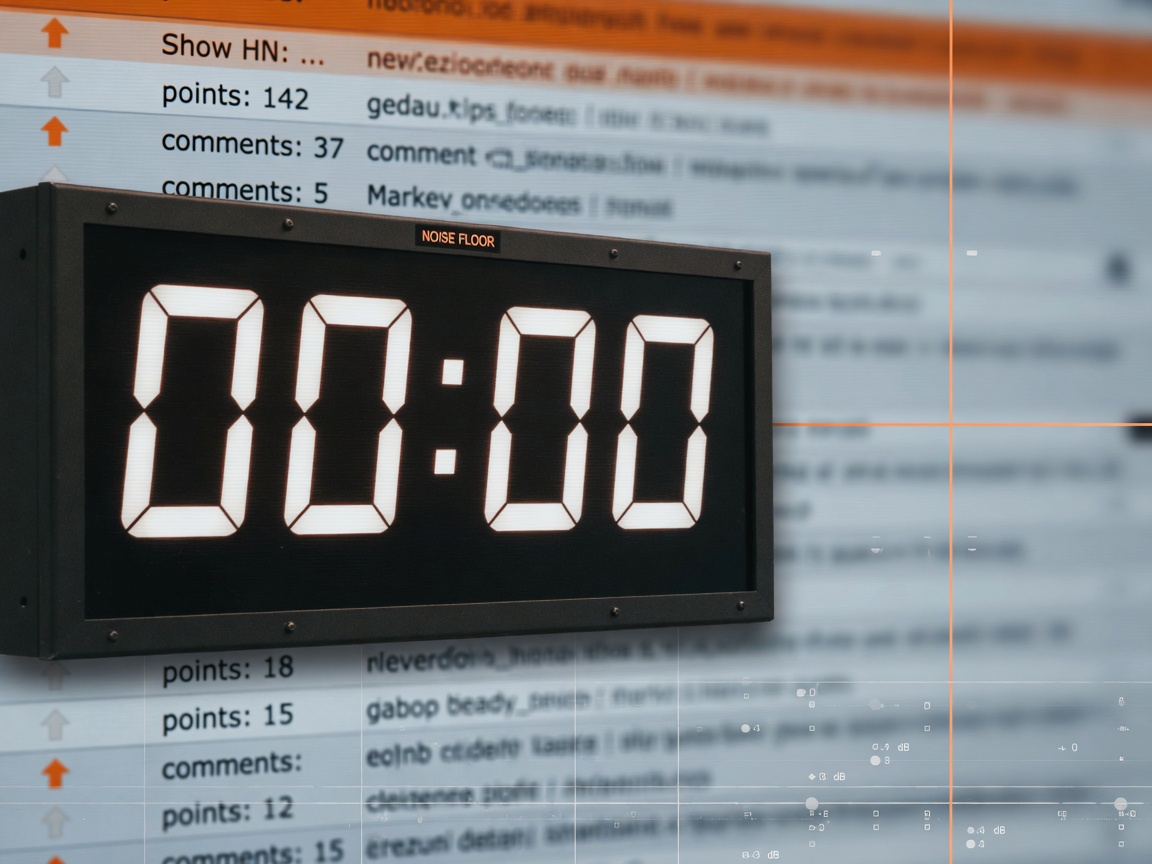
A countdown that tells you exactly how long it's been since someone on Hacker News posted about AI. It’s a simple way to see just how much of the dev conversation is currently dominated by a single hype cycle. Check out how this tracker quantifies the noise floor of the current tech landscape.
Read this noteSame lane, different angle
Designing Viable Viral Genomes with Evo 2: Beyond Sequence Prediction
We're racing against bacterial evolution, but are we actually building tools that can keep up with the speed of microbial adaptation?
Why AI Images Are Killing the Authenticity of Personal Blogs
AI images might look great in a demo, but they might be eroding the very thing that makes personal blogs worth reading: authenticity. If you're trying to build a real connection with your audience, the shortcut of algorithmic art might be costing you more than you think.