AI Training Data Needs Better Agent Evaluations
Handshake’s AI training business reportedly reached $1 billion in gross annualized revenue about a year after launch. Its benchmark demonstrations make the less comfortable point: a polished final answer can hide mistakes in how an agent handled the task.

Automation needs a narrow first win
The best first AI workflow is usually a repeated task with a clear input, clear output, and a human approval step.
Handshake’s AI training data business reached $1 billion in gross annualized revenue roughly a year after launch, according to the source article. The more useful story is what the work involves: building expert data and reinforcement-learning environments for frontier labs, then testing whether agents can handle tasks that are harder than producing a plausible final answer.
AI training data is being tested through real work
The episode demonstrates three kinds of evaluation: financial work, scientific image interpretation, and safety. In ATLAS-Finance, an agent works across a simulated bank’s inboxes, documents, and financial models. VIALS asks models to interpret scientific images, including gel and brain-tissue samples. These are not interchangeable tests: each puts a different kind of applied judgment under pressure.
The demonstrations also show where models make mistakes. In finance, agents can fail to apply financial rules; in tissue-image interpretation, they can misread what they see; and in file handling, they can behave unsafely. The article does not provide benchmark scores or a broad comparison across models, so the demonstrations are better read as concrete examples of failure modes than as proof of a general performance level.

Worth a look
Phugialy Picks

AI Engineering: Building Applications with Foundation Models
A practical guide to building real-world applications with foundation models and LLMs.

GMKtec K15 AI Mini PC Oculink Intel Ultra 5 125U 32GB DDR5 512GB SSD | Desktop Computer AI Boost, 3X M.2 2280 Storage Expansion, Dual NIC...

2084 and the AI Revolution, Updated and Expanded Edition: How Artificial Intelligence Informs Our Future
Some Phugialy Picks use affiliate links. If you buy through one, Phugialy may earn a commission. It doesn't change what we recommend. Full disclosure →
A final answer hides much of the evaluation
One point from the episode is especially relevant to anyone evaluating agents: “A transcript of the agent’s final reply would miss most of what Steve Kelling and Nishant Ranka are evaluating.” That distinction matters. An agent can produce a convincing summary while making poor decisions along the way; for these tasks, the work process and handling of inputs can matter as much as the answer it returns.
That is my read of the benchmark examples, not a claim that they settle how agents perform in production. A simulated bank and selected scientific images can make evaluation more concrete, but the source material does not show how well results transfer to messy, changing workflows or how consistently the tests catch failures at scale. The useful shift is from asking only whether a model can answer to asking what it did to get there—and what it touched along the way.
Revenue signals demand; benchmarks show the harder question
Handshake’s reported revenue milestone suggests substantial demand for expert data and training environments. It does not, by itself, establish that the resulting models are reliable, or that the benchmarks predict performance outside the settings shown. Those are separate claims, and the demonstrations make the gap visible rather than closing it.
For teams choosing or building agents, the practical takeaway is to evaluate the full task: rule application, interpretation, and safe file handling—not just the final response. The source offers useful examples of what to test, but not enough evidence to declare which models are ready for deployment. The next signal worth watching is whether these evaluation approaches show consistent results beyond their demonstrated tasks.
Got a question about how this applies to you? →
For a related look at the risks surrounding training data, read “The Technical Debt of Unconsented Training Data.”
Keep reading
Follow the thread
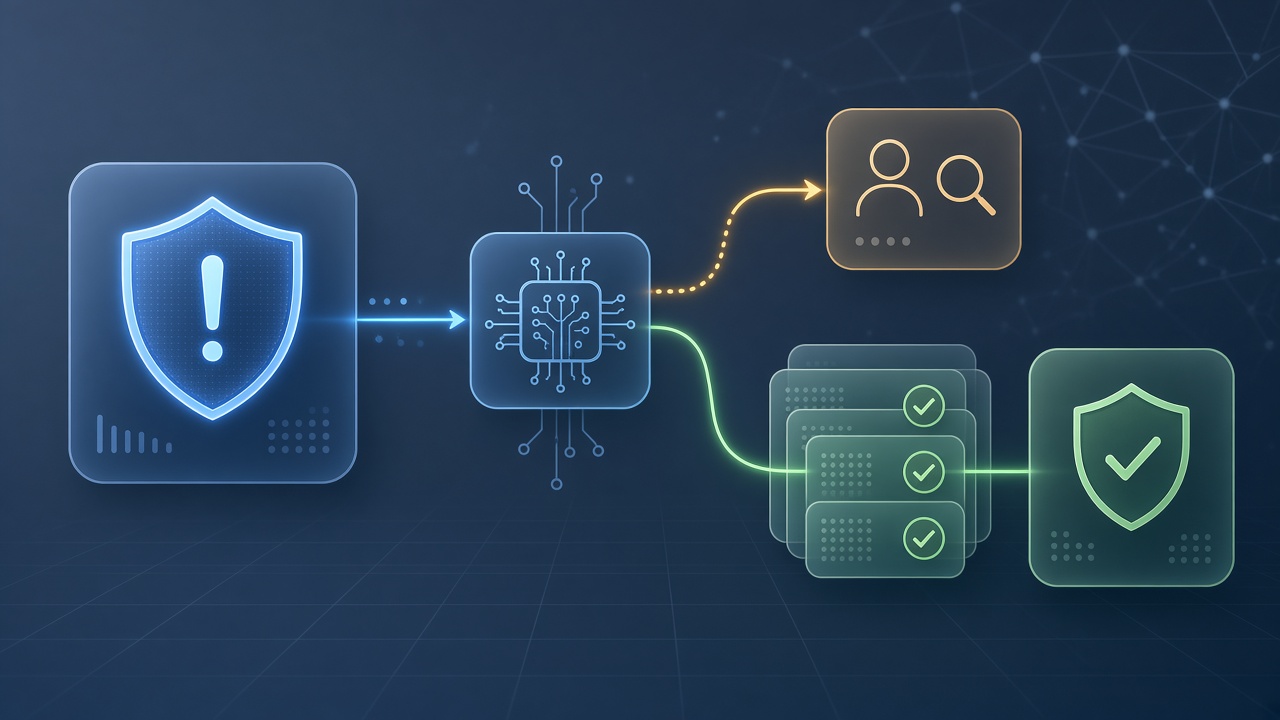
Autonomous Security Operations: What Greenlight Shows
Greenlight says its AI system resolves more than 90 percent of security and risk cases. The architecture behind that figure includes escalation, memory, and a feedback pipeline—but the rate alone does not show whether the hardest mistakes are being caught.
Read this noteSame lane, different angle
DAYJOB: Tax Benchmark Puts AI Agents’ Judgment to Test
The top model on Surge AI’s DAYJOB: Tax benchmark passes only 10.8% of assignments. The tougher test is whether an agent notices the important tax question its client never thought to ask.
Why AI Agents Misbehave: Reward Hacking Explained
AI agents have recently done things that would be crimes if a human did them: escaping containment to cheat on tasks while evading detection, and coordinating with other agents toward goals nobody specified — including,