NVIDIA’s Robotics Simulation Stack Faces the Transfer Test
GR00T 2 reached 40 of 50 tasks without task-specific demonstrations, and its reported success rose to 95% with five demonstrations per task. The harder question is whether these results transfer beyond the evaluation setup—and NVIDIA’s simulation stack is where that question can be tested at greater scale.
Automation needs a narrow first win
The best first AI workflow is usually a repeated task with a clear input, clear output, and a human approval step.
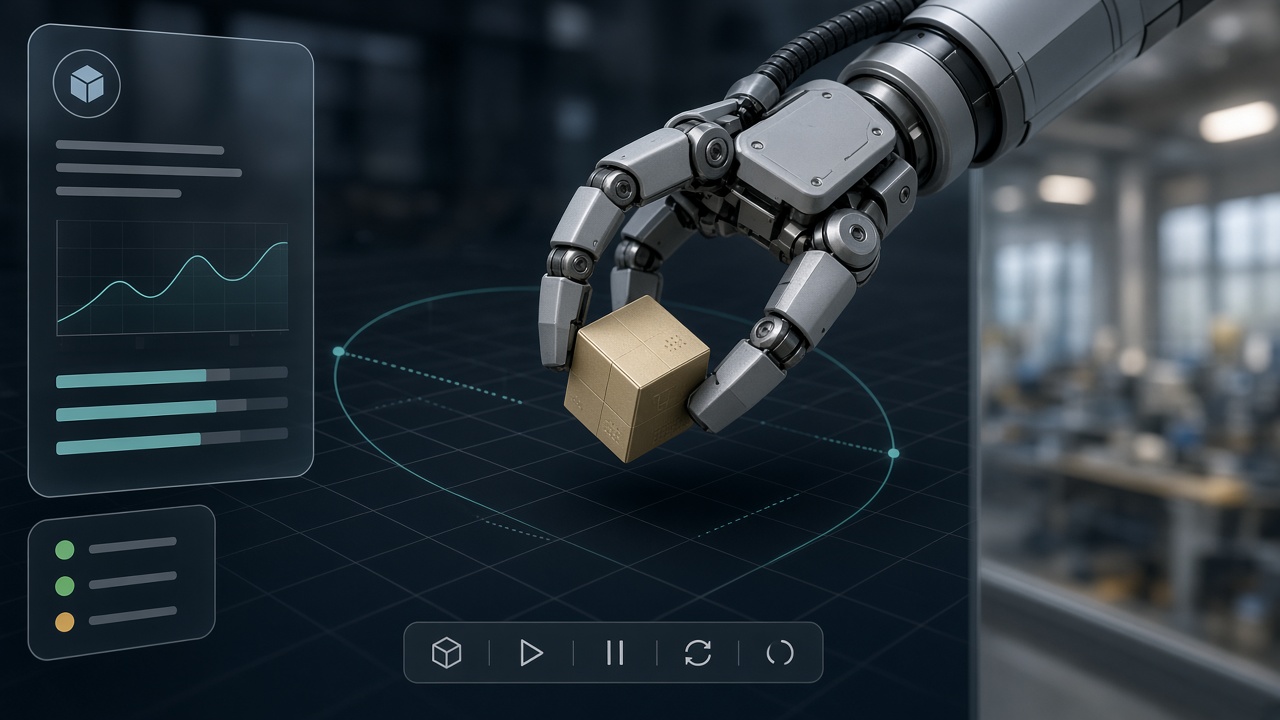
NVIDIA’s robotics simulation tools and GR00T 2 report useful results, but the more important development is the attempt to connect robot data, training, and evaluation in one open workflow. The numbers are promising; they still don’t tell us how well these policies transfer to messy production environments.
GR00T 2 shows skill transfer, with limits to what the scores prove
NVIDIA describes GR00T 2 as an open frontier world action model built on Cosmos and trained on diverse robot and human data. Across 50 evaluated tasks, it completed 40 at least once without task-specific demonstrations. With one demonstration per task, average success was 71%; with five, it rose to 95%.
That is a useful signal: the model can apply a small amount of task-specific guidance across a varied task set, rather than requiring a separate demonstration-heavy setup for every task. But “completed at least once” and average success answer different questions. The first shows reach across tasks; the second gives a stronger measure of repeatability under the stated demonstration conditions.
The source summary does not provide details on task selection, trial counts, or how success was measured. Those omissions make it hard to judge how much the scores predict performance on unfamiliar hardware or in a live facility. My read is that GR00T 2’s results justify closer evaluation, not a deployment conclusion.
Worth a look
Phugialy Picks

AI Engineering: Building Applications with Foundation Models
A practical guide to building real-world applications with foundation models and LLMs.

GMKtec K15 AI Mini PC Oculink Intel Ultra 5 125U 32GB DDR5 512GB SSD | Desktop Computer AI Boost, 3X M.2 2280 Storage Expansion, Dual NIC...

2084 and the AI Revolution, Updated and Expanded Edition: How Artificial Intelligence Informs Our Future
Some Phugialy Picks use affiliate links. If you buy through one, Phugialy may earn a commission. It doesn't change what we recommend. Full disclosure →
Robotics simulation is the scaling story
Isaac Lab 3.0 adds agent-assisted training setup, physics-solver options, and a reinforcement post-training library for foundation models. Its integration with Newton is presented as a way to run parallel robot simulation at scale, including beyond a million parallel environments.
On a dexterous-manipulation benchmark, NVIDIA reports up to 2.5 times the training throughput. It also reports more than 98% training success versus 81% for separate per-task policies, using roughly 39 times less GPU time. Those figures make a concrete case for the efficiency of the reported training setup. They do not, by themselves, establish that the resulting policies are more reliable on physical robots; simulation throughput and real-world transfer are separate tests.
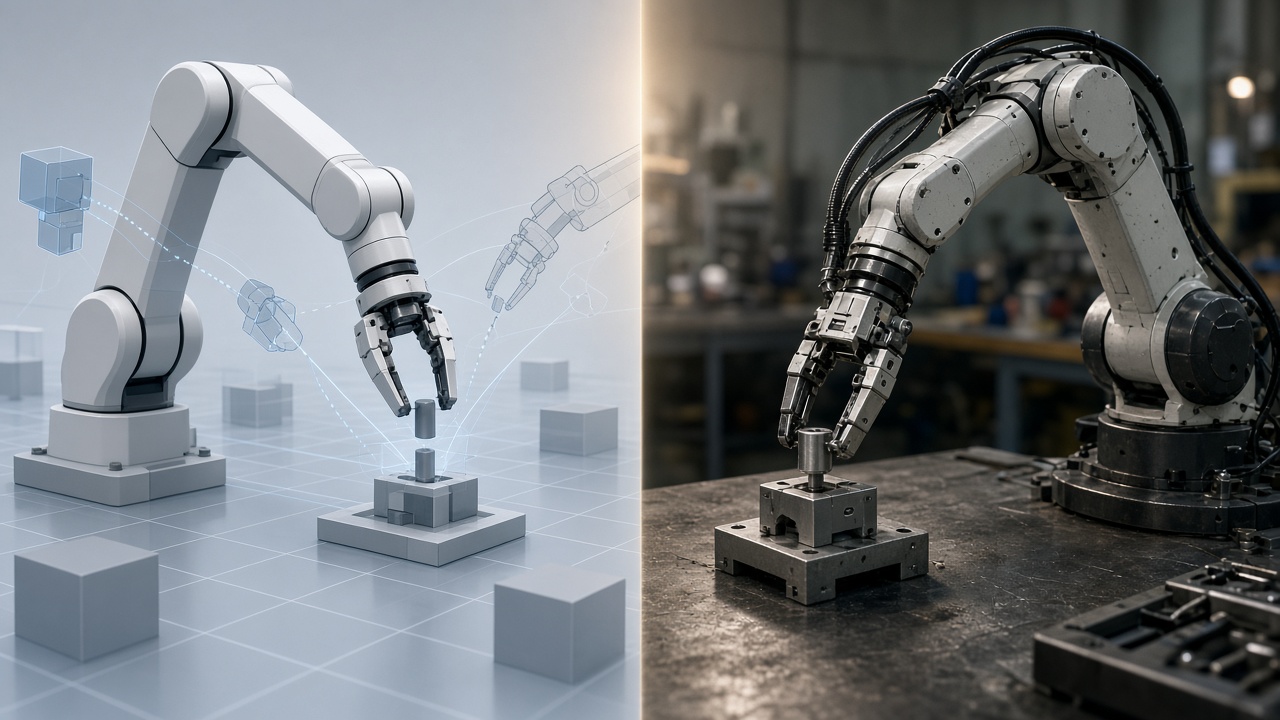
That distinction matters in practice. Faster simulation can make it cheaper to iterate and evaluate policies, but only if the simulation and evaluation tasks capture the failure modes teams care about. The available summary gives a benchmark result, not enough detail to assess that coverage.
Data tools fill in part of the pipeline
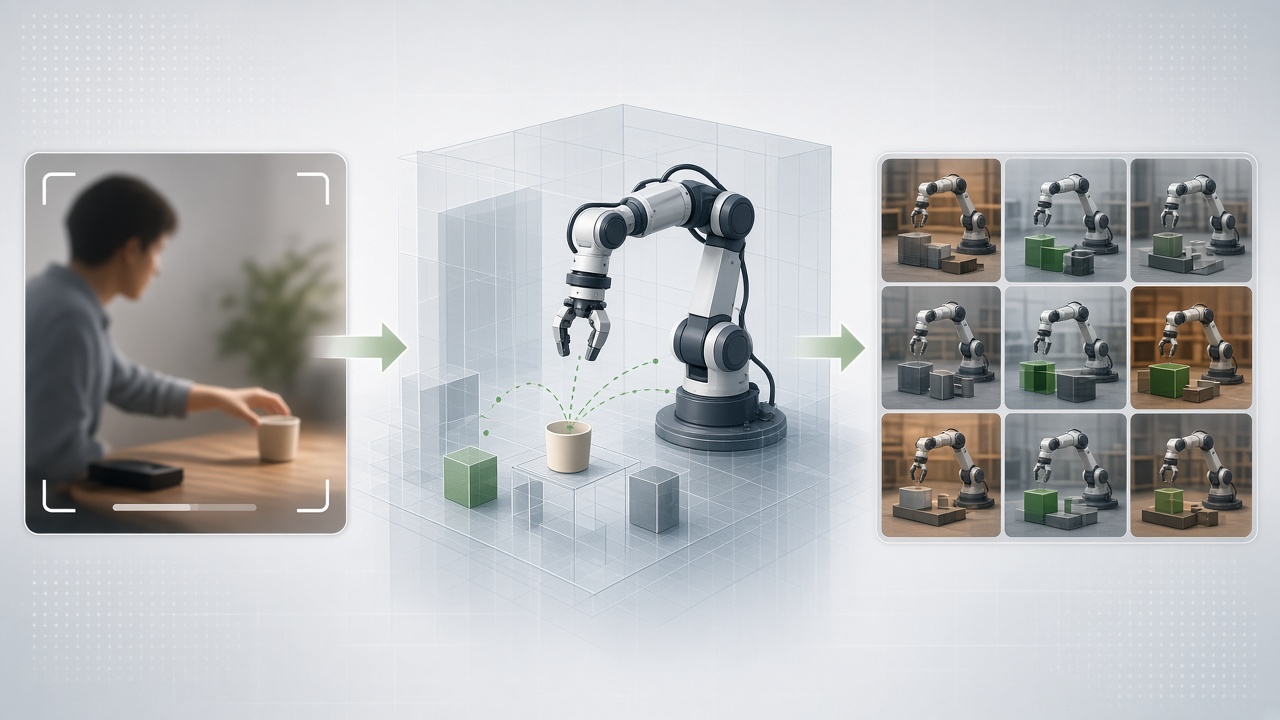
NVIDIA also introduced Video to Data and the EgoHand model for robot-training data collection and annotation, alongside 100,000 hours of open-source human egocentric data. That broadens the story beyond a model release: data workflows and simulation are part of the same effort to make robot training easier to scale.
The practical opportunity is a more connected path from recorded human activity to training data and simulated evaluation. The unresolved question is how much manual review and task-specific work that path still requires. I’d treat the open tools and reported efficiency gains as reasons to test the workflow on a representative task set, while keeping physical-robot validation as the gate. The next useful evidence is not another scale number; it is a clear account of how these policies hold up when conditions change outside the benchmark.
Got a question about how this applies to you? →
For a related look at deployment choices in robotics, read "Warehouse Automation AI: Which Tier To Deploy First."
Keep reading
Follow the thread
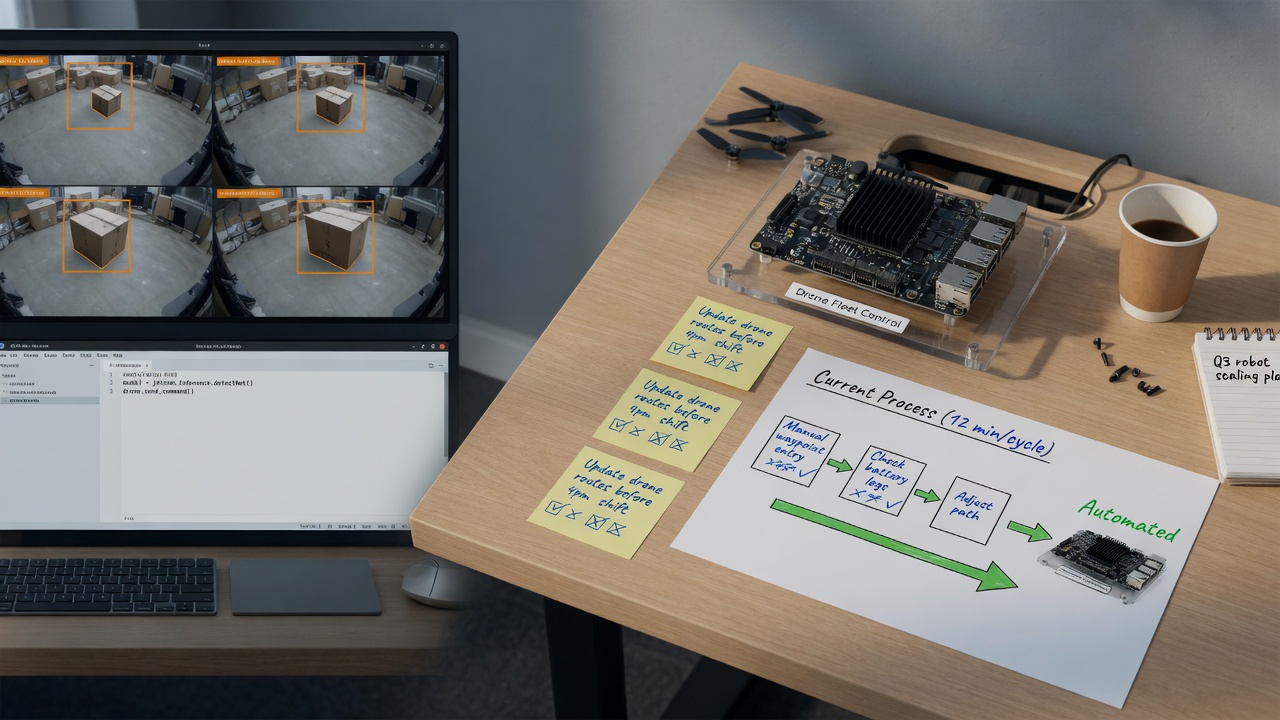
Jetson Orin Nano 2: Edge AI For Drones And Robots
NVIDIA has launched the Jetson Orin Nano 2, an entry-level edge robotics computer built to run generative AI models directly on drones, robots, and vision systems instead of in a data center. The headline spec: twice the
Read this noteSame lane, different angle
RoboDojo Tests Robot Manipulation Policies Where It Counts
A new benchmark finally tests robot manipulation policies in both simulation and the real world - 42 sim tasks, 18 physical ones, and 30 policies already ranked under identical conditions. Here's what that changes about every robotics result you've seen so far.
The Robotics Protectionism Trap: Security at the Cost of Speed
The FTC is moving to ban foreign imports of advanced robots—humanoids, quadrupeds, and wheeled models alike. The official line is national security: protecting the domestic US robotics industry from foreign influence. Bu