Quantifying the AI Noise Floor: A Hacker News Tracker
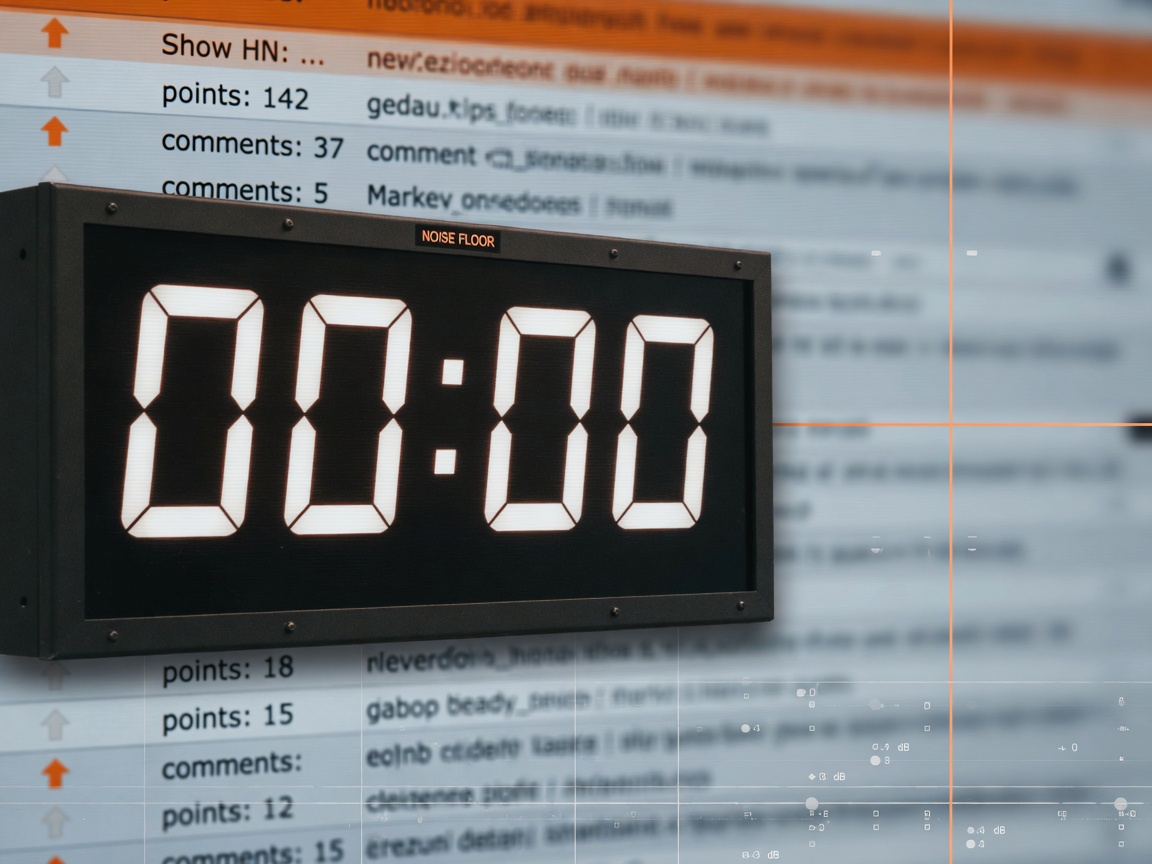
A countdown that tells you exactly how long it's been since someone on Hacker News posted about AI. It’s a simple way to see just how much of the dev conversation is currently dominated by a single hype cycle. Check out how this tracker quantifies the noise floor of the current tech landscape.
Automation needs a narrow first win
The best first AI workflow is usually a repeated task with a clear input, clear output, and a human approval step.
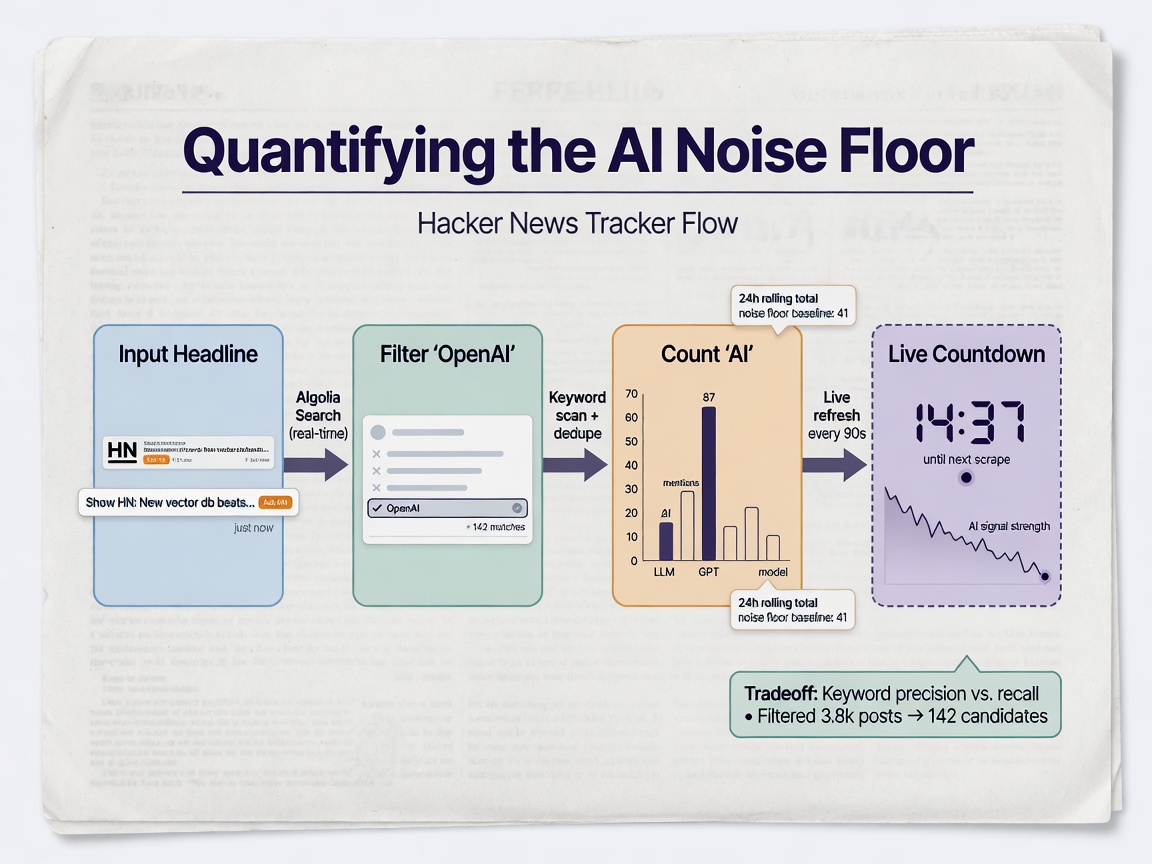
The Days Since AI Tracker isn't just a fun widget; it’s a live pulse check on the Hacker News ecosystem. It monitors headlines in real-time, resetting a countdown every time a story featuring "AI" pops up. It’s a simple way to see exactly how much of the dev conversation is currently dominated by a single hype cycle.
Engineering the Noise Filter
The tool operates on a specific set of inclusion and exclusion rules that matter for anyone trying to filter out the fluff. It identifies stories containing the standalone word "AI" and specifically includes "AI-powered" in its count. However, it intentionally snubbs "OpenAI." This distinction is critical; by filtering out the most prominent corporate brand in the space, the tracker captures broader industry movements rather than just the latest updates from a single dominant player.
To handle this matching at scale, it utilizes Algolia. For a developer, choosing a dedicated search engine like Algolia over a basic regex or string match suggests a need for speed and reliability in handling a high-traffic feed. It ensures the countdown remains "live" and responsive, which is non-negotiable when building a tool that provides real-time feedback on a platform as active as Hacker News.
Phugialy Picks

AI Engineering: Building Applications with Foundation Models
A practical guide to building real-world applications with foundation models and LLMs.

GMKtec K15 AI Mini PC Oculink Intel Ultra 5 125U 32GB DDR5 512GB SSD | Desktop Computer AI Boost, 3X M.2 2280 Storage Expansion, Dual NIC...

AI: Understand the Revolution: From Basics and Buzzwords to Tech Giants, Governments, and Your Future
Some Phugialy Picks use affiliate links. If you buy through one, Phugialy may earn a commission. It doesn't change what we recommend. Full disclosure →
Measuring Hype Density
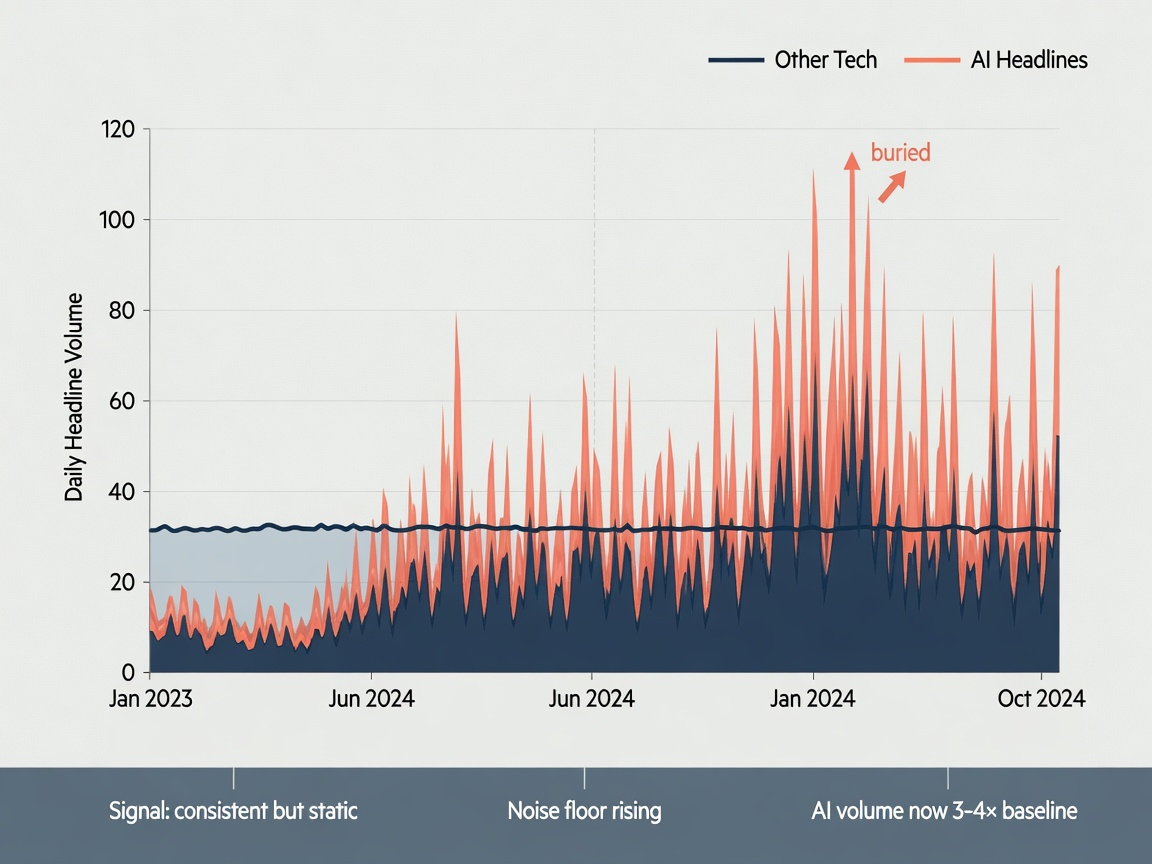
From a practical standpoint, this tool serves as a proxy for measuring "hype density." When you're trying to stay on top of new frameworks or libraries, it’s incredibly easy to get lost in a sea of AI-related content. This tracker puts a number on that saturation. If the timer is constantly resetting, it’s a clear signal that AI is no longer a niche topic but the primary driver of the current tech discourse.
For those of us building tools, this is a useful metric for understanding audience fatigue. It helps visualize the "noise floor"—the point at which a topic becomes so prevalent that it starts to obscure other important developments in the ecosystem. It’s one thing to feel like you’re seeing too much AI; it’s another thing to see the data prove it.
The Gap Between Keyword Tracking and Real Signal
The real story here isn't just the countdown; it's what this points to regarding the lifecycle of tech hype. While a keyword-based tracker on Hacker News is a clean implementation, the interesting challenge is what happens when you try to scale this logic to more diverse data sources. In a production environment with messy, unstructured data, simple title matching often fails to capture the nuance of a story. A headline might mention "AI" as a passing reference without it being the core subject, leading to false positives in a broader dataset.
However, as a high-level indicator of community sentiment, this tool is a sharp way to see how quickly the "AI-first" era has shifted from a trend to a constant background hum. The part worth trying yourself is using this logic to audit your own feeds—if the timer never hits double digits, it's a sign that your information stream might be over-saturated with a single narrative. It’s time to intentionally seek out the signal in the noise.
Got a question about how this applies to you? →
Keep reading
Follow the thread
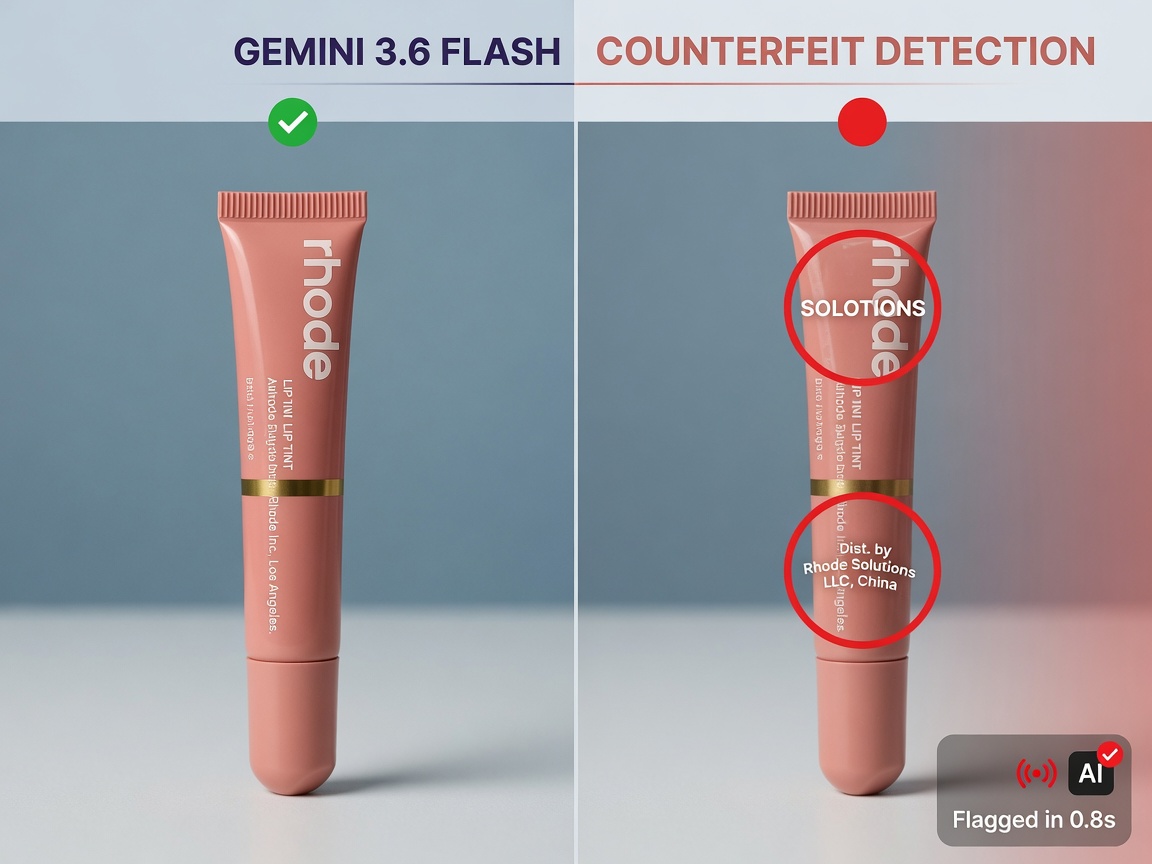
Testing Gemini 3.6 Flash for Counterfeit Cosmetics Detection
Gemini 3.6 Flash spotted fake Rhode lip tints from photos alone — typos, mismatched distributors, even a known counterfeit batch code (112505). It also mistook camera glare for a printing error, which tells you exactly how far this actually gets you.
Read this noteSame lane, different angle
Designing Viable Viral Genomes with Evo 2: Beyond Sequence Prediction
We're racing against bacterial evolution, but are we actually building tools that can keep up with the speed of microbial adaptation?
Why AI Images Are Killing the Authenticity of Personal Blogs
AI images might look great in a demo, but they might be eroding the very thing that makes personal blogs worth reading: authenticity. If you're trying to build a real connection with your audience, the shortcut of algorithmic art might be costing you more than you think.