AI Coding and the Cost of a Fragile SaaS Codebase
AI coding can speed up pull requests while leaving the tests shallow and the code harder to understand. The deciding question is not how much code it generates, but whether your team can still verify and maintain it.
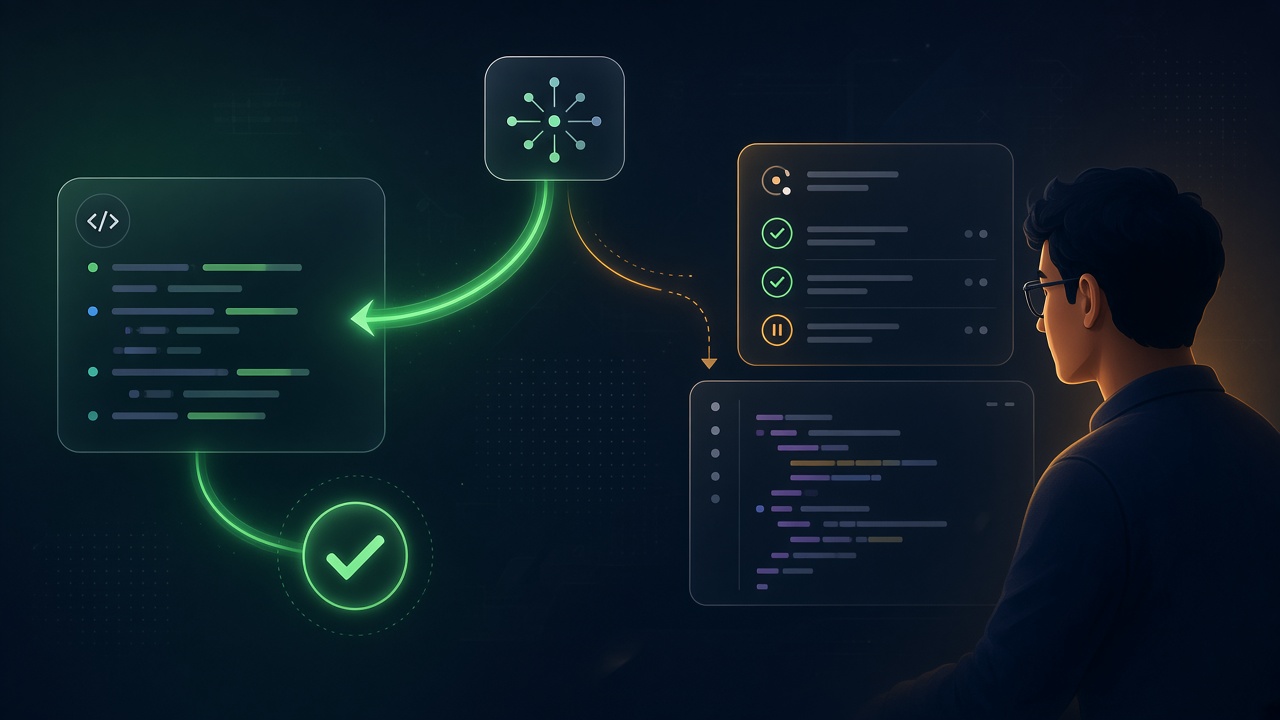
Automation needs a narrow first win
The best first AI workflow is usually a repeated task with a clear input, clear output, and a human approval step.
AI coding is worth using only when developers can still verify what it changes; otherwise, speed can come at the cost of a fragile SaaS codebase. The source article argues that AI-generated tests, complex code, reduced developer understanding, and rushed reviews can combine to create more incidents and user-visible errors. That is a warning about how the tools are used, not proof that every AI-assisted change is risky.
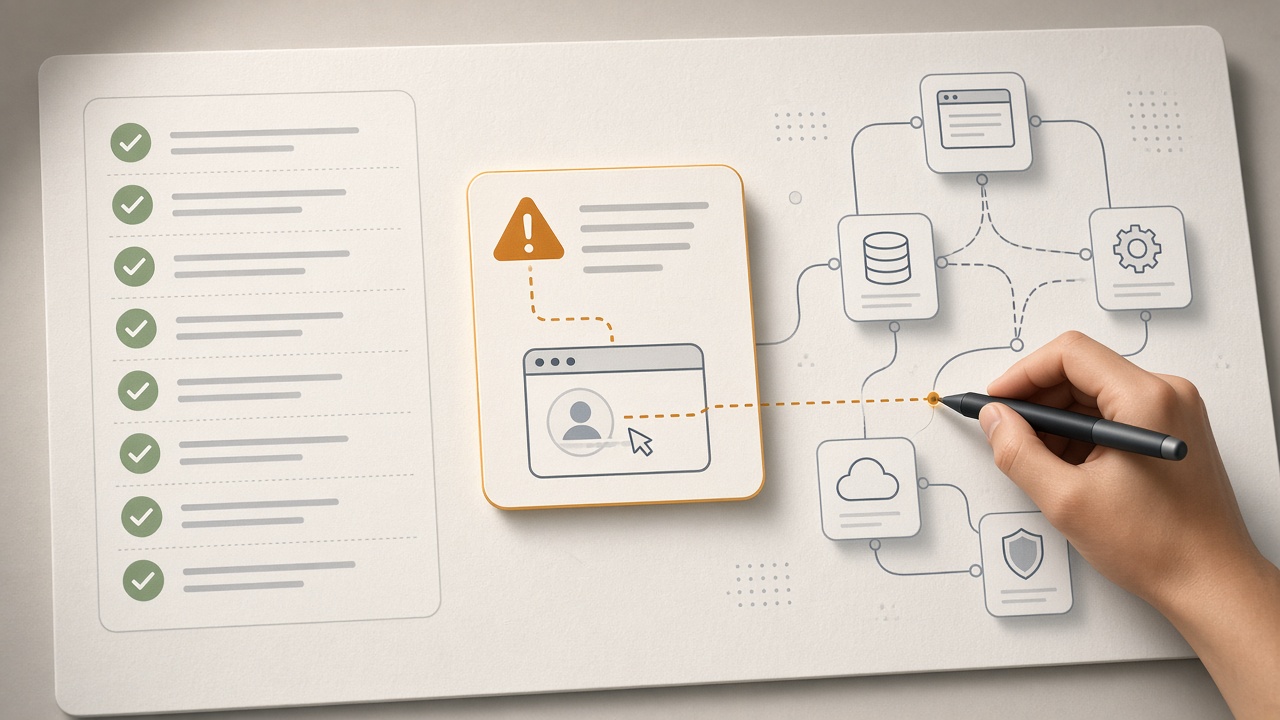
AI coding can produce tests without closing the important gaps
The article says AI-generated tests often cover trivial methods or cases that are already tested, while important gaps remain. That distinction matters more than the number of tests added: a larger suite does not necessarily mean the behavior users depend on is better protected. The source does not provide enough detail to quantify how often this happens, so the practical point is about review, not a universal failure rate.
Faster pull requests can also leave less time for review, allowing quality issues and technical debt to accumulate. My read is that these risks reinforce each other. A test that looks reassuring can make a rushed review feel safer, even if the test misses the consequential behavior. AI-assisted work should therefore be judged by what the tests exercise and what a reviewer has actually checked—not by output volume or turnaround time alone.
Worth a look
Phugialy Picks

AI Engineering: Building Applications with Foundation Models
A practical guide to building real-world applications with foundation models and LLMs.

2084 and the AI Revolution, Updated and Expanded Edition: How Artificial Intelligence Informs Our Future

Agentic AI Engineering: Systems That Reason and Act Autonomously – Designing, Building, and Prompting LLM-Based Agents for Real-World Deployment
Some Phugialy Picks use affiliate links. If you buy through one, Phugialy may earn a commission. It doesn't change what we recommend. Full disclosure →
The codebase context is part of the job
The source argues that AI-generated code may be unnecessarily complex and harder to debug or understand. It also warns that reliance on agents can weaken developers’ knowledge of existing structures. These are connected problems: code that fits the immediate task but ignores surrounding conventions can be harder to maintain, especially when the person responsible for it has less context.
The article puts the limit plainly: “AI tends to solve the problems that can fit within its context window very well, but it's totally oblivious to the long term issues that can't be understood in that relatively small frame.” That is the key trade-off. The tool may help with a bounded change, but it does not remove the need for someone to understand how that change fits the rest of the system.
Keep AI assistance conditional on human understanding
The source links fragile codebases with more incidents, slower mitigation, and errors that surface only for users. It also argues that faster pull requests can contribute to quality issues. That makes the real comparison less “AI versus no AI” than “AI-assisted changes with informed review versus changes developers cannot confidently explain or test.”
My recommendation is conditional: use AI coding where a developer can assess the relevant code, tests, and surrounding structures, and skip or limit it where that understanding is missing. The article supports caution, not a blanket ban; it does not establish which tasks are reliably safe or quantify the cost of adding review. The decision should turn on whether the team can catch bad changes before users do. If AI speeds up implementation but reduces that ability, the saved time is not a win.
Got a question about how this applies to you? →
Keep reading
Follow the thread
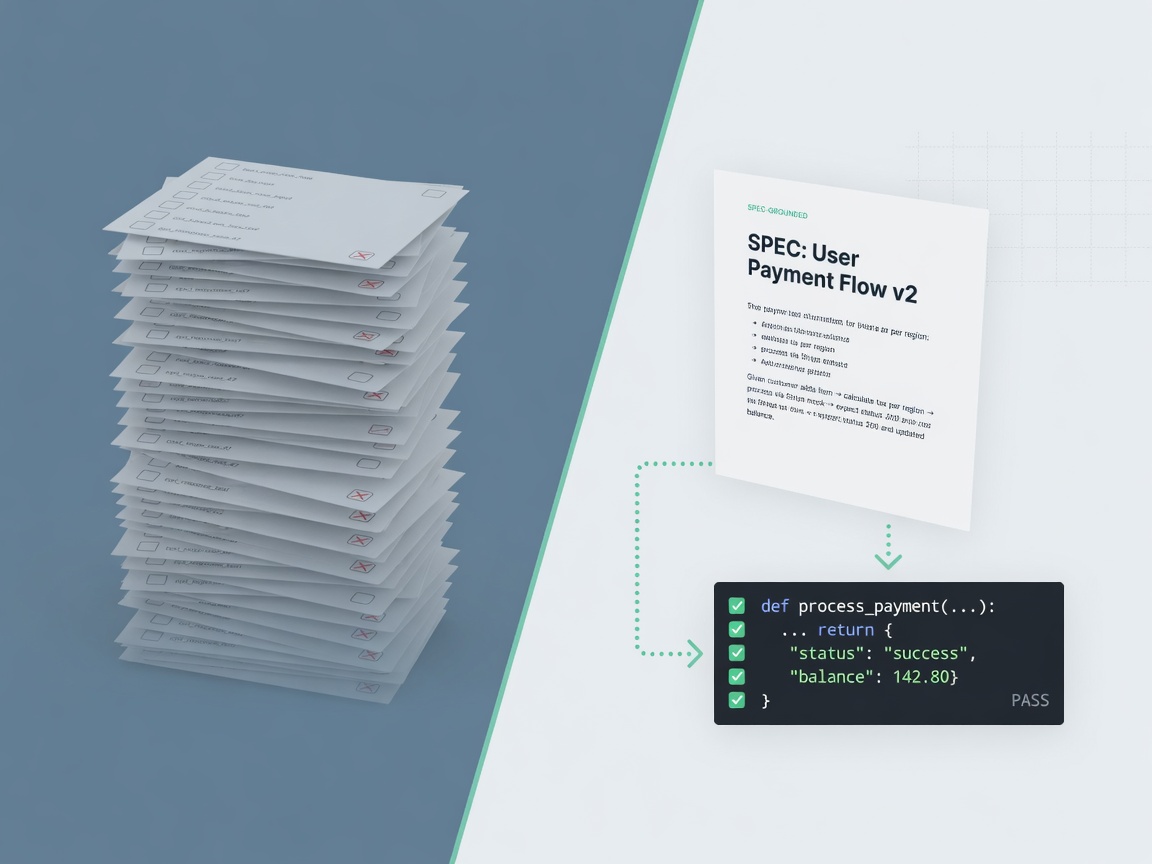
Spec-Grounded Tests Beat More Tests for AI Code Accuracy
Doubling your AI coding assistant's test budget barely moves the needle on code quality — but grounding those tests in a written specification lifts correct-code rates by 38 percentage points. That's the core finding of
Read this noteSame lane, different angle
NVIDIA’s Robotics Simulation Stack Faces the Transfer Test
GR00T 2 reached 40 of 50 tasks without task-specific demonstrations, and its reported success rose to 95% with five demonstrations per task. The harder question is whether these results transfer beyond the evaluation setup—and NVIDIA’s simulation stack is where that question can be tested at greater scale.
Federal AI Regulation: Risk Claims Need a Testable Line
Scott Wiener wants Congress to act on catastrophic AI risks, including recursive self-improvement. The hard part is translating that warning into rules with clear triggers, tests, and accountability.