Sphinx: A Git Hook for AI Code Review With Questions
Sphinx pauses pushes to protected branches until you can explain the diff, including what happens when things fail. The practical test is whether its questions stay useful on real, messy changes—or become one more prompt to bypass.
Automation needs a narrow first win
The best first AI workflow is usually a repeated task with a clear input, clear output, and a human approval step.
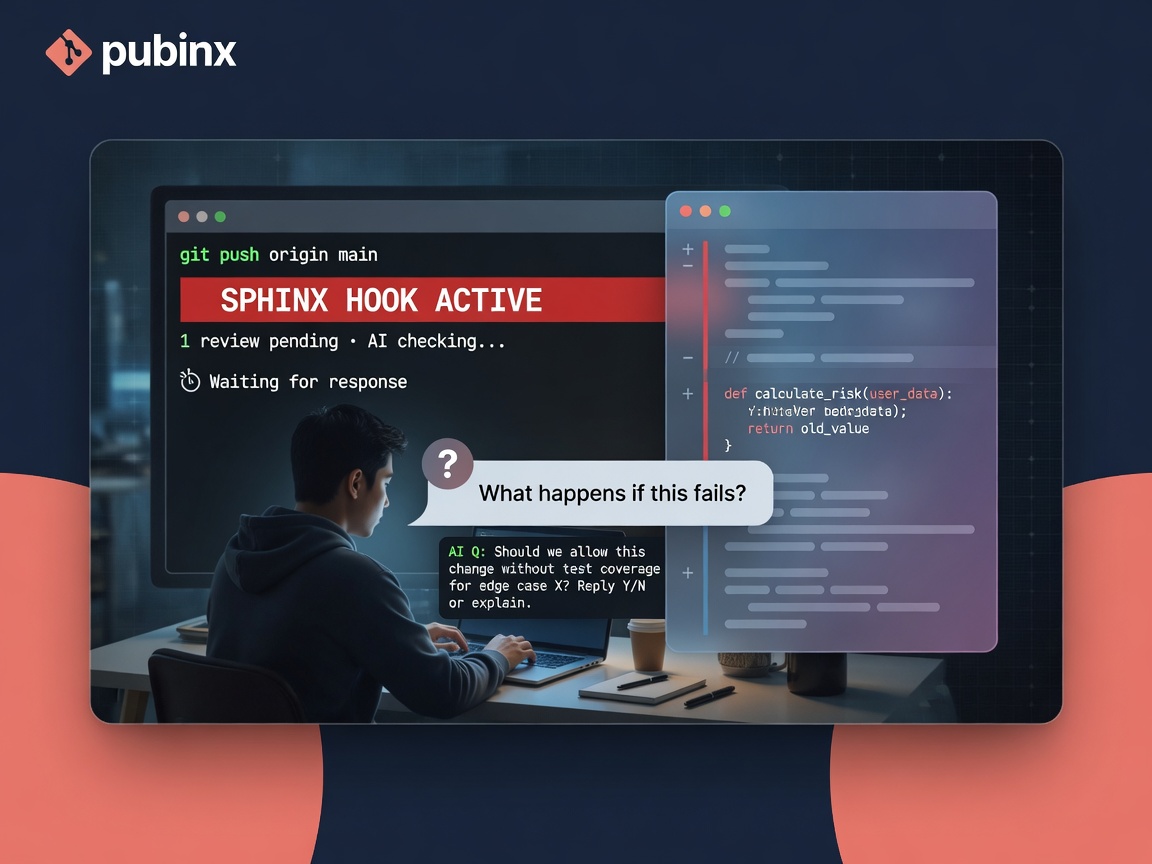
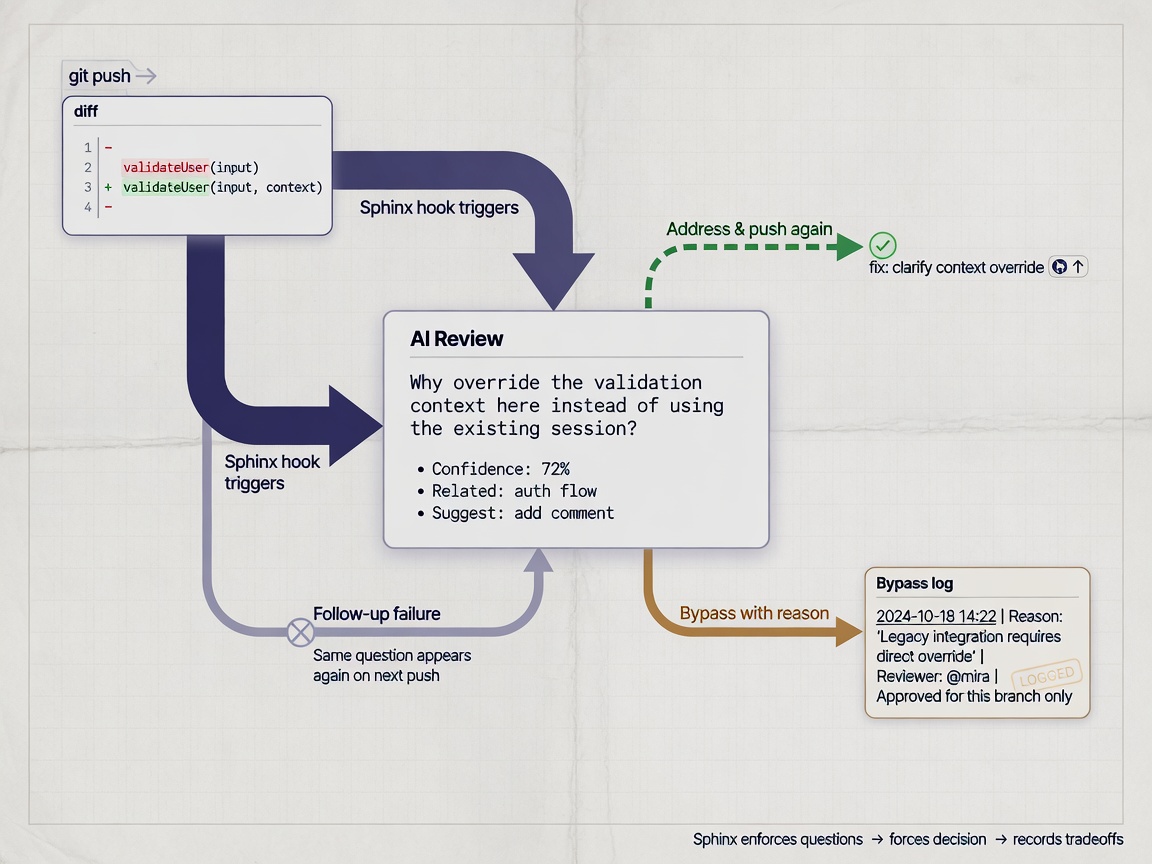
Sphinx is a Git hook for AI code review that pauses pushes to protected branches and asks you to explain what the diff does. The point is not just to put another approval step in front of a push: a correct answer lets it continue, while a wrong answer brings follow-up scenarios, including questions about failure behavior.
A Git hook for AI code review that checks your grasp of the diff
The workflow is direct. Install it with sphinx install, choose which model should review, and Sphinx generates questions from the code changes. It works with Codex, Claude Code, Cursor, OpenCode, Pi, or plain Git, so the check is not limited to one coding-agent setup.
That breadth makes the idea more interesting than a tool-specific agent feature. A team could use it as a pause point in an existing Git workflow, whether or not each developer uses the same coding agent. The question is whether the questions are useful enough to justify interrupting a push. A correct answer is a signal that someone can explain the change; it is not, by itself, proof that the change is correct or safe.
Worth a look
Phugialy Picks

livho Blue Light Blocking Computer Glasses
We'd buy this if: You spend most of your day staring at a screen and haven't tried blue light glasses yet.
We'd skip this if: You already wear prescription glasses with a blue light coating, or don't notice eye strain.
INIU 10000mAh 45W Fast Charging Portable Power Bank
We'd buy this if: You've been caught with a dead phone/laptop away from an outlet more than once.
We'd skip this if: You're always near a charger anyway.
OMOTON C2 Adjustable Aluminum Phone Stand
We'd buy this if: You want your phone upright on your desk for calls/notifications without a cable getting in the way.
We'd skip this if: You never keep your phone on your desk.
Some Phugialy Picks use affiliate links. If you buy through one, Phugialy may earn a commission. It doesn't change what we recommend. Full disclosure →
Failure scenarios make the review more than a diff summary
The follow-up questions after an incorrect answer are the part I’d pay attention to. Asking what happens when a change fails pushes the review beyond “what did the code add?” toward “what happens when the expected path breaks?” That is a practical prompt for changes whose edge cases are easy to miss in a clean diff.
But the quality of that check depends on the questions. The source says they are based on the diff and that setup asks which model should review; it does not provide evidence here about how often questions catch meaningful misunderstandings or how they behave on noisy, complicated changes. In practice, a vague question or a brittle expected answer could turn a useful pause into friction. I’d want to try it on real changes before making it a required gate.
The bypass and privacy boundaries matter in production
Sphinx allows users to bypass checks with sphinx yolo, and skips are logged. That is a sensible escape hatch for urgent work, but the log is only useful if a team decides how it will respond to repeated bypasses. The tool creates a record of skipping; it does not decide whether a skip was justified.
There are also two specific privacy claims worth checking against your workflow: Sphinx says answers are not sent to the coding agent, and that .env files and keys are never opened. Those boundaries matter when review questions are part of a development process involving agents and sensitive configuration. I’d still verify the behavior and scope that matter to my own setup rather than treating a product claim as a substitute for local review.
My read: Sphinx is worth trying as a lightweight understanding check, especially if your team wants developers to explain agent-assisted changes before pushing. I would not treat a correct answer as a replacement for tests or code review. The useful production signal will be whether its questions stay relevant on messy diffs—and whether developers learn from the pause instead of reaching for the bypass.
Got a question about how this applies to you? →
For a related look at agent access and boundaries, see “Giving AI Agents the Keys to the Kingdom (Without the Risk of Burning it Down).”
Keep reading
Follow the thread
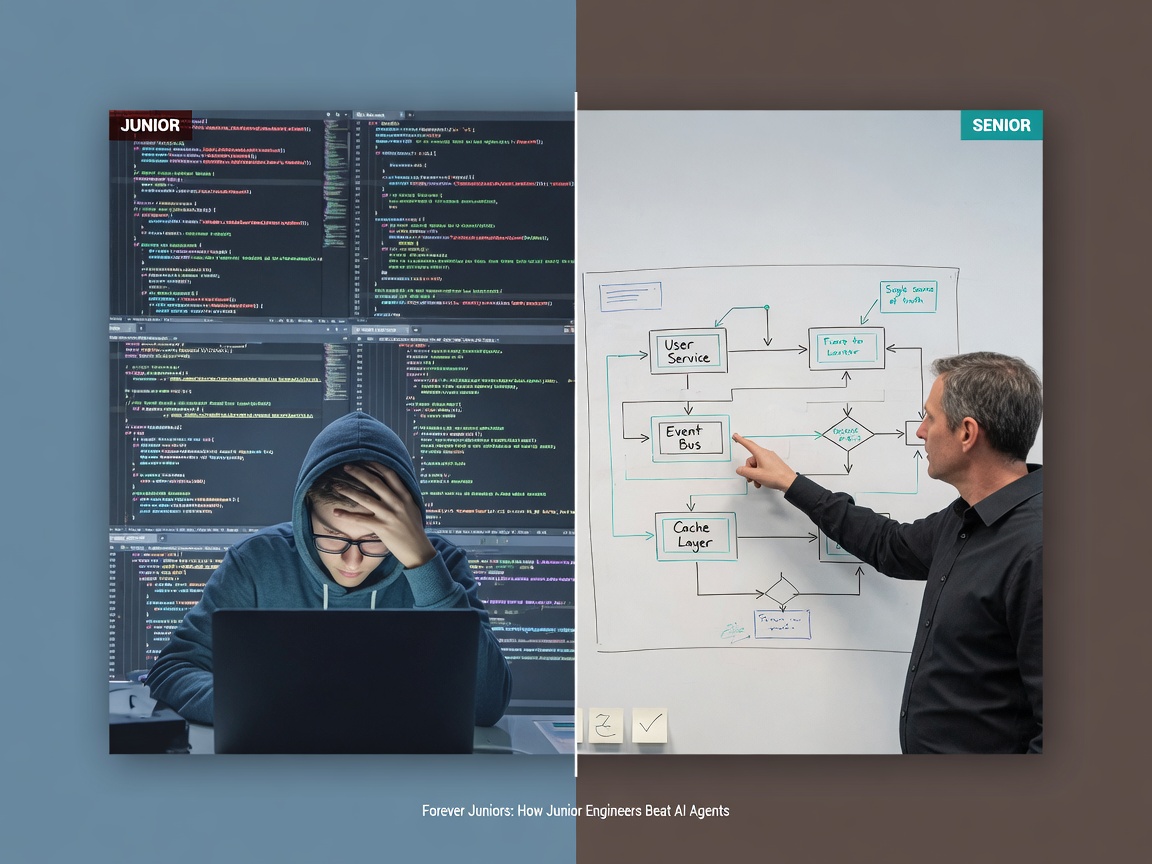
Forever Juniors": How Junior Engineers Beat AI Agents
The real risk of AI agents isn't that software engineers disappear - it's that seniors do, as a generation becomes 'forever Juniors.' A Criteo engineer lays out exactly which skills keep you out of that trap: questioning agents until they catch their own mistakes, and occasionally coding without AI at all.
Read this noteSame lane, different angle
AI Coding Agents and Code Quality: What Layered Defenses Actually Buy
The claim: AI coding agents can double your output without more bugs. The catch: only after building six defensive layers around them — and manual testing still caps you at 2-3x, not 10x.
Skillsync: Making AI Coding Agent Sessions Portable
Skillsync converts AI coding agent sessions between Claude Code, Codex, and Cursor - keeping messages, reasoning, and tool calls intact. The lock-in it targets is invisible right up until it's expensive, because the session turns out to be the unit of collaboration, and right now it's being thrown away.