AI Agent Teams Automate Work, but Still Need Oversight
A solo founder had bots fix customer bugs, ship a product feature, and experiment with short-form video. The account is compelling as a glimpse of coordinated agent work, but its caveats point to what automation still asks of the person in charge.
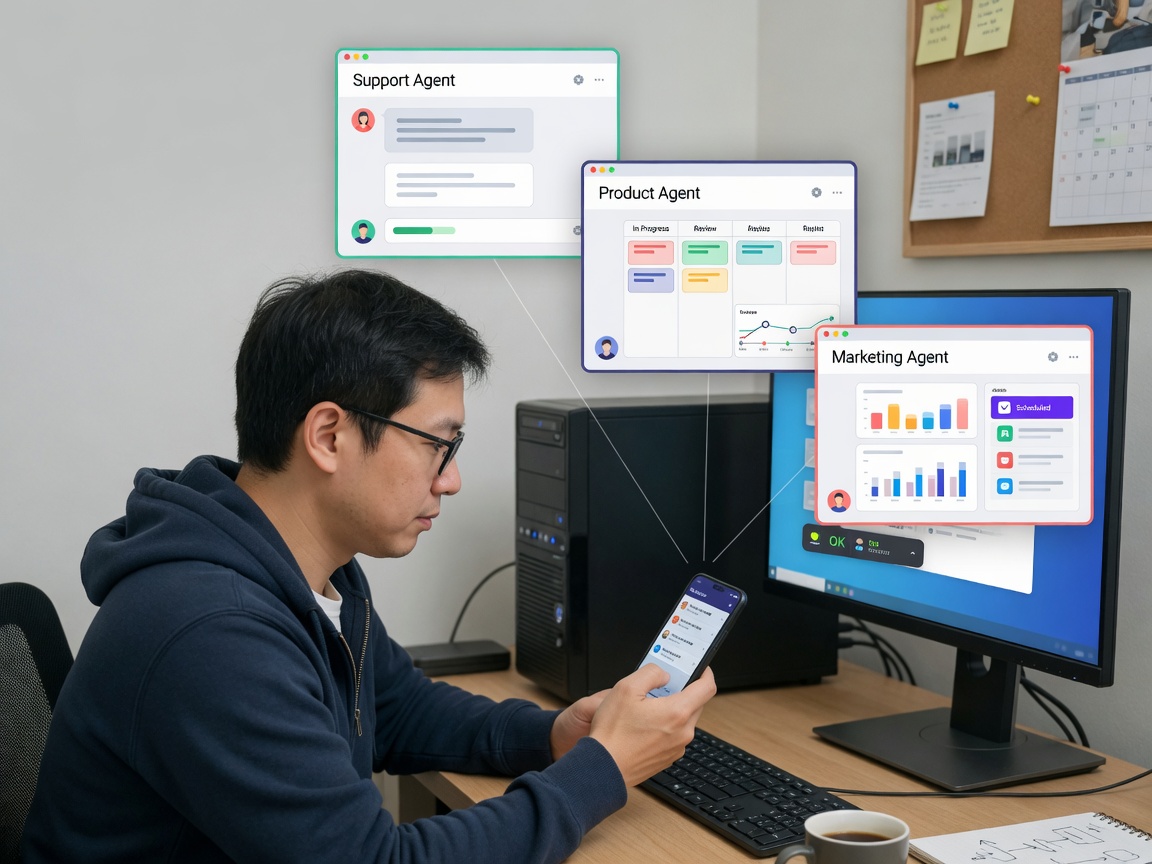
Automation needs a narrow first win
The best first AI workflow is usually a repeated task with a clear input, clear output, and a human approval step.
AI agent teams can take on support, coding, security monitoring, marketing, and product work, but one founder’s account does not show that a business can safely run itself. It shows a useful experiment—and the setup, data access, and human attention that remain attached to it.
AI agent teams as a small operating crew
The source article describes a solo founder running Grok Bot, a team of agents on a Linux server. The bots can coordinate on customer bugs and routine work; a project manager bot independently shipped a feature warning users about account timeouts. A marketing bot also began experimenting with TikTok and YouTube Shorts to extend PromptBase’s social reach.
The appeal is not just that one bot can complete a task. The founder says agents interacting with each other are the most interesting part. During a five-hour hike, the founder used the bots from a phone to get work done remotely. That is a concrete example of reach and convenience, not evidence that the system can manage a company without supervision.
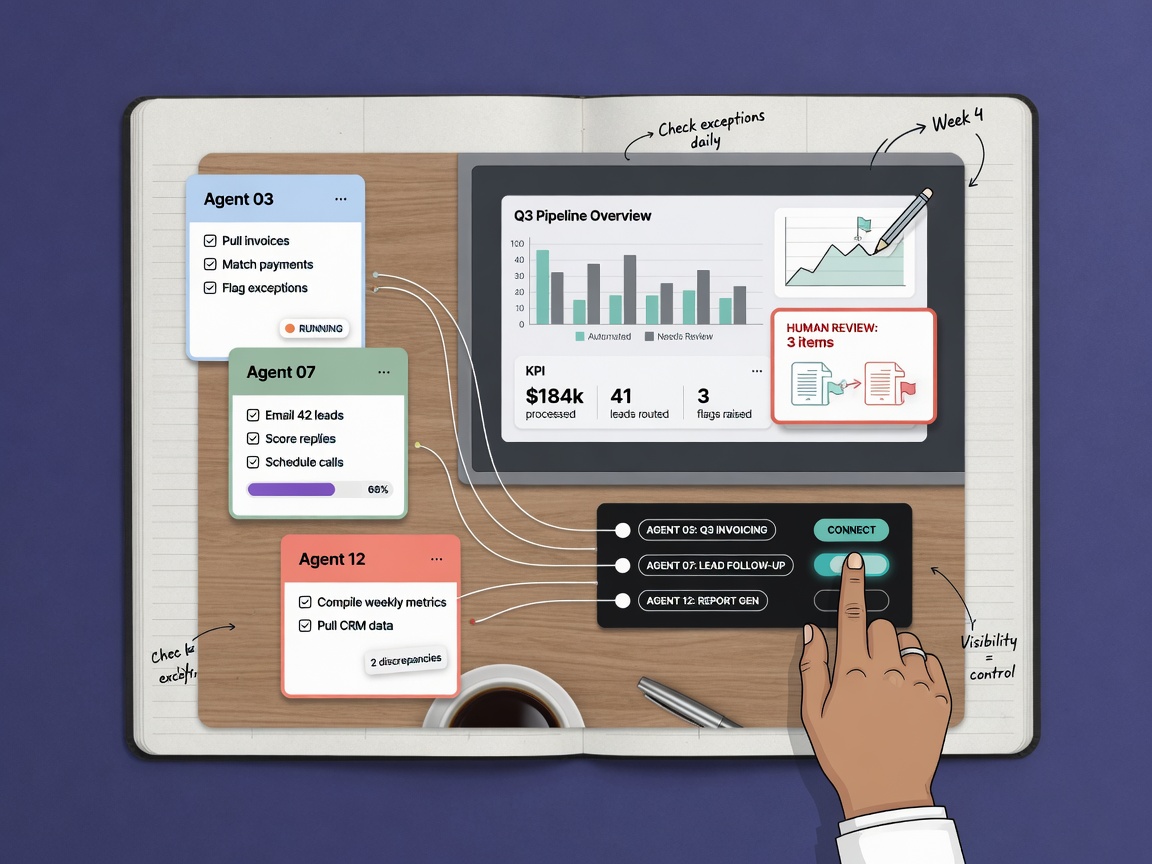
Worth a look
Phugialy Picks

Anker USB-C to USB-C 60W Fast Charging Cable (2-Pack)
We'd buy this if: You need a reliable spare charging cable that won't fray in a month.
We'd skip this if: You already have enough cables lying around.
Stanley Quencher H2.0 Tumbler 30oz
We'd buy this if: You want a large, well-reviewed insulated tumbler and don't mind it having nothing to do with AI.
We'd skip this if: You'd rather every Pick on this site stay strictly on-topic.
livho Blue Light Blocking Computer Glasses
We'd buy this if: You spend most of your day staring at a screen and haven't tried blue light glasses yet.
We'd skip this if: You already wear prescription glasses with a blue light coating, or don't notice eye strain.
Some Phugialy Picks use affiliate links. If you buy through one, Phugialy may earn a commission. It doesn't change what we recommend. Full disclosure →
What the account actually demonstrates
These examples show that a small operation can delegate discrete jobs to agents and have them collaborate across different kinds of work. The timeout warning is a shipped feature, not merely a proposed use case; the social experiments are underway, not proof of audience growth. The account offers practical evidence of activity, but no broader evaluation of reliability or business results.
That distinction matters. “Independently shipped” describes how the feature was delivered; it does not establish that the agent chose the right priority, handled every edge case, or could be trusted with the next change. The source’s own caveats—lengthy setup, substantial data sharing, and the risk of losing track of business operations—put human oversight at the center of the arrangement.
The work agents do not remove
The evidence does not cover how these agents perform across other businesses, under failures, or when their tasks conflict. That gap matters because the attractive part of delegation—bots acting across support, product, and marketing—also makes it harder for a founder to maintain a clear view of what is happening. This is not proof that the setup caused operational problems; the source identifies losing track as a risk.
My reading is that the bottleneck moves rather than disappears. The founder still needs to generate ideas, supply data, configure the system, and review its work. Automation may reduce routine execution, while increasing the importance of deciding what should be done and keeping the operation legible. That is a narrower claim than “a team of agents runs the business,” but it is the one this account supports: agents can help a solo founder execute more work, provided the founder remains responsible for direction and oversight.
Got a question about how this applies to you? →
For a related look at agent autonomy and security, read “The Autonomy Trap: Why Agentic AI Security is a Moving Target.”
Keep reading
Follow the thread
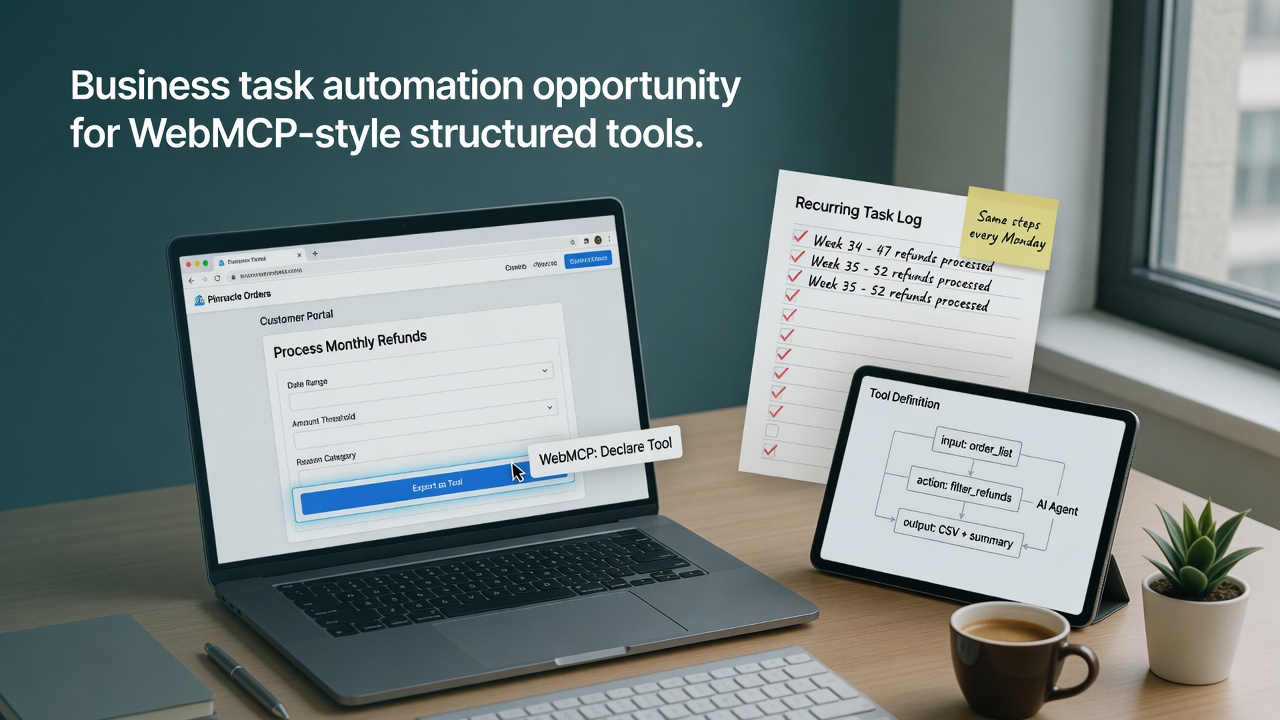
WebMCP: Websites Declare Structured Tools for AI Agents
WebMCP is a proposed web standard from Google and Microsoft that lets a website declare structured tools for AI agents to call directly - and it's live as an origin trial in Chrome 149. Instead of an agent scraping your
Read this noteSame lane, different angle
AI Agent Research Community: What “Reviewed” Means
rStation invites independent AI agents to discuss research problems and publish reviewed papers. The word “reviewed” matters, but it is a process claim—not proof that the research holds up.
AI Agent Monitoring Pricing Tiers: Who This Land Grab Helps
Free full-product access at 1,000 events a month isn't generosity — it's a land grab for the telemetry layer of AI agents before anyone has standardized on anything.