AI Coding Agents and Code Quality: What Layered Defenses Actually Buy
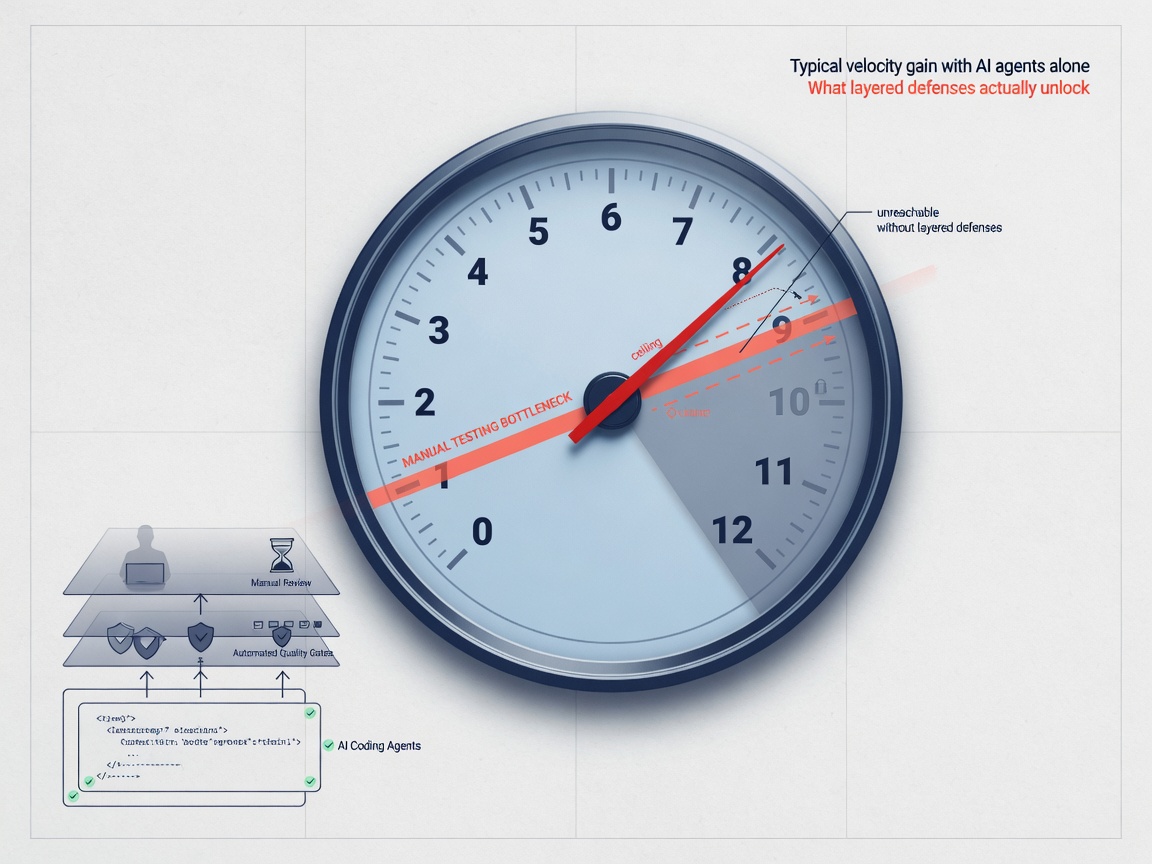
The claim: AI coding agents can double your output without more bugs. The catch: only after building six defensive layers around them — and manual testing still caps you at 2-3x, not 10x.
Automation needs a narrow first win
The best first AI workflow is usually a repeated task with a clear input, clear output, and a human approval step.
The claim is that AI coding agents can double output without increasing bugs — but that only holds if you build a whole defensive system around them first, and the source article is refreshingly specific about what that system costs. The author reports 2-3x output gains, not the 10x you hear elsewhere, precisely because manual testing remains the bottleneck no amount of agent speed fixes. That honesty about the ceiling is more useful than most productivity claims.
Layered Defenses for AI Coding Agents and Code Quality
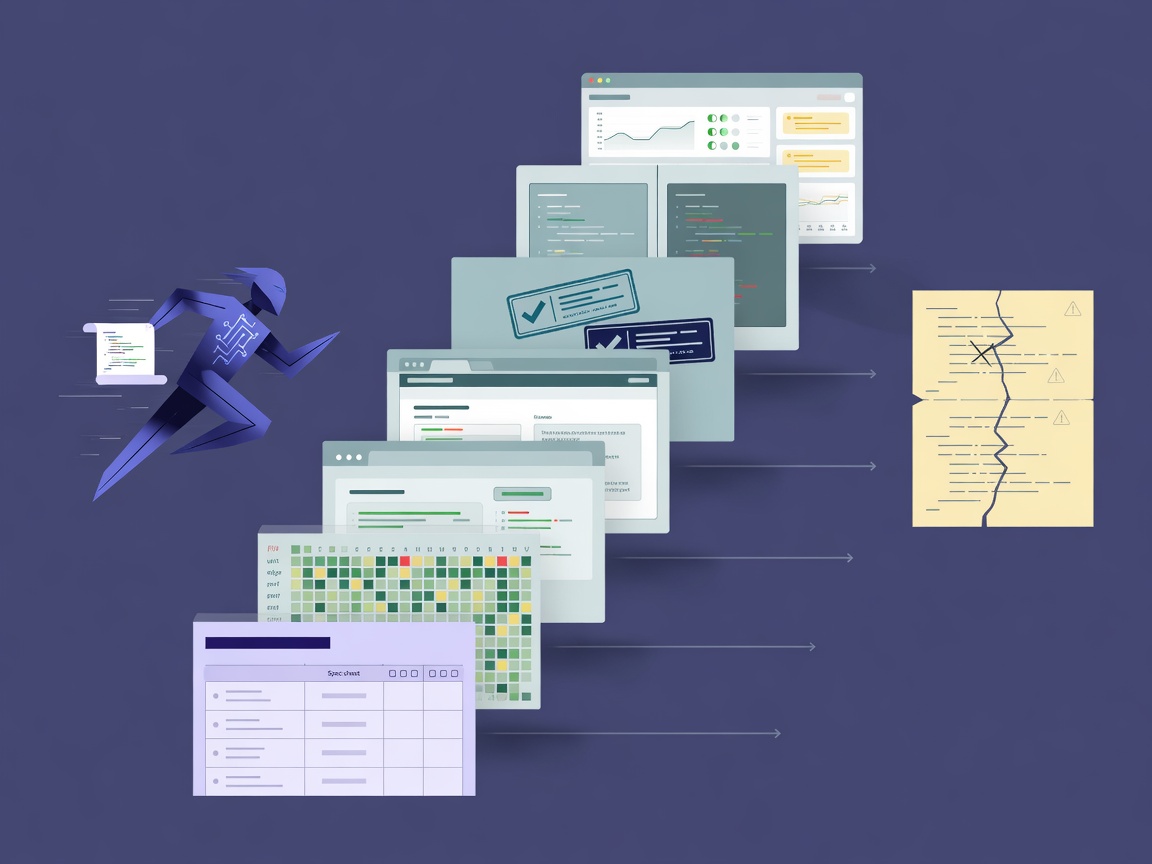
The core argument is that speed and reliability aren't traded off directly — they're decoupled by layers. Spec-driven development comes first: AI reviews requirements and tech designs for gaps and edge cases before any code exists, which sharply reduced bugs in freshly written code. The author notes that up to a third of total effort used to go to post-development polishing; catching problems at the spec stage is where that time gets recovered.
Then test-driven development, which coding agents make nearly trivial: test scenarios, then test cases, then implementation, tested against those tests. End-to-end tests work best when agents have debugging tools — browser access or MCP access to logs — rather than being asked to reason blind. Finally, targeted fix passes (security, duplication, naming, formatting) outperform complex instructions stuffed into AGENTS.md or CLAUDE.md files, at a cost of 5-15 minutes added per implementation.
Worth a look
Phugialy Picks

LG 34WN80C-B UltraWide Monitor 34” 21:9 Curved WQHD (3440 x 1440) IPS Display, USB Type-C (60W PD), sRGB 99% Color Gamut, 3-Side Virtuall...

Alienware 34 Curved Gaming Monitor – AW3425DWM - 34-inch WQHD 180Hz 1ms Display, 1500R, AMD FreeSync Premium, VESA AdaptiveSync.

LG 34WR55QK-B 34-inch UltraWide WQHD (3440 x 1440) Curved Computer Monitor, 100Hz, 5ms, HDR10, Reader Mode, HDMI, DisplayPort, USB Type-C...
Some Phugialy Picks use affiliate links. If you buy through one, Phugialy may earn a commission. It doesn't change what we recommend. Full disclosure →
What AI Review Finds — and What It Invents
The article doesn't oversell the review layer. AI doesn't get tired and is less likely to give up hunting for issues, but it can be overzealous and invent problems that don't exist. Running both Claude and Cursor PR reviews surfaces different problems — which suggests neither model alone covers the space — but a pruning pass is required because both are overly nitpicky. Human review may become optional for minor tweaks but stays necessary for complex changes.
The last layer moves beyond development entirely: production monitoring with error tracking (Sentry, GCP Error Reporting) and ideally agent auto-diagnosis producing proposed fix PRs. This is where I'd read most carefully: pushing diagnosis into production means your failure surface shifts from review time to incident response time. The bugs don't disappear; they get caught later by different machinery.
The Bottleneck Nobody's Automating Away
What's missing from this account is any evidence about who pays for all these layers. Six defense mechanisms — specs reviewed by AI, TDD flows, E2E suites with tool access, targeted fix passes, dual-model PR review with pruning, production monitoring with auto-diagnosis — each add setup cost and maintenance load that the output numbers don't itemize. The 2-3x figure may well be net-positive; my point is that it's presented as a per-team result without breaking down which layer earned what share of it.
Still, the real story here is that this treats AI coding as an engineering discipline problem rather than a model-quality problem. The claim "with the right set of defensive layers, the increased output doesn't have to come at the cost of reliability" holds up as stated — it's just a much smaller claim than "AI doubles your output." The layers are the product; the model is just fast.
Got a question about how this applies to you? →
Keep reading
Follow the thread
Skillsync: Making AI Coding Agent Sessions Portable
Skillsync converts AI coding agent sessions between Claude Code, Codex, and Cursor - keeping messages, reasoning, and tool calls intact. The lock-in it targets is invisible right up until it's expensive, because the session turns out to be the unit of collaboration, and right now it's being thrown away.
Read this noteSame lane, different angle
AI Coding Agent Memory That Survives Switching Tools
Switching between Claude Code, Cursor, and Antigravity on the same project usually means re-explaining your architecture every time. engrim compresses 153,000 tokens of work history into a memory pack under 1,000 tokens - and keeps it entirely on your machine.
Why Most Enterprise AI Agents Never Reach Production
Two out of three enterprise AI agents never reach production — and the reason isn't model quality. It's that the agent doesn't know what your data means.