Forever Juniors": How Junior Engineers Beat AI Agents
The real risk of AI agents isn't that software engineers disappear - it's that seniors do, as a generation becomes 'forever Juniors.' A Criteo engineer lays out exactly which skills keep you out of that trap: questioning agents until they catch their own mistakes, and occasionally coding without AI at all.
Automation needs a narrow first win
The best first AI workflow is usually a repeated task with a clear input, clear output, and a human approval step.
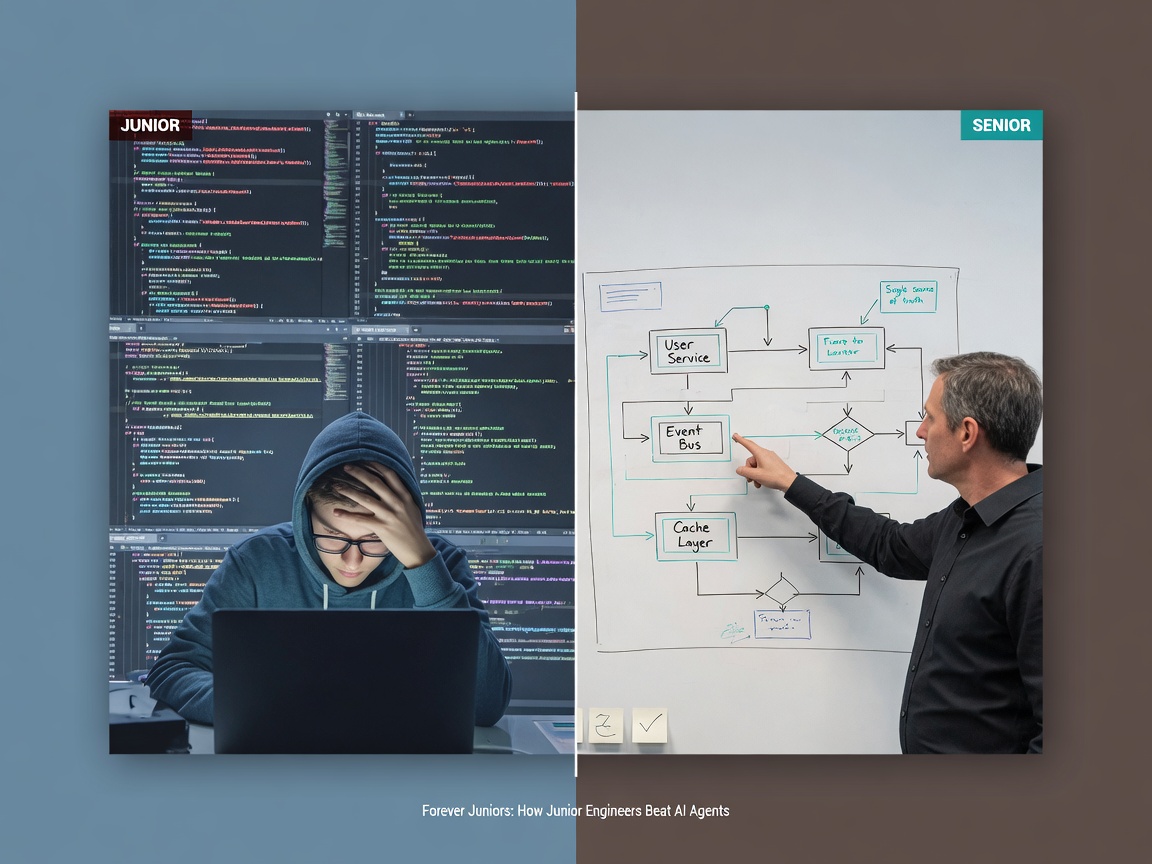
The real competition for a junior engineer today isn't another junior with better AI tools - it's the question of whether they'll ever become a senior at all. A Criteo engineer argues the actual risk of AI agents isn't that software engineers disappear, but that seniors do, as an entire cohort becomes 'forever Juniors' leaning on agents without ever developing judgment of their own.
What Seniorhood Actually Requires When Agents Write the Code
The source article defines seniorhood concretely: defending shipped code, arguing design choices, detecting when an agent goes wrong, knowing when to delegate, and teaching others. None of those skills emerge automatically from using an agent - if anything, heavy agent use can route around all of them. At Criteo, engineers are asked to lean on AI agents for productivity while keeping 'a firm hand on the wheel,' which is the honest framing: the tool is mandatory, the judgment is optional and therefore at risk.
The practical takeaway is that the skills worth deliberately building are exactly the ones agents don't develop for you. That's not nostalgia for hand-written code; it's a list of what still has to be true about you when the agent finishes.
Worth a look
Phugialy Picks

AI Engineering: Building Applications with Foundation Models
A practical guide to building real-world applications with foundation models and LLMs.

Agentic AI Engineering: Systems That Reason and Act Autonomously – Designing, Building, and Prompting LLM-Based Agents for Real-World Deployment

LLM Systems Engineering: Training and Building Large Language Models – Engineering AI Models Through Fine-Tuning, Continued Pretraining, and From-Scratch Development (AI Engineering)
Some Phugialy Picks use affiliate links. If you buy through one, Phugialy may earn a commission. It doesn't change what we recommend. Full disclosure →
Questioning Agents Beats Trusting Them - Here's the Mechanism
The most actionable technique in the piece is Socratic questioning: demanding that an agent justify its choices instead of accepting output. The author's observation is precise - making an agent explain a flawed solution out loud is often how it catches its own mistake, and how you catch it too. This beats passive review because it converts every agent interaction into a reasoning exercise rather than a diff-approval exercise.
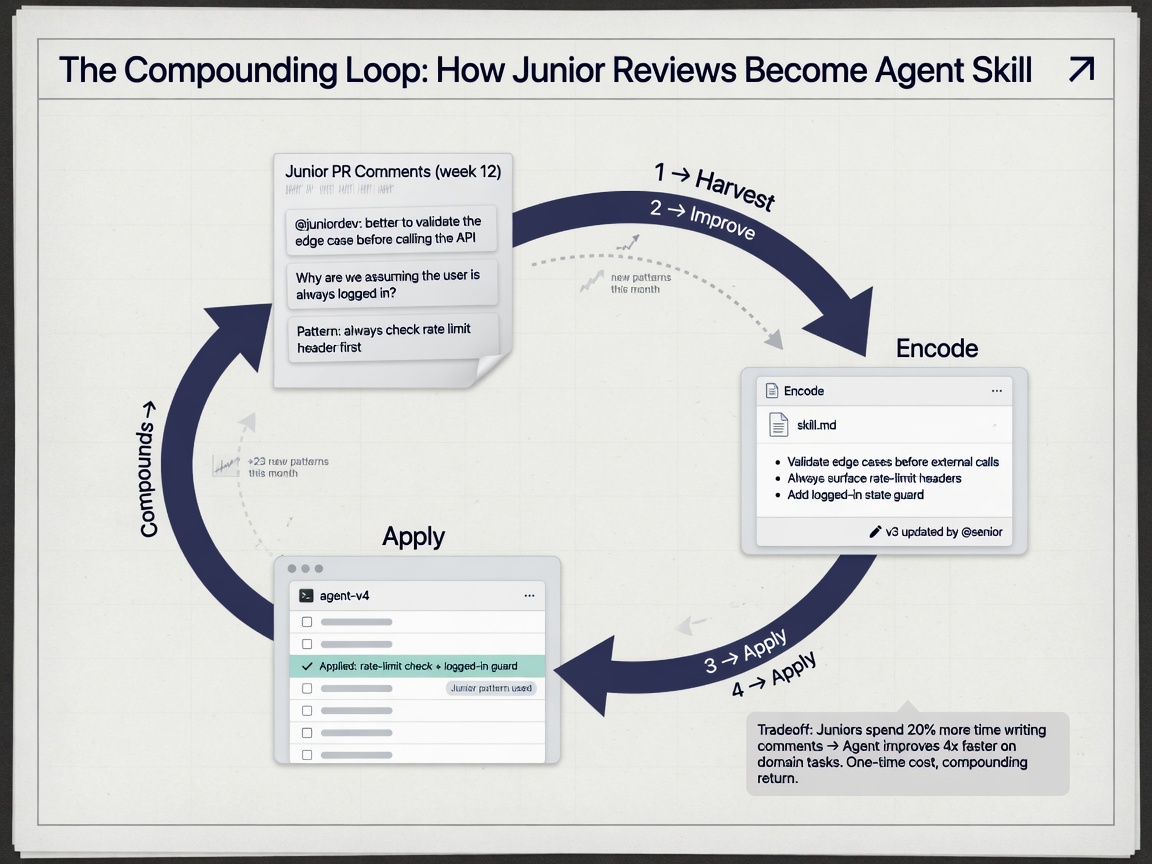
Review skill matters just as much. The author recommends reviewing agent output using patterns harvested from senior code comments - recurring critiques like naming, boundary, or error-handling issues - and then encoding those patterns into a skill.md file fed back to the agent. That's a compounding loop: your review taste becomes the agent's constraints.
Coding Without AI Isn't Nostalgia, It's Calibration
Occasionally coding without AI - what the author calls 'handwriting' - builds autonomy. The point isn't purity; it's calibration. If you never code unassisted, you lose the baseline needed to notice when an agent's output is subtly wrong.
The author's own skill.md makes this concrete: it forbids the agent from writing files or committing without explicit plan confirmation. That constraint does two jobs at once - it protects the codebase and forces the human to stay in the decision loop where senior judgment actually forms.
Where This Beats Doing Nothing (And Where It Doesn't)
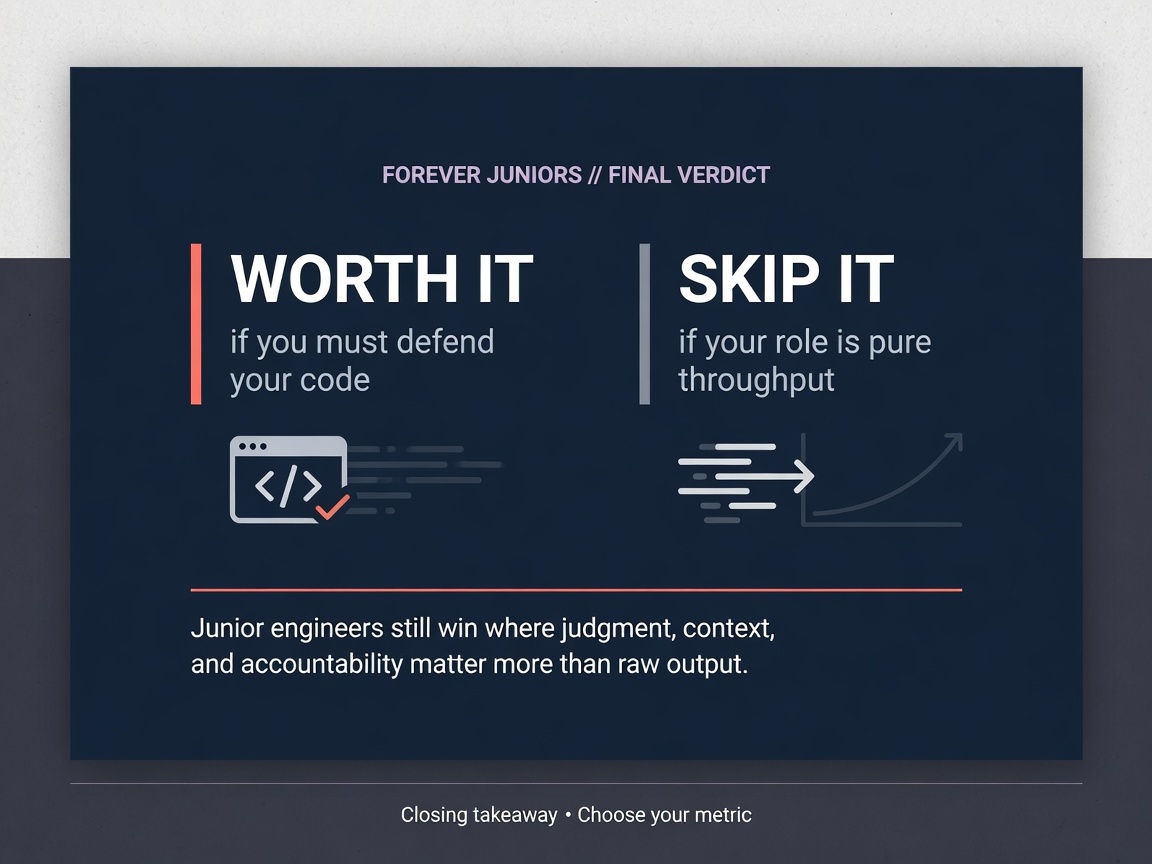
Compared to the default path - use agents heavily, hope seniority arrives with tenure - this approach wins specifically when your job involves shipping code you'll have to defend later. It loses on raw short-term throughput; hand-writing code and demanding justifications are slower than accepting output.
Worth adopting if you're early-career and your team measures you on what you ship and can explain; skip it if your role genuinely never requires defending design choices - though in that case, my read is that the role itself is the bigger problem than any workflow choice.
Got a question about how this applies to you? →
Keep reading
Follow the thread
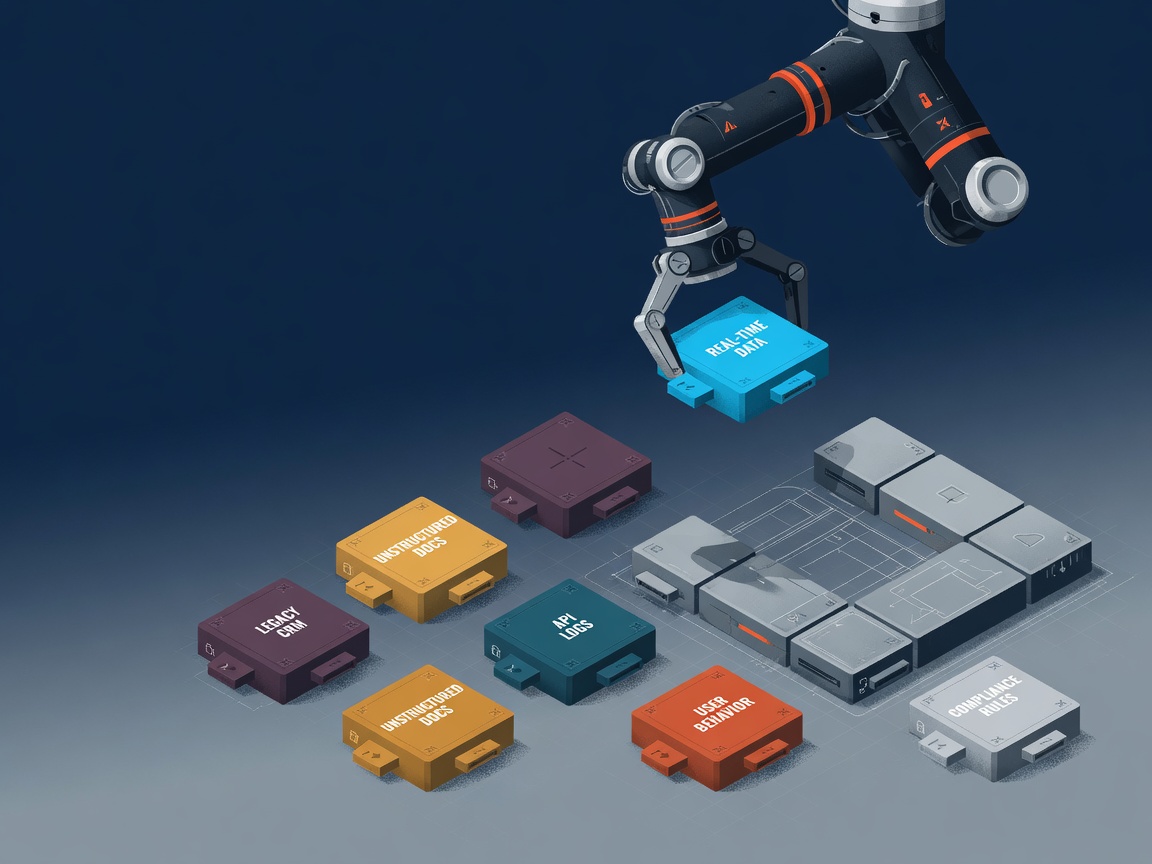
Why Most Enterprise AI Agents Never Reach Production
Two out of three enterprise AI agents never reach production — and the reason isn't model quality. It's that the agent doesn't know what your data means.
Read this noteSame lane, different angle
Automated PoC Generation Fixes AI Bug Reports
AnyPoC turns LLM bug reports into executable proof-of-concept tests — rejecting 9.7x more false positives than naive validation. The architecture behind why one agent grading its own homework fails.
ERC-8004 in Practice: Most AI Agent Trust Data Fails Audit
If your business is planning to transact with autonomous AI agents and you were counting on ERC-8004 to tell you who to trust, the first empirical study of the protocol has bad news: only 3% of identity registrations on