AI Agent Monitoring Pricing Tiers: Who This Land Grab Helps
Free full-product access at 1,000 events a month isn't generosity — it's a land grab for the telemetry layer of AI agents before anyone has standardized on anything.
Automation needs a narrow first win
The best first AI workflow is usually a repeated task with a clear input, clear output, and a human approval step.
A free tier of 1,000 events per month, a $49 Starter plan, and a $499 Pro tier — that's the pricing structure an AI agent monitoring vendor has just published, and the numbers tell you exactly who they think this market belongs to: everyone, right now, before anyone has standardized on anything.
What The Pricing Tiers Actually Cover
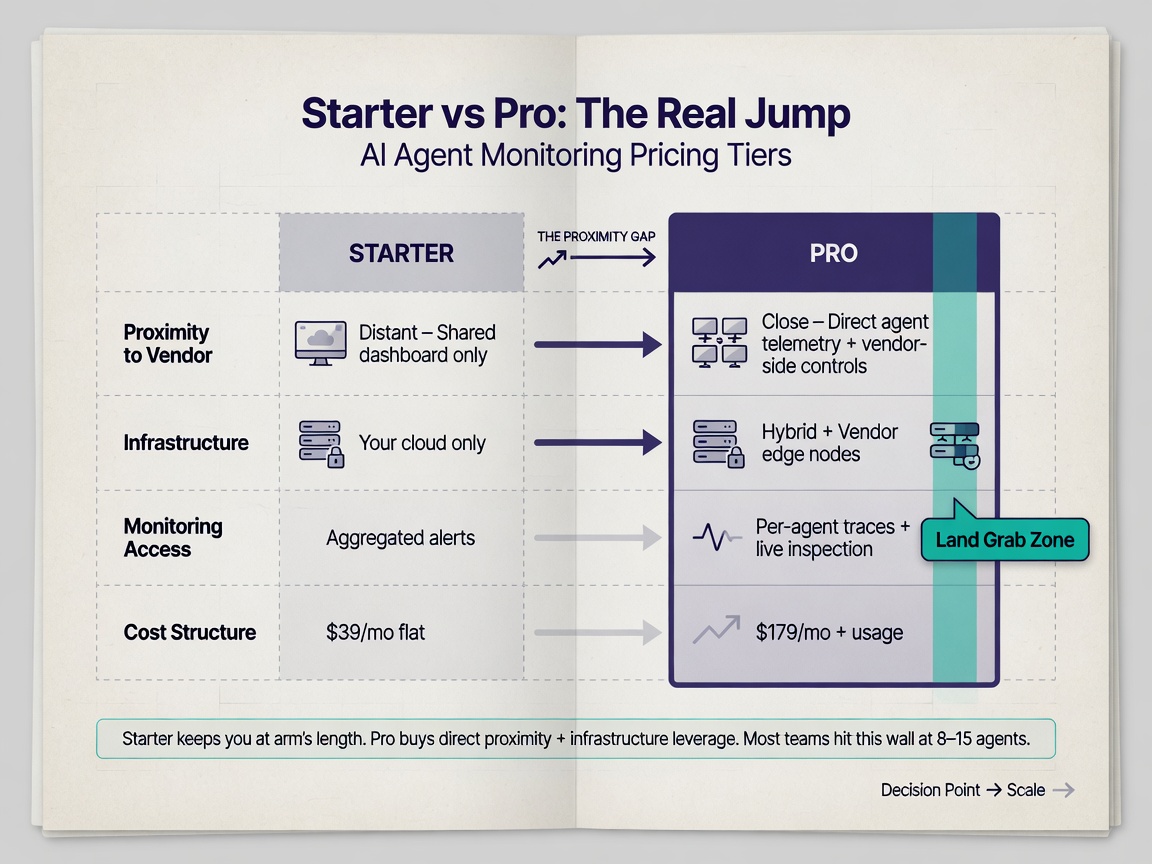
The structure is straightforward. The free tier gives you full product access at 1,000 events per month, where an event is one captured operation — an agent turn, a model generation, or a tool call. Starter at $49/month adds onboarding help and self-improvement suggestions. Pro at $499/month adds Founders Slack access. Enterprise is custom-priced and is where the serious infrastructure shows up: self-hosted VPC deployments, audit logs, custom SLAs and SLOs, and fine-tuned SLMs.
Notably, every plan — including free — includes the core monitoring features: intent and sentiment discovery and compliance violation alerts. Usage is measured over a rolling 30-day window, and analysis pauses when you hit the limit rather than cutting you off mid-operation.
Worth a look
Phugialy Picks

AI Engineering: Building Applications with Foundation Models
A practical guide to building real-world applications with foundation models and LLMs.

GMKtec K15 AI Mini PC Oculink Intel Ultra 5 125U 32GB DDR5 512GB SSD | Desktop Computer AI Boost, 3X M.2 2280 Storage Expansion, Dual NIC...

Agentic AI Engineering: Systems That Reason and Act Autonomously – Designing, Building, and Prompting LLM-Based Agents for Real-World Deployment
Some Phugialy Picks use affiliate links. If you buy through one, Phugialy may earn a commission. It doesn't change what we recommend. Full disclosure →
Why Free Full-Product Access Is A Deliberate Bet
The real story isn't the feature list — it's what this pricing signals about where the market is. Agent monitoring is pre-consolidation. Nobody has won it yet, and the cheapest way to win it is to make your tool the default instrumentation every developer's agents run through before they're asked to pay. Giving away full product access at 1,000 events/month isn't generosity; it's a land grab for the telemetry layer.
The tier boundaries are also revealing. The gap between $49 and $499 is not a feature gap — both paid tiers get essentially the same product plus small additions. What separates Pro from Starter is proximity to the vendor: Founders Slack access. That's a startup-stage company selling access while it still can, which tells you something about where they are in their own lifecycle.
What Has To Be True For This To Matter In A Year
This only matters if two conditions hold. First, that enterprises will accept SOC 2 Type I as sufficient — the vendor notes Type II is in progress, which is honest but means the strictest buyers will wait. Second, that 'events' as a unit of measurement holds up as agents get more complex; if a single task generates hundreds of tool calls and model generations, 1,000 free events evaporates fast and usage-based pricing becomes a cost question enterprises will scrutinize.
The compliance angle deserves attention too: compliance violation alerts on every tier suggests the vendor believes regulation-driven monitoring demand — not developer curiosity — is what converts free users into paid ones. That's a bet worth watching.
For teams deploying agents in production right now, the calculation is simple: there's no cost to instrumenting with this today and pausing analysis at your limit costs little while you evaluate. The competitive question this raises for incumbent observability platforms is whether they'll match free full-product access or concede the agent-native segment entirely.

Got a question about how this applies to you? →
Keep reading
Follow the thread
Forever Juniors": How Junior Engineers Beat AI Agents
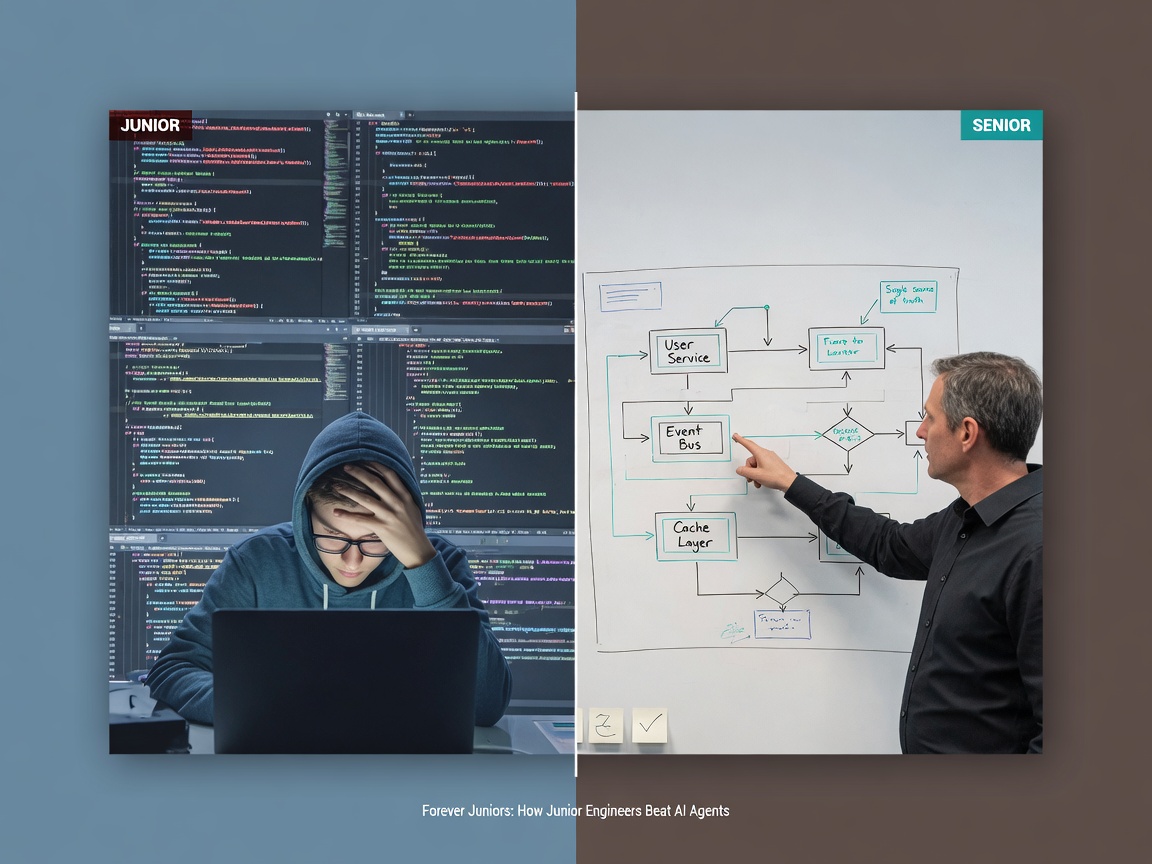
The real risk of AI agents isn't that software engineers disappear - it's that seniors do, as a generation becomes 'forever Juniors.' A Criteo engineer lays out exactly which skills keep you out of that trap: questioning agents until they catch their own mistakes, and occasionally coding without AI at all.
Read this noteSame lane, different angle
Why Most Enterprise AI Agents Never Reach Production
Two out of three enterprise AI agents never reach production — and the reason isn't model quality. It's that the agent doesn't know what your data means.
Automated PoC Generation Fixes AI Bug Reports
AnyPoC turns LLM bug reports into executable proof-of-concept tests — rejecting 9.7x more false positives than naive validation. The architecture behind why one agent grading its own homework fails.