PA-SciML: Auditing Scientific Machine Learning for Physics
Scientific machine learning has a trust problem: a neural surrogate can fit training data beautifully and still violate the physics it's supposed to describe. A new workflow called Physics-Audited Agentic SciML (PA-SciML
Automation needs a narrow first win
The best first AI workflow is usually a repeated task with a clear input, clear output, and a human approval step.
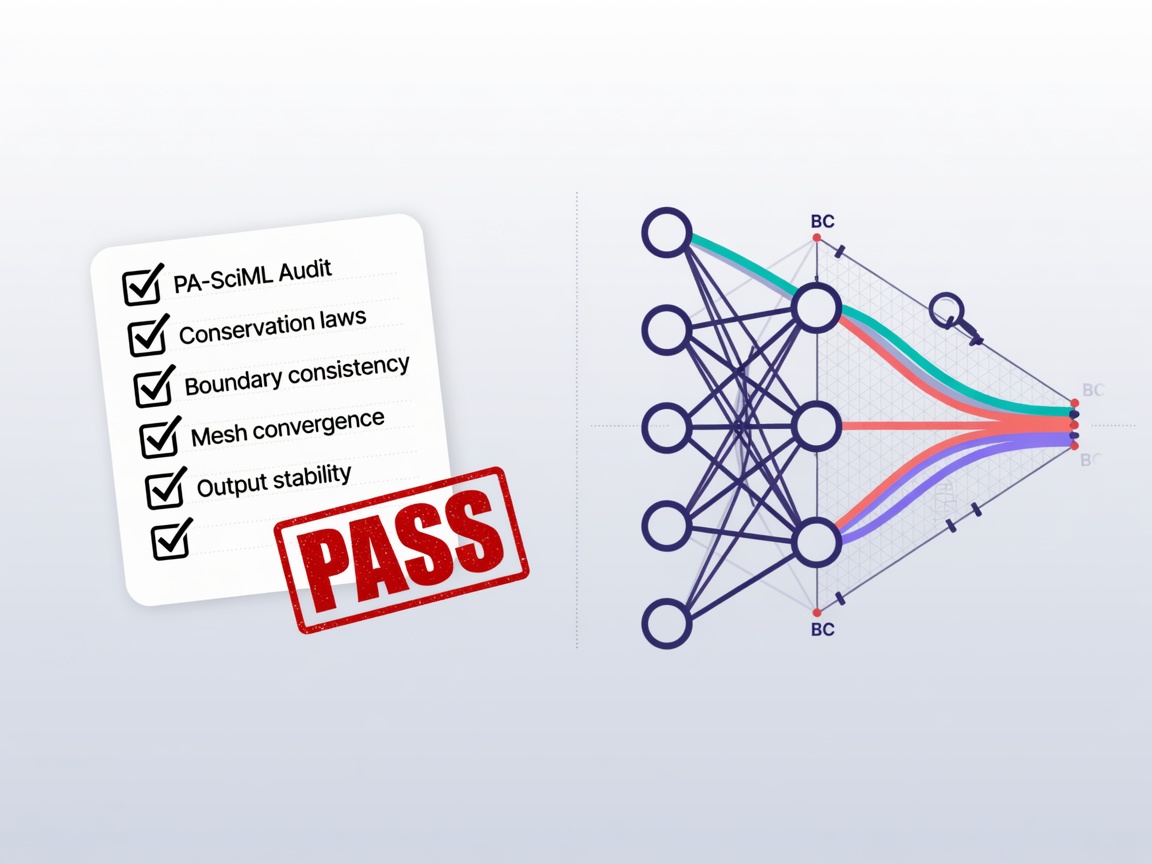
Scientific machine learning has a trust problem: a neural surrogate can fit training data beautifully and still violate the physics it's supposed to describe. A new workflow called Physics-Audited Agentic SciML (PA-SciML) tackles this by making physics compliance a pass/fail requirement, not an afterthought. The idea is simple to state and surprisingly rare in practice: before any model gets picked, its outputs are checked against explicit, machine-checkable physics requirements.
What "Physics-Audited" Actually Means
Most explanations of verification in scientific machine learning stop at "check the error." PA-SciML does something more specific. The workflow fixes a scoring evaluator before the search begins, and from that derives reviewable, machine-checkable physics requirements. Each trained candidate model is then checked on its actual outputs for things like boundary conditions, superposition, stiffness scaling, and causality — not just whether its predictions land close to the data.
The workflow also adds advisory numerical probes before training and deliberately tests one modeling change at a time, so every score gain can be traced back to an isolated, recorded edit. That's an audit trail, not just a leaderboard.
Worth a look
Phugialy Picks

AI Engineering: Building Applications with Foundation Models
A practical guide to building real-world applications with foundation models and LLMs.

GMKtec K15 AI Mini PC Oculink Intel Ultra 5 125U 32GB DDR5 512GB SSD | Desktop Computer AI Boost, 3X M.2 2280 Storage Expansion, Dual NIC...

AI: Understand the Revolution: From Basics and Buzzwords to Tech Giants, Governments, and Your Future
Some Phugialy Picks use affiliate links. If you buy through one, Phugialy may earn a commission. It doesn't change what we recommend. Full disclosure →
Where the Baseline Fails: Causality
The clearest evidence comes from two sets of computational solid mechanics examples. In static elasticity runs, both the PA-SciML-selected surrogate and an error-only baseline pass common linear-elastic checks — but the selected surrogate achieves lower validation error. So even where the baseline survives, physics auditing doesn't cost you accuracy; here it came with better error too.
The transient elastodynamics runs are where the distinction really matters. There, the error-only baseline fails a stricter causality check by responding to future parts of the loading history — meaning the model was effectively peeking ahead in time to produce its answers. The PA-SciML-selected surrogate passes the stated checks. An error-only evaluation would never have caught that failure on its own; low error and violated causality can coexist perfectly comfortably.
Why Auditing Before Search Changes the Game
Here's what I think most coverage of agentic scientific ML glosses over: an agent that searches over models is only as trustworthy as its selection criterion. If that criterion is validation error alone, the agent will happily select a physically nonsensical model that happens to fit well — and in transient problems, one that violates causality while doing it. PA-SciML's real contribution isn't a new model architecture; it's fixing the evaluator first and making every requirement reviewable before training starts.
It's easy to conflate this with PINNs (physics-informed neural networks), where physics is baked into the loss during training. That's a different mechanism — PA-SciML audits outputs after training against explicit requirements derived up front, which means failures are visible as failures rather than smoothed into gradients.
What this actually points to is a shift in how we should evaluate agentic workflows in science generally: not by whether the agent produces impressive numbers, but by whether its acceptance criteria are written down early enough that humans can review them — and strict enough that they catch things like temporal peeking that raw error scores structurally cannot see.
Got a question about how this applies to you? →
Keep reading
Follow the thread
AgentsDock: One Workspace for Agentic AI Research
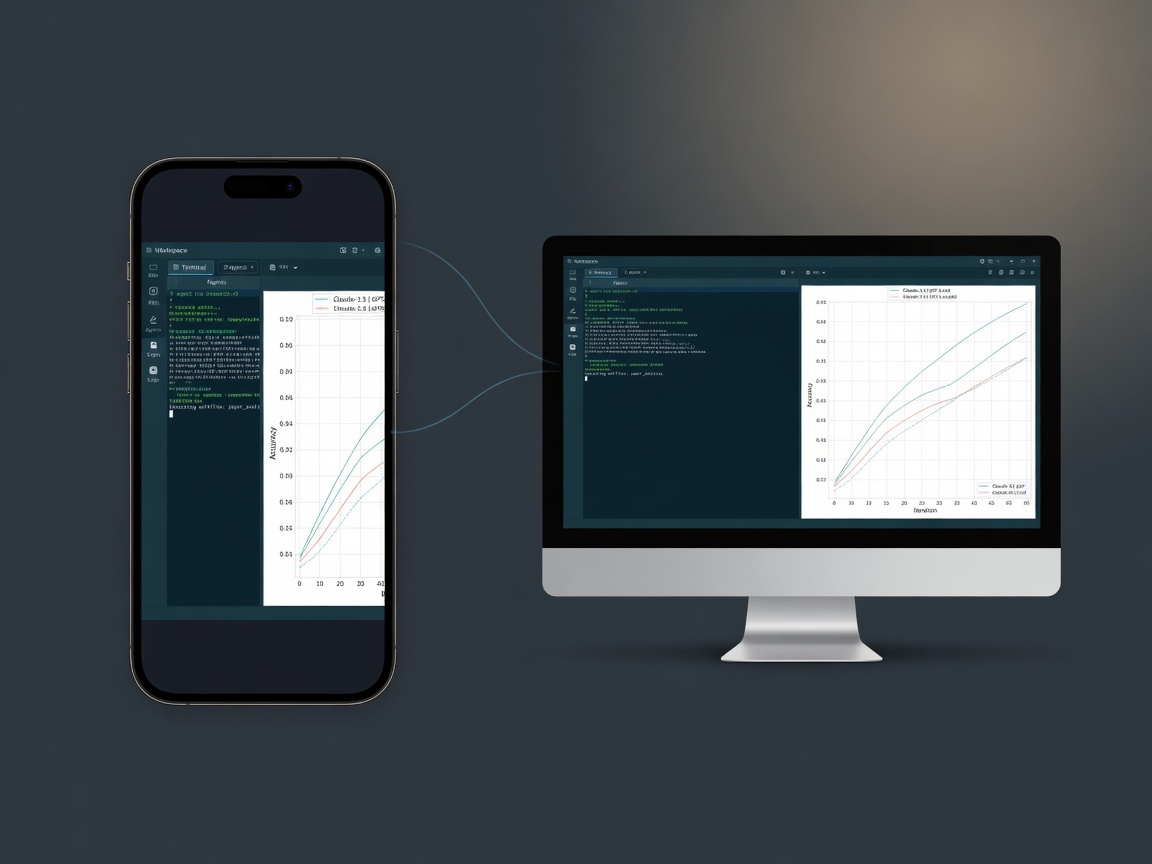
AgentsDock 1.0 puts Claude Code, Codex, and Cursor in one workspace reachable from your phone - with training plots showing up inline in chat instead of behind an SSH login.
Read this noteSame lane, different angle
Single-Rollout Asynchronous Optimization: Why One Sample Beats Groups
Most RL training for language models generates a whole group of responses per prompt and compares them. A new method called SAO uses just one — and trains stably for over a thousand steps anyway.
The Orchestration Layer: Agentic AI's Biggest Efficiency Lever
What if the biggest lever for making AI agents cheaper and faster isn't the model you pick at all? A new study says it's the layer wrapped around the model - the orchestration layer, or "harness" - and the numbers behind