LLM Evaluation Framework Scores Five Factors At Once
A new multifactor scoring paradigm evaluates LLMs across accuracy, factual consistency, readability, coherence, and conciseness at once - and its TruthfulQA results expose exactly where mainstream models quietly fail.
Automation needs a narrow first win
The best first AI workflow is usually a repeated task with a clear input, clear output, and a human approval step.
Most teams evaluating a language model are still doing it with a spreadsheet and a gut feeling, which is why a new multifactor scoring paradigm for LLM evaluation is worth more attention than its dry framing suggests. The framework, described in a recent arXiv paper, integrates five dimensions - accuracy, conciseness, factual consistency, readability, and coherence - into a single evaluation approach, and pairs it with a graphical user interface for visualizing the outcomes.
What The Numbers Actually Show
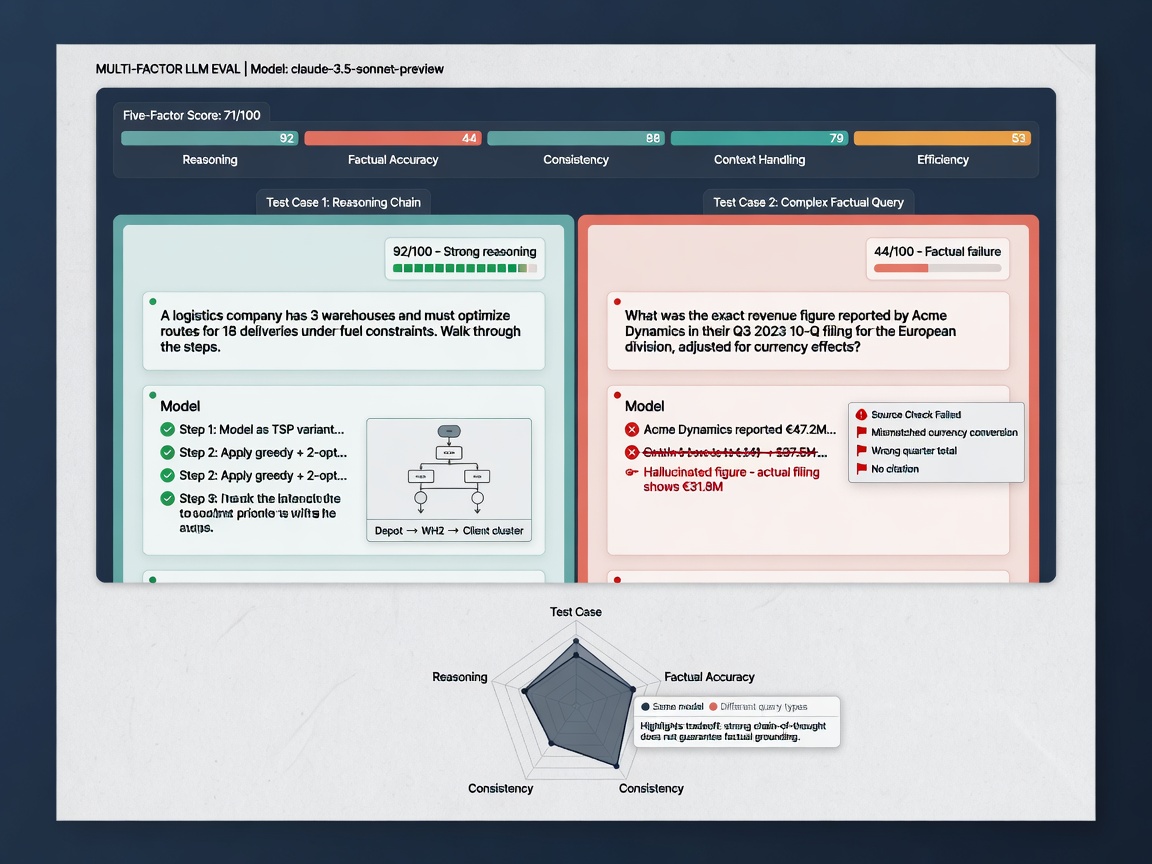
The researchers ran their evaluations on the TruthfulQA dataset, and the results split cleanly into two buckets. Mainstream LLMs show genuine strengths in reasoning tasks. But the framework also identifies pervasive limitations in navigating complex facts and ambiguities - exactly the failure mode that matters most when you're putting a model in front of customers.
That split is the useful part. A model that reasons well but stumbles on complex facts will demo beautifully and fail quietly in production. Single-metric evaluations - accuracy alone, or a vibes-based human review - tend to mask that gap. A multifactor scoring paradigm makes it visible, because it forces you to look at factual consistency and readability alongside whether the answer was technically correct.
Worth a look
Phugialy Picks

AI Engineering: Building Applications with Foundation Models
A practical guide to building real-world applications with foundation models and LLMs.

GMKtec K15 AI Mini PC Oculink Intel Ultra 5 125U 32GB DDR5 512GB SSD | Desktop Computer AI Boost, 3X M.2 2280 Storage Expansion, Dual NIC...

AI: Understand the Revolution: From Basics and Buzzwords to Tech Giants, Governments, and Your Future
Some Phugialy Picks use affiliate links. If you buy through one, Phugialy may earn a commission. It doesn't change what we recommend. Full disclosure →
The Adoption Cost Is Low; The Discipline Is Not
Operationally, this is one of the cheaper categories of AI tooling to adopt. The framework includes a GUI for visualizing evaluation outcomes, which means your QA lead or product manager can actually read the results without an ML engineer translating. It's also described as transparent and adaptable - you can adjust the weighting across those five dimensions to match what your business actually cares about. A support chatbot should weight factual consistency heavily; marketing copy generation should weight readability and conciseness.
The real cost isn't the license or the setup. It's deciding what your weights are and defending them internally - that's a product decision disguised as a technical one, and most teams haven't had that conversation before. If nobody in your organization can say whether coherence matters more than conciseness for your use case, no evaluation framework will fix that.
Where This Fits And What It Doesn't Solve Yet
Two caveats from the source material itself: the evaluations were conducted on TruthfulQA, which is one benchmark among many, and the framework is presently focused on English tasks with horizons toward multilingual domains. If your customers write in more than one language, this isn't ready for you yet - though multilingual support appears to be where this line of work is headed.
The real story here is what this points to: evaluation is becoming its own product category, separate from the models being evaluated. That matters for buyers more than labs. When models are commoditized at the top end, your edge comes from picking and monitoring them well against your own criteria - not from having access to a model nobody else has. A transparent, adaptable scoring framework is infrastructure for that discipline. It won't tell you which model to buy on its own; it will tell you whether last quarter's choice still holds up against facts and ambiguities your users actually throw at it.
For teams already running LLM features in production, this is worth adopting once you have concrete failure examples from real users - not before.
Got a question about how this applies to you? →
Keep reading
Follow the thread
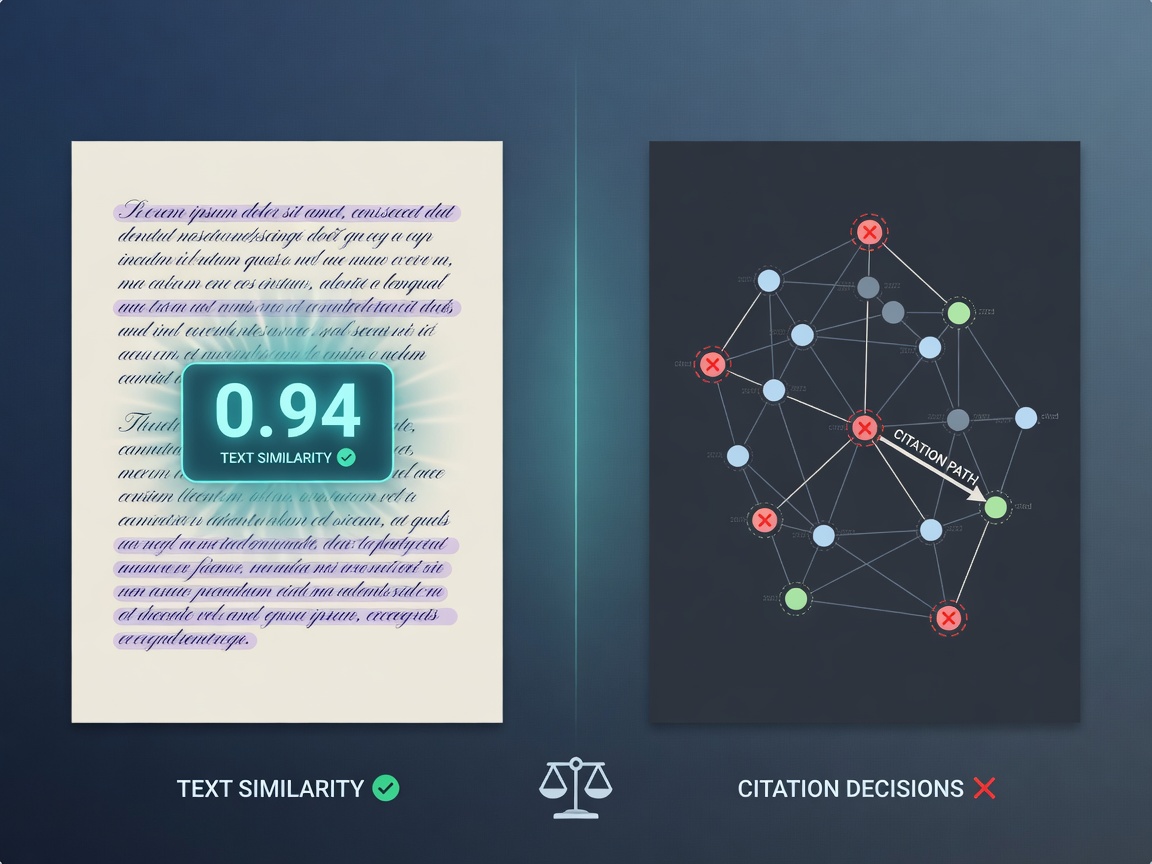
RWGBench: Why Citation Decisions Beat Text Similarity
A model can write a fluent related work section with near-perfect similarity scores while citing all the wrong papers. RWGBench evaluates citation decisions instead of text overlap — and finds failures standard metrics never see.
Read this noteSame lane, different angle
VERA-MH Benchmark: Validating AI Chatbot Safety Testing
An automated benchmark for AI chatbot safety in mental health sounds like exactly what the field needs — but a benchmark is only as good as the domain it covers, and this one covers one narrow slice of it. The VERA-MH be
AI Tutors Work Only If Students Use Them: Trial
A two-year trial across 18 middle schools found Khan Academy's AI tutor raised math scores modestly - but here's the catch: the gains looked just like those from practice without any AI at all. The real story isn't whether AI tutoring works; it's that 96% of students tried it and almost none used it when they actually needed help.