AgentsDock: One Workspace for Agentic AI Research
AgentsDock 1.0 puts Claude Code, Codex, and Cursor in one workspace reachable from your phone - with training plots showing up inline in chat instead of behind an SSH login.
Automation needs a narrow first win
The best first AI workflow is usually a repeated task with a clear input, clear output, and a human approval step.
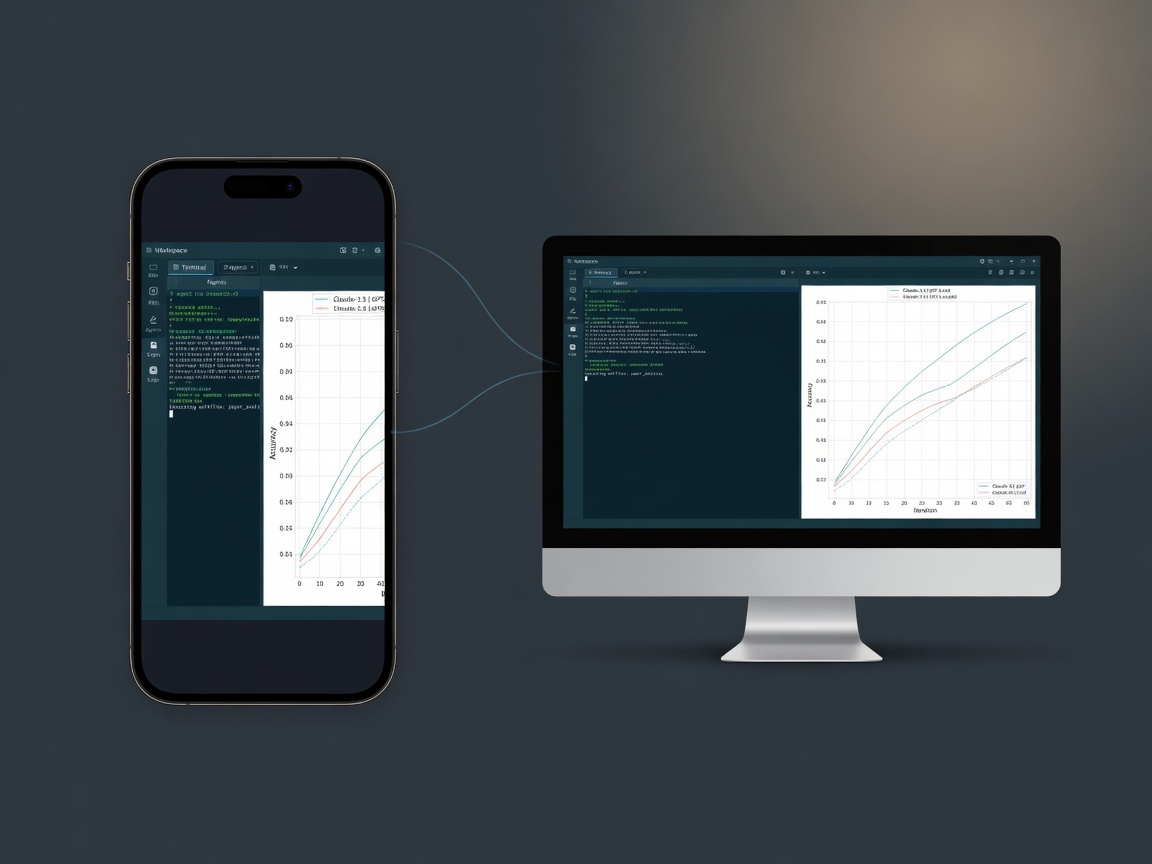
AgentsDock 1.0.0 is out: a workspace IDE for agentic AI research that runs Claude Code, Codex, and Cursor side by side, on desktop and mobile, connected to as many servers as you want to throw at it. The pitch is simple - your lab workstation, a Mac mini, and a rented GPU box all reachable from one interface, with the agents' output (plots, images, rendered rollouts) showing up inline in chat.
What It Actually Does
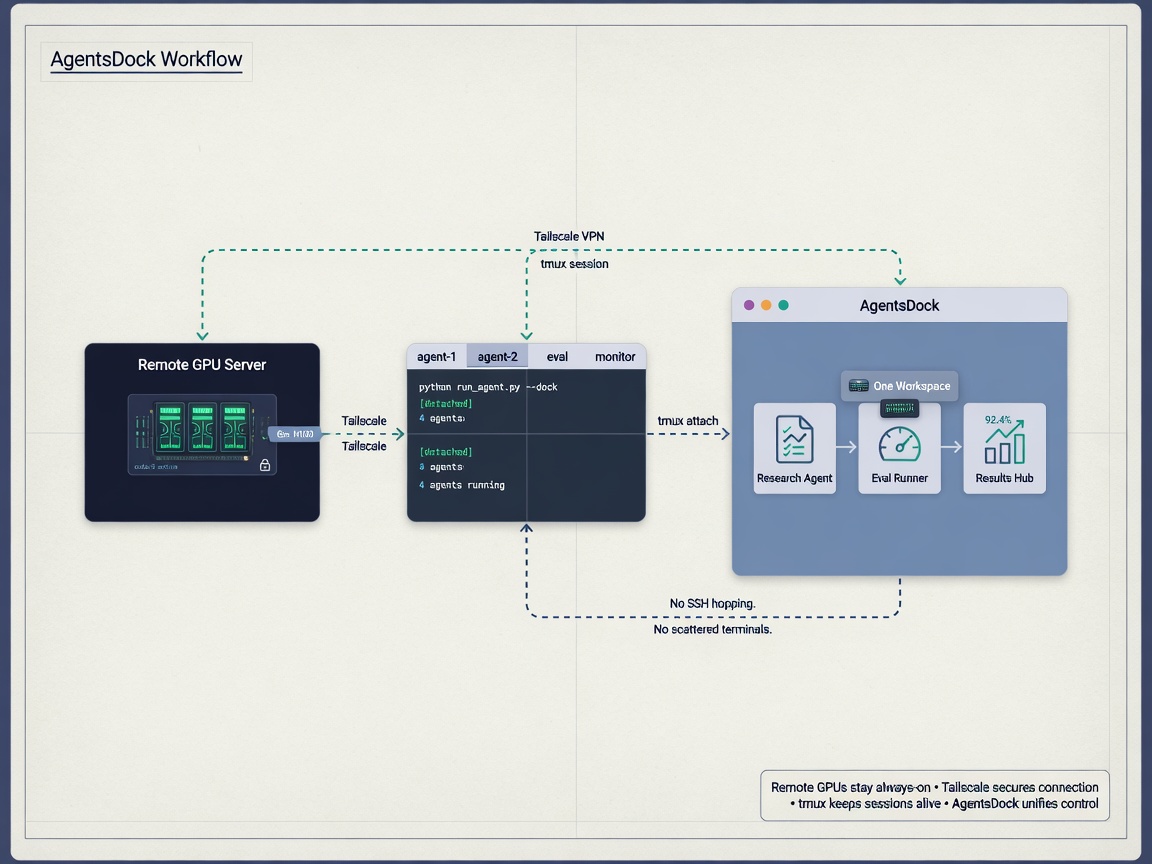
The feature list is concrete rather than aspirational. You get code viewing and editing with syntax highlighting on remote machines, full terminal access through persistent tmux sessions from any device, and server switching between machines without re-establishing anything. Optional Tailscale support handles the connectivity piece. Agents can return plots, images, and rendered rollouts directly in the chat stream instead of forcing you to open files on the machine that produced them.
That last part is the one worth pausing on. If you've run agentic workflows against remote training jobs, you know the friction: the agent finishes its turn on a GPU box three time zones away from your brain, and you SSH in just to look at a loss curve. AgentsDock's own user quote says it plainly - "I used to need my laptop just to see how a run turned out. On the subway, that's not happening." That's a real workflow problem being solved, not a demo problem.
Worth a look
Phugialy Picks

AI Engineering: Building Applications with Foundation Models
A practical guide to building real-world applications with foundation models and LLMs.

GMKtec K15 AI Mini PC Oculink Intel Ultra 5 125U 32GB DDR5 512GB SSD | Desktop Computer AI Boost, 3X M.2 2280 Storage Expansion, Dual NIC...

AI: Understand the Revolution: From Basics and Buzzwords to Tech Giants, Governments, and Your Future
Some Phugialy Picks use affiliate links. If you buy through one, Phugialy may earn a commission. It doesn't change what we recommend. Full disclosure →
The Part Worth Being Skeptical Of
What's missing from the announcement is any evidence about how this holds up under sustained use: session stability across flaky mobile connections, how well three different agent CLIs behave when multiplexed through one workspace, and whether inline rendering stays reliable when rollouts get large. Version 1.0.0 means exactly what 1.0.0 usually means - it works for someone, today; whether it works for you at production scale is unproven.
There's also a question of what "side by side" really costs you. Claude Code, Codex, and Cursor each have their own state management quirks; wrapping them in one interface adds an abstraction layer that can break in ways none of them would break alone. In practice this means debugging occasionally becomes about AgentsDock itself rather than your agent - a tradeoff you accept in exchange for not juggling three terminals and an SSH client.
Why This Category Matters Anyway
The real story here is that agentic AI tooling is maturing into infrastructure problems we already solved once for remote development: persistent sessions (tmux), mesh networking (Tailscale), device-independent workspaces (the whole cloud IDE wave). AgentsDock isn't inventing anything new technically - it's reassembling proven pieces around a new workload. That's usually where useful tools come from.
My honest read: this looks like Termius meeting Claude Code meeting Cursor in one window - which is exactly what one user called it - and for researchers running long training jobs they want to check from anywhere, that combination has genuine value even if the edges are rough at 1.0.
Got a question about how this applies to you? →
Keep reading
Follow the thread
Run AI Agents From Your Phone: AgentsDock Makes It Real
You can now run AI agents like Claude Code and Codex from your phone — not a stripped-down preview, but full terminal access, code editing, and inline results with plots and rendered videos. That's the pitch behind Agent
Read this noteSame lane, different angle
Skillsync: Making AI Coding Agent Sessions Portable
Skillsync converts AI coding agent sessions between Claude Code, Codex, and Cursor - keeping messages, reasoning, and tool calls intact. The lock-in it targets is invisible right up until it's expensive, because the session turns out to be the unit of collaboration, and right now it's being thrown away.
PA-SciML: Auditing Scientific Machine Learning for Physics
Scientific machine learning has a trust problem: a neural surrogate can fit training data beautifully and still violate the physics it's supposed to describe. A new workflow called Physics-Audited Agentic SciML (PA-SciML