From Prototype to Production: Mastering the Engineering Superpower in the AI Era
Let’s be real: the 'blank page' problem is officially on life support. We’ve all been there—staring at a blinking cursor, trying to figure out where the boilerplate ends and the actual magic begins. Well, thanks to AI, t
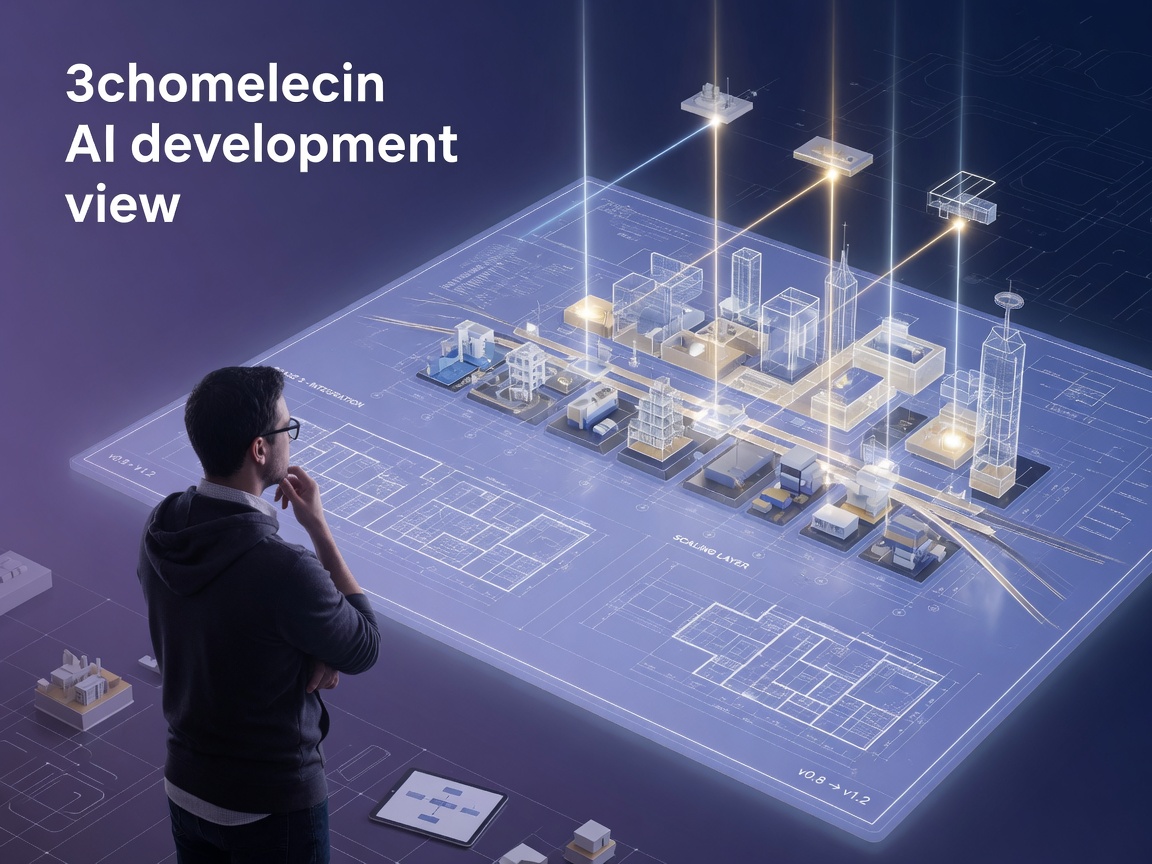
Automation needs a narrow first win
The best first AI workflow is usually a repeated task with a clear input, clear output, and a human approval step.
Let’s be real: the 'blank page' problem is officially on life support. We’ve all been there—staring at a blinking cursor, trying to figure out where the boilerplate ends and the actual magic begins. Well, thanks to AI, that friction is evaporating. We’re entering an era where you can go from 'I have a wild idea' to 'Look at this working app' in the time it takes to grab a coffee. It’s not just a minor upgrade; it’s a massive leap in creative velocity.
The Prototype Power-Up
This is the ultimate force multiplier. AI isn't just helping us write code; it’s shattering the barrier to initial exploration. Think of it as a superpower for your imagination. When you can generate a functional first version almost instantly, you’re freed from the drudgery of syntax and repetitive structure. This gives you the space to do what humans do best: iterate, test hypotheses, and visualize user flows at a breakneck pace. It’s about moving from 'how do I build this?' to 'what should I build next?' faster than ever before.
Worth a look
Phugialy Picks

AI Engineering: Building Applications with Foundation Models
A practical guide to building real-world applications with foundation models and LLMs.

GMKtec K15 AI Mini PC Oculink Intel Ultra 5 125U 32GB DDR5 512GB SSD | Desktop Computer AI Boost, 3X M.2 2280 Storage Expansion, Dual NIC...

GEEKOM IT15 AI Mini PC, Intel Ultra 9 285H(99 Tops), 32GB DDR5, 1TB SSD | The Most Powerful Workstation,Arc 140T GPU,WiFi 7,8K Business D...
Some Phugialy Picks use affiliate links. If you buy through one, Phugialy may earn a commission. It doesn't change what we recommend. Full disclosure →
Why Your Engineering Brain is the Secret Sauce
But here’s the twist—and this is where the real magic happens. While AI is a beast at pattern matching, it doesn't have a single ounce of judgment. It can churn out code that looks right, but it doesn't know if that code will crumble under a million users or leave a backdoor wide open. This is why your foundation in computer science isn't just 'old school'—it’s your most critical tool in the new toolkit.
When an AI spits out a query that seems perfect but is actually dragging your database into the dirt, or introduces a sneaky race condition, you need the mental models to catch it. The 'mechanical' side of coding—the syntax and the repetitive structure—is being automated, which means your value as an engineer is shifting. You’re moving from being a writer of code to a reviewer of logic, a designer of systems, and a guardian of reliability. You aren't just using a tool; you're wielding a force multiplier that demands a sharper, deeper understanding of the fundamentals.
Becoming an Architect of Intent
The real story here isn't about AI replacing engineers; it’s about the evolution of what it means to be one. We are moving toward a democratization of high-level system architecture. In a year or two, we won't just be talking about 'AI-assisted coding'—we’ll be talking about a world where every developer is an architect of intent.
By offloading the heavy lifting of syntax to machines, we’re being pushed to master the big-picture problems: scalability, reliability, and elegant design. The more we lean into these tools, the more we are forced to become better engineers. It’s an incredible opportunity to stop worrying about the semicolons and start mastering the systems that actually change the world. Learn the fundamentals first, then grab the tools—and let's build something amazing.
Got a question about how this applies to you? →
Keep reading
Follow the thread
Debian’s AI Policy: Responsibility Isn't Automated
If you can't defend every line an LLM spat out, you have no business hitting 'merge'.
Read this noteSame lane, different angle
OpenJDK’s AI Policy: Why Your Copilot Output is a One-Way Street
Oracle just dropped a reality check on how we use AI in the OpenJDK ecosystem. As the corporate sponsor, they’re drawing a hard line: you can use AI as a personal power tool, but you can't let it do the heavy lifting in
The Polish Gap: Why AI Can't Replace Engineering Judgment
AI can follow a recipe perfectly, but it doesn't know what a steak is. If we outsource the 'how' to a machine, we risk a future of technically correct but practically flawed software. Here is why human judgment remains the most critical part of the stack.