Octomind’s Coding Agent Harness: What the Results Show
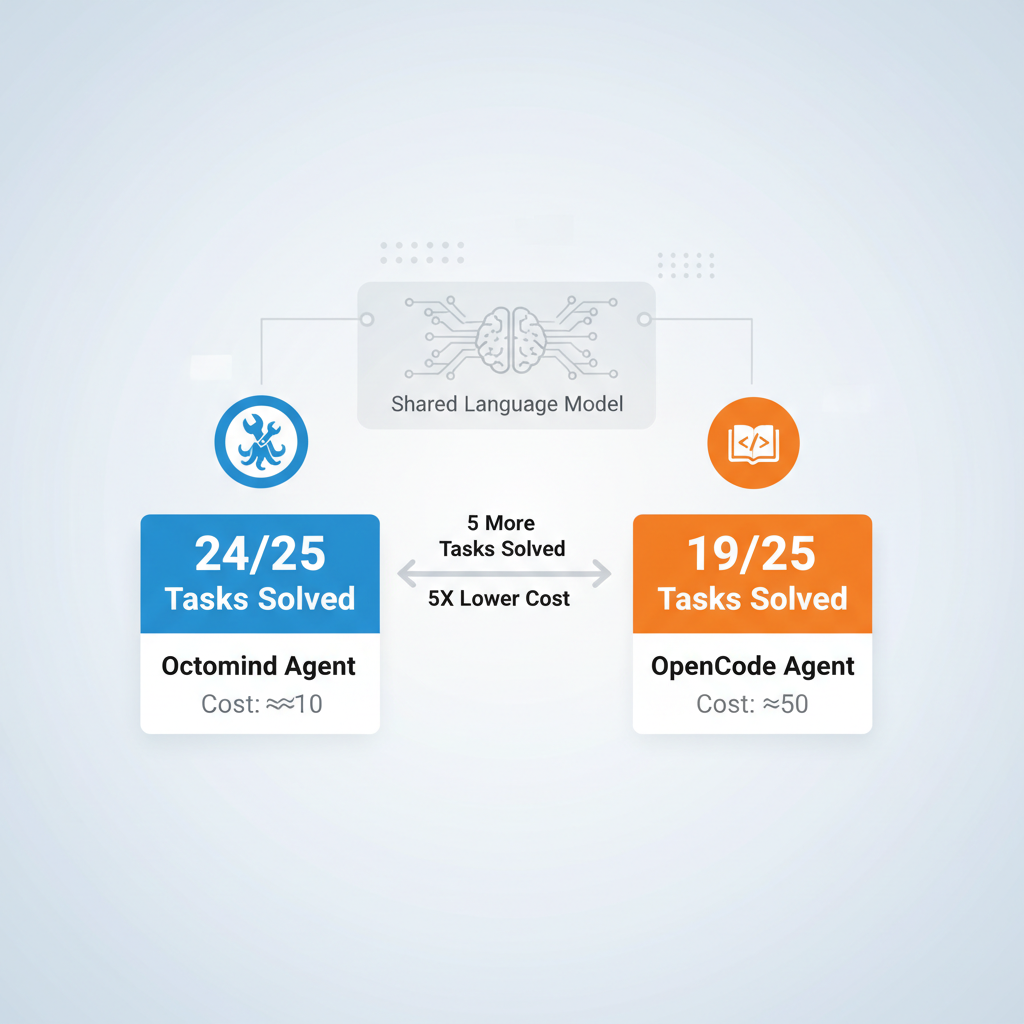
Octomind reports solving 24 of 25 merged-pull-request tasks, compared with 19 for OpenCode using the same model at about twice the cost. The result is worth testing, but the more useful question is whether its guardrails and interfaces hold up in your repository.
Automation needs a narrow first win
The best first AI workflow is usually a repeated task with a clear input, clear output, and a human approval step.
Octomind is an open-source coding agent harness that runs through an interactive CLI, stdin, daemon, WebSocket, and ACP. It combines repository tools, configurable models, TOML guardrails, and an optional supervising model; the practical question is whether that combination helps on the messy work beyond a clean demo.
Octomind’s coding agent harness separates policy from supervision
The harness provides tools for reading and editing files, running shell commands, searching code, and delegating to sub-agents through MCP. It supports multiple model providers and configurable roles, alongside spend limits. That makes it more than a model wrapper: it gives an agent a set of ways to interact with a repository and lets the operator configure how the work is carried out.
The more interesting design choice is the split between deterministic and model-based control. TOML guardrails and scripts handle policy checks; an optional supervising model can plan and verify work. That distinction matters in integration. A model can help reason about a task, but a deterministic check is a better place to encode rules that must be applied consistently. The source describes the pieces, though it does not establish how they behave across different repository policies or unusual project setups.
Worth a look
Phugialy Picks

LG 34WN80C-B UltraWide Monitor 34” 21:9 Curved WQHD (3440 x 1440) IPS Display, USB Type-C (60W PD), sRGB 99% Color Gamut, 3-Side Virtuall...

Alienware 34 Curved Gaming Monitor – AW3425DWM - 34-inch WQHD 180Hz 1ms Display, 1500R, AMD FreeSync Premium, VESA AdaptiveSync.

LG 34WR55QK-B 34-inch UltraWide WQHD (3440 x 1440) Curved Computer Monitor, 100Hz, 5ms, HDR10, Reader Mode, HDMI, DisplayPort, USB Type-C...
Some Phugialy Picks use affiliate links. If you buy through one, Phugialy may earn a commission. It doesn't change what we recommend. Full disclosure →
The benchmark is encouraging, but narrow
The published July 30, 2026 results cover 25 tasks taken from merged pull requests. Octomind solved 24; OpenCode solved 19 with the same model, at about twice the cost. The article also reports that Opus billed roughly 97% of context re-reads at cache rates.
Those numbers make the harness worth a closer look, but they are not a general prediction of success on your backlog. The set is small and drawn from merged pull requests, and the supplied results do not tell us how representative the tasks are of other repositories or workflows. The cost comparison is useful evidence for those reported runs, not a promise that Octomind will cost half as much in every setup. I would treat this as a strong reason to reproduce the comparison on tasks that resemble my own issues, rather than as a leaderboard verdict.
Test the integration surface, not just the score
One Rust binary, multiple interfaces, configurable providers, and policy checks suggest a harness designed to fit more than one way of working. My read is that the useful test is whether those controls stay legible when a real project has its own scripts, conventions, and edge cases. The source lists the interfaces and capabilities, but it does not report how much setup they require or what happens when a guardrail conflicts with an agent’s proposed change.
I’d start with a small evaluation set drawn from completed issues in the target repository. Compare task completion and spend under the same model, then inspect whether the TOML rules catch the cases that matter to the team. If the interface fits and the rules are easy to maintain, Octomind could be a practical foundation for a repository-specific agent. If either becomes another layer of configuration to babysit, the benchmark advantage alone won’t settle the decision. The harness matters most when its controls remain useful after the first successful run.
Got a question about how this applies to you? →
For the related question of controlling agent access, see “Giving AI Agents the Keys to the Kingdom (Without the Risk of Burning it Down)”.
Keep reading
Follow the thread
Skillsync: Making AI Coding Agent Sessions Portable
Skillsync converts AI coding agent sessions between Claude Code, Codex, and Cursor - keeping messages, reasoning, and tool calls intact. The lock-in it targets is invisible right up until it's expensive, because the session turns out to be the unit of collaboration, and right now it's being thrown away.
Read this noteSame lane, different angle
AI Coding Agent Memory That Survives Switching Tools
The real competition for engrim isn't other memory tools - it's the habit of pasting a summary of your project into every new AI coding agent session and hoping nothing important got lost. engrim, a local-first SQLite me
Postman Coding-Agent Integrations Need User Consent
Postman’s agent integrations could be convenient when you choose them. A report raises a different question: should opening an API client change what your coding agent is instructed to do by default?