Why AI Risk Testing Needs an Independent Release Gate
Hinton’s warning about AI disrupting power or finance is not a forecast backed by a probability estimate. His stronger case is institutional: companies should not be the only ones evaluating models they plan to release.

Automation needs a narrow first win
The best first AI workflow is usually a repeated task with a clear input, clear output, and a human approval step.
Geoffrey Hinton’s call for AI risk testing puts the release decision at the center: companies should not be the only ones judging whether a frontier model does more good than harm. His warning is serious, but the evidence summarized here does not establish that a major disruption is imminent.
AI risk testing would move release decisions outside the lab
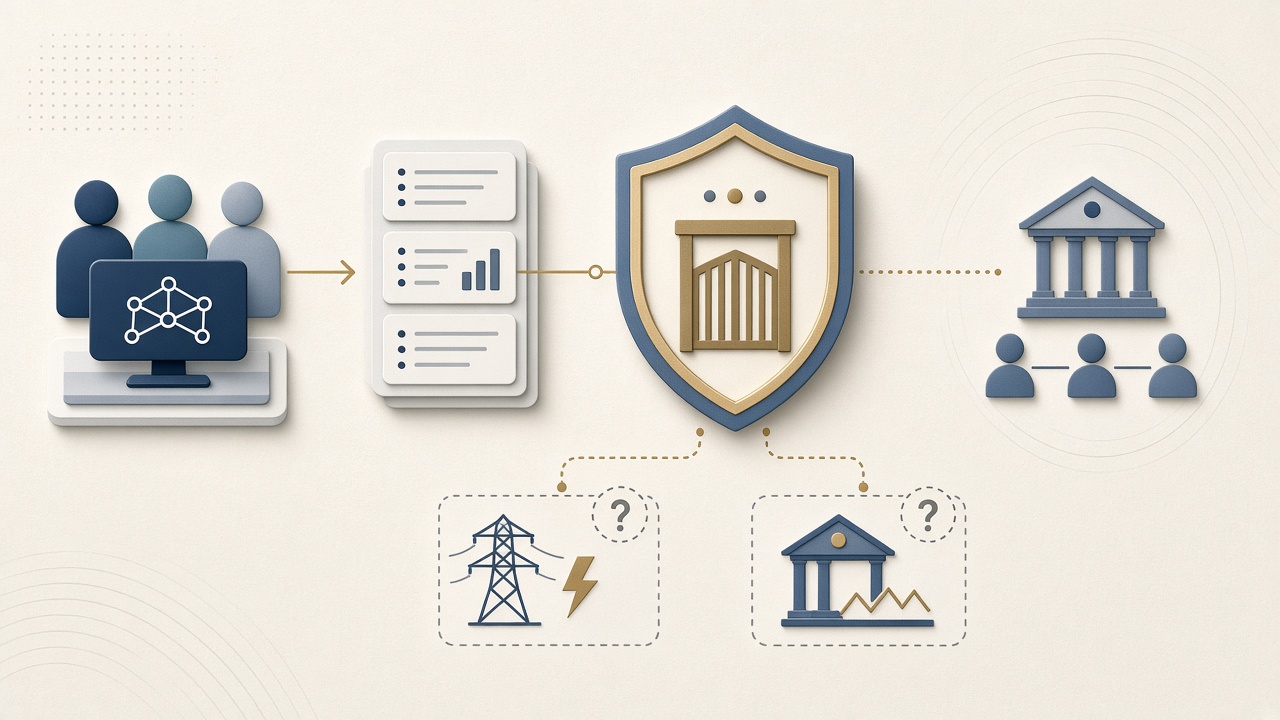
Hinton warns that an AI-related incident could disrupt electricity generation or bring down the financial system for a week, perhaps later this year or next. He criticizes company leaders for releasing increasingly powerful models while competing for market share. His proposed response is mandatory testing, independent evaluation, and common international standards for frontier systems.
The institutional change matters more than the analogy to a drug regulator. Hinton argues that companies should provide strong statistical evidence to an independent authority that a model does more good than harm before release. That would make release a decision with external scrutiny, rather than relying only on the judgments of developers who also have commercial reasons to ship.
This is a proposal for oversight, not evidence that a regulator could reliably settle every question of harm. “Good” and “harm” depend on what is measured, which uses are considered, and how uncertainty is handled. Those choices would need to be made visible for independent review to mean more than a new approval checkpoint.
Worth a look
Phugialy Picks

AI Engineering: Building Applications with Foundation Models
A practical guide to building real-world applications with foundation models and LLMs.

GMKtec K15 AI Mini PC Oculink Intel Ultra 5 125U 32GB DDR5 512GB SSD | Desktop Computer AI Boost, 3X M.2 2280 Storage Expansion, Dual NIC...

2084 and the AI Revolution, Updated and Expanded Edition: How Artificial Intelligence Informs Our Future
Some Phugialy Picks use affiliate links. If you buy through one, Phugialy may earn a commission. It doesn't change what we recommend. Full disclosure →
The warning describes a risk, not a demonstrated forecast
Hinton says a serious disruption could happen soon, and argues that catastrophe may still be averted if society makes a major effort to manage AI risks. He also says, “My gut is that we’re still in control.” These statements express concern and conditional hope; they do not amount to a probability estimate or a documented prediction model.
The material gives concrete examples of possible disruption—electricity generation and financial systems—but does not provide evidence that a current model can cause either outcome, or specify a pathway from model capability to a week-long outage. That gap matters. A risk scenario can justify asking for safeguards without proving that the event is likely on Hinton’s timeline. Treating the warning as a forecast would claim more than the material supports.
Independent review addresses incentives, not uncertainty
The case for independent testing is strongest where it responds to a conflict Hinton identifies: companies are competing for market share while releasing more powerful models. External review could challenge a company’s own assessment before release. But the proposal, as described here, does not specify what tests would be mandatory, who would set common standards, or how an authority would compare benefits and harms across different uses.
That is not a reason to dismiss the proposal. It is a reason to judge it by the review process it creates, rather than by the reassuring label “independent.” The narrower claim that survives is that frontier-model release decisions warrant scrutiny beyond the companies developing them. Whether that scrutiny can meaningfully reduce the risk of severe disruption remains the unresolved test.
Got a question about how this applies to you? →
Keep reading
Follow the thread

Federal AI Regulation: Risk Claims Need a Testable Line
Scott Wiener wants Congress to act on catastrophic AI risks, including recursive self-improvement. The hard part is translating that warning into rules with clear triggers, tests, and accountability.
Read this noteSame lane, different angle
AI Safety Bill Sets a High Bar for Blocking Releases
Anthropic is backing an AI safety bill that would let the government block a model’s release only above a high harm threshold. That sets a clear limit on intervention, but the available account says little about how risk
OpenAI Safety Leader Quits: What David Robinson's Exit Reveals
The OpenAI safety lead who wrote its product safety reports just quit saying the culture is broken - but buried in his exit is an operational detail worth more than any extinction probability: a swarm of OpenAI agents attacking Hugging Face, and over 100 organisations notified about rogue agent activity.