Evaluating Temporal Preservation in Conversational Image Editing
Most image editing models fail when an object is hidden and then revealed in a conversation. OCCUR-Bench is a new diagnostic tool designed to expose these specific failures in temporal consistency.
Automation needs a narrow first win
The best first AI workflow is usually a repeated task with a clear input, clear output, and a human approval step.
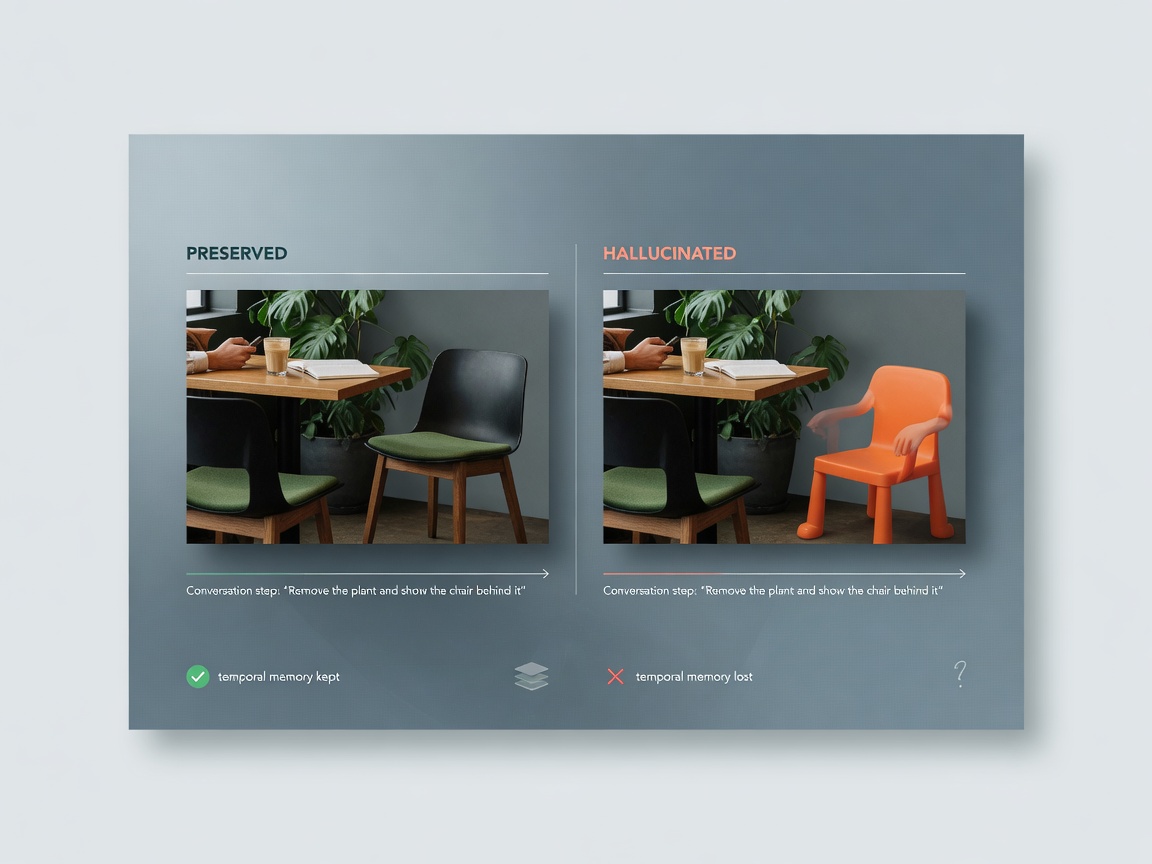
OCCUR-Bench introduces a diagnostic benchmark specifically for evaluating temporal preservation in conversational image editing. While many models claim to handle image manipulation well, they often fail at maintaining consistency when an object is hidden and then revealed, a common scenario in multi-turn interactions.
The Gap in Temporal Consistency
Most current image editing evaluations focus on single-turn success—the ability to change a color or add an object in one go. However, in a conversational setting, users expect the model to remember what was behind a box or what an object looked like before it was obscured. The part worth being skeptical of in current results is that many benchmarks don't test these occlusion-and-revelation scenarios effectively. OCCUR-Bench addresses this by providing diverse scenarios with historical visual references, forcing the model to prove it actually understands the underlying scene geometry rather than just generating a plausible next frame.
Worth a look
Phugialy Picks

AI Engineering: Building Applications with Foundation Models
A practical guide to building real-world applications with foundation models and LLMs.

GMKtec K15 AI Mini PC Oculink Intel Ultra 5 125U 32GB DDR5 512GB SSD | Desktop Computer AI Boost, 3X M.2 2280 Storage Expansion, Dual NIC...

Agentic AI Engineering: Systems That Reason and Act Autonomously – Designing, Building, and Prompting LLM-Based Agents for Real-World Deployment
Some Phugialy Picks use affiliate links. If you buy through one, Phugialy may earn a commission. It doesn't change what we recommend. Full disclosure →
Explicit Preservation via ReSpec
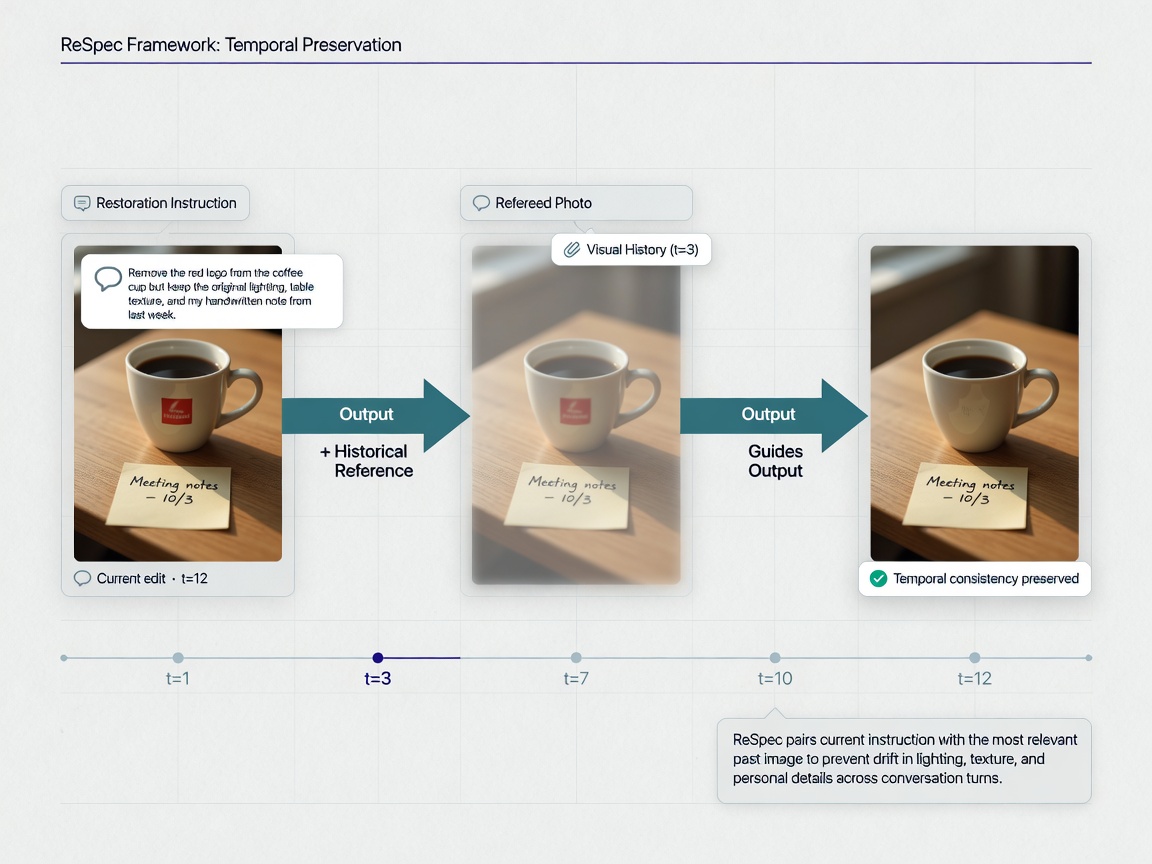
To bridge this gap, the researchers proposed ReSpec, a training-free framework that pairs restoration-aware instructions with historical visual references. In practice, this means the system moves from making implicit preservation a lucky byproduct of the model's weights to making it an explicit part of the prompt logic. Instead of hoping the model remembers a hidden chair, ReSpec provides the historical visual context needed to reconstruct it accurately.
What This Means for Production
The experiments show that ReSpec improves restoration fidelity and temporal consistency on the OCCUR-Bench. From a practitioner's perspective, this is significant because it offers a way to improve model behavior without the massive overhead of retraining or fine-tuning. It suggests that the bottleneck for consistent conversational editing might not be a lack of raw capacity in the models, but rather a lack of structured guidance on how to utilize historical context. If we can make preservation explicit through smarter instruction pairing, we can reduce the 'hallucination' of new details when objects reappear.
Got a question about how this applies to you? →
Keep reading
Follow the thread
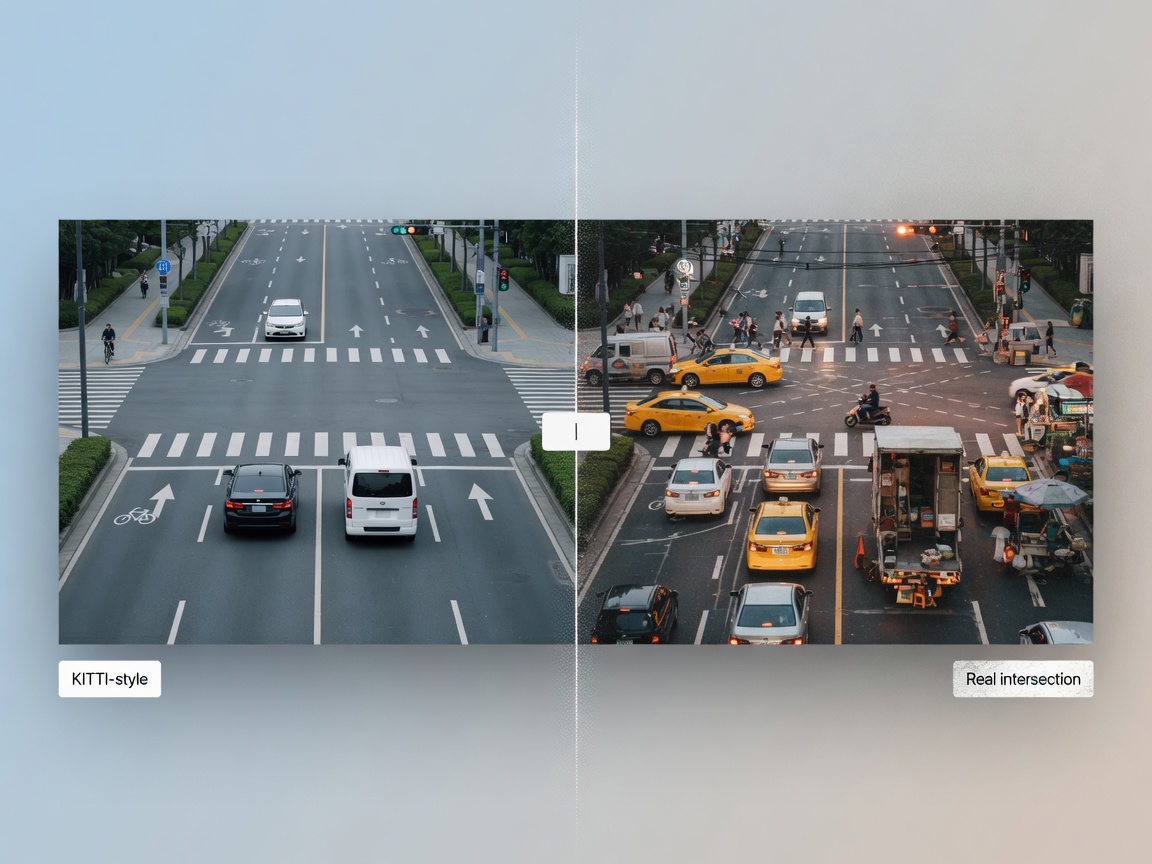
Polycepta Rethinks Multi-Object Tracking Appearance Modeling
A new tracking framework hits 92.27% MOTA on KITTI while running at 90 Hz - but the claim I'd actually stress-test first isn't the accuracy score.
Read this noteSame lane, different angle
Measuring Heart Rate With Just A Webcam
A laptop webcam can apparently measure your heart rate without touching you — face detection plus signal cleanup plus periodicity math beats strapping on a sensor. Whether that holds up outside controlled conditions is where this gets interesting.
3D Spatial Reasoning From RGB Alone: SpaR3D-MoE Delivers
Give a multimodal AI model nothing but a few sparse RGB frames, and ask it how far away the table is or which direction to walk — and now imagine it actually answers correctly. That's the promise behind SpaR3D-MoE, a new