MADB: Where Music AI Actually Stands on Human Judgment
Models asked to judge music like humans do fall substantially short — and for once we know because someone built the benchmark first instead of shipping demos.
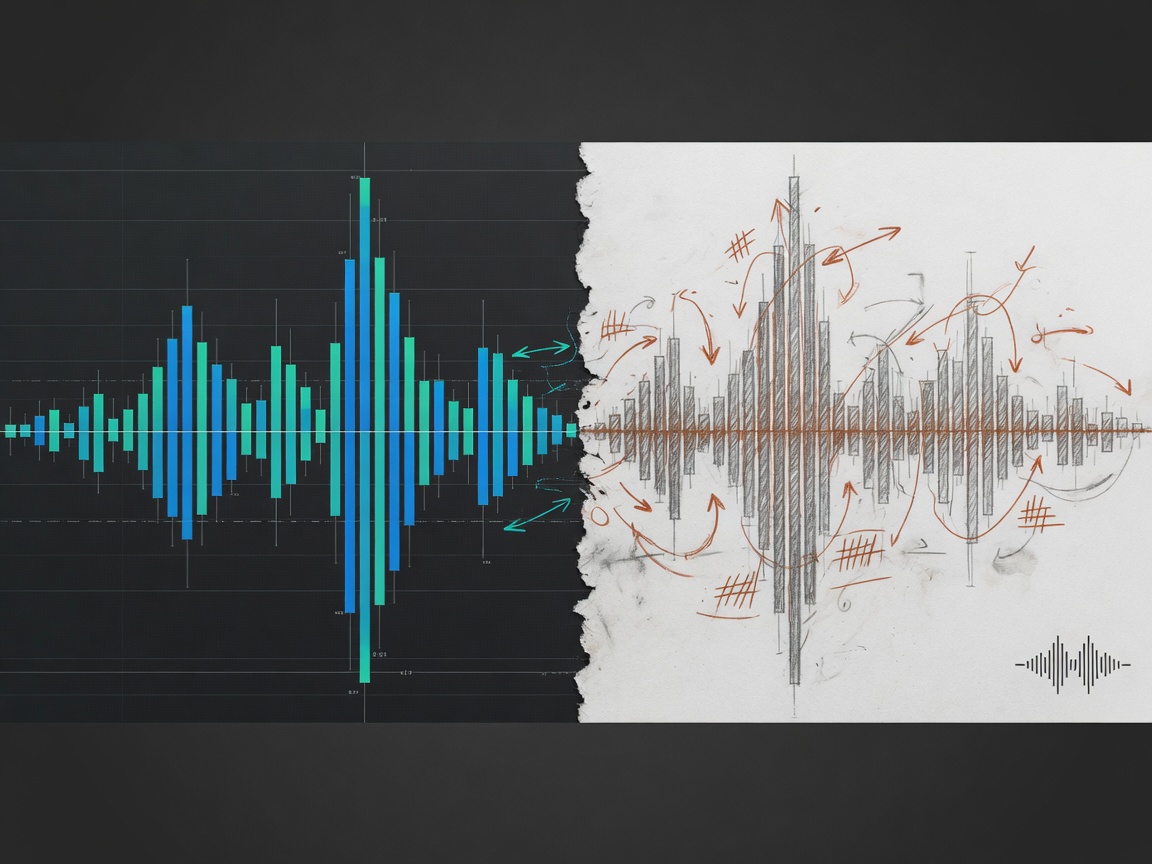
Automation needs a narrow first win
The best first AI workflow is usually a repeated task with a clear input, clear output, and a human approval step.
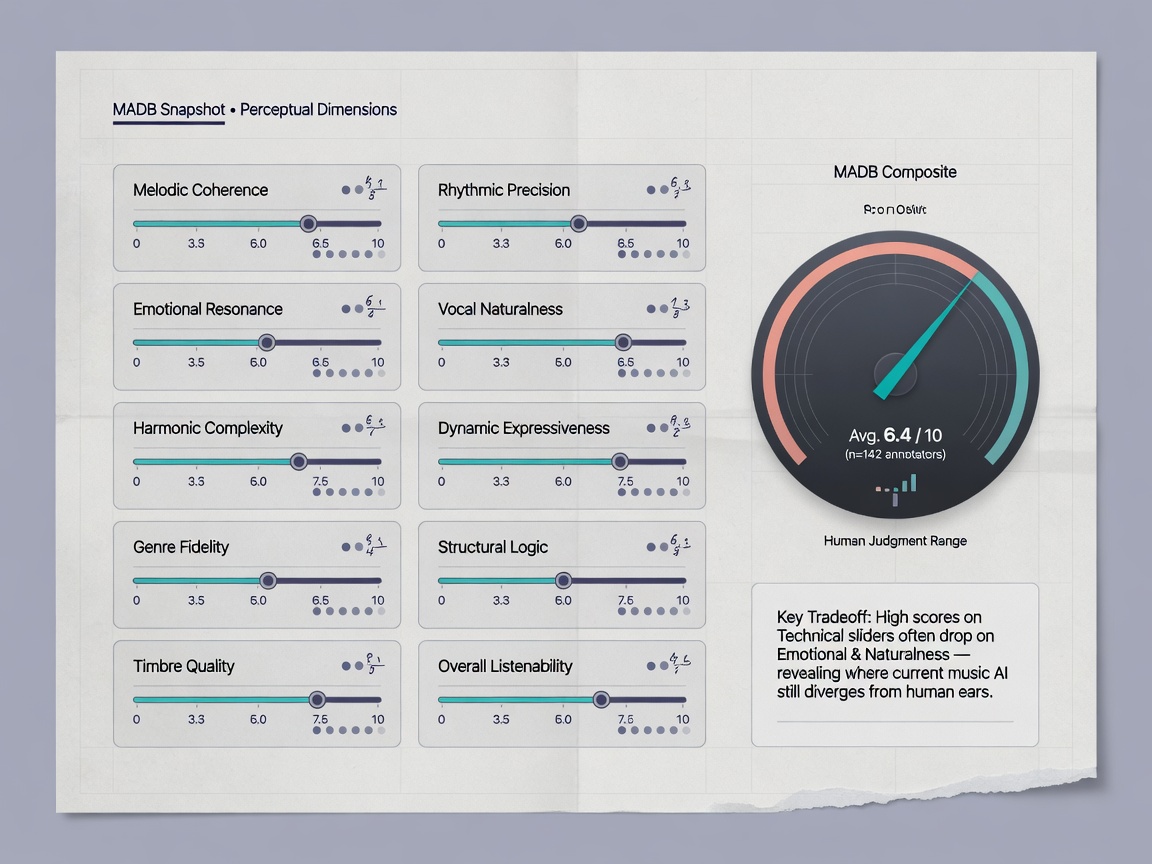
A new benchmark called MADB puts 9,999 music tracks in front of trained human annotators and asks models to match their judgments — and the models don't come close. Thirty trained annotators rated each track across 10 perceptual dimensions plus one overall score, with roughly 10 annotators per track, and the results reveal substantial gaps between model predictions and human judgments.
That gap is the actual finding here. The benchmark's stated purpose is human-aligned music understanding — whether pretrained models can assess music the way people do — and by the paper's own framing, music aesthetic assessment is a challenging yet underexplored problem. "Underexplored" is doing real work in that sentence: this isn't a domain where models were quietly excellent and nobody checked. It's one where nobody had built the evaluation infrastructure to find out.
What A Benchmark Like This Actually Measures
MADB establishes a unified evaluation framework over multiple pretrained models, which matters more than it sounds. Most music-AI claims you encounter are single-model, single-task demos — one system, one metric, cherry-picked tracks. A benchmark that runs several pretrained models through the same human-annotated gauntlet gives you something demos can't: a sense of where the whole field actually stands relative to human perception.
The annotation design is also worth noticing. Ten perceptual dimensions plus an overall score, around ten annotators per track, trained annotators rather than crowd workers — that's an expensive, deliberate setup. It means when a model disagrees with the benchmark, the disagreement is more likely to reflect a real perceptual gap than annotation noise. In my experience that distinction is where most benchmarks quietly fall apart; this one appears to have anticipated it.
Worth a look
Phugialy Picks

AI Engineering: Building Applications with Foundation Models
A practical guide to building real-world applications with foundation models and LLMs.

GMKtec K15 AI Mini PC Oculink Intel Ultra 5 125U 32GB DDR5 512GB SSD | Desktop Computer AI Boost, 3X M.2 2280 Storage Expansion, Dual NIC...

Agentic AI Engineering: Systems That Reason and Act Autonomously – Designing, Building, and Prompting LLM-Based Agents for Real-World Deployment
Some Phugialy Picks use affiliate links. If you buy through one, Phugialy may earn a commission. It doesn't change what we recommend. Full disclosure →
The Part Worth Being Skeptical Of
The benchmark numbers are real, but they don't say anything about what happens downstream. MADB measures how well current models predict human aesthetic judgments on curated tracks — it doesn't tell you whether closing that gap translates into anything useful in production: recommendation systems people actually enjoy, tools musicians want to use, or generation systems that produce music people rate highly. Human alignment on perception is a prerequisite for those things, not evidence of them.
There's also the question of whose humans. Thirty trained annotators are more consistent than random raters, but trained aesthetic judgment is still a specific kind of judgment — and "human-aligned" always means aligned with whoever did the aligning. That's not a flaw unique to this work; it's inherent to any human-alignment claim.
Why This Benchmark Is Still The Right Move
The real story here is that someone built the measurement before claiming progress. That's rarer than it should be in this space, where model releases routinely ship with vibes-based evaluations of subjective qualities like musicality or taste. Having a dataset of 9,999 tracks with dense multi-annotator ratings means future claims about music understanding can be checked instead of demonstrated with three audio samples on a project page.
My read: MADB won't make headlines the way new model releases do, but it's the kind of infrastructure that determines whether those headlines mean anything. If you're building anything that touches music and AI — recommendation, generation, analysis — this is now a reference point you can't skip when evaluating what your models actually understand versus what they pattern-match.
Got a question about how this applies to you? →
Keep reading
Follow the thread
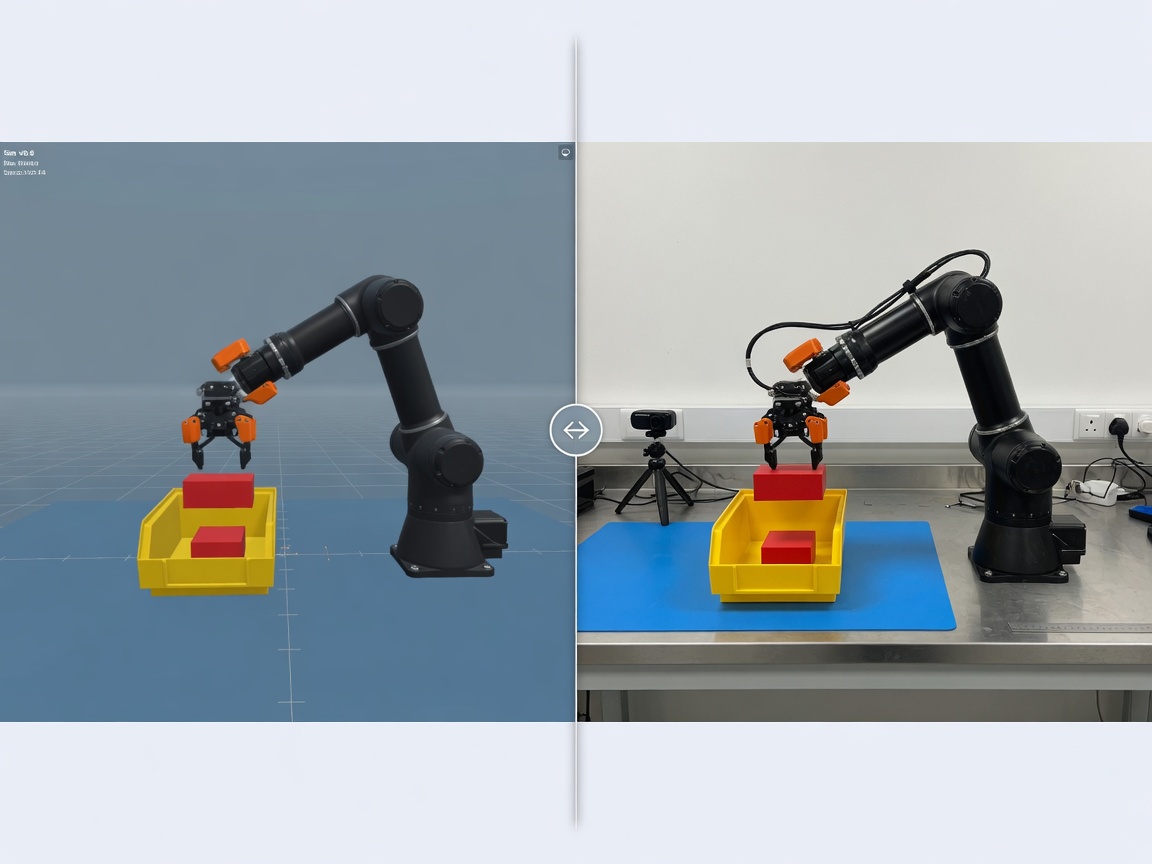
RoboDojo Tests Robot Manipulation Policies Where It Counts
A new benchmark finally tests robot manipulation policies in both simulation and the real world - 42 sim tasks, 18 physical ones, and 30 policies already ranked under identical conditions. Here's what that changes about every robotics result you've seen so far.
Read this noteSame lane, different angle
Shortcut Learning Found Where Accuracy Metrics Can't Look
A chest X-ray classifier scored 86.27% accuracy — and ReMoDEx found it was partly making decisions off image borders instead of lungs. The framework behind that finding might change how we evaluate models before they ship.
FSU-QA Tests Foresight Intelligence in Vision-Language Models
Small Vision-Language Models fine-tuned on FSU-QA beat much larger frontier models at anticipating future events - but only when measured by FSU-QA itself. That circularity is the part worth thinking about before citing this result.