Enterprise Networks Must Adapt to AI Inference Workloads
AI agents are estimated to generate 450% more network traffic than people doing the same tasks. That figure matters for planning, but it is not a sizing formula for every deployment.
Automation needs a narrow first win
The best first AI workflow is usually a repeated task with a clear input, clear output, and a human approval step.
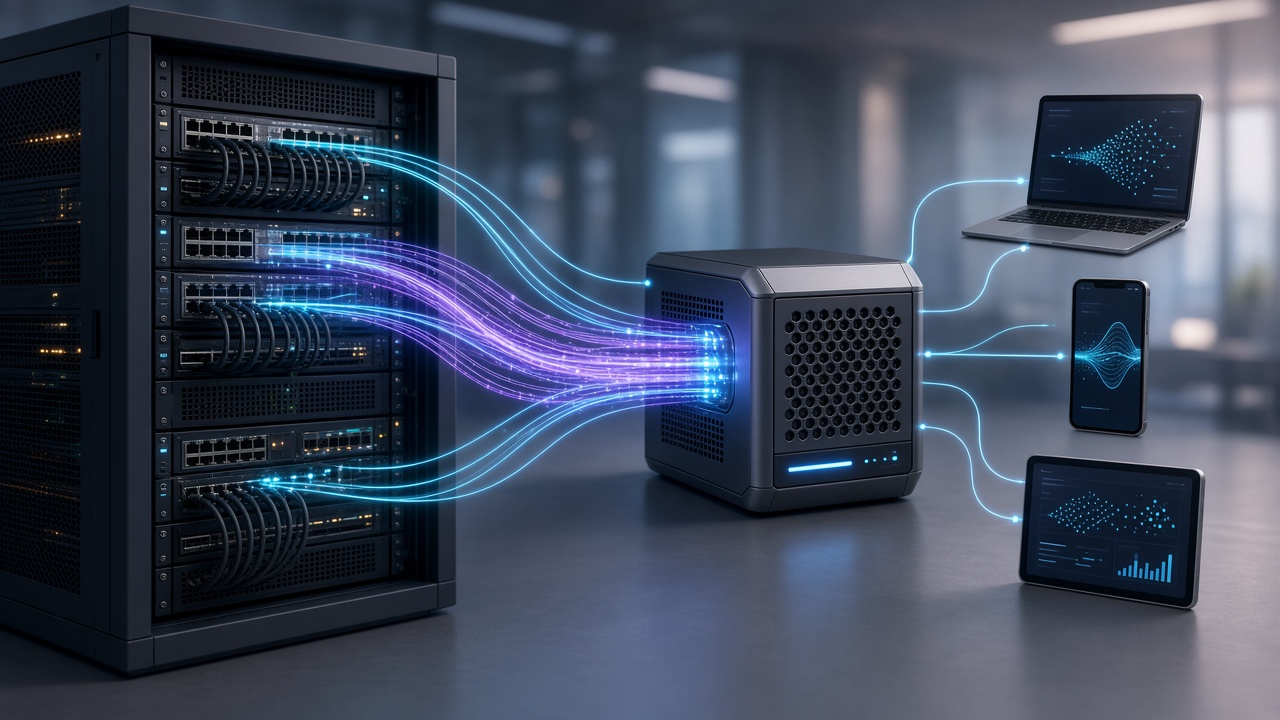
AI inference is changing enterprise network planning because some workloads need low-latency connections and infrastructure close to users. The source article estimates that AI agents generate 450% more network traffic than people doing the same tasks; that is a reason to measure workload impact, not a universal capacity multiplier.
AI inference makes latency and location part of network planning
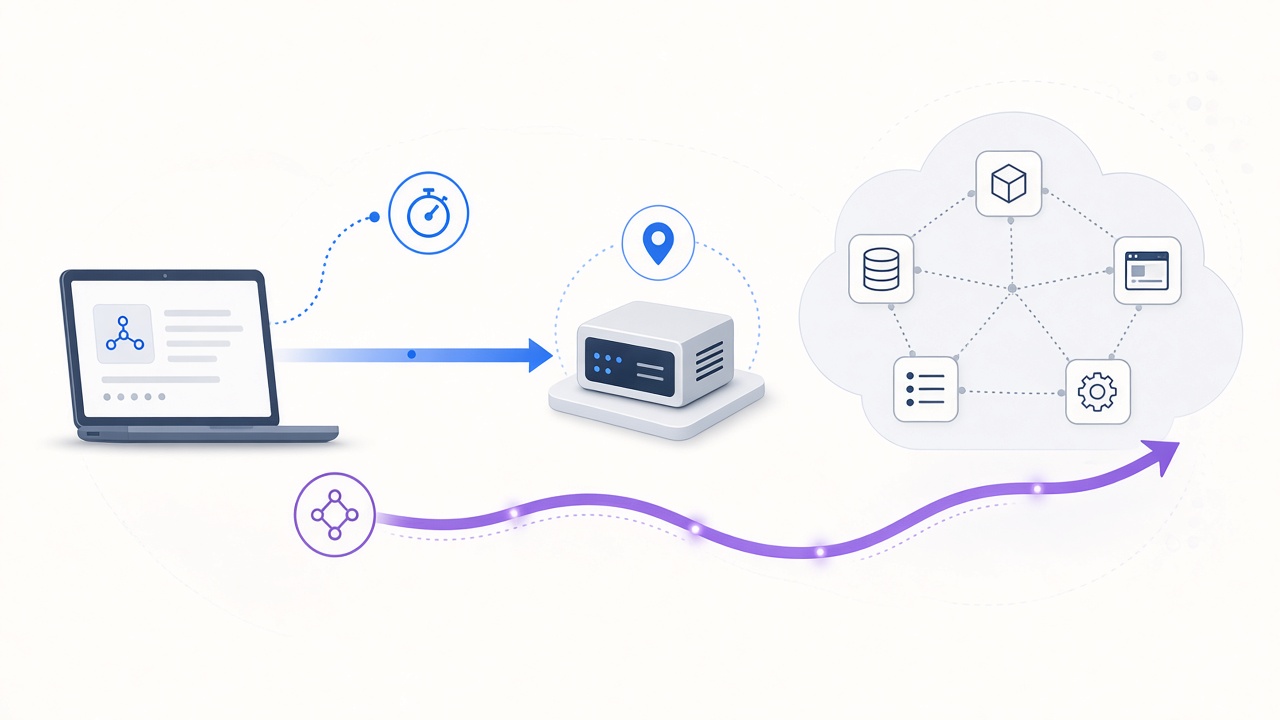
Real-time AI inference can require low-latency connectivity, and the report says some of that work is moving onto on-premises or near-premises infrastructure. That puts network design in the path of decisions about where an inference workload runs: a distant service may not fit a task with tight response-time needs, while a closer deployment depends on the network and infrastructure available there.
The practical point is not that every enterprise should bring AI in-house. The source describes a shift in some workloads, not a blanket case for local deployment. My read is that teams need to treat placement and connectivity as a joint decision. Testing a model's response time in isolation will not tell you whether the full path to the user can meet the requirement.
Worth a look
Phugialy Picks

AI Engineering: Building Applications with Foundation Models
A practical guide to building real-world applications with foundation models and LLMs.

GMKtec K15 AI Mini PC Oculink Intel Ultra 5 125U 32GB DDR5 512GB SSD | Desktop Computer AI Boost, 3X M.2 2280 Storage Expansion, Dual NIC...

Agentic AI Engineering: Systems That Reason and Act Autonomously – Designing, Building, and Prompting LLM-Based Agents for Real-World Deployment
Some Phugialy Picks use affiliate links. If you buy through one, Phugialy may earn a commission. It doesn't change what we recommend. Full disclosure →
Agent-generated network traffic needs workload-specific estimates
The 450% estimate compares tasks conducted by AI agents with the same tasks performed by human workers. It signals that agentic workflows can add substantial network demand, but it does not say every agent, task, or deployment will create that exact increase. The report summary does not provide a breakdown by workload, so applying 450% across a network plan would be false precision.
For an engineering team, the useful next step is to measure the traffic generated by the agent workflows it actually intends to run. That is an interpretation of the estimate, not a prescription in the report. The difference matters: an agent that repeatedly calls services or moves data could have a different network profile from another workflow, and the figure alone cannot tell you which will dominate your environment.
Network modernization is an ongoing capacity decision
The report says as few as half of enterprises believe their current networks can handle AI's bandwidth and latency demands. It presents network modernization as an ongoing strategy for adapting to AI workloads and other changes—not as a one-time fix or a product launch. There is no new AI model or network product described here; the subject is infrastructure readiness.
My take is that the underappreciated issue is workload variability. Network plans based on today's human-driven traffic may not hold as more agent tasks and latency-sensitive inference enter production. But the available figures do not establish that every enterprise needs an immediate upgrade. Before spending, connect actual workload measurements to the bandwidth and latency requirements of the use case, then check whether the existing network can meet them.
If those measurements show a gap, modernization has a concrete target. If they do not, the report's broad estimates are not enough on their own to justify a costly change. The signal to watch is whether real deployments make the traffic and latency gap visible in a particular environment.
Holiday picks
Black Friday: big-ticket buys
The big-ticket day: computers, screens, audio and home upgrades worth waiting for.

Audio
Big purchaseBose QuietComfort Headphones - Wireless Bluetooth Headphones, Active Over Ear Noise Cancelling and Mic, USB-C Charging, Deep Bass, Up to ...
View on Amazon (opens in a new tab): Bose QuietComfort Headphones - Wireless Bluetooth Headphones, Active Over Ear Noise Cancelling and Mic, USB-C Charging, Deep Bass, Up to ...Prices change daily. Check today's price on Amazon.

Home & Kitchen
Keurig K-Elite Single Serve K-Cup Pod Coffee Maker, Brushed Silver
View on Amazon (opens in a new tab): Keurig K-Elite Single Serve K-Cup Pod Coffee Maker, Brushed SilverPrices change daily. Check today's price on Amazon.

Home & Kitchen
De'Longhi Magnifica Duo Automatic Espresso Machine, Milk Frother, Silver
View on Amazon (opens in a new tab): De'Longhi Magnifica Duo Automatic Espresso Machine, Milk Frother, SilverPrices change daily. Check today's price on Amazon.
We earn from qualifying purchases made through these links, at no extra cost to you, as an Amazon Associate and through other affiliate programs. Disclosure. See all Black Friday picks
Got a question about how this applies to you? →
For a related look at agentic AI, read “The Governance Gap: Moving from Generative Chat to Agentic Autonomy.”
Keep reading
Follow the thread
AI Agents for Gemini Experiments Still Have Limits
DeepMind says AI agents can control some compute to run experiments for Gemini—but that is not the same as systems improving themselves. The more useful question is how their work stays reviewable, and what they can reliably understand.
Read this noteSame lane, different angle
Google Workspace AI Agents Face a Tooling Boundary
Google is requiring Workspace AI agents to use its MCP servers. But the public tools still omit several familiar email actions, leaving an important question: what can agents actually do through the required route?
Clay’s Agent Platform Rebuild Targets Real CRM Work
Clay rebuilt Sculptor from a limited tool loop into a coding agent with access to its CLI and CRM data. The harder test now is whether its routing and workload controls hold up when providers fail and demand spikes.