AI in Video Games Still Needs More Than a Prompt
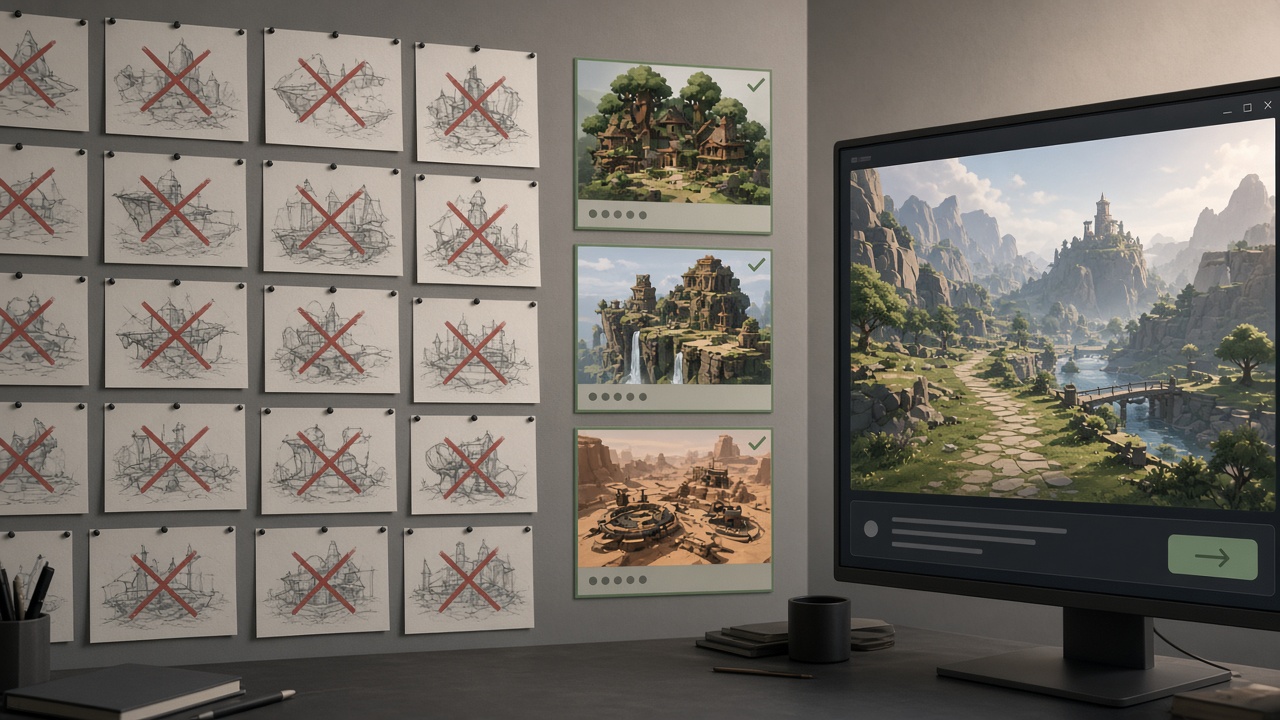
A prompt can produce an explorable 3D world. That is not the same as producing a game players will choose—or a business can profitably sell. GTA VI offers a useful counterpoint: its creative process involved years of human experimentation and revision.

Automation needs a narrow first win
The best first AI workflow is usually a repeated task with a clear input, clear output, and a human approval step.
AI in video games is worth evaluating as a tool for exploration, not as a shortcut to a finished hit. The case of Grand Theft Auto VI is a reminder that creative work can depend on the time spent testing ideas, revising them, and throwing them away—not just on the output that survives.
AI in video games can generate worlds, not prove demand
Google’s Project Genie lets users create and explore 3D worlds from prompts to a large language model. Its release coincided with uncertainty among investors in video game companies, as technology leaders described a future of personalized AI-generated content and games. Meta CEO Mark Zuckerberg said AI could understand users and generate personalized content; Elon Musk suggested AI would figure out which game someone would like best.
Those are possibilities, not evidence that players will want the results or that a business can profitably deliver them. Take-Two CEO Strauss Zelnick questioned whether a person could simply prompt, create, market, and distribute a hit to millions. That distinction matters to anyone assessing a tool: generating an artifact is only one step in making something people choose and pay for.
Worth a look
Phugialy Picks

AI Engineering: Building Applications with Foundation Models
A practical guide to building real-world applications with foundation models and LLMs.

GMKtec K15 AI Mini PC Oculink Intel Ultra 5 125U 32GB DDR5 512GB SSD | Desktop Computer AI Boost, 3X M.2 2280 Storage Expansion, Dual NIC...

Agentic AI Engineering: Systems That Reason and Act Autonomously – Designing, Building, and Prompting LLM-Based Agents for Real-World Deployment
Some Phugialy Picks use affiliate links. If you buy through one, Phugialy may earn a commission. It doesn't change what we recommend. Full disclosure →
GTA VI shows what creative iteration can involve
Grand Theft Auto VI was developed without generative AI, through years of human experimentation and revision. About 5,000 people worked on it for more than a decade, and the game includes 30,000 different nonplayable characters. Those figures do not show that every project needs that scale, or that AI could not help with parts of development. They do show how much human work went into this particular result.
The source article also makes a useful point about inefficiency. Experimentation means spending time on ideas that may not work and deleting them. That can look like waste when measured only by immediate output. In creative work, though, it may be part of finding the choices that make the final product distinctive. Automating the discarded work is valuable only if the process still produces better decisions, not merely more material.
The business case depends on what AI replaces
The practical question is not whether AI can generate a world, character, or game concept. It is whether a team can use it to reduce a specific bottleneck without weakening the judgment that shapes the result. If a studio spends less time on low-value iteration and can direct that time toward stronger design, there may be a return. The material here does not establish that Project Genie delivers those savings, or that generated games can compete commercially.
My read is that creative businesses should treat generative AI as a production aid to test, not a replacement plan to budget around. The license is only one part of the cost: teams would also need a way to evaluate generated work and decide what deserves development. Until a tool shows it can improve that decision process—not just create more options—the case for adoption remains unproven. The signal to watch is whether AI-generated experiences attract sustained player demand, not simply whether a prompt can produce a playable world.
Holiday picks
Black Friday: big-ticket buys
The big-ticket day: computers, screens, audio and home upgrades worth waiting for.

Audio
DJI Mic 2 (2 TX + 1 RX + Charging Case), All-in-one Wireless Microphone
View on Amazon (opens in a new tab): DJI Mic 2 (2 TX + 1 RX + Charging Case), All-in-one Wireless MicrophonePrices change daily. Check today's price on Amazon.

Home & Kitchen
Keurig K-Elite Single Serve K-Cup Pod Coffee Maker, Brushed Silver
View on Amazon (opens in a new tab): Keurig K-Elite Single Serve K-Cup Pod Coffee Maker, Brushed SilverPrices change daily. Check today's price on Amazon.

Home & Kitchen
De'Longhi Magnifica Duo Automatic Espresso Machine, Milk Frother, Silver
View on Amazon (opens in a new tab): De'Longhi Magnifica Duo Automatic Espresso Machine, Milk Frother, SilverPrices change daily. Check today's price on Amazon.
We earn from qualifying purchases made through these links, at no extra cost to you, as an Amazon Associate and through other affiliate programs. Disclosure. See all Black Friday picks
Got a question about how this applies to you? →
Keep reading
Follow the thread
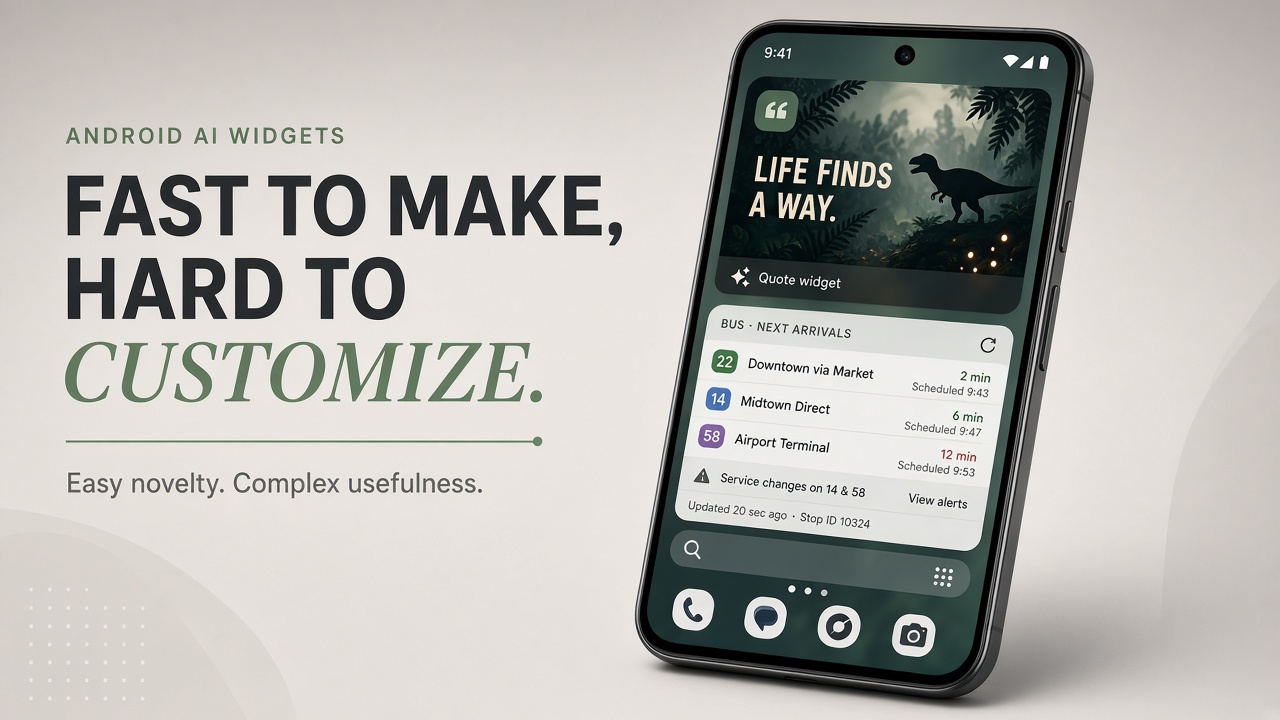
Android AI Widgets Are Fast to Make, Hard to Customize
Google’s AI made a Jurassic Park quote widget in about 20 seconds. But when asked for a bus-arrival widget, it produced a wordy schedule response instead of the glanceable live information the tester wanted.
Read this noteSame lane, different angle
Local Inference Benchmarking Gets a Public AMD Dashboard
A public llama.cpp dashboard makes AMD inference results inspectable and reusable. Its measurements are useful, but they answer a narrower question than a universal performance ranking.
AI Data Center Readiness Is Becoming a Neocloud Filter
Nvidia is signaling support for AI data centers only when they are nearly ready to operate. That changes the practical question for neoclouds: how much of the land, power, and building work is already real?