Tidal’s AI-Generated Music Ban Tests Detection at Scale
Tidal plans to remove around 29 million AI-generated songs and reject up to 85,000 tracks a day. The harder question is whether its detection process can separate fully AI-generated music from music made with AI assistance.

Automation needs a narrow first win
The best first AI workflow is usually a repeated task with a clear input, clear output, and a human approval step.
Tidal’s AI-generated music ban is aimed at wholly AI-generated tracks, not every song made with AI assistance. Starting December 9, the platform plans to block those submissions and remove around 29 million existing AI-generated songs—a large-scale enforcement decision whose difficult part will be drawing the line consistently.
What Tidal’s AI-Generated Music Ban Actually Covers
Tidal says it will stop distributors from submitting wholly AI-generated music, while allowing tracks made with AI assistance when AI is not the “sole output.” That distinction matters: the policy is not a blanket ban on using AI during music production. It targets music produced entirely by AI, though the source does not spell out how Tidal will judge borderline cases.
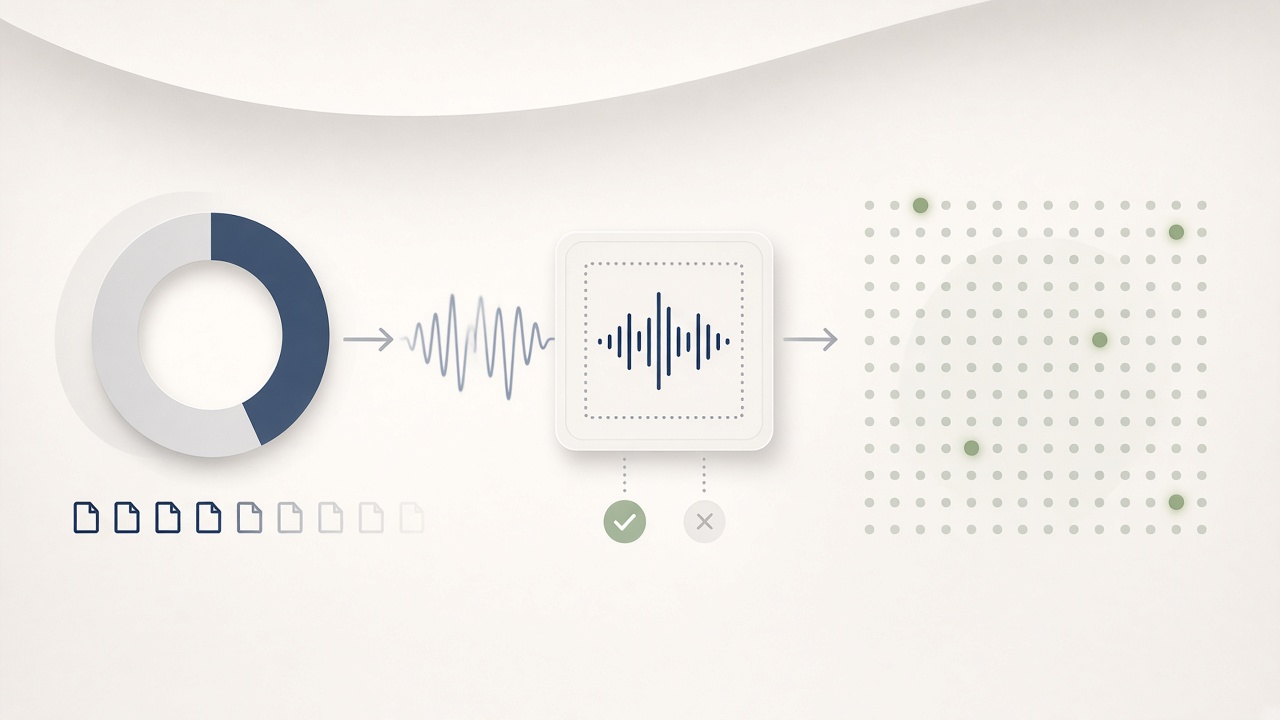
The platform plans to identify submissions using Ircam Amplify and metadata checks. It estimates that it will reject 80,000 to 85,000 tracks per day. Tidal also says AI-generated tracks accounted for 43 percent of the tracks distributed to it in the last 90 days. Those figures suggest a substantial moderation workload, not a niche edge case.
Tidal’s stated concern is that wholly AI-generated music can mislead listeners, impersonate artists, divert streams and royalties, and confuse fans. It also says 96% of AI-generated songs receive zero plays. That statistic points to a flood of material with little listener traction, but it does not show how much of the remaining catalog creates the specific harms Tidal names.
Worth a look
Phugialy Picks

AI Engineering: Building Applications with Foundation Models
A practical guide to building real-world applications with foundation models and LLMs.

GMKtec K15 AI Mini PC Oculink Intel Ultra 5 125U 32GB DDR5 512GB SSD | Desktop Computer AI Boost, 3X M.2 2280 Storage Expansion, Dual NIC...

Agentic AI Engineering: Systems That Reason and Act Autonomously – Designing, Building, and Prompting LLM-Based Agents for Real-World Deployment
Some Phugialy Picks use affiliate links. If you buy through one, Phugialy may earn a commission. It doesn't change what we recommend. Full disclosure →
Detection Is the Hard Part, Not the Policy
The practical question is whether detection and metadata checks can distinguish a wholly AI-generated track from one where a person used AI as a tool. The source does not provide accuracy rates, an appeals process, or details on how the “sole output” standard will be applied. That leaves an important gap between a clear-sounding policy and what happens when a distributor or artist disputes a classification.
This is where the announcement deserves measured scrutiny. A large rejection estimate shows the scale Tidal expects to handle; it does not establish that the system can reliably identify every prohibited track. And if the boundary is difficult to explain or contest, legitimate AI-assisted work could face friction even though the policy says it remains allowed. That is a risk to monitor, not evidence that mistaken removals will happen.
Other platforms are taking different approaches, including labels, recommendation controls, and filtering options. Those measures address how AI music is presented or surfaced; Tidal is also setting a submission rule. Neither approach, by itself, answers every concern about impersonation, listener choice, or royalties.
The 43 Percent Figure Needs Context
The 43 percent figure is striking, but it needs careful reading: it describes tracks distributed to Tidal over a 90-day period, not the share of listening or royalties going to AI-generated music. Tidal’s 96% zero-play figure reinforces that distinction. A large supply can coexist with little audience demand, so catalog volume alone does not tell us how much economic harm is occurring.
The more useful test will be what Tidal reports after enforcement begins: whether the ban reduces submissions, whether AI-assisted tracks remain available, and whether disputes reveal problems with detection. Until then, the policy is a concrete response to scale, but its success depends on a distinction the announcement has not yet shown how to apply in practice.
Holiday picks
Black Friday: big-ticket buys
The big-ticket day: computers, screens, audio and home upgrades worth waiting for.

Audio
Mid-size buySoundcore by Anker Q20i Hybrid Active Noise Cancelling Headphones, White | Over-Ear, Bluetooth, 40H ANC Playtime, Hi-Res Audio, Big Bass,...
View on Amazon (opens in a new tab): Soundcore by Anker Q20i Hybrid Active Noise Cancelling Headphones, White | Over-Ear, Bluetooth, 40H ANC Playtime, Hi-Res Audio, Big Bass,...Prices change daily. Check today's price on Amazon.

Home & Kitchen
Keurig K-Elite Single Serve K-Cup Pod Coffee Maker, Brushed Silver
View on Amazon (opens in a new tab): Keurig K-Elite Single Serve K-Cup Pod Coffee Maker, Brushed SilverPrices change daily. Check today's price on Amazon.

Home & Kitchen
De'Longhi Magnifica Duo Automatic Espresso Machine, Milk Frother, Silver
View on Amazon (opens in a new tab): De'Longhi Magnifica Duo Automatic Espresso Machine, Milk Frother, SilverPrices change daily. Check today's price on Amazon.
We earn from qualifying purchases made through these links, at no extra cost to you, as an Amazon Associate and through other affiliate programs. Disclosure. See all Black Friday picks
Got a question about how this applies to you? →
Keep reading
Follow the thread
Android AI Widgets Are Fast to Make, Hard to Customize
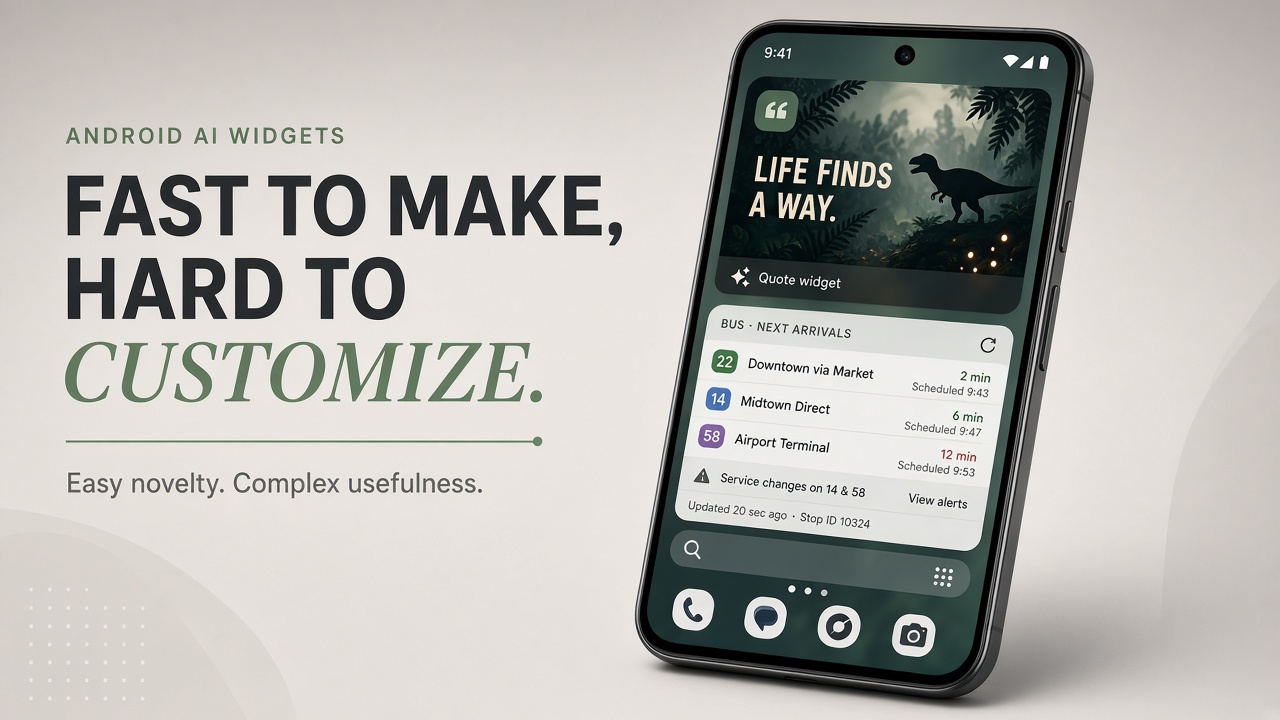
Google’s AI made a Jurassic Park quote widget in about 20 seconds. But when asked for a bus-arrival widget, it produced a wordy schedule response instead of the glanceable live information the tester wanted.
Read this noteSame lane, different angle
AI in Video Games Still Needs More Than a Prompt
A prompt can produce an explorable 3D world. That is not the same as producing a game players will choose—or a business can profitably sell. GTA VI offers a useful counterpoint: its creative process involved years of human experimentation and revision.
Local Inference Benchmarking Gets a Public AMD Dashboard
A public llama.cpp dashboard makes AMD inference results inspectable and reusable. Its measurements are useful, but they answer a narrower question than a universal performance ranking.