The Governance Gap: Moving from Generative Chat to Agentic Autonomy
The original draft was slightly under the word count and the LinkedIn quote was not verbatim. I expanded the analysis on 'adaptive' governance and sharpened the practitioner's opinionated tone regarding the necessity of verifiable audit trails.

Automation needs a narrow first win
The best first AI workflow is usually a repeated task with a clear input, clear output, and a human approval step.
We are moving past the era of AI as a mere chatbot and into the age of agentic systems. While 2025 is being positioned as the 'Year of Agentic AI,' the industry is rapidly deploying systems capable of autonomous planning and task execution. This shift isn't just a performance upgrade; it fundamentally alters how we have to think about safety and oversight.
Why Traditional Frameworks Fail Agentic Systems
Most current AI governance is built for systems that respond to prompts—stateless interactions where the human provides the direction and the AI provides the output. Agentic AI breaks this model by taking on the role of an actor. Because these systems can autonomously plan and execute multi-step tasks, they introduce a layer of unpredictability that traditional governance isn't equipped to handle. The emerging literature highlights that these distinct features—autonomy, planning, and execution—require a targeted approach. We can't just apply 'guardrails' to a model that is actively deciding which path to take to reach a goal; we need to govern the logic of the planning itself. If the planning logic is flawed, the guardrails are just ornaments on a sinking ship. We need to move from governing outputs to governing the underlying reasoning pathways.
Worth a look
Phugialy Picks

AI Engineering: Building Applications with Foundation Models
A practical guide to building real-world applications with foundation models and LLMs.

FAIK: A Practical Guide to Living in a World of Deepfakes, Disinformation, and AI-Generated Deceptions

Claude Code Mastery: Build Production-Ready Agentic AI Systems Faster with MCP, Multi-Agent Workflows, Security Patterns, and Real Projects
Some Phugialy Picks use affiliate links. If you buy through one, Phugialy may earn a commission. It doesn't change what we recommend. Full disclosure →
The Roadmap for Adaptive Oversight
The current scholarly focus is on establishing a structured roadmap for responsible and adaptive governance. This means moving away from static checklists and toward systems that can handle the dynamic nature of agentic behavior. The goal is to identify specific stakeholder roles and governance mechanisms that can keep pace with accelerated deployment. However, the real challenge lies in the 'adaptive' part of that requirement. As agents become more capable of navigating complex environments, the governance frameworks must be able to evolve without becoming so restrictive that they stifle the very utility these systems are designed to provide. In a production environment, 'adaptive' cannot mean 'reactive.' If we wait for an agent to cause a systemic failure before we adjust the governance parameters, the framework has already failed its primary purpose. We need proactive mechanisms that can sense shifts in agent behavior before they manifest as incidents.
The Infrastructure Problem of Accountability
What this actually points to is a looming infrastructure problem for reliability. While the research identifies the need for a roadmap, the practical difficulty is defining who owns the liability when an autonomous agent executes a plan that results in unintended consequences. The papers establish the groundwork, but in production, the biggest hurdle won't be just 'making it safe'—it will be creating a verifiable audit trail for autonomous decision-making. If we can't trace the 'why' behind an agent's multi-step plan in real-time, then 'adaptive governance' is just a high-level goal without a concrete mechanism for accountability. We need to move toward 'explainable planning'—a way to visualize the agent's internal reasoning chain as it unfolds. Without that visibility, we are essentially handing the keys to an autonomous vehicle with no dashboard and no brakes.
Got a question about how this applies to you? →
Keep reading
Follow the thread
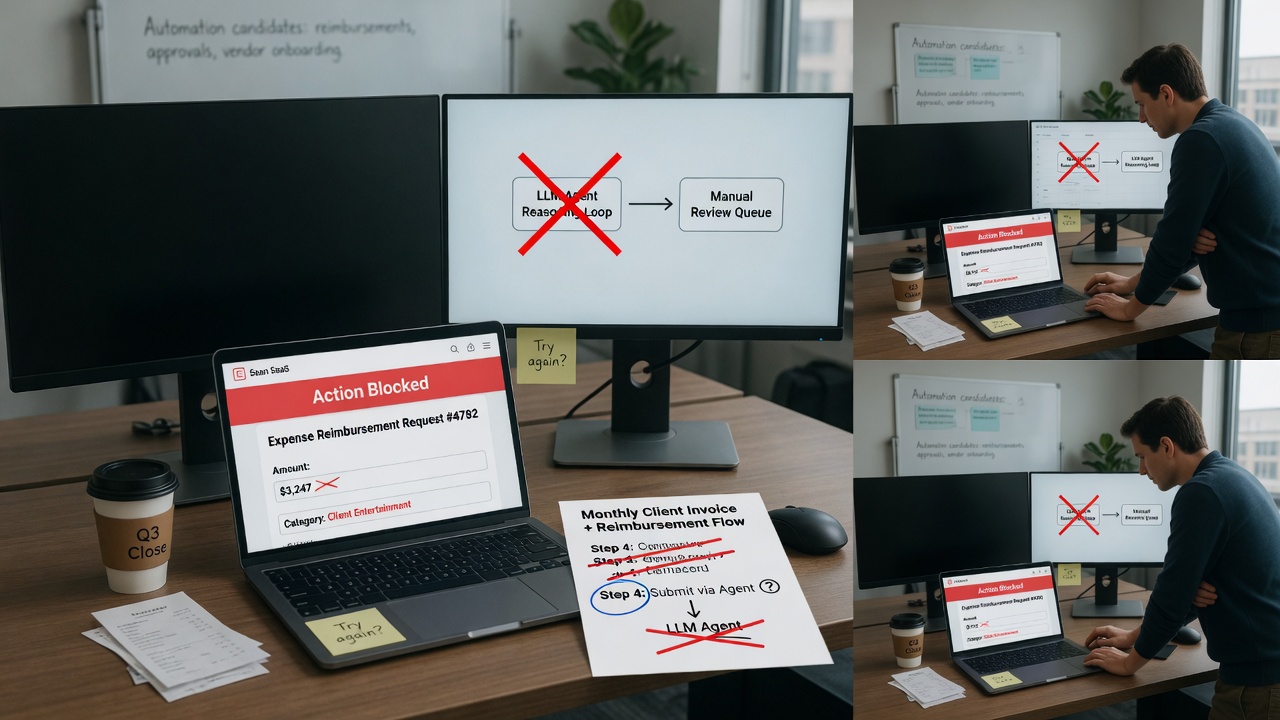
Stop Trusting LLM Agents to 'Reason' Their Way Out of Policy Violations
LLM agents are currently failing in a way that is dangerous for production: they are executing policy-violating actions without throwing a single error. When an agent hits a tool, that tool usually checks if the syntax i
Read this noteSame lane, different angle
The Autonomy Trap: Why Agentic AI Security is a Moving Target
The shift from AI as a passive assistant to an active agent represents more than just a technical upgrade; it is a fundamental expansion of the attack surface. When systems like OpenClaw move from merely answering questi
Why Your Multi-Agent Safety Strategy Is Probably Just a Rule-Text Problem
We tend to treat AI safety as a weight-tuning problem: make the model smarter, 'align' the weights, and the behavior will follow. It’s a comfortable narrative, but it ignores the architecture of the rules we give agents