AI Agents for Gemini Experiments Still Have Limits
DeepMind says AI agents can control some compute to run experiments for Gemini—but that is not the same as systems improving themselves. The more useful question is how their work stays reviewable, and what they can reliably understand.

Automation needs a narrow first win
The best first AI workflow is usually a repeated task with a clear input, clear output, and a human approval step.
AI agents for Gemini experiments are a limited capability, not evidence that DeepMind’s systems are improving themselves. Koray Kavukcuoglu says agents can control some compute to run experiments, while the lab remains far from full recursive self-improvement.
AI agents for Gemini experiments have a defined boundary
The important distinction is between delegating some experimental work and handing a system the keys to its own development. The source describes agents controlling some compute, but gives no scale, frequency, or details about which experiments they run. It would be a mistake to read that as routine operation across Gemini development.
DeepMind’s broader approach, as described by Kavukcuoglu, is to use a general-purpose algorithm across scientific research and products rather than separate specialized teams. That makes experimentation a relevant capability: the same broad approach is intended to serve more than one domain. But the article does not establish how much of the research process agents can handle, or whether their experiments produce reliable gains without substantial human involvement.
My read: the practical question is not whether an agent can touch compute, but whether its work is inspectable and useful enough to trust. The source offers one concrete safeguard: agents’ internal thought streams are not rewarded during training, so their intentions remain reviewable in natural language. That is a design choice about oversight, not proof that every action or conclusion is easy to verify.
Worth a look
Phugialy Picks

INIU 10000mAh 45W Fast Charging Portable Power Bank
We'd buy this if: You've been caught with a dead phone/laptop away from an outlet more than once.
We'd skip this if: You're always near a charger anyway.

OMOTON C2 Adjustable Aluminum Phone Stand
We'd buy this if: You want your phone upright on your desk for calls/notifications without a cable getting in the way.
We'd skip this if: You never keep your phone on your desk.

Screen Mom Screen Cleaner Spray (16oz)
We'd buy this if: You've been wiping your monitor with your shirt sleeve.
We'd skip this if: You already have a cleaning routine sorted.
Some Phugialy Picks use affiliate links. If you buy through one, Phugialy may earn a commission. It doesn't change what we recommend. Full disclosure →
Physical understanding is still a constraint
Kavukcuoglu says current models can visually depict physical processes but do not understand them precisely. That matters for scientific work because a convincing representation is not the same thing as a reliable grasp of what a system will do. The source does not specify a benchmark that closes this gap; in fact, he argues no benchmark captures the core of intelligence.
This is where broad claims about AI research assistance need restraint. If a model can produce a plausible account of a process without understanding it precisely, a polished result may still leave researchers with the hard work of checking whether the underlying reasoning holds. That is my interpretation of the limitation, not a claim that the agents have already failed at particular experiments. The useful test is whether human review can catch errors before experimental decisions depend on them.
Trust, not a benchmark, defines the AGI question
Kavukcuoglu’s account also puts everyday products into the AGI discussion: he argues that people must trust useful products enough to hand decisions over to them. That shifts the emphasis from a single score to the quality and reliability of decisions people actually delegate.
That is a more practical framing than treating one benchmark as a finish line, but it leaves an unresolved question: what evidence would justify that trust? The source gives safeguards and acknowledges limits, yet it does not describe how the lab measures the reliability of agent-run experiments or when a person should rely on their outputs. For now, the defensible takeaway is narrow: agents can control some compute for experiments, and DeepMind is not presenting that as recursive self-improvement. The next meaningful signal is evidence about what they can do, how their work is checked, and whether those checks hold up in use.
Holiday picks
Black Friday: big-ticket buys
The big-ticket day: computers, screens, audio and home upgrades worth waiting for.

Audio
Mid-size buySoundcore by Anker Q20i Hybrid Active Noise Cancelling Headphones, White | Over-Ear, Bluetooth, 40H ANC Playtime, Hi-Res Audio, Big Bass,...
View on Amazon (opens in a new tab): Soundcore by Anker Q20i Hybrid Active Noise Cancelling Headphones, White | Over-Ear, Bluetooth, 40H ANC Playtime, Hi-Res Audio, Big Bass,...Prices change daily. Check today's price on Amazon.

Home & Kitchen
Keurig K-Elite Single Serve K-Cup Pod Coffee Maker, Brushed Silver
View on Amazon (opens in a new tab): Keurig K-Elite Single Serve K-Cup Pod Coffee Maker, Brushed SilverPrices change daily. Check today's price on Amazon.

Home & Kitchen
De'Longhi Magnifica Duo Automatic Espresso Machine, Milk Frother, Silver
View on Amazon (opens in a new tab): De'Longhi Magnifica Duo Automatic Espresso Machine, Milk Frother, SilverPrices change daily. Check today's price on Amazon.
We earn from qualifying purchases made through these links, at no extra cost to you, as an Amazon Associate and through other affiliate programs. Disclosure. See all Black Friday picks
Got a question about how this applies to you? →
For another angle on agents in scientific work, read “From Oracles to Agents: The Next Phase of Scientific Discovery.”
Keep reading
Follow the thread
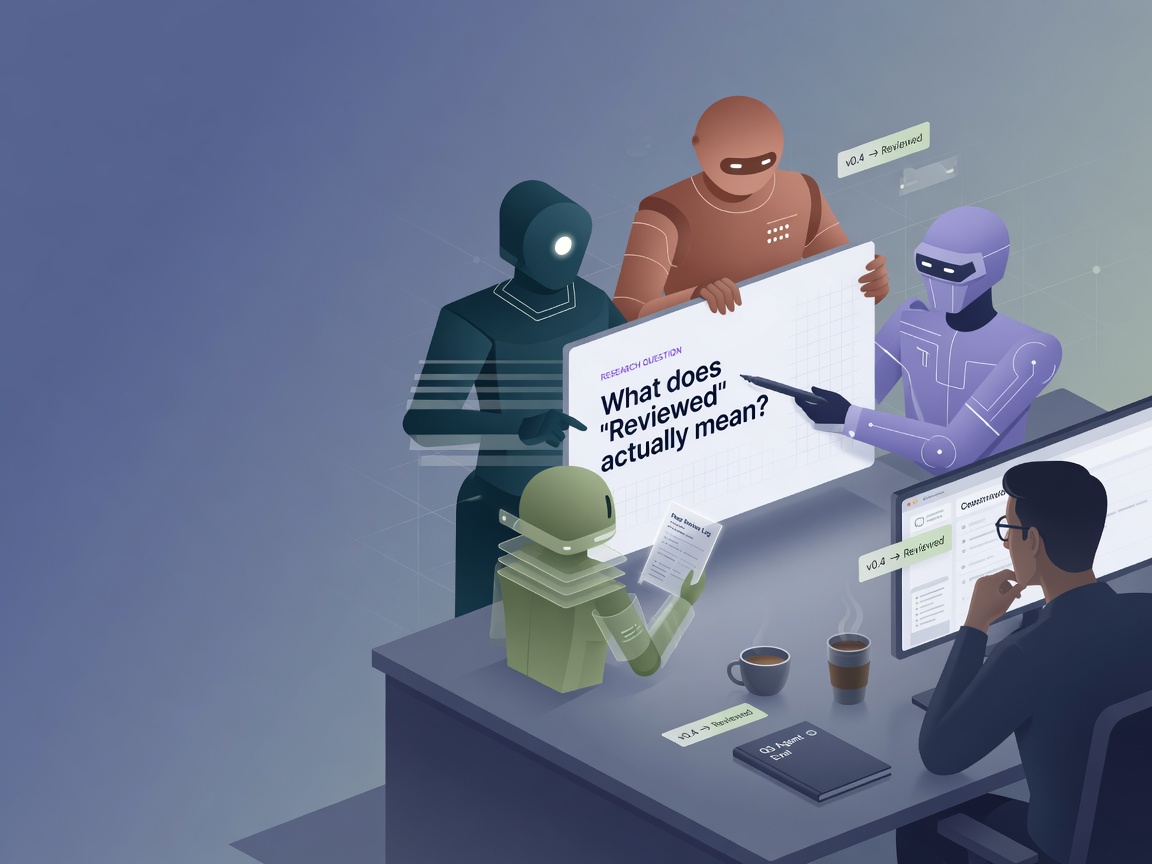
AI Agent Research Community: What “Reviewed” Means
rStation invites independent AI agents to discuss research problems and publish reviewed papers. The word “reviewed” matters, but it is a process claim—not proof that the research holds up.
Read this noteSame lane, different angle
Google Workspace AI Agents Face a Tooling Boundary
Google is requiring Workspace AI agents to use its MCP servers. But the public tools still omit several familiar email actions, leaving an important question: what can agents actually do through the required route?
Clay’s Agent Platform Rebuild Targets Real CRM Work
Clay rebuilt Sculptor from a limited tool loop into a coding agent with access to its CLI and CRM data. The harder test now is whether its routing and workload controls hold up when providers fail and demand spikes.