AI Coding Agents: What iFood’s Platform Actually Shows
iFood’s results make a stronger case for an internal agent service than for a particular model. Its platform has completed more than 25,000 tasks, but the most useful result is the reported improvement in security fixes—and the limits of what that proves.
Automation needs a narrow first win
The best first AI workflow is usually a repeated task with a clear input, clear output, and a human approval step.
For teams choosing between ad hoc AI coding agents and a shared internal service, iFood’s Remote Agents Platform makes the service model look more compelling—but it does not prove GPT‑5.6 Luna beats competing models. The useful result is an operational one: teams can send repository work through an API, run it in an isolated environment, and receive a structured result.
AI coding agents work here as a service, not a chat window
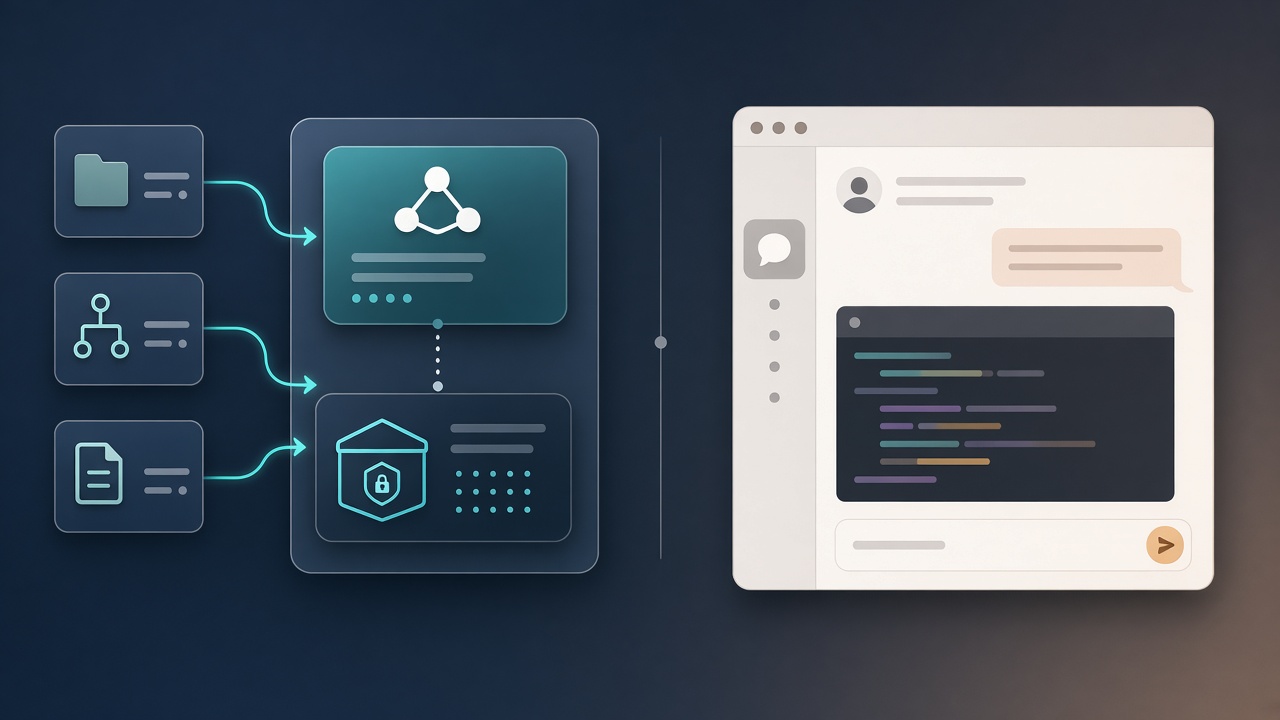
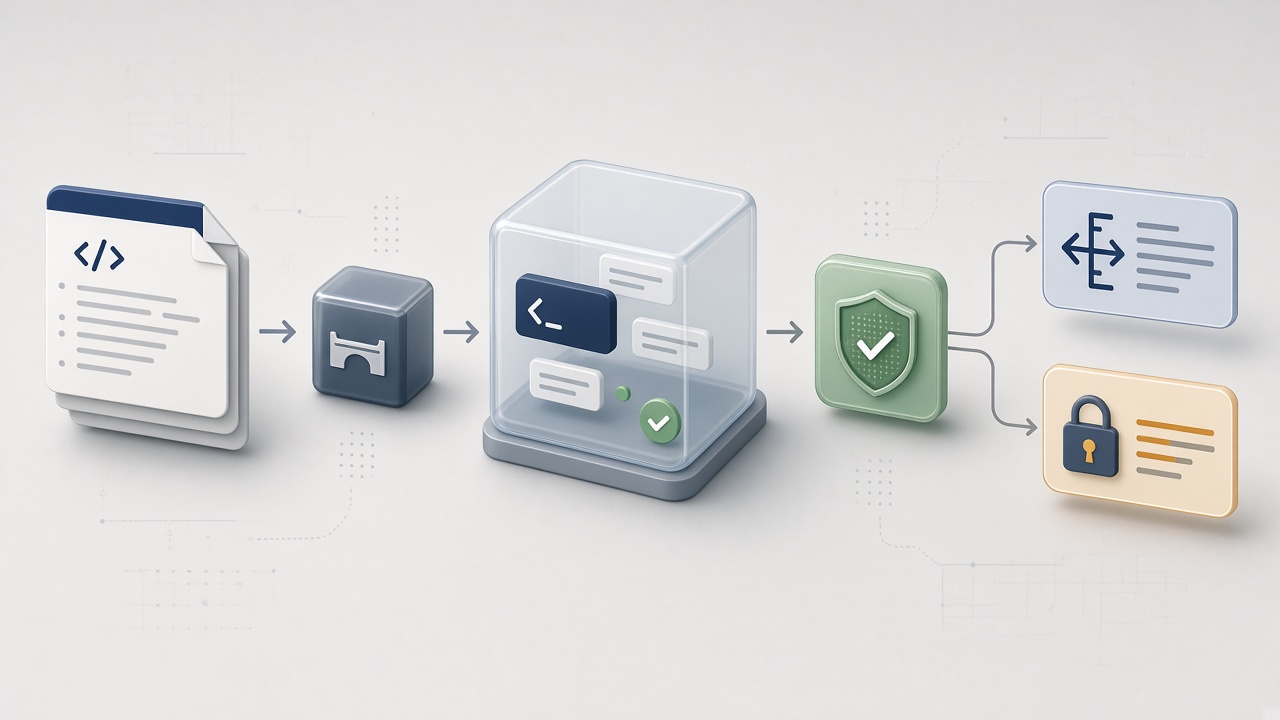
iFood built an internal REST API that lets teams delegate repository tasks. Execution happens asynchronously in isolated remote sandboxes, and results can include merge requests. That setup turns an agent from an individual coding interface into a service that other teams can call.
The platform has completed more than 25,000 tasks across iFood’s repository ecosystem. The source also lists more than 15,000 code repositories, more than 27 billion tokens, and a cost of US$0.04 per run. Those figures suggest substantial use, but they do not explain how tasks were counted, what the token total covers, or whether the per-run cost includes the full operating stack. They are evidence of deployment, not a complete cost comparison.
My read: the strongest case here is for organizations that need repeatable, asynchronous repository work—not for developers looking for a better conversational coding assistant. The REST API and sandboxing are the product’s defining choices; they matter more to this deployment than a model name alone.
Worth a look
Phugialy Picks

AI Engineering: Building Applications with Foundation Models
A practical guide to building real-world applications with foundation models and LLMs.

LG 34WN80C-B UltraWide Monitor 34” 21:9 Curved WQHD (3440 x 1440) IPS Display, USB Type-C (60W PD), sRGB 99% Color Gamut, 3-Side Virtuall...

Alienware 34 Curved Gaming Monitor – AW3425DWM - 34-inch WQHD 180Hz 1ms Display, 1500R, AMD FreeSync Premium, VESA AdaptiveSync.
Some Phugialy Picks use affiliate links. If you buy through one, Phugialy may earn a commission. It doesn't change what we recommend. Full disclosure →
GPT‑5.6 Luna’s case rests on the operating pipeline
iFood selected GPT‑5.6 Luna for a balance of intelligence, efficiency, and execution speed, based on benchmarks among models at the same checkpoint. The platform also uses Structured Outputs to check that results follow a predefined contract. That contract matters because a useful automated task needs a response the surrounding system can process, not just plausible-looking text.
The source does not provide benchmark scores, identify the alternatives, or separate the model’s contribution from the platform’s design. So this is not enough to conclude that GPT‑5.6 Luna is the best coding model for another team. It does support a narrower point: model choice, execution environment, and output validation were combined in a working internal service.
Security gains are promising, not a model leaderboard
After migration, iFood’s security product more than doubled both the accuracy of its fixes and the number of vulnerabilities resolved. That is the most consequential result in the account because it ties the deployment to a concrete security workflow, rather than only reporting task volume.
Still, the source gives no baseline values or comparison with another model or workflow. The improvement should be read as an outcome of the migration, not proof that GPT‑5.6 Luna alone caused it. For teams with a similar security backlog, iFood’s approach is worth evaluating if they can isolate tasks, define acceptable outputs, and measure fix accuracy against their own baseline. If the need is an individual coding assistant or a proven model ranking, this account does not establish that it should replace the alternatives. The next useful evidence would be comparable results across models and workflows on the same security tasks.
Holiday picks
Black Friday: big-ticket buys
The big-ticket day: computers, screens, audio and home upgrades worth waiting for.

Audio
DJI Mic 2 (2 TX + 1 RX + Charging Case), All-in-one Wireless Microphone
View on Amazon (opens in a new tab): DJI Mic 2 (2 TX + 1 RX + Charging Case), All-in-one Wireless MicrophonePrices change daily. Check today's price on Amazon.

Home & Kitchen
eufy C28 Robot Vacuum Cleaner and Mop for pet hair, 15,000 Pa
View on Amazon (opens in a new tab): eufy C28 Robot Vacuum Cleaner and Mop for pet hair, 15,000 PaPrices change daily. Check today's price on Amazon.

Home & Kitchen
Keurig K-Elite Single Serve K-Cup Pod Coffee Maker, Brushed Silver
View on Amazon (opens in a new tab): Keurig K-Elite Single Serve K-Cup Pod Coffee Maker, Brushed SilverPrices change daily. Check today's price on Amazon.
We earn from qualifying purchases made through these links, at no extra cost to you, as an Amazon Associate and through other affiliate programs. Disclosure. See all Black Friday picks
Got a question about how this applies to you? →
Keep reading
Follow the thread

Coding-Agent Model Evaluation Needs a Production Loop
Airbnb evaluates coding-agent models on its own engineering tasks before rolling them out, then checks whether production behavior matches the evaluation. That matters more than a leaderboard alone: the team is trying to
Read this noteSame lane, different angle
Octomind’s Coding Agent Harness: What the Results Show
Octomind reports solving 24 of 25 merged-pull-request tasks, compared with 19 for OpenCode using the same model at about twice the cost. The result is worth testing, but the more useful question is whether its guardrails and interfaces hold up in your repository.
Skillsync: Making AI Coding Agent Sessions Portable
Skillsync converts AI coding agent sessions between tools like Claude Code, Codex, and Cursor, preserving messages, reasoning, and tool calls. That last part is the one worth paying attention to - a transcript export is