Enterprise AI Governance Starts Outside the Agent Loop
BMW Group’s agent governance model puts controls outside individual agents and assigns autonomy by workflow step. That’s a more practical starting point than deciding an entire agent is either trusted or not—but the evaluation dataset has to represent the work teams will actually deploy.

Automation needs a narrow first win
The best first AI workflow is usually a repeated task with a clear input, clear output, and a human approval step.
Enterprise AI governance gets harder when agents are built by hundreds of teams and wired into systems with real operational consequences. BMW Group’s approach, as described in the AWS article, is to let teams build while enforcing key controls outside individual agents.
Enterprise AI governance belongs outside the agent
The scale is the point: BMW Group’s R&D environment includes more than 12,500 developers, hundreds of globally distributed teams, more than 1,300 microservices, and approximately 500 million lines of vehicle software code. The article describes agents being built and operated in that environment, where one-off rules embedded in each agent would be difficult to govern consistently.
A harness supplies an agent’s execution loop, tool dispatch, memory management, and observability hooks. But the harness is not the whole governance model. The article places controls in integration layers and CI/CD validation, rather than relying on each agent to police itself. That is a useful separation: developers can choose frameworks, while shared systems check whether changes meet organizational requirements.
My read is that framework-agnostic governance matters less as a promise of developer freedom than as a way to keep controls from being tied to one agent implementation. The practical test is whether those controls can catch a risky change without making every team adopt the same framework.
Worth a look
Phugialy Picks

AI Engineering: Building Applications with Foundation Models
A practical guide to building real-world applications with foundation models and LLMs.

GMKtec K15 AI Mini PC Oculink Intel Ultra 5 125U 32GB DDR5 512GB SSD | Desktop Computer AI Boost, 3X M.2 2280 Storage Expansion, Dual NIC...

Agentic AI Engineering: Systems That Reason and Act Autonomously – Designing, Building, and Prompting LLM-Based Agents for Real-World Deployment
Some Phugialy Picks use affiliate links. If you buy through one, Phugialy may earn a commission. It doesn't change what we recommend. Full disclosure →
Trust should vary by workflow step
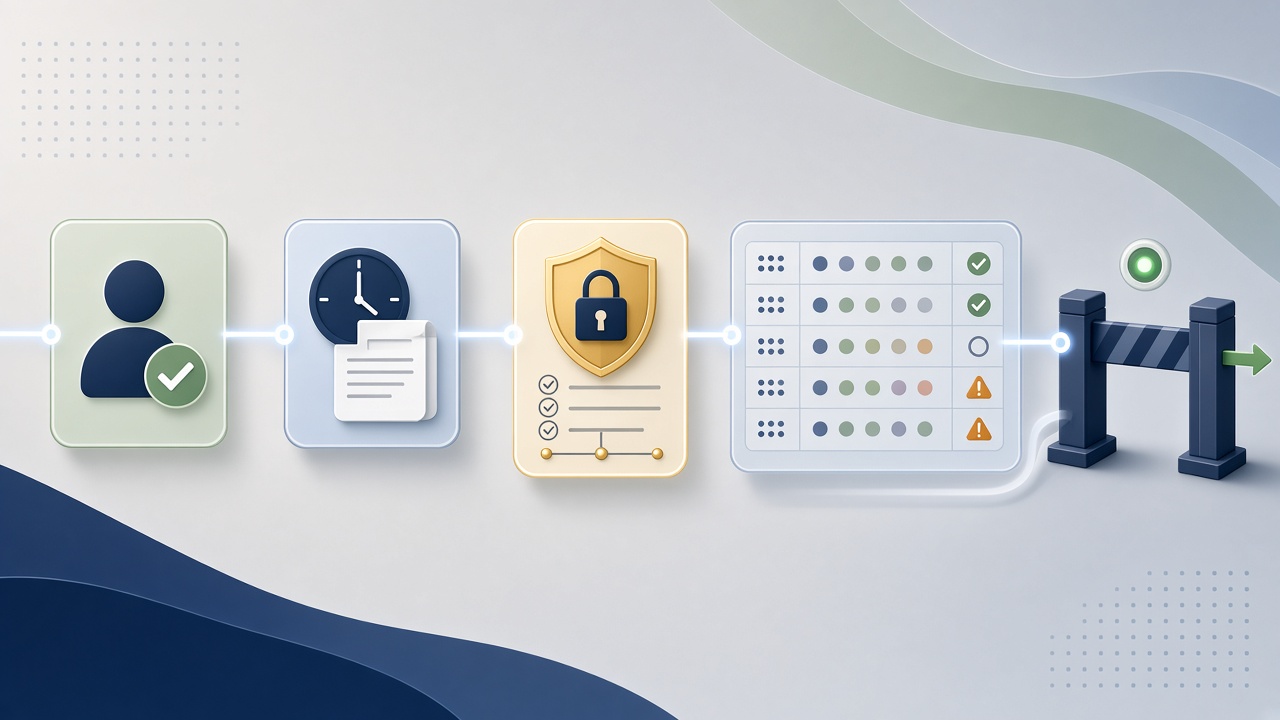
The article’s advice is to “Assign trust levels per step, not per agent.” In practice, autonomy can differ across steps in one workflow: a step may require human approval, go through asynchronous review, or run within deterministic guardrails. That avoids treating an agent as either broadly trusted or broadly restricted.
This is a more useful way to reason about production behavior than a single autonomy setting. A workflow can contain both routine actions and decisions that need review. The source does not specify how BMW chooses among those controls, so teams should not mistake the principle for a ready-made policy. They still need to decide which steps can run unattended and what conditions trigger review.
Evaluation and composition are the deployment contract
Agent changes are evaluated against a ground-truth dataset, with quality thresholds gating deployment. The article also recommends defining an agent’s scope, interaction model, tools, evaluation dataset, and criteria before implementation. That sequence puts the evaluation target in view before a team has invested in a polished demo.
The advice to “build agents that can cooperate from the start” fits the same operating model: specialized agents should work compositionally, rather than being treated as isolated demos. My interpretation is that cooperation raises the value of clear boundaries and observable execution traces, because teams need to understand how work moves between components. It also makes evaluation harder: a dataset must reflect the behavior the team intends to deploy, not just a narrow success case.
For anyone integrating agents, the part worth borrowing is the discipline of defining scope and quality criteria early, then enforcing deployment checks outside the agent. I would treat that as a starting design, not proof that the controls will hold up under every edge case. The signal to watch is whether the evaluation and CI/CD gates remain useful as more teams and cooperating agents enter the system.
Holiday picks
Thanksgiving: early shopping
Start early: products for hosting, travel and home, plus the gear you have been watching.

Audio
Big purchaseSony WH-1000XM5 Premium Noise Cancelling Wireless Headphones
View on Amazon (opens in a new tab): Sony WH-1000XM5 Premium Noise Cancelling Wireless HeadphonesPrices change daily. Check today's price on Amazon.
 Trending now
Home & Kitchen
Keurig K-Elite Single Serve K-Cup Pod Coffee Maker, Brushed Silver
View on Amazon (opens in a new tab): Keurig K-Elite Single Serve K-Cup Pod Coffee Maker, Brushed SilverPrices change daily. Check today's price on Amazon.
 Trending now
Home & Kitchen
eufy C28 Robot Vacuum Cleaner and Mop for pet hair, 15,000 Pa
View on Amazon (opens in a new tab): eufy C28 Robot Vacuum Cleaner and Mop for pet hair, 15,000 PaPrices change daily. Check today's price on Amazon.
We earn from qualifying purchases made through these links, at no extra cost to you, as an Amazon Associate and through other affiliate programs. Disclosure. See all Thanksgiving picks
Got a question about how this applies to you? →
For a related look at what agent traces need to show, read “AI Agent Observability Needs Identity, Not Just Traces.”
Keep reading
Follow the thread

AI Simulation Agents Still Need a Human Test Loop
AI agents can assemble and run industrial, robotics, and VR simulations, but a successful render is not proof that the scene behaves correctly. The useful workflow still includes logs, direct testing, and a developer checking the result.
Read this noteSame lane, different angle
AI Loan Servicing Assistant: Where the Work Really Is
LoanPro’s assistant works across eight API endpoints and synthesizes around 1,400 fields per account. The reported call-time reduction is up to 15 percent, but the more useful question for builders is how each stage handles messy account data.
An AI Context Layer Could Make Enterprise AI Useful
An AI context layer is a proposed way to make enterprise AI more useful by connecting business systems to AI platforms and translating organizational knowledge into governed, machine-usable context. The case for it is pr