AI Loan Servicing Assistant: Where the Work Really Is
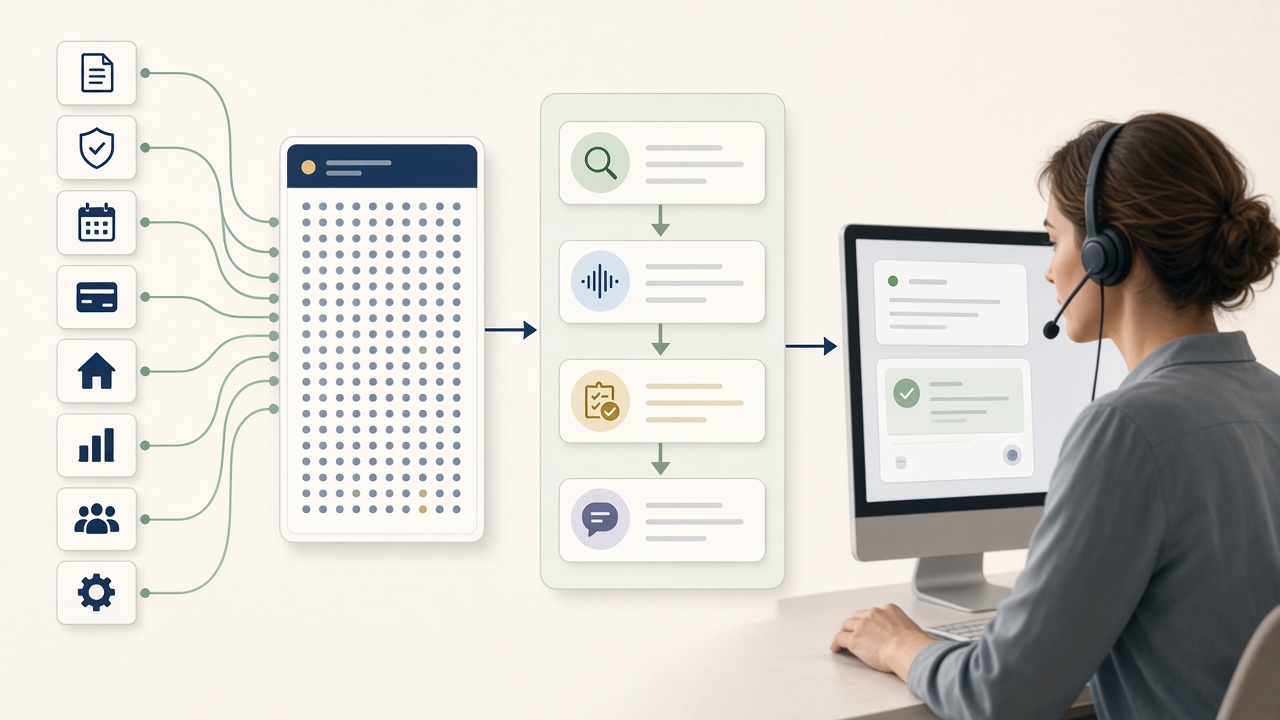
LoanPro’s assistant works across eight API endpoints and synthesizes around 1,400 fields per account. The reported call-time reduction is up to 15 percent, but the more useful question for builders is how each stage handles messy account data.

Automation needs a narrow first win
The best first AI workflow is usually a repeated task with a clear input, clear output, and a human approval step.
LoanPro’s AI loan servicing assistant pulls account details across eight API endpoints, synthesizes around 1,400 fields per account, and recommends what a servicing agent should do next. The reported result is customer call times reduced by up to 15 percent, according to an AllCloud case study. The architecture is more interesting than the headline: it makes API access and task boundaries explicit.
How the AI loan servicing assistant divides the work
LoanPro worked with AllCloud and the AWS Generative AI Innovation Center to build the assistant on Amazon Bedrock, Amazon Bedrock AgentCore, and Anthropic Claude models. Specialized agents handle borrower-data retrieval, account summarization, workflow recommendations, and response composition. The system uses Claude Sonnet 5.5, Claude Haiku 5.5, and Claude Opus 5.5, though the source material doesn’t map individual models to specific tasks.
AgentCore Gateway exposes LoanPro APIs to agents as tools over the Model Context Protocol (MCP). The retrieval tool spans eight API endpoints and synthesizes around 1,400 fields per account, connecting to live production data through existing APIs. That is a concrete integration choice: the assistant works against LoanPro’s current data-access layer rather than a separate data connection described in the source.
My read is that the separation of tasks is the practical design decision to study. A retrieval step, a summary, a recommendation, and a drafted response are different things to inspect. Keeping them distinct could make it easier to identify which stage needs tuning when an answer is incomplete or a recommendation is off. The case study’s stated rationale is similar: each agent is more straightforward to evaluate, tune, and extend independently.
Worth a look
Phugialy Picks

OMOTON C2 Adjustable Aluminum Phone Stand
We'd buy this if: You want your phone upright on your desk for calls/notifications without a cable getting in the way.
We'd skip this if: You never keep your phone on your desk.

Screen Mom Screen Cleaner Spray (16oz)
We'd buy this if: You've been wiping your monitor with your shirt sleeve.
We'd skip this if: You already have a cleaning routine sorted.
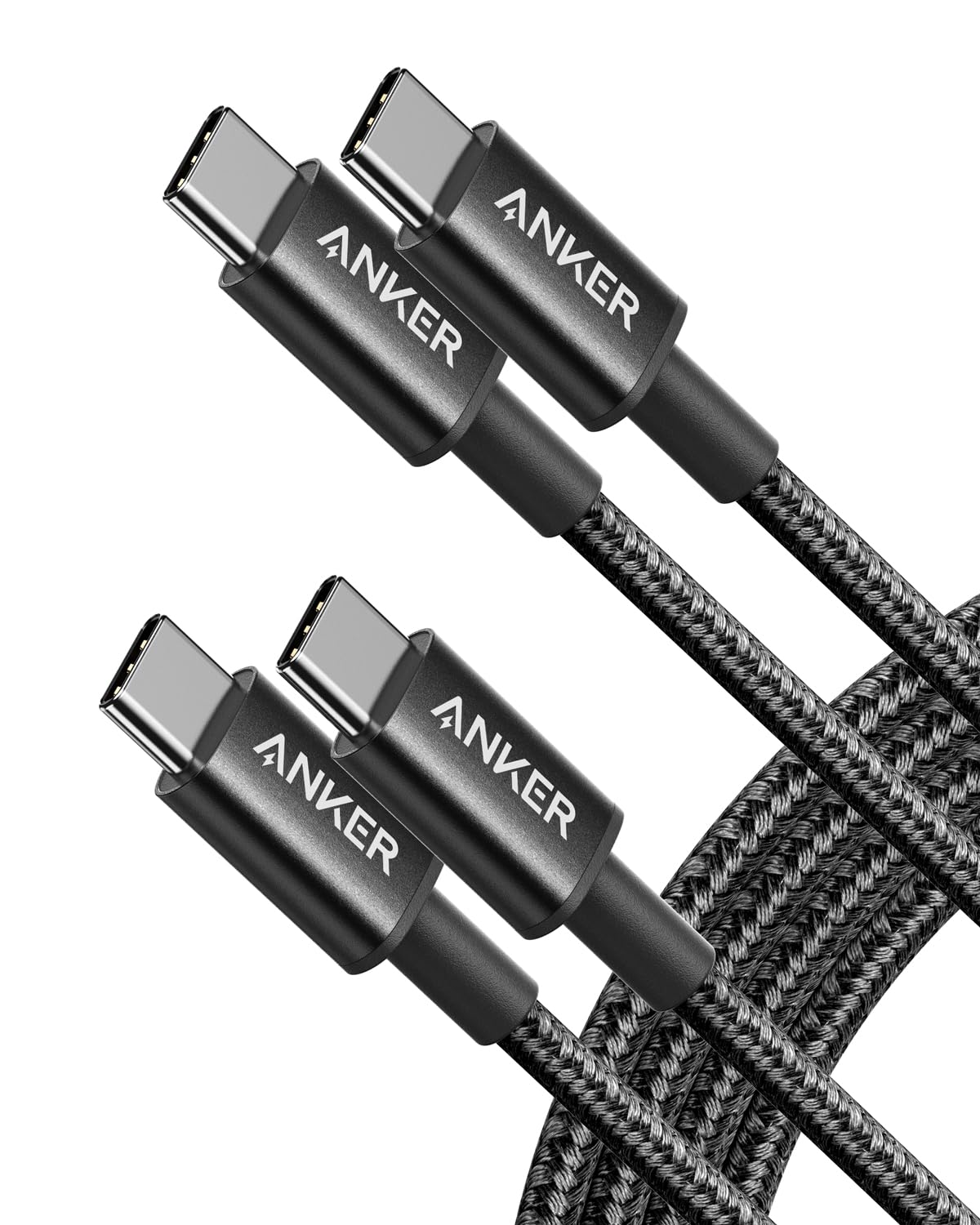
Anker USB-C to USB-C 60W Fast Charging Cable (2-Pack)
We'd buy this if: You need a reliable spare charging cable that won't fray in a month.
We'd skip this if: You already have enough cables lying around.
Some Phugialy Picks use affiliate links. If you buy through one, Phugialy may earn a commission. It doesn't change what we recommend. Full disclosure →
What the 15 percent call-time reduction does—and doesn’t—show
AllCloud’s case study reports customer call times reduced by up to 15 percent. That gives the project a measurable operational outcome, not just a description of an AI demo. But “up to” matters: the provided summary doesn’t specify how broadly the reduction applied, how it was measured, or whether it held across different call types.
For a servicing team, shorter calls could be valuable if agents are spending less time hunting through account details and composing routine responses. That is a plausible interpretation of the system’s retrieval and synthesis role, not a measured explanation of why call times fell. The metric is encouraging, but it isn’t enough on its own to estimate results for another organization.
The integration question is what happens on messy accounts
The interesting question isn’t whether agents can summarize 1,400 fields; it’s whether the resulting summary and next-step recommendation stay useful when an account’s data is incomplete, contradictory, or unusual. The source establishes that the assistant uses live production data through existing APIs, but the available details don’t describe how it handles those edge cases or how human review fits into the response workflow.
If I were evaluating this pattern, I’d focus on the handoffs: whether retrieval brings back the right borrower context, whether the summary preserves important exceptions, and whether the recommendation remains grounded in that context. The multi-agent design gives those stages names and boundaries to test. That is a more useful starting point for a servicing assistant than treating one model response as a single black box. Before using the reported call-time result as a forecast, I’d want to see how it varies across call types and account conditions.
Holiday picks
Thanksgiving: early shopping
Start early: products for hosting, travel and home, plus the gear you have been watching.

Audio
Mid-size buyJLab, JBuds Lux ANC, Over Ear Headphones, Active Noise Cancelling, Bluetooth, Spatial Audio, Sage
View on Amazon (opens in a new tab): JLab, JBuds Lux ANC, Over Ear Headphones, Active Noise Cancelling, Bluetooth, Spatial Audio, SagePrices change daily. Check today's price on Amazon.

Home & Kitchen
eufy C28 Robot Vacuum Cleaner and Mop for pet hair, 15,000 Pa
View on Amazon (opens in a new tab): eufy C28 Robot Vacuum Cleaner and Mop for pet hair, 15,000 PaPrices change daily. Check today's price on Amazon.
 New this week
Home & Kitchen
Keurig K-Elite Single Serve K-Cup Pod Coffee Maker, Brushed Silver
View on Amazon (opens in a new tab): Keurig K-Elite Single Serve K-Cup Pod Coffee Maker, Brushed SilverPrices change daily. Check today's price on Amazon.
We earn from qualifying purchases made through these links, at no extra cost to you, as an Amazon Associate and through other affiliate programs. Disclosure. See all Thanksgiving picks
Got a question about how this applies to you? →
If the data-integration side is your concern, read “Agentic AI for Lab Operations Depends on Better Data” next.
Keep reading
Follow the thread

Agentic AI for Lab Operations Depends on Better Data
SWARM reports roughly 130 times faster first responses and 96.2 percent automated ticket coverage. The more useful engineering lesson may be less about adding agents and more about building the equipment-specific document pipeline that helps them retrieve the right knowledge.
Read this noteSame lane, different angle
Autonomous Security Operations: What Greenlight Shows
Greenlight says its AI system resolves more than 90 percent of security and risk cases. The architecture behind that figure includes escalation, memory, and a feedback pipeline—but the rate alone does not show whether the hardest mistakes are being caught.
Agentic AI for Financial Services: Duco’s Stack
Duco’s agentic AI for financial services stack pairs Amazon Bedrock’s foundation-model access with Amazon Bedrock AgentCore’s managed agent runtime. The useful change is not just adding agents: Duco can select models fro