An AI Context Layer Could Make Enterprise AI Useful
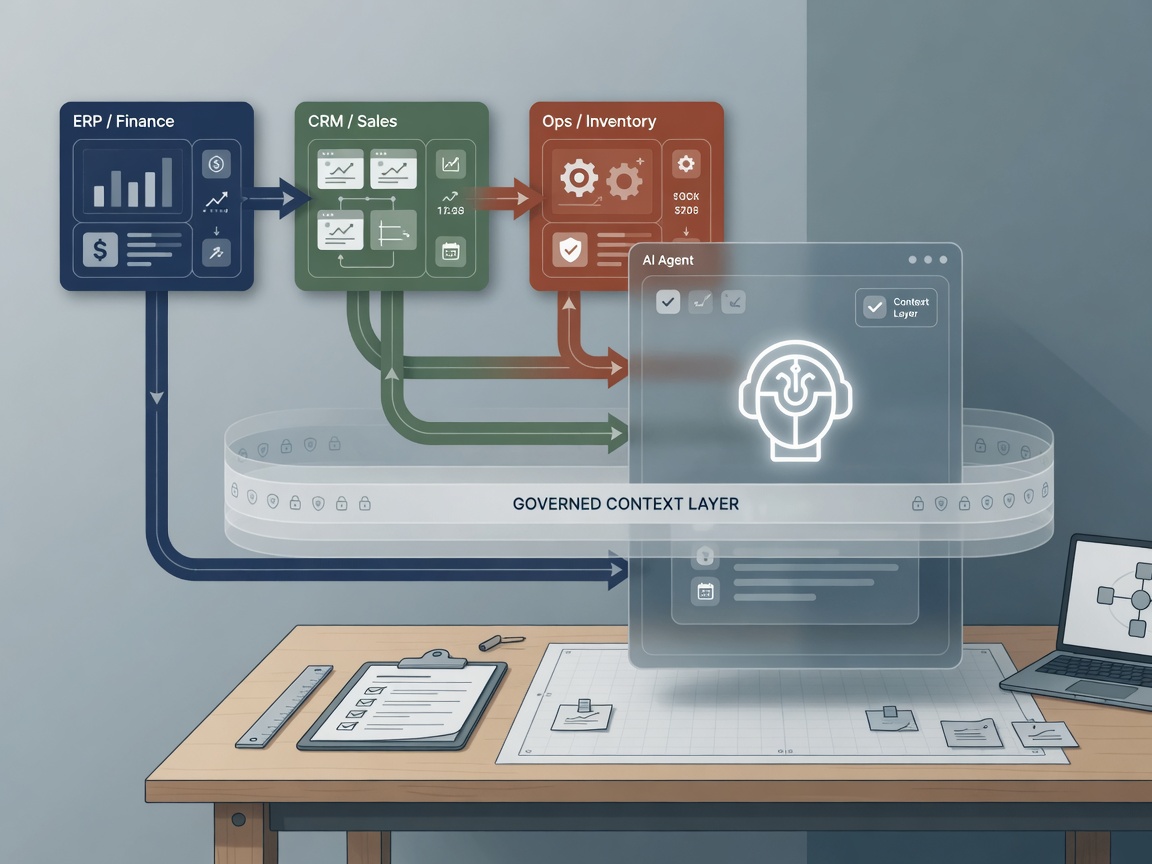
An AI context layer is a proposed way to make enterprise AI more useful by connecting business systems to AI platforms and translating organizational knowledge into governed, machine-usable context. The case for it is pr
Automation needs a narrow first win
The best first AI workflow is usually a repeated task with a clear input, clear output, and a human approval step.
An AI context layer is a proposed way to make enterprise AI more useful by connecting business systems to AI platforms and translating organizational knowledge into governed, machine-usable context. The case for it is practical: a model can be capable and still struggle to help when it lacks the context of the organization where it is being used.
AI context layer: capability is not the same as business value
An MIT Technology Review Insights poll points to a gap between AI adoption and results. Organizations are using AI, but few report transformative value, and most remain in pilot projects or employee-assistance use cases. Only 12% of surveyed enterprises report having AI agents in production.
Atlan co-founder Prukalpa Sankar describes the underlying problem as “a big gap between what the models are capable of and how the models are actually being useful inside organizations.” The article also quotes her saying that “For every real-life intent and purpose, artificial general intelligence is already here. It’s just not really useful in most companies today.” That is a broad claim about capability; the poll’s production figure is a narrower measure of how far organizations have taken agents.
My read is that deployment status matters more here than another capability demo. A pilot can show that a model responds well to a clean prompt. It does not establish that an agent can act usefully within a business, where relevant information is distributed across systems and needs to be interpreted in context.
Worth a look
Phugialy Picks

AI Engineering: Building Applications with Foundation Models
A practical guide to building real-world applications with foundation models and LLMs.

GMKtec K15 AI Mini PC Oculink Intel Ultra 5 125U 32GB DDR5 512GB SSD | Desktop Computer AI Boost, 3X M.2 2280 Storage Expansion, Dual NIC...

2084 and the AI Revolution, Updated and Expanded Edition: How Artificial Intelligence Informs Our Future
Some Phugialy Picks use affiliate links. If you buy through one, Phugialy may earn a commission. It doesn't change what we recommend. Full disclosure →
What a governed context layer is meant to provide
The proposed context layer sits between business systems and AI platforms. Its job, as described in the source, is to translate enterprise intelligence into context that models and agents can use while keeping that context governed. The idea is not simply to connect a model to more data; it is to make organizational context usable in a form that can guide AI systems.
Sankar compares an AI system without this layer to “the smartest intern in the world, blindfolding them, and throwing them into your organization.” It’s a useful integration analogy: general capability does not automatically tell a system which business information applies or how to use it. The article presents a context layer as infrastructure intended to address that gap, not as proof that every enterprise agent will become reliable once it is added.
The production test is whether context survives real work
The source makes a case for context infrastructure, but it does not establish that a context layer alone will deliver transformative value. My interpretation is that the hard test is whether an agent can use governed context consistently enough to move beyond pilots and employee assistance. The poll’s 12% production figure makes that a more useful question than whether the underlying model can perform impressively in a demo.
For a team evaluating this approach, I would first identify a specific workflow where missing business context is the blocker. Then test whether the proposed layer supplies the information the agent needs in that workflow, with governance intact. That is a way to evaluate the claim, not a result the source reports. If production adoption and reported business value rise as organizations build this kind of infrastructure, the case strengthens. If pilots remain the norm, the context layer may be necessary without being sufficient.
Holiday picks
Thanksgiving: early shopping
Start early: products for hosting, travel and home, plus the gear you have been watching.

Monitors
Big purchaseAlienware 34 Curved Gaming Monitor – AW3425DWM - 34-inch WQHD 180Hz 1ms Display, 1500R, AMD FreeSync Premium, VESA AdaptiveSync.
View on Amazon (opens in a new tab): Alienware 34 Curved Gaming Monitor – AW3425DWM - 34-inch WQHD 180Hz 1ms Display, 1500R, AMD FreeSync Premium, VESA AdaptiveSync.Prices change daily. Check today's price on Amazon.

Home & Kitchen
eufy C28 Robot Vacuum Cleaner and Mop for pet hair, 15,000 Pa
View on Amazon (opens in a new tab): eufy C28 Robot Vacuum Cleaner and Mop for pet hair, 15,000 PaPrices change daily. Check today's price on Amazon.
 New this week
Home & Kitchen
Keurig K-Elite Single Serve K-Cup Pod Coffee Maker, Brushed Silver
View on Amazon (opens in a new tab): Keurig K-Elite Single Serve K-Cup Pod Coffee Maker, Brushed SilverPrices change daily. Check today's price on Amazon.
We earn from qualifying purchases made through these links, at no extra cost to you, as an Amazon Associate and through other affiliate programs. Disclosure. See all Thanksgiving picks
Got a question about how this applies to you? →
Keep reading
Follow the thread
Why Most Enterprise AI Agents Never Reach Production
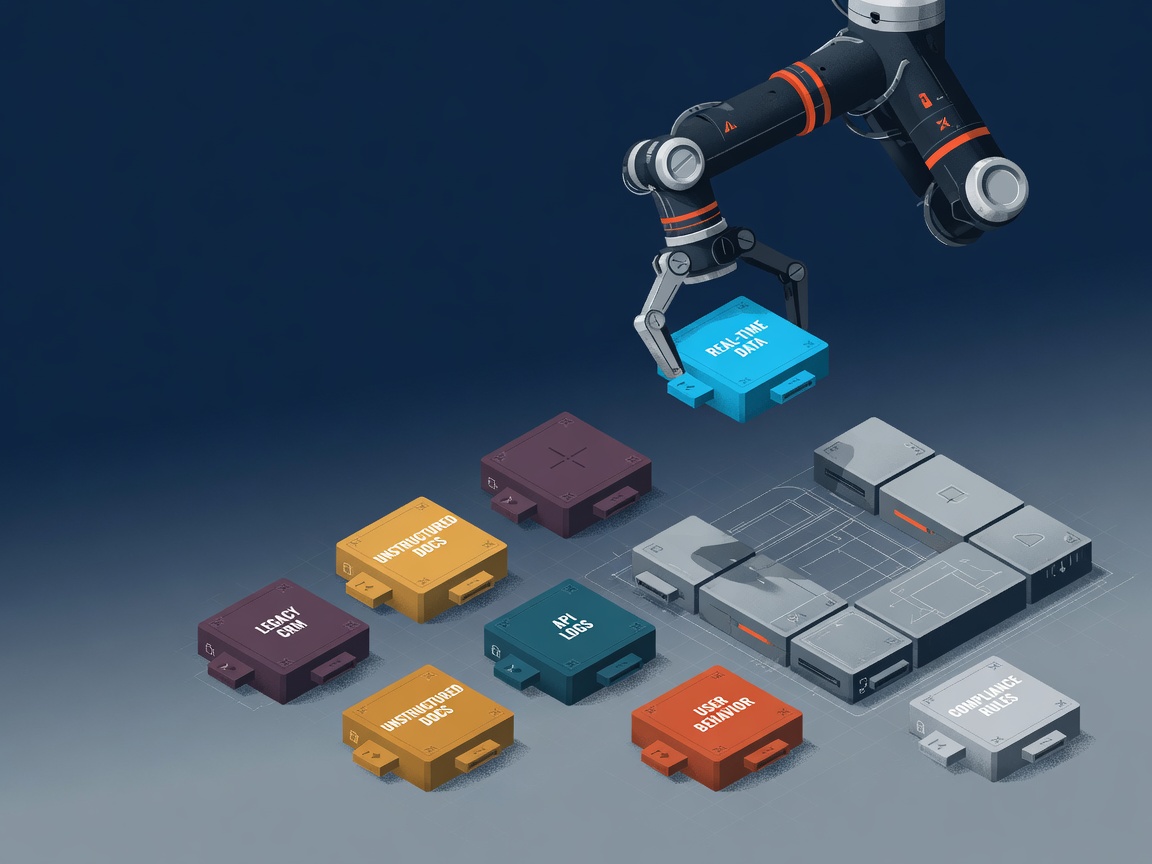
Two out of three enterprise AI agents never reach production — and the reason isn't model quality. It's that the agent doesn't know what your data means.
Read this noteSame lane, different angle
Multi-Agent AI Systems Are Taking Over Supply Chain Execution
Multi-agent AI systems are now replacing human approval stages in supply chain execution - not in demos, but at Lenovo across 180 markets, at Rohto Pharmaceutical on a live physical chain, and at Kohler and Belden on Dat
AI Loan Servicing Assistant: Where the Work Really Is
LoanPro’s assistant works across eight API endpoints and synthesizes around 1,400 fields per account. The reported call-time reduction is up to 15 percent, but the more useful question for builders is how each stage handles messy account data.