AI Data Center Financing Meets Bank Exposure Limits
Banks are seeking ways to shift risk from AI-linked loans as they approach internal limits. The signal is real, but it says more about distributing a large debt pool than about financing disappearing across the data center sector.
Automation needs a narrow first win
The best first AI workflow is usually a repeated task with a clear input, clear output, and a human approval step.
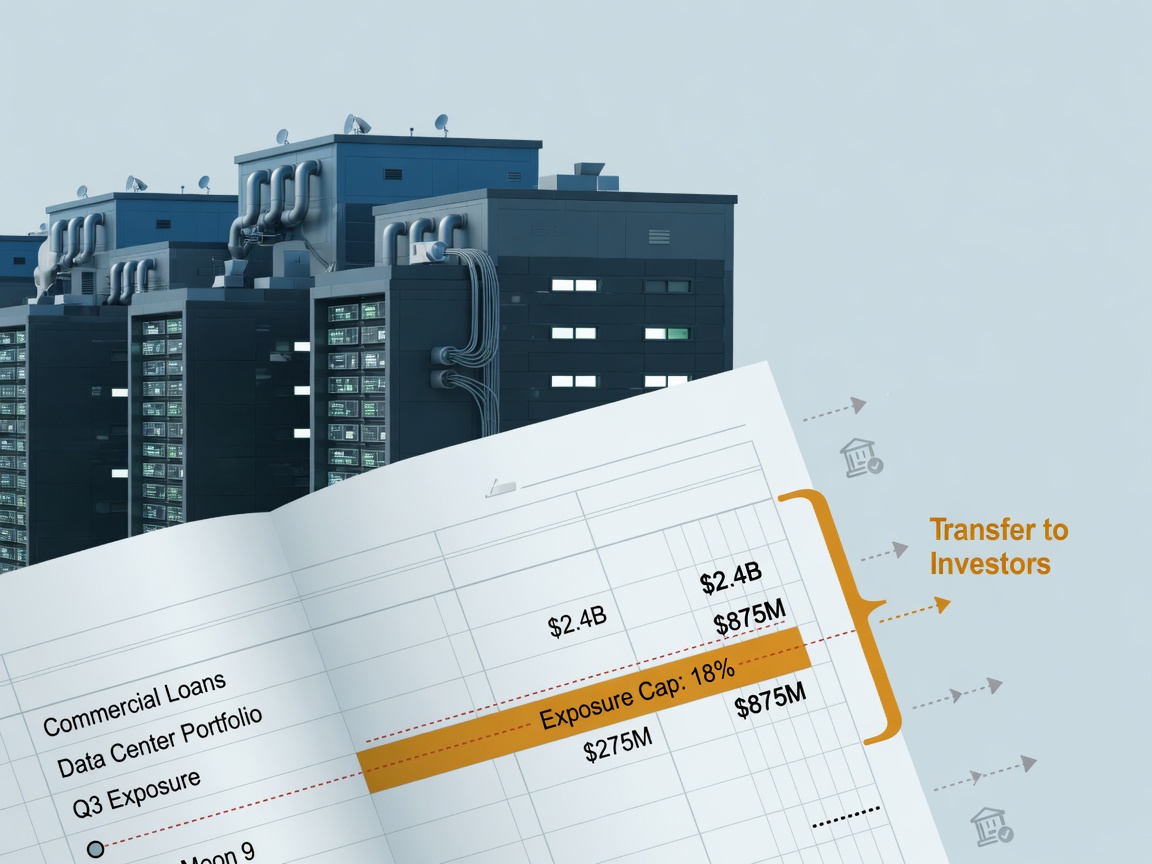
Banks are exploring ways to transfer risk from AI-linked loans as some approach internal exposure limits. That points to pressure in AI data center financing, but it does not show that funding has dried up across the sector—or that only investment-grade projects can borrow.
What banks are trying to do with AI-linked loans
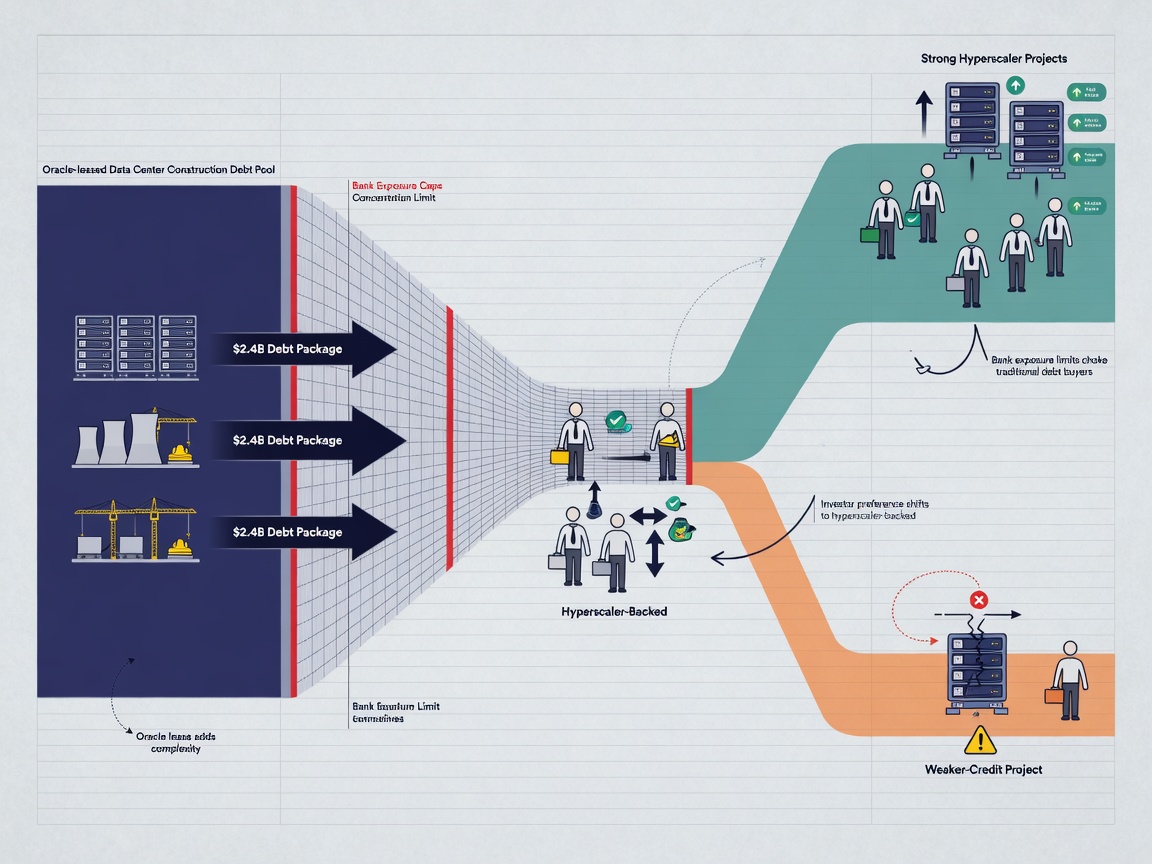
JPMorgan, Morgan Stanley, SMBC and MUFG are exploring significant risk transfers that would move the riskiest portions of AI-linked loans to outside investors. The banks are nearing internal exposure limits, while lenders have struggled for more than six months to distribute $38 billion in construction debt tied to data center projects leased to Oracle.
That combination matters. Banks can continue financing projects only if they can manage the concentration and risk on their own books; transferring part of that risk is one route to doing so. But a proposed transfer is not the same as a completed one, and the difficulty distributing this particular pool of debt suggests that finding buyers is taking time. It does not, by itself, establish that the wider data center market has stopped attracting capital.
Worth a look
Phugialy Picks

AI Engineering: Building Applications with Foundation Models
A practical guide to building real-world applications with foundation models and LLMs.

GMKtec K15 AI Mini PC Oculink Intel Ultra 5 125U 32GB DDR5 512GB SSD | Desktop Computer AI Boost, 3X M.2 2280 Storage Expansion, Dual NIC...

2084 and the AI Revolution, Updated and Expanded Edition: How Artificial Intelligence Informs Our Future
Some Phugialy Picks use affiliate links. If you buy through one, Phugialy may earn a commission. It doesn't change what we recommend. Full disclosure →
AI data center financing is meeting more selective demand
Investors are favoring data centers leased to investment-grade hyperscalers over weaker credits such as CoreWeave. That is evidence of a preference in the reported financing market, not proof of a clean, market-wide divide between projects that can and cannot get financed. The source also points to higher Treasury yields and thinner demand for AI-related corporate bonds as additional pressure on financing.
The gap in the evidence is important: the figures describe strain in distributing a large amount of construction debt and in placing banks’ exposure, but they do not map financing availability across all borrowers, project types or lenders. My reading is that the story is less about a categorical retreat from AI infrastructure than about how much risk banks and investors are currently willing to hold, and on what terms. A preference for stronger credits can shape who attracts interest without proving that weaker ones have no route to financing.
The defensible claim is about risk distribution
The reported $38 billion is a substantial test of debt distribution, while the banks’ internal limits show that their capacity to retain AI-linked loans is not unlimited. Together, those points indicate tighter financing conditions for at least some AI infrastructure deals. They do not establish a general funding cutoff, nor do they quantify how much financing is available to projects outside the investment-grade hyperscaler category.
Risk transfers could ease pressure on bank balance sheets if outside investors take on the targeted loan exposure. But they would shift who bears that risk, not erase the underlying obligation to repay the debt. The narrower claim that survives is that banks are looking for ways to manage sizable AI-linked exposures while distribution is proving difficult and investors are more selective. Whether those transfers find buyers—and whether debt placement becomes easier—will show more than a headline about banks trying to offload loans.
Holiday picks
Thanksgiving: early shopping
Start early: products for hosting, travel and home, plus the gear you have been watching.

Cleaning & Care
Small add-onScreen Mom Screen Cleaner Spray (16oz)
Buy if: You've been wiping your monitor with your shirt sleeve.
Skip if: You already have a cleaning routine sorted.
View on Amazon (opens in a new tab): Screen Mom Screen Cleaner Spray (16oz)Prices change daily. Check today's price on Amazon.
 Trending now
Home & Kitchen
De'Longhi Magnifica Duo Automatic Espresso Machine, Milk Frother, Silver
View on Amazon (opens in a new tab): De'Longhi Magnifica Duo Automatic Espresso Machine, Milk Frother, SilverPrices change daily. Check today's price on Amazon.
 Trending now
Home & Kitchen
Keurig K-Elite Single Serve K-Cup Pod Coffee Maker, Brushed Silver
View on Amazon (opens in a new tab): Keurig K-Elite Single Serve K-Cup Pod Coffee Maker, Brushed SilverPrices change daily. Check today's price on Amazon.
We earn from qualifying purchases made through these links, at no extra cost to you, as an Amazon Associate and through other affiliate programs. Disclosure. See all Thanksgiving picks
Got a question about how this applies to you? →
For a related look at financing structures around AI expansion, read “The Circular Financing Loop: How Hyperscalers Are Subsidizing Their Own AI Growth.”
Keep reading
Follow the thread
AI Data Center Financing Could Put Pensions at Risk
The AI data-center buildout has a financing chain that can reach retirement savings. The weak link to watch is whether the new capacity gets used enough to support the investment behind it.
Read this noteSame lane, different angle
AI Data Center Water Use Has a Cost Beyond Compute
AI data center water use in Quilicura is not an abstract sustainability metric: the source article links server cooling to pressure on local water resources amid Chile’s ongoing drought. It also describes a local project
Why Advanced Materials Are AI Infrastructure's Next Bottleneck
The constraint on AI's next phase isn't compute or capital - it's whether the physical materials underneath data centers can keep up. That's the argument Syensqo CTO Mike Finelli makes in a recent MIT Technology Review p