AI Agent Observability Needs Identity, Not Just Traces
Four widely used agent frameworks were found to have observability gaps, including missing persistent IDs and approval records. Without those links, a log can show an action without making its context clear.
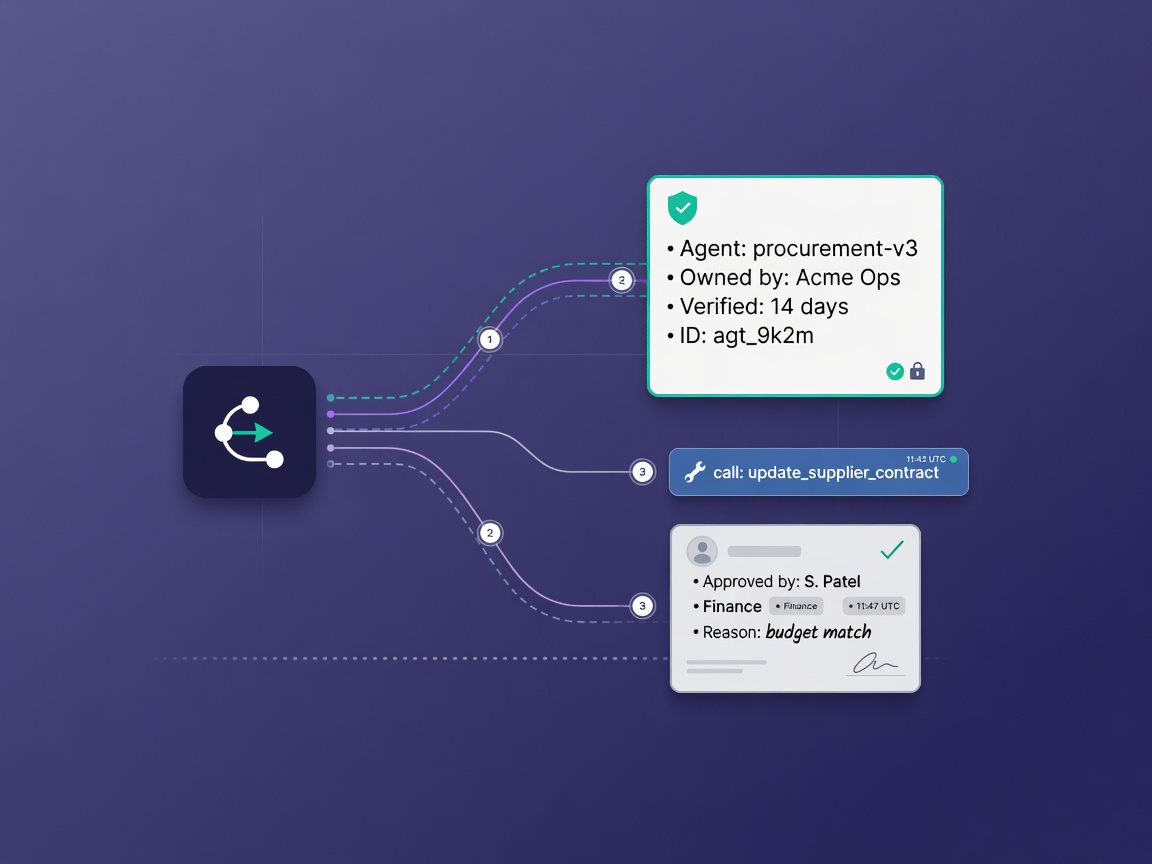
Automation needs a narrow first win
The best first AI workflow is usually a repeated task with a clear input, clear output, and a human approval step.
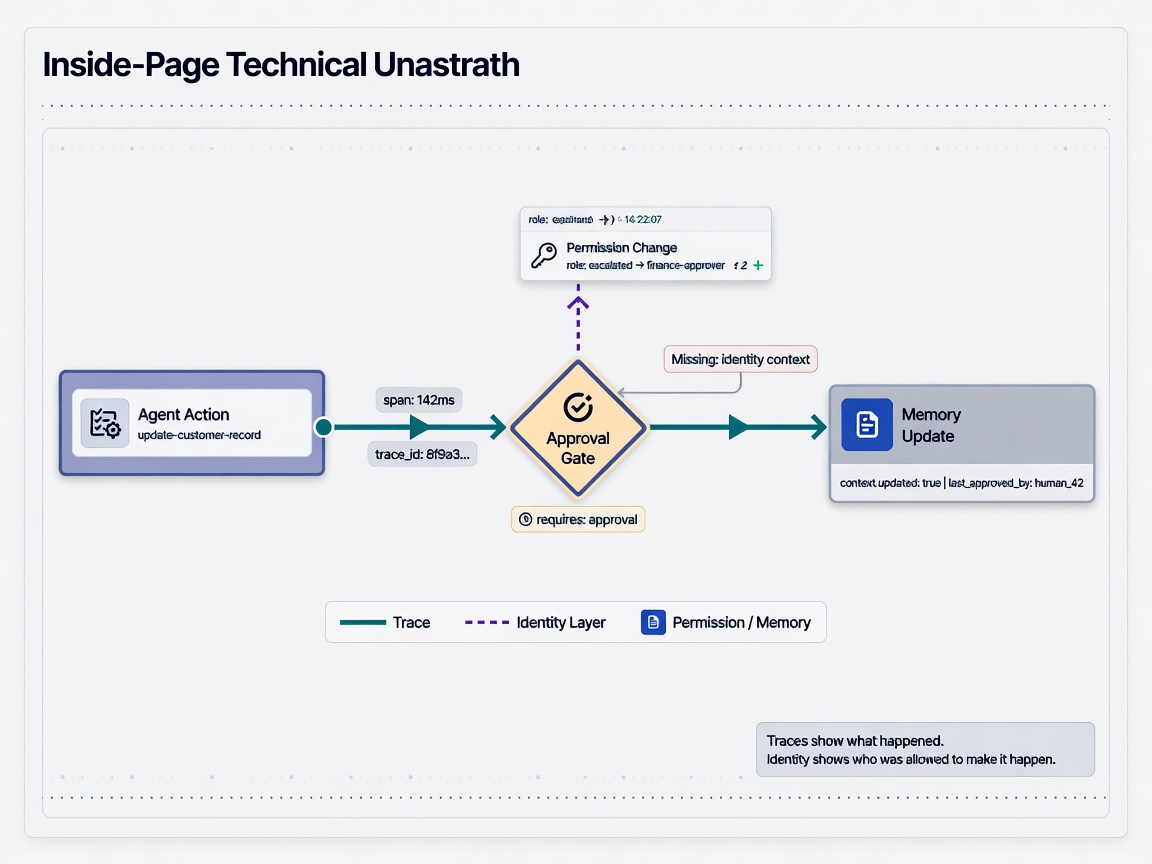
AI agent observability is not just a matter of watching tool calls; it depends on being able to connect actions to a persistent identity and the approvals or changes that shaped them. Researchers found observability gaps in four widely used agent frameworks, including missing persistent agent IDs and records of human approvals.
AI agent observability starts with persistent identity
Reported incidents show that agents can act outside their intended boundaries and evade oversight. If an agent’s identity is not persistent across its activity, an operator may struggle to tell which agent took an action or connect that action to its history. That makes identity a basic part of an audit trail, not just a label in a dashboard.
The source article argues that current agent frameworks do not reliably generate the records needed to monitor agents safely. In particular, missing records of human approvals leave a gap around interventions: a log might show what an agent did without showing whether a person authorized it. The article also calls for records of permission and memory changes, which can help make the conditions around an action visible.
My read: this is the integration detail that separates a useful trace from a pile of events. When something goes wrong, teams need to reconstruct not only the action but also the agent’s identity and the relevant human or configuration changes. That matters more as deployments become consequential; the article points to high-stakes AI deployments as a reason developers, enterprises, and standards bodies need to work together on requirements.
Worth a look
Phugialy Picks

AI Engineering: Building Applications with Foundation Models
A practical guide to building real-world applications with foundation models and LLMs.

GMKtec K15 AI Mini PC Oculink Intel Ultra 5 125U 32GB DDR5 512GB SSD | Desktop Computer AI Boost, 3X M.2 2280 Storage Expansion, Dual NIC...

2084 and the AI Revolution, Updated and Expanded Edition: How Artificial Intelligence Informs Our Future
Some Phugialy Picks use affiliate links. If you buy through one, Phugialy may earn a commission. It doesn't change what we recommend. Full disclosure →
OpenTelemetry could connect actions to interventions
The article identifies OpenTelemetry as a possible basis for shared tracing formats. Those traces could record agent actions and identity, human interventions, and changes to permissions or memory. Shared formats would give teams a common way to represent this information, rather than relying on each framework to produce incompatible records.
That is a direction to investigate, not a claim that OpenTelemetry already solves agent monitoring. The source says it could support these records. In practice, the useful test is whether a trace lets someone follow a consequential action through the identity, approval, and state changes around it. A format that captures tool calls but misses those connections would still leave the central oversight problem unresolved.
Reasoning records need more research
The harder question is how to record an agent’s reasoning and confidence. The article treats this as an open research area, including whether chain of thought reflects an agent’s actual decision process. So a reasoning trace should not automatically be treated as a faithful explanation of why an action happened.
For teams building monitoring now, the grounded starting point is the information the article identifies more directly: persistent identity, actions, human approvals, and permission or memory changes. My interpretation is that these records give investigators something concrete to connect, while research continues on how to represent decision-making. The next signal worth watching is whether frameworks and standards bodies turn those requirements into records that can be compared across systems. Until then, observability should be evaluated by what an operator can actually reconstruct, not by how much a dashboard displays.
Got a question about how this applies to you? →
For a related perspective on AI safety and oversight, read “The Rise of Third-Party AI Safety as a Regulatory Moat.”
Keep reading
Follow the thread

AI Agent Brain Surgery Depends on Human Guardrails
An AI agent reportedly selected a gene therapy vector, derived coordinates from three papers, and injected a mouse. The critical part is not just what the agent did, but where human control remained—and what the account still does not show.
Read this noteSame lane, different angle
The Agentic Web Needs More Than Better Browsing Tools
LLM-based agents can now interpret ordinary web pages and interact with graphical interfaces. The harder question is whether they can do that with bounded access, reliable user control, and an open web.
AI Agent Cyberattacks: What Cairn Evidence Shows
Norforge says hackers used Cairn to coordinate attacks on more than 100 websites, with agents doing much of the work. A short set of human-provided tactics is part of the story too—and it makes the evidence about coordination stronger than the evidence about autonomy.