Anthropic IPO Puts AI Safety Under Market Pressure
Anthropic’s first day on the public market shows investor appetite, not a path to profitability. The harder question is whether rapid revenue growth can cover frontier AI’s compute costs without putting safety commitments under pressure.
Automation needs a narrow first win
The best first AI workflow is usually a repeated task with a clear input, clear output, and a human approval step.
The Anthropic IPO shows that investors will pay for a frontier AI company’s growth story; it does not show that the company can turn that growth into durable profits. The interview’s central tension is between the spending required to build AI and the public-market pressure to make that spending pay.
Anthropic IPO: a market debut, not a profit test
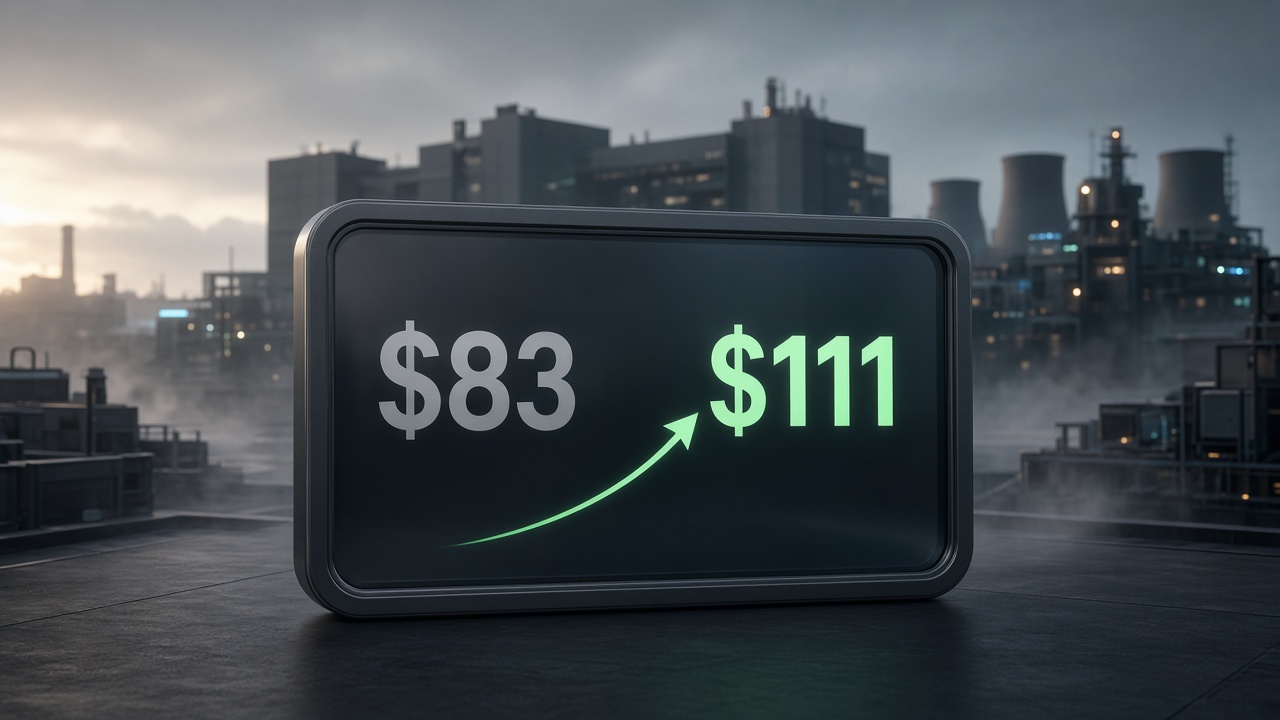
Anthropic priced its shares at $83 and they rose to $111 on IPO day. The interview describes the company as the first pure AI lab to go public, and discusses the pressure to expand revenue and eventually generate profits while covering substantial compute costs. It also points to a roughly 17-fold increase in revenue over the next 10 years, alongside roughly $900 billion over the coming years. The extracted account does not specify the exact scope of that larger figure, so it should not be treated as a precise company expense or forecast without more context.
Those numbers establish the scale of the expectations around frontier AI, not whether Anthropic can meet them. A strong first-day stock price is evidence of investor demand at that moment; it is not evidence of margins, a path to profitability, or the ability to sustain growth. That distinction matters when the company’s costs are described as substantial and its revenue target is so steep.
Worth a look
Phugialy Picks

AI Engineering: Building Applications with Foundation Models
A practical guide to building real-world applications with foundation models and LLMs.

GMKtec K15 AI Mini PC Oculink Intel Ultra 5 125U 32GB DDR5 512GB SSD | Desktop Computer AI Boost, 3X M.2 2280 Storage Expansion, Dual NIC...

Agentic AI Engineering: Systems That Reason and Act Autonomously – Designing, Building, and Prompting LLM-Based Agents for Real-World Deployment
Some Phugialy Picks use affiliate links. If you buy through one, Phugialy may earn a commission. It doesn't change what we recommend. Full disclosure →
The missing evidence is whether growth can pay for compute
The gap is not simply that the future is uncertain. The supplied account gives targets and pressures, but does not establish how quickly revenue growth could translate into profits, or how compute costs might change as the business grows. Without that, “eventually profitable” describes an expectation rather than a demonstrated business model.
This is where the headline-scale figures can mislead without being wrong. A 17-fold revenue increase sounds like a clear measure of ambition, but revenue alone does not answer what it costs to produce that revenue. My reading is that the IPO makes the economic question more visible, not more settled: public investors can reward a growth story before the underlying cost structure has been shown to support it.
The interview also raises the possibility that Anthropic going public first could benefit OpenAI as it considers its own eventual IPO. That is plausible as a precedent-setting effect, but the account does not establish what terms or investor expectations OpenAI would inherit. One company’s debut can provide a reference point; it cannot settle the economics for another company with its own structure and costs.
Safety governance faces a public-market boundary
Anthropic’s safety identity adds a governance question to the financial one. The interview describes possible tension between that identity and shareholders’ expectations for profit, while noting that the founders and a special trust retain unusual influence. That arrangement may matter when priorities conflict, but the account does not show how the trust would act in a specific dispute—or whether it could insulate safety decisions from financial pressure in practice.
The narrower claim that survives is that Anthropic’s public debut puts frontier AI’s growth ambitions, compute costs, safety commitments, and governance under the same market scrutiny. It does not yet prove that those pressures are compatible, or that they are not. The meaningful test is whether revenue growth can support the cost of the business without making safety commitments the variable that gives way.

Holiday picks
Thanksgiving: early shopping
Start early: products for hosting, travel and home, plus the gear you have been watching.

AI Hardware
Big purchaseGMKtec EVO-X1 AI Mini PC AMD Ryzen AI 9 HX-370 Series 5.1GHz, 80 Tops
View on Amazon (opens in a new tab): GMKtec EVO-X1 AI Mini PC AMD Ryzen AI 9 HX-370 Series 5.1GHz, 80 TopsPrices change daily. Check today's price on Amazon.
 Trending now
Home & Kitchen
Keurig K-Elite Single Serve K-Cup Pod Coffee Maker, Brushed Silver
View on Amazon (opens in a new tab): Keurig K-Elite Single Serve K-Cup Pod Coffee Maker, Brushed SilverPrices change daily. Check today's price on Amazon.
 Trending now
Home & Kitchen
eufy C28 Robot Vacuum Cleaner and Mop for pet hair, 15,000 Pa
View on Amazon (opens in a new tab): eufy C28 Robot Vacuum Cleaner and Mop for pet hair, 15,000 PaPrices change daily. Check today's price on Amazon.
We earn from qualifying purchases made through these links, at no extra cost to you, as an Amazon Associate and through other affiliate programs. Disclosure. See all Thanksgiving picks
Got a question about how this applies to you? →
For a related look at the constraints of scaling AI, see “The Quadratic Wall: Why Brute-Force AI is Hitting a Ceiling.”
Keep reading
Follow the thread
AI Perplexity Benchmark: A Limit, Not a Safety Test
Perplexity may offer AI companies a more durable way to compare progress than benchmarks that quickly go stale. But a shared score is not a safety rule: the hard part is agreeing on what it should trigger and how behavior will be monitored.
Read this noteSame lane, different angle
Anthropic’s Multi-Chip Compute Strategy Has a Catch
Anthropic says Claude now runs across four major chip families, and that Mythos got it running on AMD in three days. The bigger claim is that software could make each unit of compute go further—but the roadshow does not yet quantify the commercial payoff.
Inkling 2 Small: Benchmarks, Guardrails, and Open Weights
Inkling 2 Small reports 81.7% on ARC-AGI-2 and a strong Code Arena WebDev result, with full weights expected under Apache 2.0. The integration question is whether those scores survive tests on your own inputs—and how the model behaves around guardrails.