Designing Viable Viral Genomes with Evo 2: Beyond Sequence Prediction
Stanford researchers just moved the needle on synthetic biology by using the Evo 2 generative AI model to design bacteriophages. The objective was straightforward but difficult: create a cocktail of viruses capable of ki
Automation needs a narrow first win
The best first AI workflow is usually a repeated task with a clear input, clear output, and a human approval step.
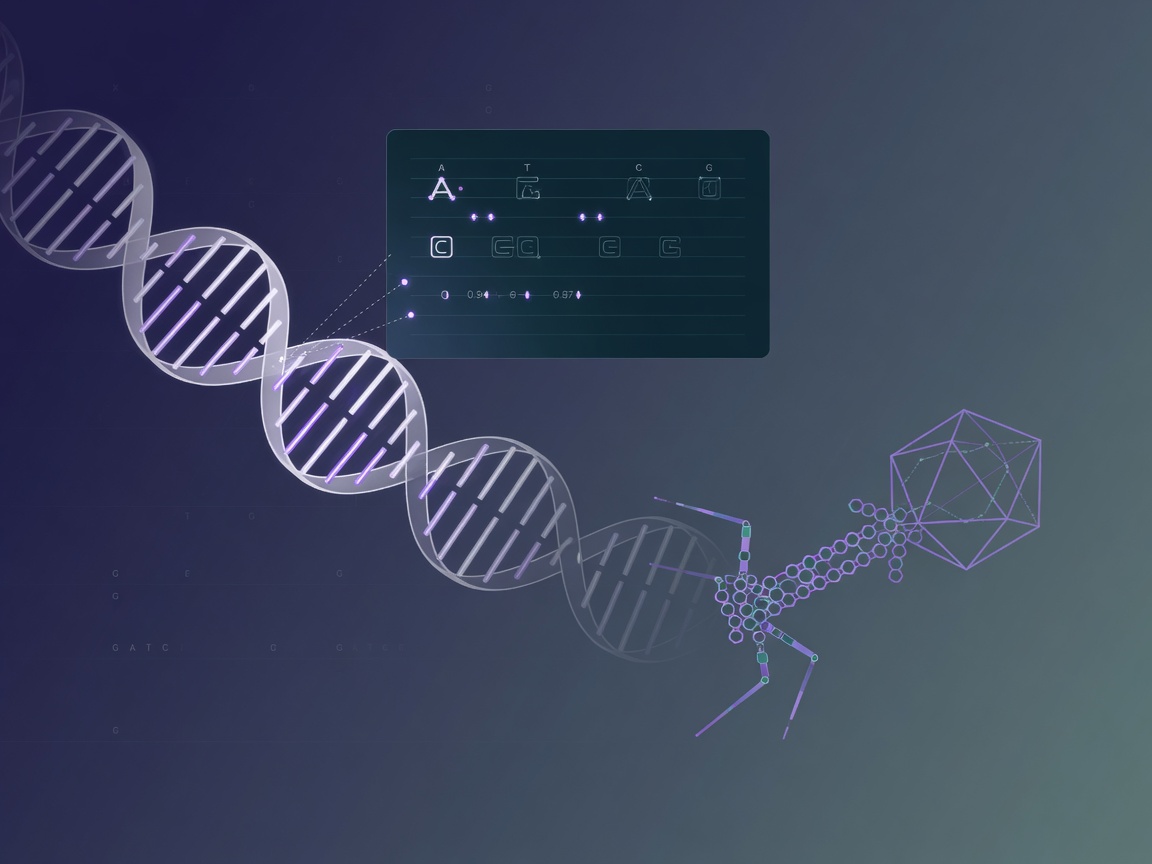
Stanford researchers just moved the needle on synthetic biology by using the Evo 2 generative AI model to design bacteriophages. The objective was straightforward but difficult: create a cocktail of viruses capable of killing E. coli that had already developed resistance to standard treatments. By leveraging Evo 2’s ability to generate DNA sequences in a single left-to-right pass from small starting snippets, the team synthesized nearly 300 phages. From that pool, they identified 16 specific phages with strong killing activity, successfully overcoming the resistance of native ΦX174.
The "Design-First" Framework: Filtering Before Synthesis
What’s actually interesting here isn't just the model's ability to spit out DNA; it's the integration of a computational framework to filter those results before they ever hit a lab bench. The researchers didn't just let Evo 2 run wild. They evaluated candidate genomes based on specific design criteria first. For anyone trying to move AI from a research toy to a production pipeline, this is the critical distinction. Identifying 16 viable candidates out of nearly 300 shows that Evo 2 can handle the constraints of biological viability. The model produced sequences under 6,000 base pairs—a tiny fraction of the 3 billion base pairs in the human genome—yet these sequences were functional enough to be chemically synthesized and tested in a real-world biological environment.
Worth a look
Phugialy Picks

AI Engineering: Building Applications with Foundation Models
A practical guide to building real-world applications with foundation models and LLMs.

GMKtec K15 AI Mini PC Oculink Intel Ultra 5 125U 32GB DDR5 512GB SSD | Desktop Computer AI Boost, 3X M.2 2280 Storage Expansion, Dual NIC...

GEEKOM IT15 AI Mini PC, Intel Ultra 9 285H(99 Tops), 32GB DDR5, 1TB SSD | The Most Powerful Workstation,Arc 140T GPU,WiFi 7,8K Business D...
Some Phugialy Picks use affiliate links. If you buy through one, Phugialy may earn a commission. It doesn't change what we recommend. Full disclosure →
The Creativity vs. Controllability Trap
This project exposes a core tension in generative biology: the trade-off between creative novelty and predictable outcomes. The researchers admitted that while Evo 2 allows for "creativity," the biggest remaining hurdles are achieving greater genetic novelty and better controllability of the outcomes. In a clinical or industrial setting, "creative" output is a liability if it isn't consistently reproducible and safe. If you can't steer the model toward specific functional goals, you're just generating expensive noise. While the success in creating a phage cocktail to bypass resistance is a significant proof of concept, the leap to broader applications—like producing chemicals, medicines, or fuels—requires a level of precision that current models are still struggling to master.
Moving Past the Generative Hype
The real story here is the shift toward a "design-first" approach to antimicrobial resistance. By using Evo 2 to create genetically distinct phages, the researchers are attacking the mechanism of resistance itself—making it harder for bacteria to develop immunity to a whole mixture than to a single agent. However, we need to be realistic about the transition. The bottleneck remains the physical validation step. While Evo 2 can generate the blueprint in a single pass, the move to production-scale medicine still relies on the slow, physical synthesis and laboratory testing of those sequences. This is a powerful accelerant for the R&D cycle, but it doesn't replace the need for rigorous biological verification. We are looking at a faster way to find the needle in the haystack, not a way to skip the haystack entirely.
Got a question about how this applies to you? →
Keep reading
Follow the thread
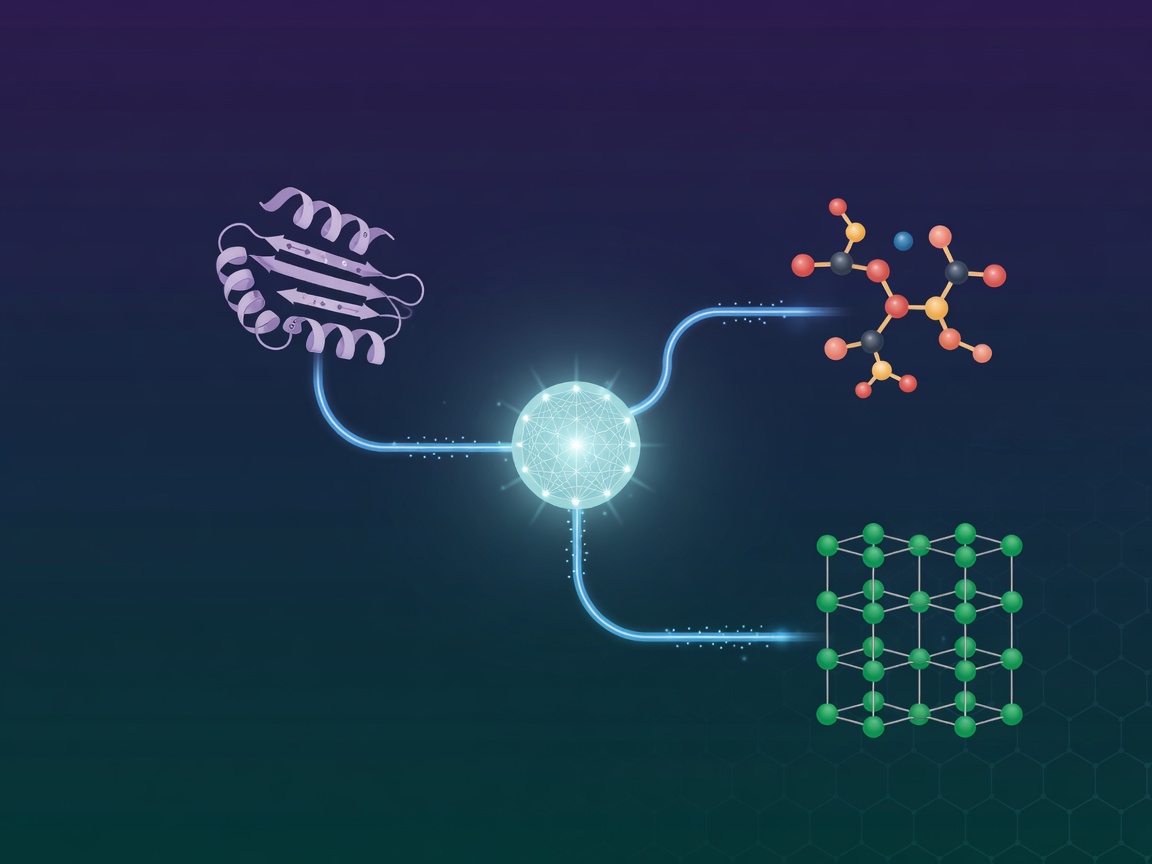
SciReasoner: One Model Reasons Across Proteins, Molecules, Crystals
Proteins, molecules, and crystals share almost nothing on the surface - different representations, different tools, different vocabularies entirely. What if one model could reason natively across all three? That's the pr
Read this noteSame lane, different angle
Testing Gemini 3.6 Flash for Counterfeit Cosmetics Detection
Gemini 3.6 Flash spotted fake Rhode lip tints from photos alone — typos, mismatched distributors, even a known counterfeit batch code (112505). It also mistook camera glare for a printing error, which tells you exactly how far this actually gets you.
Quantifying the AI Noise Floor: A Hacker News Tracker
The Days Since AI Tracker isn't just a fun widget; it’s a live pulse check on the Hacker News ecosystem. It monitors headlines in real-time, resetting a countdown every time a story featuring "AI" pops up. It’s a simple