Amazon Nova Models Move to Minimal Support as Focus Shifts
Amazon has put most of its Nova text, video, and image models into minimal support while redirecting resources to a frontier-model effort led by Pieter Abbeel. That is an organizational decision, not a technical verdict
Automation needs a narrow first win
The best first AI workflow is usually a repeated task with a clear input, clear output, and a human approval step.
Amazon has put most of its Nova text, video, and image models into minimal support while redirecting resources to a frontier-model effort led by Pieter Abbeel. That is an organizational decision, not a technical verdict on how well the Nova models work. For builders, the immediate question is more practical: what support and continuity can you count on if a model is already in your stack?
What Amazon's Nova models shift means for builders
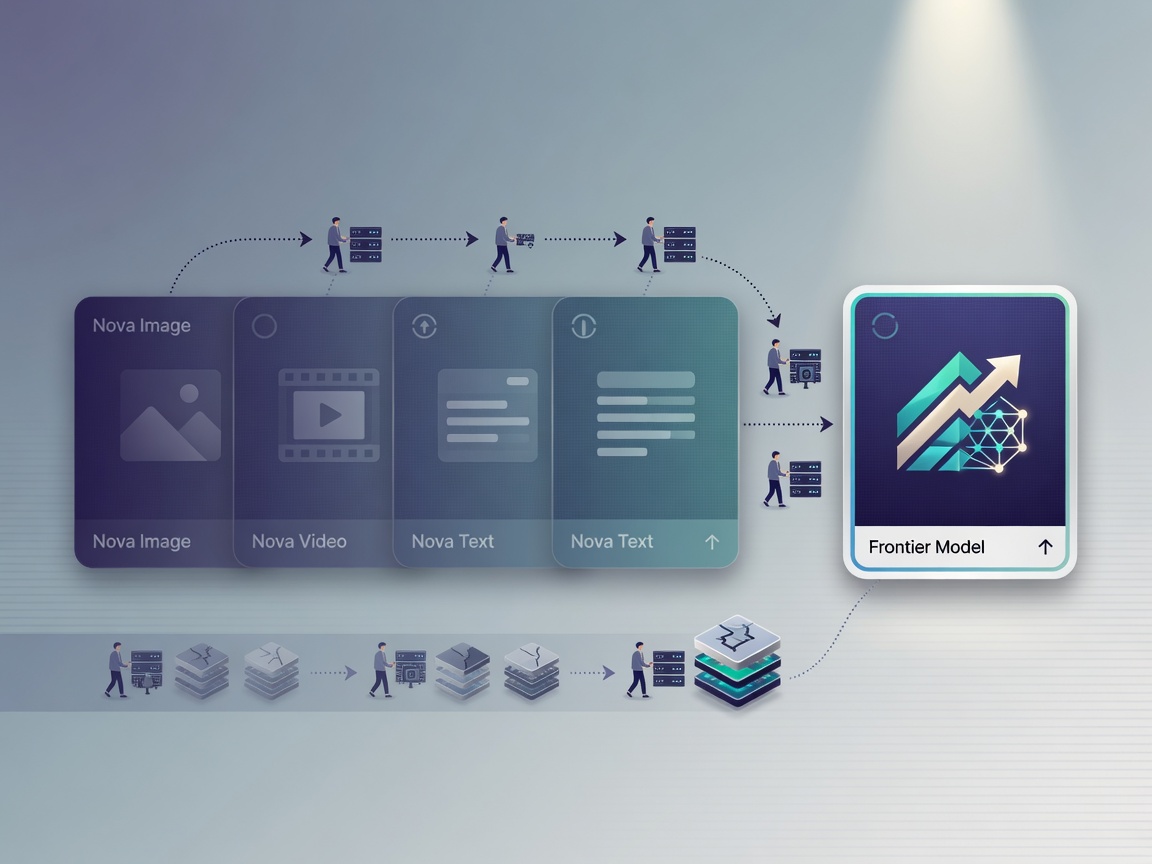
The reported change affects most of Amazon’s Nova text, video, and image models, which are now in a minimal-support state. The company is concentrating labor and computing resources on one frontier-model effort, rather than continuing to develop most of those models at their previous level of support.
That changes the planning picture even without a claim that the models have been discontinued. Minimal support is a meaningful signal for anyone choosing a model for a new product or maintaining one in production: the vendor’s attention and resources are moving elsewhere. My read is that this is chiefly a continuity issue for builders, not a reason to assume Nova outputs or capabilities have suddenly changed. A model can remain useful while the conditions around it become less predictable.
Worth a look
Phugialy Picks

AI Engineering: Building Applications with Foundation Models
A practical guide to building real-world applications with foundation models and LLMs.

GMKtec K15 AI Mini PC Oculink Intel Ultra 5 125U 32GB DDR5 512GB SSD | Desktop Computer AI Boost, 3X M.2 2280 Storage Expansion, Dual NIC...

2084 and the AI Revolution, Updated and Expanded Edition: How Artificial Intelligence Informs Our Future
Some Phugialy Picks use affiliate links. If you buy through one, Phugialy may earn a commission. It doesn't change what we recommend. Full disclosure →
Abbeel's frontier effort and the closed San Francisco office
The effort led by Pieter Abbeel is the destination for the redirected resources. Amazon has also closed an 80-person San Francisco office focused on artificial general intelligence research. Together, these details point to a substantial reorganization of the company’s AI work: a dedicated research site has closed as resources shift toward a single frontier-model effort.
There is a plausible operational logic to concentrating people and computing behind one priority. In my view, the unresolved test is whether that focus produces a model and a delivery plan that developers can actually rely on—not simply whether the organization has made its priorities clearer. The source material doesn’t report the frontier effort’s results, timeline, or evaluation criteria, so there isn’t enough here to judge its technical progress or whether the bet will pay off.
Check Nova support before building a dependency
The source also leaves important specifics open: which individual models are included in “most,” what minimal support covers, how long that status is expected to last, and what it means for availability or existing users. It provides no detailed continuity commitment or migration guidance. Those are the questions that matter at implementation time; the announcement alone doesn’t answer them.
If you’re evaluating an Amazon Nova model, check its current support commitment and availability directly, and understand your fallback or migration options before making it a production dependency. For an existing integration, review the model-specific support information rather than treating the broad organizational change as proof that a particular service is ending. That distinction is useful, but it doesn’t remove the need to plan for uncertainty.
The practical takeaway is simple: treat Nova’s minimal-support status as a reason to verify the operational details, not as a prediction about model quality. For production systems, a model choice includes the continuity behind the model.
Got a question about how this applies to you? →
Keep reading
Follow the thread

AI Data Center Water Use Has a Cost Beyond Compute
Data centers in Quilicura use large amounts of water to cool servers amid Chile’s ongoing drought. A local project made that infrastructure visible by having residents act as “human A.I.” for a day—but the bigger question is what water-use data would let communities evaluate the impact.
Read this noteSame lane, different angle
AI Data Center Expansion Faces a Policy Risk Test
AI data center expansion is becoming a policy-risk story, but election results are not the same as construction delays. Democratic wins in Texas and other states with substantial planned capacity have raised questions ab
Why AI Serving Architecture Shapes Enterprise AI Results
A strong model is only part of an enterprise AI system. Memory, concurrency, scheduling, and GPU utilization shape whether it can deliver reliably in production—and the bottleneck may move after you fix it.