AI Data Center Expansion Faces a Policy Risk Test
AI data center expansion is becoming a policy-risk story, but election results are not the same as construction delays. Democratic wins in Texas and other states with substantial planned capacity have raised questions ab
Automation needs a narrow first win
The best first AI workflow is usually a repeated task with a clear input, clear output, and a human approval step.
AI data center expansion is becoming a policy-risk story, but election results are not the same as construction delays. Democratic wins in Texas and other states with substantial planned capacity have raised questions about moratoriums and other policy changes—not confirmed a halt to projects.
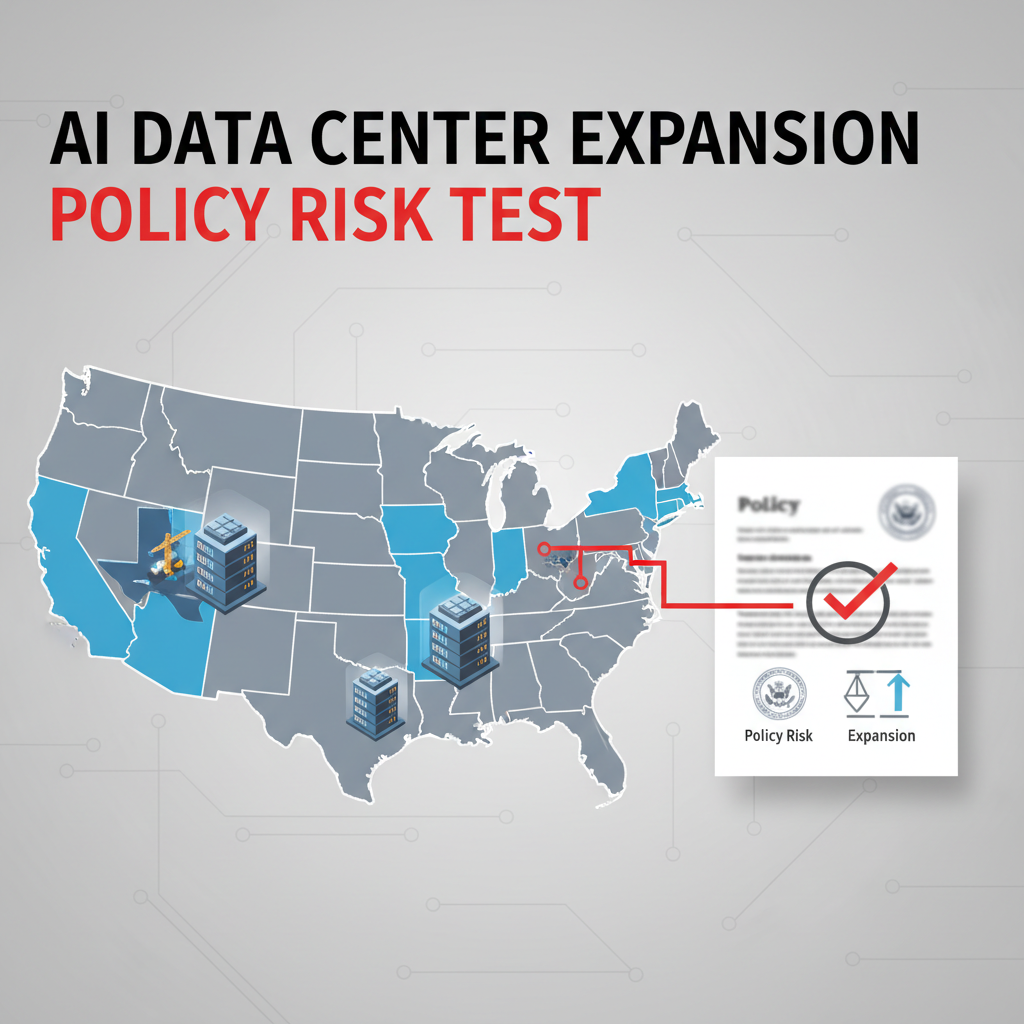
Texas holds 27% of planned data center capacity
The Texas result matters because the state accounts for 27% of planned U.S. data center gigawatts. Analysts saw Gina Hinojosa’s win as a potential risk to construction plans, including SpaceX projects in the state. Democrats also won or retained governorships in Georgia, Pennsylvania, and Ohio, which together add more exposure: Georgia represents 7% of planned U.S. data center gigawatts, while Ohio and Pennsylvania account for 5% each.
That concentration makes the map worth watching. If policy changes slowed projects in several of these states, the effects could reach a meaningful share of the capacity companies expect to build. But the reported concern is about possible hurdles. The source material does not establish that moratoriums have been enacted or that projects have been delayed.
Worth a look
Phugialy Picks

AI Engineering: Building Applications with Foundation Models
A practical guide to building real-world applications with foundation models and LLMs.

GMKtec K15 AI Mini PC Oculink Intel Ultra 5 125U 32GB DDR5 512GB SSD | Desktop Computer AI Boost, 3X M.2 2280 Storage Expansion, Dual NIC...

2084 and the AI Revolution, Updated and Expanded Edition: How Artificial Intelligence Informs Our Future
Some Phugialy Picks use affiliate links. If you buy through one, Phugialy may earn a commission. It doesn't change what we recommend. Full disclosure →
AI data center expansion meets a mixed stock reaction
The share moves were not a simple vote against AI infrastructure. CoreWeave and Iren fell 4% in Wednesday morning trading. SpaceX shares were down 4% after the open, and Tesla shares were down 5%. At the same time, Alphabet rose 3%, Amazon 7%, Meta 2%, and Microsoft 5.5%.
That split is more useful than treating “AI stocks” as one trade. Investors may distinguish between companies building or selling data center capacity and large technology firms whose businesses span more than that infrastructure. That is an interpretation of the uneven moves, not proof of why each stock changed. One morning’s prices also cannot tell us whether investors are pricing in actual policy outcomes or reacting to uncertainty.
The integration risk is uncertainty, not a shutdown
For anyone planning an AI service around future capacity, the practical issue is whether policy uncertainty changes where and when new data centers can be built. A proposal, campaign position, or analyst warning can affect expectations before it changes a project schedule; those are different stages, and they should not be collapsed into a claim that construction has stopped.
My read is that this is a location-and-timing risk to track, not a reason to assume U.S. capacity is about to disappear. The reported figures show why Texas, Georgia, Ohio, and Pennsylvania matter to the buildout, while the stock reaction shows investors did not respond uniformly. I would keep deployment plans flexible where they depend on future capacity, but this evidence alone does not justify a specific vendor or regional bet. The signal that would change the call is concrete: whether policy changes are enacted and followed by documented project delays in these states.
Got a question about how this applies to you? →
Keep reading
Follow the thread
AI Regulation Now Depends on the Companies It Regulates
The most uncomfortable line in a recent analysis on AI's institutional power: a government may end up trying to regulate an AI provider whose technology it simultaneously depends on. That's the vendor lock-in problem every developer knows, scaled until the dependent party writes the rules — and with a footprint of more than a billion devices, the dependency is already shipping.
Read this noteSame lane, different angle
When AI Labs Counterbalance Government, Who Checks Them?
OpenAI hired Dean Ball as Head of Strategic Futures after he argued that frontier AI labs could become a "counterbalance to government" and a "new kind of institution under the sun." That's the story on the surface. The
Frontier AI Labs Want Government Power - Who Audits Them?
At some point, a government may find itself trying to regulate an AI provider whose technology it simultaneously depends on. That line, from an argument making the rounds about OpenAI strategists and the future of fronti