AI Training Jobs Depend on More Than Data Labeling
AI training work now includes physicians and other specialists evaluating model outputs—not just people labeling existing data. But the hourly rate is only part of the deal when platforms can change rates, end projects, or control access to payment.
Automation needs a narrow first win
The best first AI workflow is usually a repeated task with a clear input, clear output, and a human approval step.
AI training jobs now include work that looks less like labeling and more like professional review: specialists design scenarios, assess AI-generated reports, rank model answers, and correct outputs. Rest of World’s account shows how platforms can depend on that expertise while retaining control over rates, access to tasks, and payment terms.
AI training jobs include evaluation, not just labeling
The workers behind AI systems are not only annotating existing material. The source describes people creating new examples, evaluating model responses, and supplying corrections that can shape how systems improve. Platforms recruit physicians and other specialists for this work, alongside data labelers whose jobs may be more routine.
That range matters. Public discussion of AI training often focuses on whether companies use existing creative work without permission. This account points to another part of the supply chain: human judgment produced specifically for training and evaluation. A model’s answer may look automated to its user, but its development can depend on people writing scenarios, checking reports, and deciding which output is better.
The rates cited are strikingly uneven: the article includes figures such as up to $180 an hour, up to $7.50 an hour, up to $12.50, $21 an hour, and $16 an hour. Those figures should not be read as a single pay scale: the source says Outlier advertises different rates for similar work across locations. The spread is a reminder that “AI work” is not one job with one market rate.

Worth a look
Phugialy Picks

AI Engineering: Building Applications with Foundation Models
A practical guide to building real-world applications with foundation models and LLMs.

GMKtec K15 AI Mini PC Oculink Intel Ultra 5 125U 32GB DDR5 512GB SSD | Desktop Computer AI Boost, 3X M.2 2280 Storage Expansion, Dual NIC...

Agentic AI Engineering: Systems That Reason and Act Autonomously – Designing, Building, and Prompting LLM-Based Agents for Real-World Deployment
Some Phugialy Picks use affiliate links. If you buy through one, Phugialy may earn a commission. It doesn't change what we recommend. Full disclosure →
Platform control is part of the compensation
The article describes a recurring sequence: platforms recruit and pay a workforce for tasks, then lower rates, end projects, or shift work elsewhere. That pattern affects workers from Venezuelan data labelers to credentialed professionals recruited through Outlier. The work may require expertise, but expertise alone does not guarantee stable assignments or bargaining power.
Terms matter alongside advertised hourly rates. Outlier’s terms reportedly permit payment delays or withholding “some or all amounts accrued,” as well as account deactivation. The article also notes that the platform invokes “enhanced security protocols.” Those details do not establish that every worker experiences a payment problem or account closure; they do show how much control the platform’s rules can reserve for itself.
In practice, that means a quoted rate is only one part of the deal. Whether tasks remain available, how long payment takes, and whether an account stays active all affect what workers can actually earn. My read is that AI companies’ reliance on human evaluation is easy to understate precisely because the work is distributed across platforms and project cycles.
What AI companies owe the people evaluating models
The story is not simply that AI needs human labor. It is that companies and platforms can draw on both low-paid labeling and high-skill professional judgment through arrangements where rates and conditions are set elsewhere. If model evaluation is important enough to recruit specialists, then the stability and terms of that work are operational concerns, not side issues.
For anyone considering this work, the available evidence does not support a blanket yes or no. The practical question is whether the advertised rate, task continuity, and payment protections hold for the specific role and location. For companies relying on these workers, the same questions are a test of whether their evaluation process can remain dependable when projects or platform terms change.
Holiday picks
Thanksgiving: early shopping
Start early: products for hosting, travel and home, plus the gear you have been watching.
AI Hardware
Big purchaseGMKtec K15 AI Mini PC Oculink Intel Ultra 5 125U 32GB DDR5 512GB SSD | Desktop Computer AI Boost, 3X M.2 2280 Storage Expansion, Dual NIC...
View on Amazon (opens in a new tab): GMKtec K15 AI Mini PC Oculink Intel Ultra 5 125U 32GB DDR5 512GB SSD | Desktop Computer AI Boost, 3X M.2 2280 Storage Expansion, Dual NIC...Prices change daily. Check today's price on Amazon.
 Trending now
Home & Kitchen
Keurig K-Elite Single Serve K-Cup Pod Coffee Maker, Brushed Silver
View on Amazon (opens in a new tab): Keurig K-Elite Single Serve K-Cup Pod Coffee Maker, Brushed SilverPrices change daily. Check today's price on Amazon.
 Trending now
Home & Kitchen
eufy C28 Robot Vacuum Cleaner and Mop for pet hair, 15,000 Pa
View on Amazon (opens in a new tab): eufy C28 Robot Vacuum Cleaner and Mop for pet hair, 15,000 PaPrices change daily. Check today's price on Amazon.
We earn from qualifying purchases made through these links, at no extra cost to you, as an Amazon Associate and through other affiliate programs. Disclosure. See all Thanksgiving picks
Got a question about how this applies to you? →
For a related look at this labor market, read “37 An Hour To Train Your Replacement: Inside AI Training Jobs.”
Keep reading
Follow the thread
What an AI Data Labeling Map Reveals About Hidden Labor
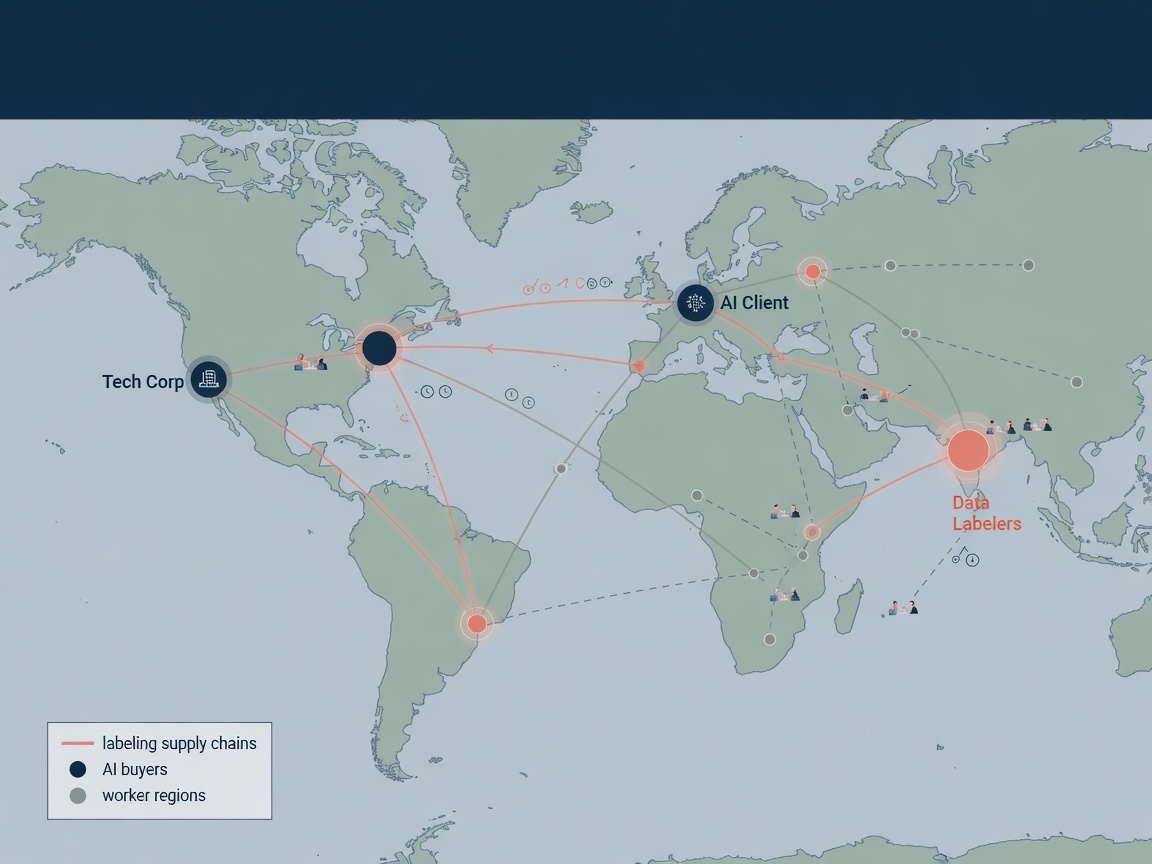
A new map links 13 data-labeling firms to 141 corporate customers and worker sites in 31 countries. It cannot tell a buyer exactly how much labor sits behind a specific AI product, but it makes the hidden supply chain harder to ignore.
Read this noteSame lane, different angle
MADB: Where Music AI Actually Stands on Human Judgment
A new benchmark called MADB puts 9,999 music tracks in front of trained human annotators and asks models to match their judgments — and the models don't come close. Thirty trained annotators rated each track across 10 pe
Shortcut Learning Found Where Accuracy Metrics Can't Look
Accuracy told us a VGG16 classifier hit 86.27% on chest X-ray classification with a 0.9624 AUC. It told us nothing about whether the model was actually looking at lungs. A new framework called ReMoDEx (Relevance Based Mo