37 An Hour To Train Your Replacement: Inside AI Training Jobs
A Ph.D. graduate was offered $37 an hour — eighteen times South Africa's minimum wage — to teach an AI system how he thinks. He walked away, but most won't.
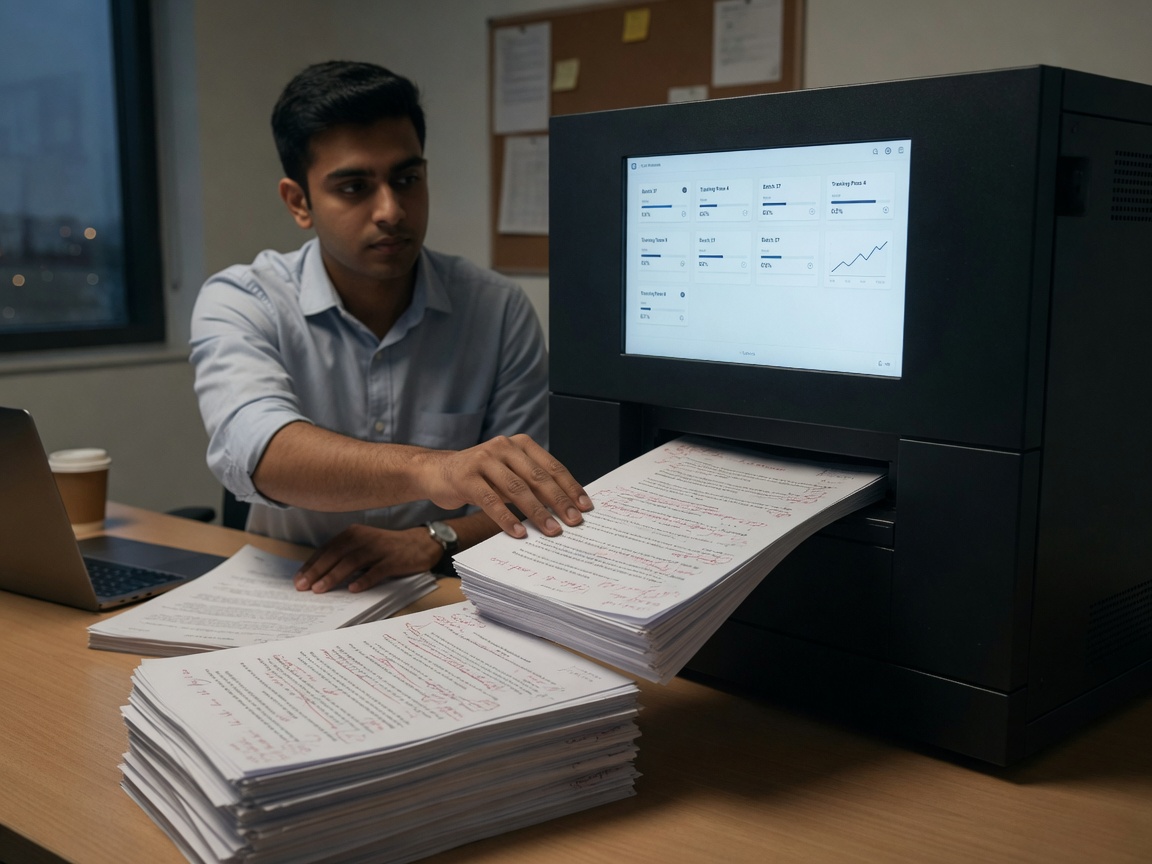
Automation needs a narrow first win
The best first AI workflow is usually a repeated task with a clear input, clear output, and a human approval step.
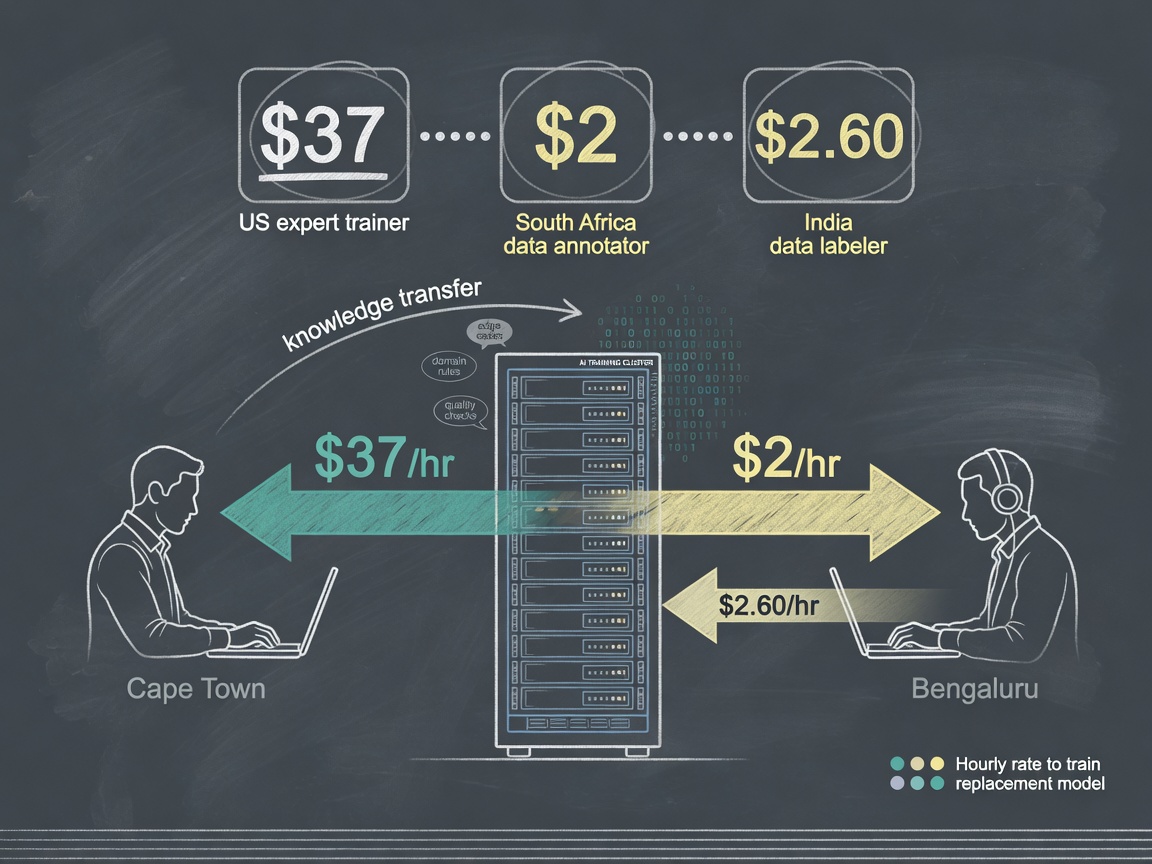
A South African Ph.D. graduate was offered $37 an hour to train the AI system that could eventually replace him — and turned it down. The offer came through an AI recruiter, paid 600 rand an hour against a national minimum wage of 30.23 rand ($2), and the job itself was to teach an AI system how to design assessments, teach undergraduates, and mark essays. His 45-minute interview was conducted entirely by AI, which then emailed feedback and suggested he retake part of the assessment.
What AI Training Jobs Actually Pay — And Who's Taking Them
The economics explain why he was tempted. With youth unemployment in South Africa at 47.4%, $37 an hour is not a marginal offer; it's roughly eighteen times the legal minimum wage. The same arbitrage is running elsewhere: in India, waste sorters and welders are paid 250 rupees ($2.60) an hour to capture the data used to train humanoid robots that could replace them.
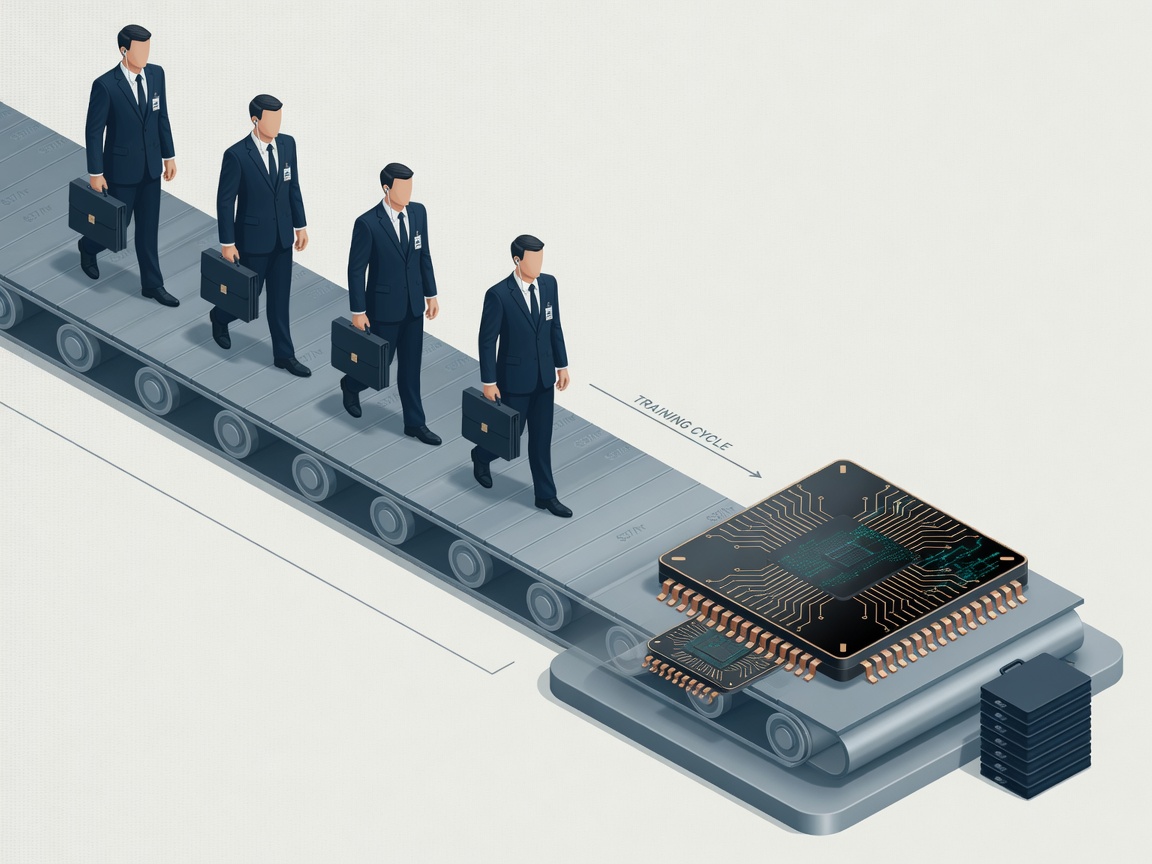
Platforms like Outlier, Mercor, and Surge have built a business on recruiting doctors, lawyers, and engineers to transfer professional judgment into machines. The source article's sharpest line is about what's actually being bought: "The AI would not simply learn what I knew; it would learn how I decided." That's a different commodity from the annotation work of earlier data-labeling booms — this is expertise extraction, sold at developing-world rates for systems aimed at developed-world jobs.
Phugialy Picks

AI Engineering: Building Applications with Foundation Models
A practical guide to building real-world applications with foundation models and LLMs.

GMKtec K15 AI Mini PC Oculink Intel Ultra 5 125U 32GB DDR5 512GB SSD | Desktop Computer AI Boost, 3X M.2 2280 Storage Expansion, Dual NIC...

AI: Understand the Revolution: From Basics and Buzzwords to Tech Giants, Governments, and Your Future
Some Phugialy Picks use affiliate links. If you buy through one, Phugialy may earn a commission. It doesn't change what we recommend. Full disclosure →
Why Africa Is Both The Supplier And The Skeptic
There's a structural irony in the setup. Africa has among the lowest AI adoption rates globally, with most countries below the global average of about 18% among the working-age population; South Africa sits at 23%. So the continent is being recruited as a knowledge supplier for technology it has barely deployed — and where displaced professionals have fewer alternative sectors to absorb them.
AI companies have a clear incentive here: extract expert knowledge from African professionals at costs far below Western rates. From the worker's side, though, this isn't simple exploitation arithmetic. When your alternative is no income at all, refusing on principle is a luxury the source article acknowledges directly: "When the opportunity to earn a livelihood collides with your principle on helping a technology that can compete with you, what do you do?"
The Real Story Is Where The Judgment Goes Next
What this actually points to isn't a labor story — it's a competitive intelligence story. The companies quietly assembling libraries of expert decision-making are building an asset that compounds: every Ph.D. who marks essays for $37 an hour is teaching a model to do it without them. Whether these systems genuinely replace professional judgment within a year is still an open question — training data quality, assessment integrity, and institutional trust all have to hold up first.
But if even part of that bet lands, the moat belongs to whoever paid for the judgment early and cheaply. The interesting competitive question this raises is whether Western firms will keep tolerating their most expensive professionals doing this work when equivalent expertise can be sourced elsewhere at one-fifth or one-tenth of the rate — or whether regulators and professional bodies move first.
The author of the source piece says he continues looking for an academic job teaching students, not AI. That choice reads as principled; it also reads as rare. Most people facing $37 an hour against 47% youth unemployment will take the money — which means the judgment transfer happens either way.
Got a question about how this applies to you? →
Keep reading
Follow the thread
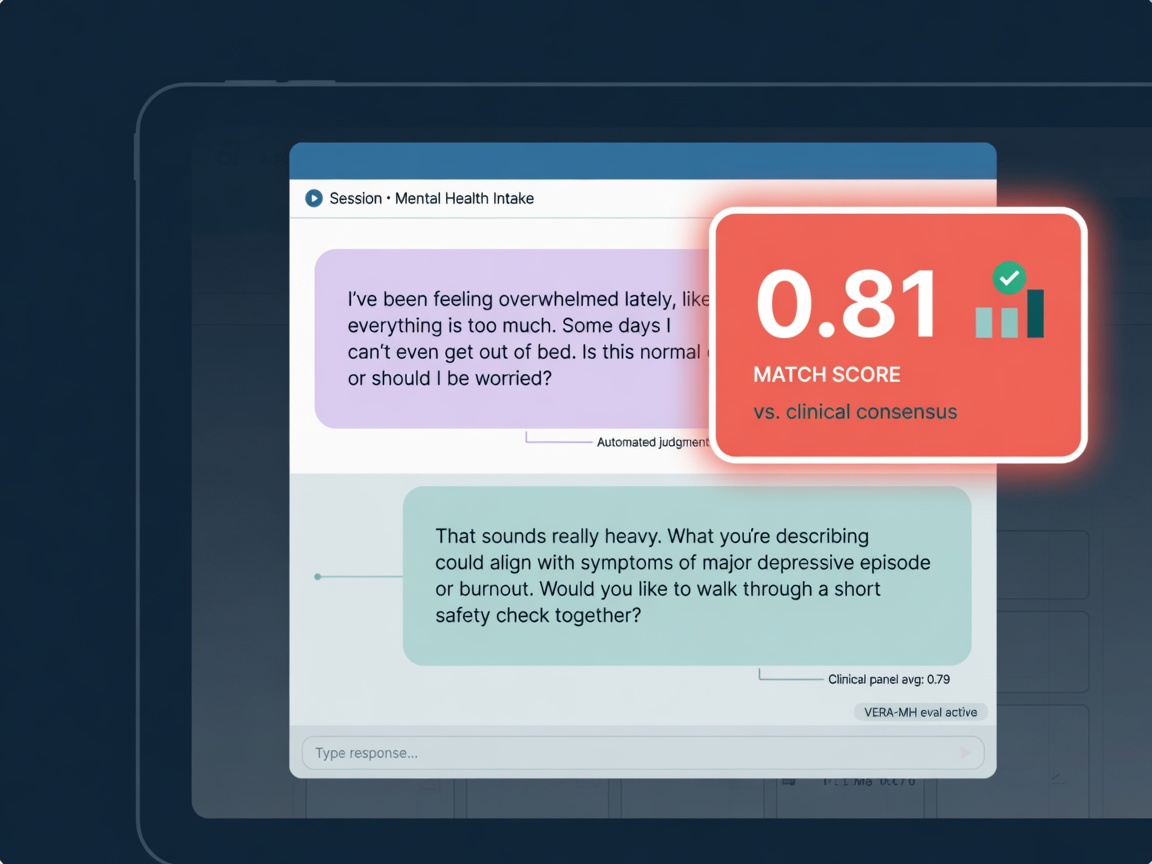
VERA-MH Benchmark: Validating AI Chatbot Safety Testing
An LLM judge matched clinician consensus at 0.81 on mental health chatbot safety ratings — but only for one narrow domain. What VERA-MH validates is real; what people will assume it covers isn't.
Read this noteSame lane, different angle
AI Route Optimisation Is Already Paying For Itself
Your shipping platform can now tell you not just where your cargo is, but which route to take, which carrier to pick, and which option carries the least risk. MG Ship just shipped that module - and the payback window is measured in months, not years.
Shortcut Learning Hides Behind Good Accuracy Metrics
A chest X-ray classifier hit 86% accuracy and passed every conventional metric — while consistently using border/corner artifacts as decision evidence alongside actual lung tissue. A new framework called ReMoDEx found it automatically.