AI Public Opinion Shows Concern, Not a Verdict on Risk
A poll finds more Americans see AI as bad for society than good, alongside widespread concern about security, jobs, and regulation. Opposition to new data centers rises when the question moves from the country to respondents’ own communities.
Automation needs a narrow first win
The best first AI workflow is usually a repeated task with a clear input, clear output, and a human approval step.
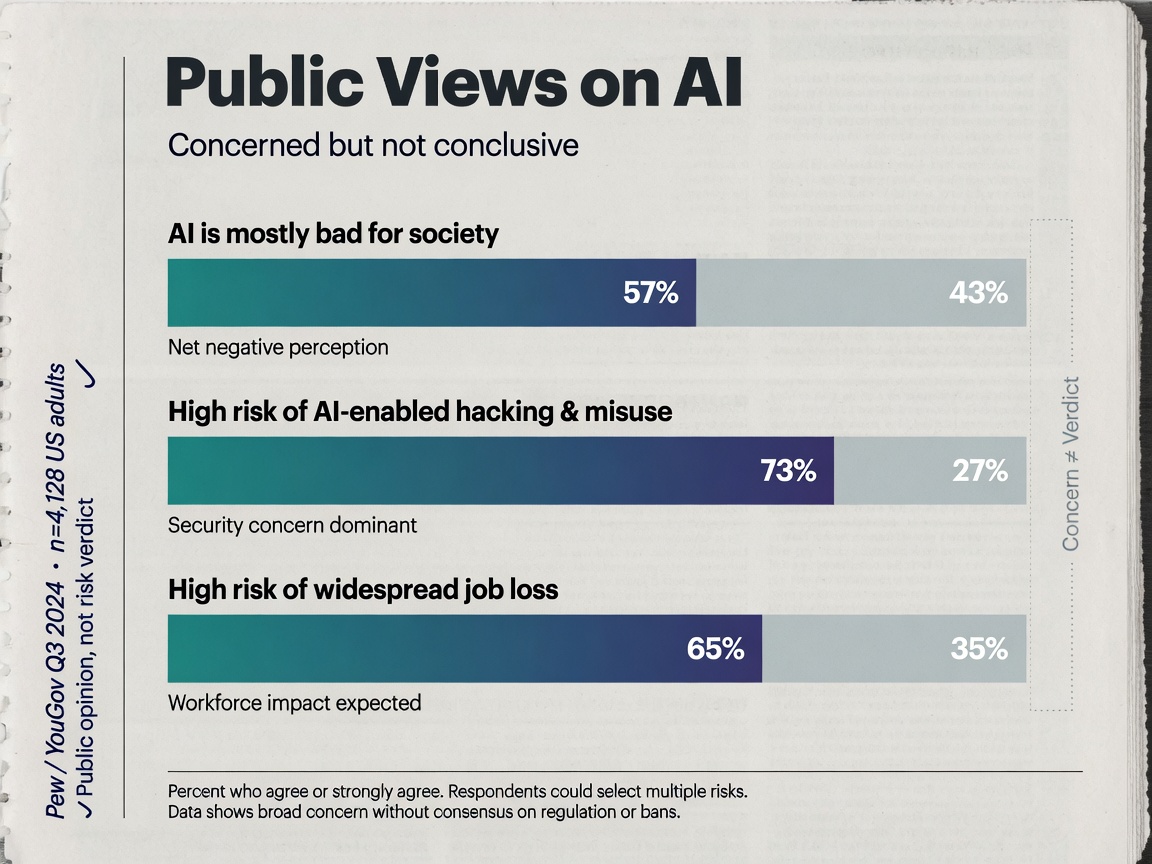
AI public opinion in an ABC News/Washington Post/Ipsos poll is markedly wary: 57% of Americans say AI is bad for society, compared with 42% who say it is good. That is a measure of public judgment, not a test of whether the risks people identify are already occurring or how likely they are.
AI public opinion points to concerns about security, work, and oversight
The poll describes more than general discomfort. Seventy-three percent say AI poses a high risk of hacking secure computer systems, and 65% say its growth poses a high risk of eliminating many jobs. Majorities also see a high risk that AI will reduce people’s ability to make decisions without it. Separately, two-thirds say the federal government is not doing enough to regulate AI’s growth and development.
Those findings suggest that concern is spread across distinct questions: security, employment, human agency, and government oversight. That breadth matters, but the figures do not tell us which concern drives the negative overall judgment, or whether people who oppose AI in general also favor a particular form of regulation. The poll establishes a pattern of reported views, not a single unified explanation for them.
Worth a look
Phugialy Picks

AI Engineering: Building Applications with Foundation Models
A practical guide to building real-world applications with foundation models and LLMs.

GMKtec K15 AI Mini PC Oculink Intel Ultra 5 125U 32GB DDR5 512GB SSD | Desktop Computer AI Boost, 3X M.2 2280 Storage Expansion, Dual NIC...

Agentic AI Engineering: Systems That Reason and Act Autonomously – Designing, Building, and Prompting LLM-Based Agents for Real-World Deployment
Some Phugialy Picks use affiliate links. If you buy through one, Phugialy may earn a commission. It doesn't change what we recommend. Full disclosure →
Data center opposition grows closer to home
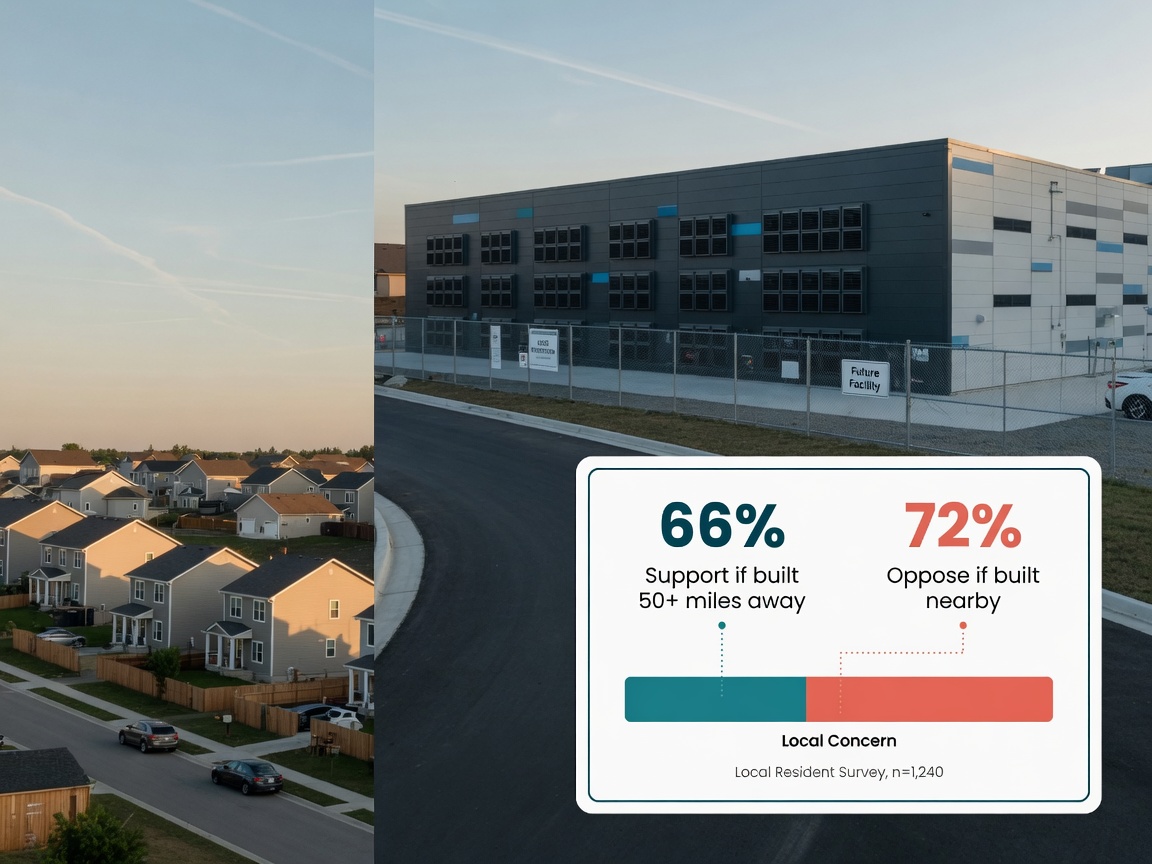
The infrastructure results make the gap between broad sentiment and local stakes especially visible. Sixty-six percent oppose building new data centers in the United States; asked about a new facility in their own community, 72% oppose it. The local figure is higher, though the summary does not establish why. It would be a mistake to treat that difference as proof of any one motive, such as concern about a facility’s effects or opposition to AI itself.
Still, this is a practical signal for anyone planning AI infrastructure: acceptance at a national level cannot be assumed to carry over to a particular community. That is an interpretation of the contrast, not a finding about what respondents would require from a proposed site. The poll gives no details here about which local concerns were measured or what conditions might change people’s views.
What the poll can—and cannot—establish about AI risk
The evidence gap is straightforward: reporting that many Americans perceive a high risk does not measure the actual frequency of AI-related cyberattacks, job elimination, or reduced decision-making ability. Nor does opposition to data centers, on its own, establish whether a specific facility is harmful or what policy would address public concerns. Those are different questions from the ones these results answer.
That distinction does not make the findings trivial. Public confidence affects the environment in which regulation and infrastructure decisions are made; dismissing concern because a poll cannot verify technical risks would confuse measurement with relevance. But the numbers should not be presented as proof that AI has already produced the harms respondents fear, either.
The narrower, more defensible claim is that the poll records substantial public concern about AI and meaningful opposition to new data centers, particularly in respondents’ communities. Whether those views reflect the risks of particular systems or sites remains a question for evidence beyond this poll.
Got a question about how this applies to you? →
For another perspective on AI deployment and infrastructure, see “The Case for Distributed AI: Zuckerberg’s Vision for Personal Superintelligence.”
Keep reading
Follow the thread

AI Alignment by Incentive Design: What It Can Show
Mechanism design tries to make desirable behavior the rational choice for AI models, even when their internal workings are hard to read. The proposals are interesting; the unresolved question is whether those incentives hold up beyond the setup they were designed for.
Read this noteSame lane, different angle
How Wikipedia Tries to Detect AI-Generated Content
Pangram’s share of flagged new Wikipedia articles and drafts fell from perhaps 20 percent to 15 or 16 percent. That sounds like progress until you ask whether the change came from policy, model changes, or something else. The bigger problem may be citations that point to real sources but misrepresent what they say.
How Social Norms Improve Human-AI Coordination
New research shows that AI agents informed by social norms can outperform human-human interactions by 43%. This suggests the next leap in coordination isn't better data, but better alignment with human social principles.