How Wikipedia Tries to Detect AI-Generated Content
Pangram’s share of flagged new Wikipedia articles and drafts fell from perhaps 20 percent to 15 or 16 percent. That sounds like progress until you ask whether the change came from policy, model changes, or something else. The bigger problem may be citations that point to real sources but misrepresent what they say.
Automation needs a narrow first win
The best first AI workflow is usually a repeated task with a clear input, clear output, and a human approval step.
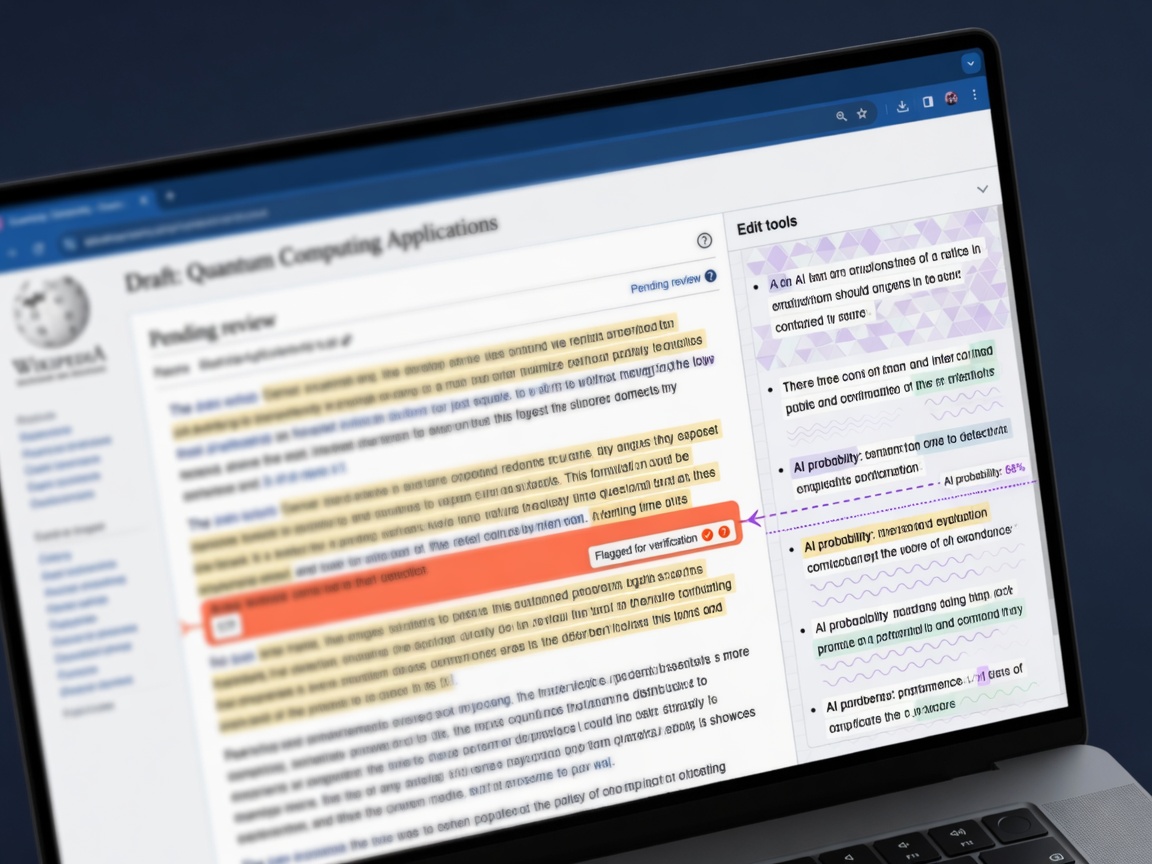
Pangram flagged perhaps 20 percent of new Wikipedia articles and drafts as AI-generated in late 2025; by early 2026, the figure was 15 or 16 percent. That movement is worth tracking, but it does not yet tell us whether Wikipedia’s rule against AI-written articles is working.
AI-generated content is harder to spot by style alone
Volunteers in WikiProject AI Cleanup are finding that the obvious signals are giving way to subtler patterns. Instead of conspicuous phrases, they are looking at structures such as the “rule of three” and negative parallelisms. Those patterns can be clues, but they are not the same as proof that a person used AI. The more detection relies on style, the more it risks confusing a recognizable writing habit with evidence of how a passage was made.
That makes this a moving target for anyone trying to build a dependable detector. A checklist based on yesterday’s telltale phrases can lose value as models change their output. The figures from Pangram show that the share it flagged shifted over a few months, but the source account says it is unclear whether that reflects policy effects or changes in AI models. The numbers are a signal to investigate, not a clean measure of enforcement success.
Worth a look
Phugialy Picks

AI Engineering: Building Applications with Foundation Models
A practical guide to building real-world applications with foundation models and LLMs.

GMKtec K15 AI Mini PC Oculink Intel Ultra 5 125U 32GB DDR5 512GB SSD | Desktop Computer AI Boost, 3X M.2 2280 Storage Expansion, Dual NIC...

2084 and the AI Revolution, Updated and Expanded Edition: How Artificial Intelligence Informs Our Future
Some Phugialy Picks use affiliate links. If you buy through one, Phugialy may earn a commission. It doesn't change what we recommend. Full disclosure →
Misleading citations are the harder content problem
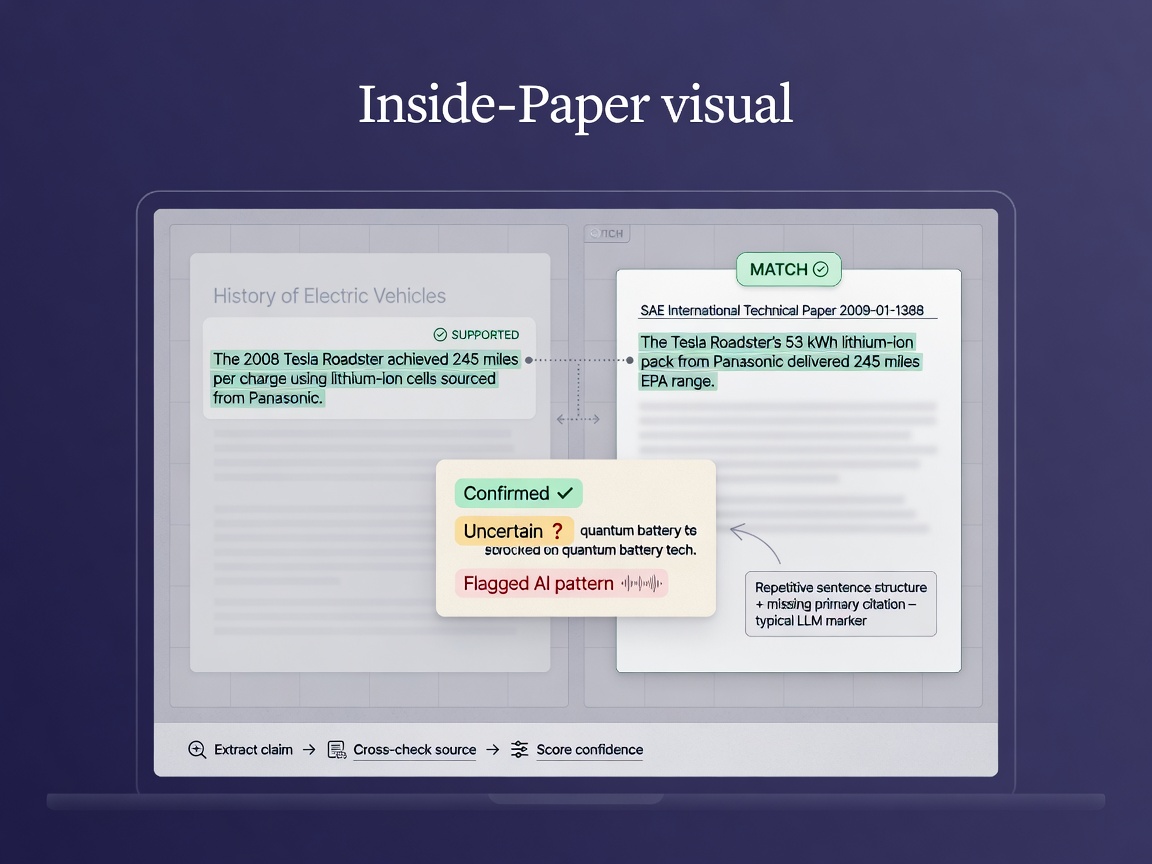
A polished paragraph is only part of the problem. AI systems may locate real sources and then misrepresent what those sources actually say, leaving citations that look plausible but do not support the accompanying claims. The source account describes misleading citations as a major worry, and that shifts the practical focus from “does this sound machine-written?” to “does this claim follow from its evidence?”
A volunteer-created AI source verifier checks whether sources support claims. That is a more useful direction for editorial work than relying on style clues alone: a citation can be checked against a claim even when the prose gives no obvious indication of its origin. Still, the existence of a verifier does not establish how accurate or comprehensive it is. In my view, the valuable unit to check is the claim-source pair, not a whole article’s supposedly machine-like voice.
Detection tools need to be treated as signals, not verdicts
Pangram is being used to flag possible AI-generated writing, while the Wikimedia Foundation is developing Paste Check to flag text pasted from some AI chatbots. They address different clues: one flags writing, while the other is described as looking for pasted text. Neither description supports treating a flag as a definitive answer about authorship or accuracy.
For a production workflow, I would use these tools to prioritize review, then verify citations and claims directly. That is a practical interpretation, not a report of a settled Wikipedia process. False certainty in either direction would be costly: a stylistic pattern could draw attention away from a factual problem, while a clean-looking passage could still contain a citation that does not support its claim.
The fall in Pangram’s flagged share is not enough to show that the rule is succeeding, and Lebleu says it is too early to determine whether it is. The useful next signal is whether citation checks and tool flags help volunteers catch unsupported claims consistently—not simply whether a detector’s percentage falls. Until that is clearer, the rule’s impact remains an open question.
Got a question about how this applies to you? →
Keep reading
Follow the thread

AI Alignment by Incentive Design: What It Can Show
Mechanism design tries to make desirable behavior the rational choice for AI models, even when their internal workings are hard to read. The proposals are interesting; the unresolved question is whether those incentives hold up beyond the setup they were designed for.
Read this noteSame lane, different angle
AI Public Opinion Shows Concern, Not a Verdict on Risk
A poll finds more Americans see AI as bad for society than good, alongside widespread concern about security, jobs, and regulation. Opposition to new data centers rises when the question moves from the country to respondents’ own communities.
How Social Norms Improve Human-AI Coordination
New research shows that AI agents informed by social norms can outperform human-human interactions by 43%. This suggests the next leap in coordination isn't better data, but better alignment with human social principles.