How Social Norms Improve Human-AI Coordination
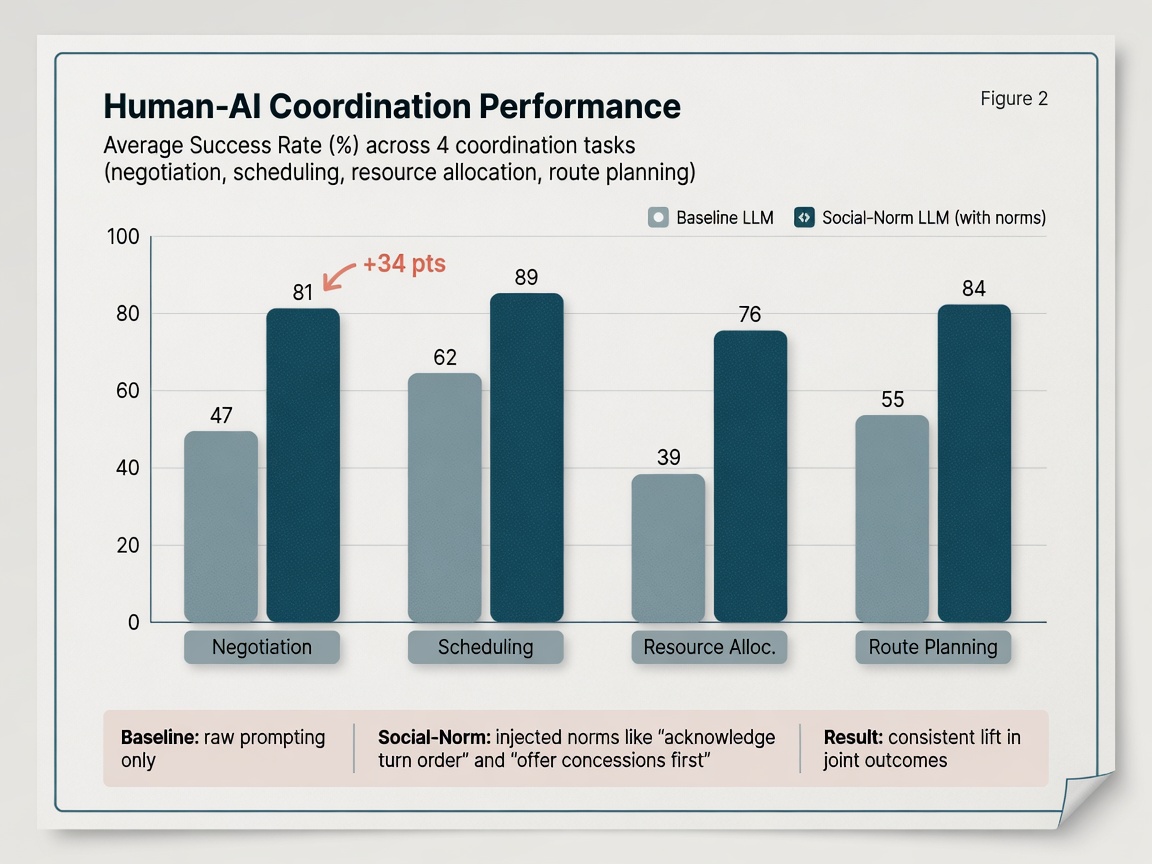
New research shows that AI agents informed by social norms can outperform human-human interactions by 43%. This suggests the next leap in coordination isn't better data, but better alignment with human social principles.
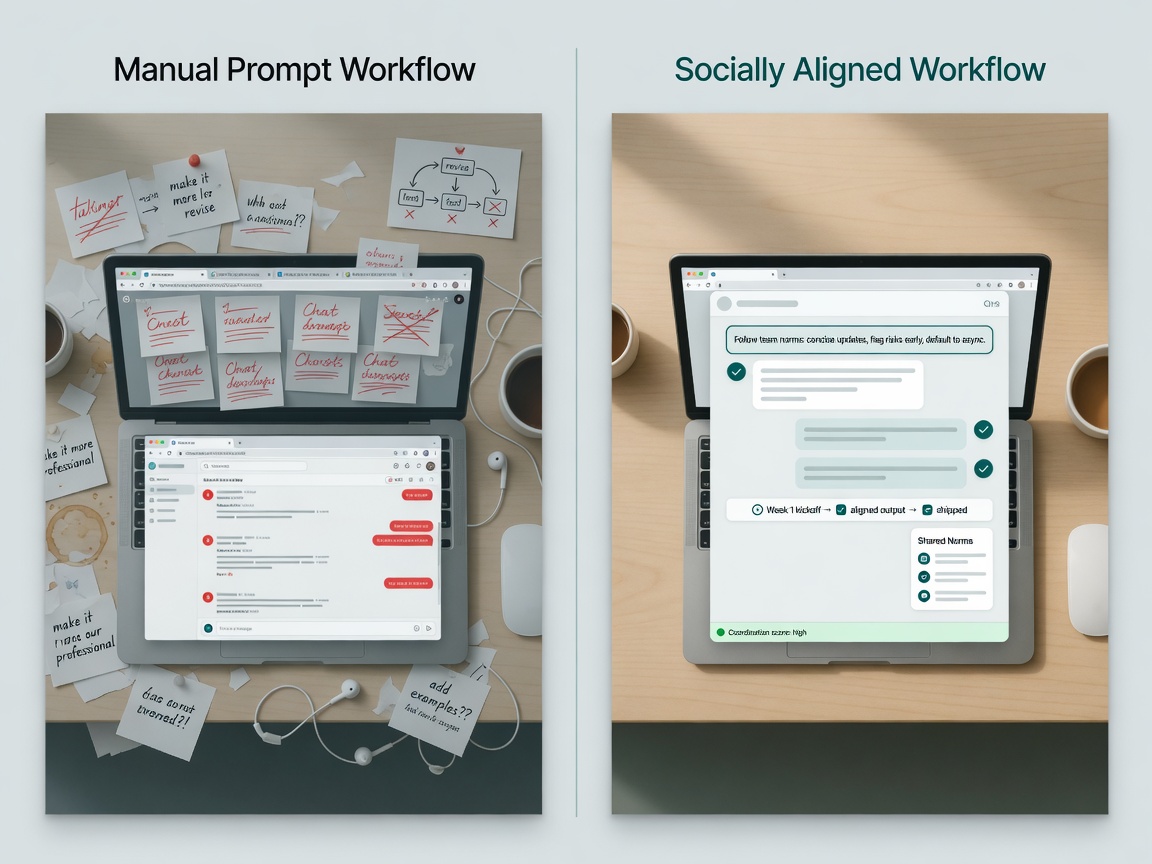
Automation needs a narrow first win
The best first AI workflow is usually a repeated task with a clear input, clear output, and a human approval step.
Integrating social norms into AI agents can achieve nearly fourfold higher scores in complex human-AI coordination tasks compared to standard baseline strategies. This research identifies three specific principles—outcome predictability, value alignment, and advantage awareness—as the core drivers for making AI agents behave in ways that feel natural and reliable to human partners.
What The Numbers Actually Show
The research tested these principles against 3,456 dynamic human interactions. When AI agents were programmed to understand these underlying social norms rather than just mimicking human demonstrations, their performance in closed-loop interaction tasks improved significantly. Specifically, the social-norm-informed LLMs achieved nearly fourfold higher total scores than baseline strategies and outperformed human-human interactions by 43% in certain scenarios. This suggests that teaching an AI the "why" of social behavior—rather than just the "what"—is a more effective path to coordination.
Worth a look
Phugialy Picks

AI Engineering: Building Applications with Foundation Models
A practical guide to building real-world applications with foundation models and LLMs.

GMKtec K15 AI Mini PC Oculink Intel Ultra 5 125U 32GB DDR5 512GB SSD | Desktop Computer AI Boost, 3X M.2 2280 Storage Expansion, Dual NIC...

Agentic AI Engineering: Systems That Reason and Act Autonomously – Designing, Building, and Prompting LLM-Based Agents for Real-World Deployment
Some Phugialy Picks use affiliate links. If you buy through one, Phugialy may earn a commission. It doesn't change what we recommend. Full disclosure →
The Real Cost of Implementation
The business value here isn't in the raw performance metrics; it's in the reduction of friction during human-AI collaboration. For a company deploying agents to handle customer service, logistics, or internal workflows, the primary hurdle is often the unpredictability of how an AI reacts to nuanced human prompts. By formalizing outcome predictability and value alignment, organizations can move away from "prompt engineering" as a constant manual overhead and toward a system where the agent's logic is pre-aligned with company standards.
Who Actually Uses This Day-to-Day
The primary users of this technology won't be the AI developers; they will be the middle managers and team leads responsible for operational consistency. If an AI agent understands advantage awareness—the ability to recognize when a human's goal might conflict with a system's efficiency—it reduces the need for constant human supervision. This is worth adopting once your organization has defined clear, quantifiable internal values and predictable outcomes, as the AI requires these concrete parameters to function as intended. It isn't a plug-and-play solution for companies that still haven't codified their own operational norms.
Got a question about how this applies to you? →
Keep reading
Follow the thread
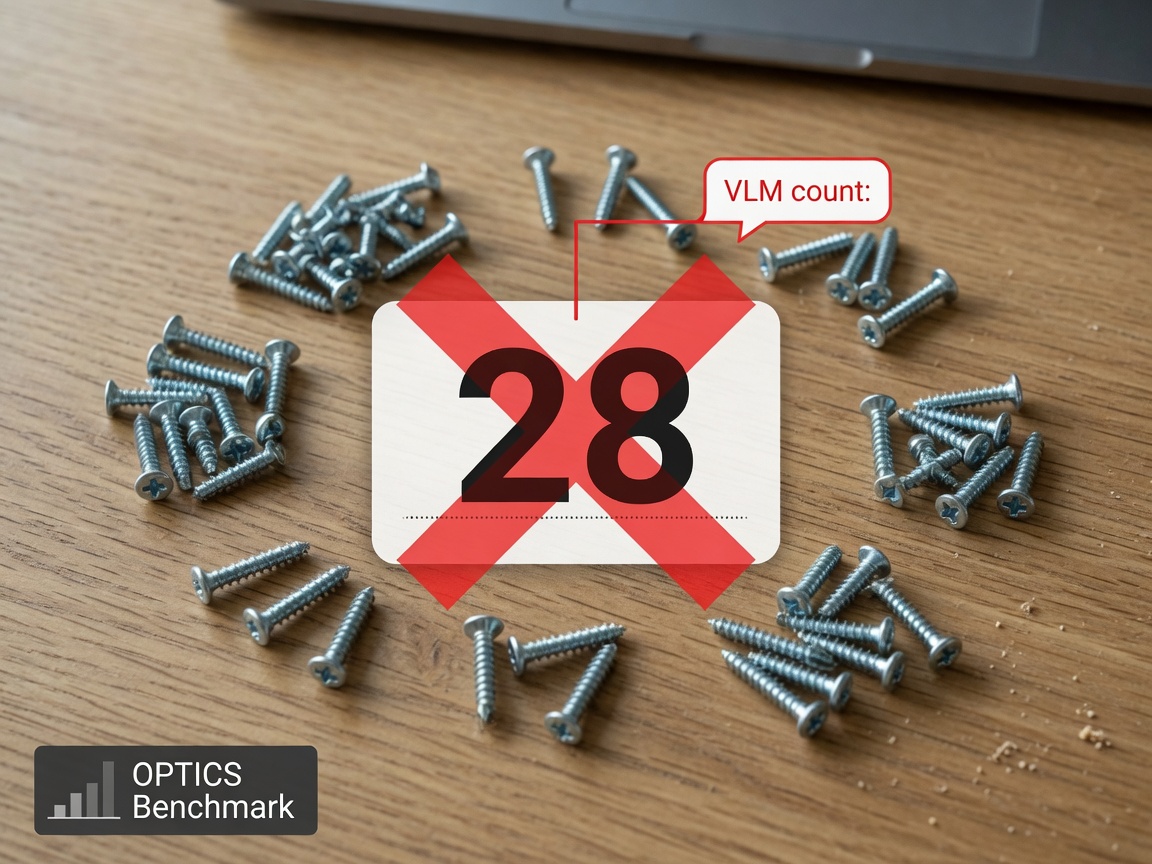
The OPTICS Benchmark Shows VLMs Still Can't Count
State-of-the-art vision-language models score below 40% on counting tasks in zero-shot settings — and even newer reasoning models trail humans by 20%. A new benchmark called OPTICS breaks down exactly where visual reasoning falls apart.
Read this noteSame lane, different angle
How AI Labs Are Becoming a Counterbalance to Government
Frontier AI labs are transitioning from mere software providers to critical infrastructure, creating a scenario where they may soon act as a counterbalance to government. As AI becomes the primary substrate for cognitive
LLM Flight Planning for eVTOL: What FRAMe's 93.8% Really Shows
FRAMe turns plain-language instructions into eVTOL flight routes that pass a three-stage validation review - 93.8% aggregate validity across four LLMs, 99% on the easy cases. The interesting question is what the other 6.2% means when the aircraft carries people.