The Circular Financing Loop: How Hyperscalers Are Subsidizing Their Own AI Growth
The reported growth in AI revenue for cloud giants like Amazon, Google, and Microsoft looks like a triumph of infrastructure on paper. However, if you look past the glossy headlines, the data suggests a much more insular
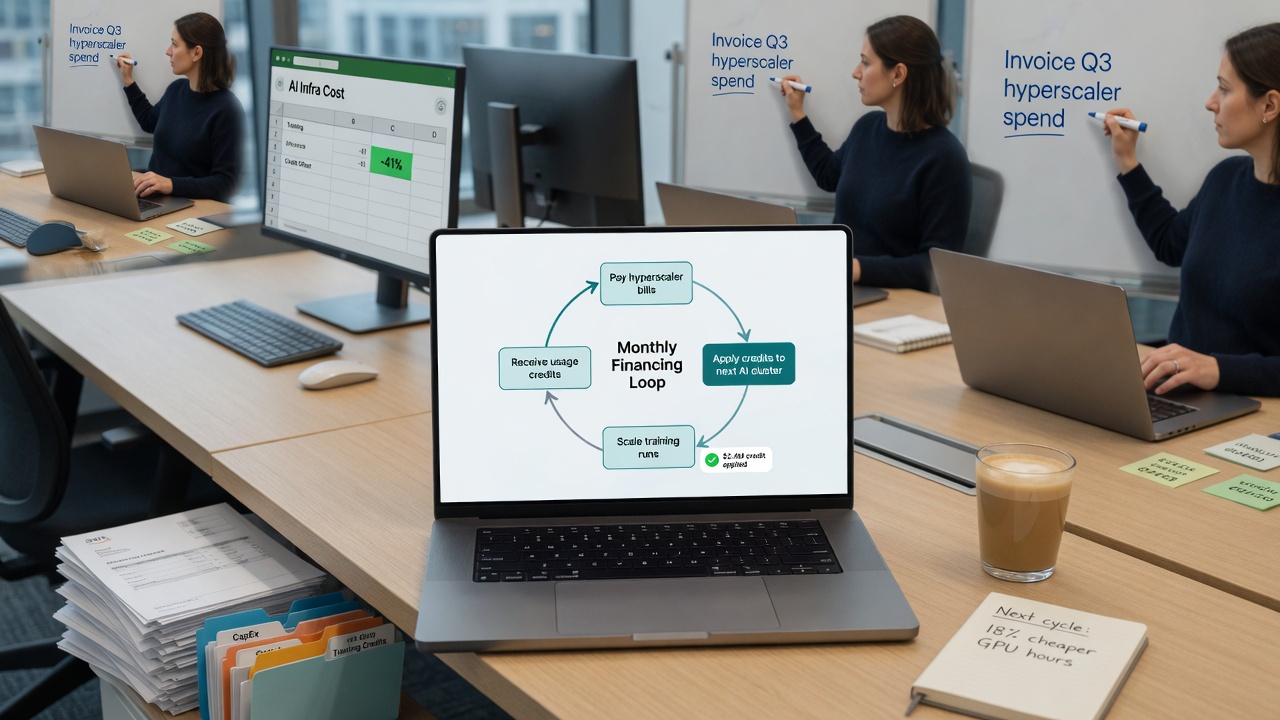
Automation needs a narrow first win
The best first AI workflow is usually a repeated task with a clear input, clear output, and a human approval step.
The reported growth in AI revenue for cloud giants like Amazon, Google, and Microsoft looks like a triumph of infrastructure on paper. However, if you look past the glossy headlines, the data suggests a much more insular reality. We aren't seeing a broad, diverse market adoption of AI; we are seeing a massive concentration of revenue driven by the compute spending of just two entities: Anthropic and OpenAI.
The Illusion of a Diverse AI Market
Cloud providers are currently not breaking out specific figures, but analyst estimates reveal a startling concentration. Anthropic and OpenAI are estimated to account for over 70% of the AI revenues for the big three cloud providers. To put that in perspective, Anthropic and OpenAI are projected to make up 73% of all of Amazon’s AI revenues in 2026 and 75% in 2028.
In 2026, total AI revenues are projected to hit around $30.9 billion. Yet, the compute spend from OpenAI and Anthropic alone sits at $18.3 billion—nearly 60% of that total. This means the "AI boom" for hyperscalers is currently tethered to the scaling requirements of two specific labs rather than a broad adoption curve across the enterprise landscape. If these two labs stop spending, the growth curve for the hyperscalers doesn't just flatten; it potentially collapses.
Phugialy Picks

AI Engineering: Building Applications with Foundation Models
A practical guide to building real-world applications with foundation models and LLMs.

GMKtec K15 AI Mini PC Oculink Intel Ultra 5 125U 32GB DDR5 512GB SSD | Desktop Computer AI Boost, 3X M.2 2280 Storage Expansion, Dual NIC...

AI: Understand the Revolution: From Basics and Buzzwords to Tech Giants, Governments, and Your Future
Some Phugialy Picks use affiliate links. If you buy through one, Phugialy may earn a commission. It doesn't change what we recommend. Full disclosure →
The Mechanics of Circular Financing
This revenue structure is underpinned by what can only be described as a circular financing model. Hyperscalers are investing billions into Anthropic and OpenAI, who then immediately funnel that capital back into the hyperscalers' infrastructure. It is a closed loop of capital.
Google has sunk $10 billion (with up to $30 billion more planned) into Anthropic. Amazon funneled $5 billion to Anthropic within a single week of an initial investment and has total commitments of $50 billion to OpenAI. These labs are facing staggering scaling costs—Anthropic is projected to spend $35.8 billion in 2028, while OpenAI is projected to spend $20 billion in the same year.
Because these labs are currently unprofitable and unsustainable without continuous infusions of capital, the hyperscalers are essentially funding their own primary customers. The hyperscalers profit from their monopoly permissions to sell the infrastructure, while the labs provide the volume necessary to keep the cloud growth numbers moving upward. It’s a symbiotic relationship, but one that relies on a constant flow of investment rather than organic profitability.
The Risk of a Subsidized Infrastructure Play
The real story here is that this model relies on a feedback loop of capital rather than a broad expansion of the customer base. What this actually points to is a fragile dependency: if you remove Anthropic and OpenAI’s compute spend, the "AI business" for Google, Microsoft, and Amazon looks significantly smaller, if it exists at all.
In practice, this means the current growth figures are more of a subsidized infrastructure play than a sign of organic market demand. While the hyperscalers are successfully capturing the lion's share of the compute spend for the current leaders, they have yet to demonstrate that they can monetize AI at scale across a diverse range of independent customers. Until we see significant revenue from outside these two labs, the narrative of a broad, self-sustaining AI economy remains unproven at the production level. We are watching a massive capital expenditure exercise—like Amazon's planned $220 billion spend in 2026—be used to prop up a very narrow set of winners.
Got a question about how this applies to you? →
Keep reading
Follow the thread
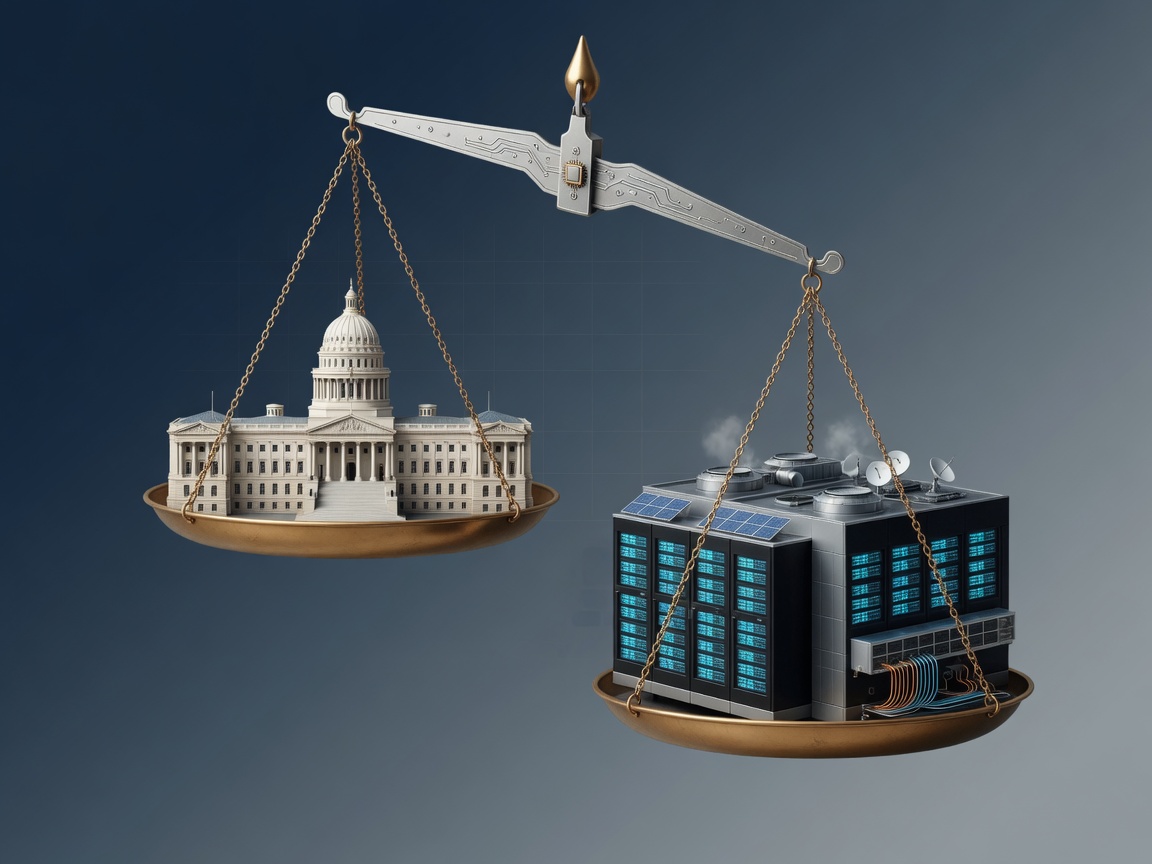
How AI Labs Are Becoming a Counterbalance to Government
Frontier AI labs are moving beyond being tools to becoming critical infrastructure. This shift creates a power dynamic where private tech may soon act as a counterbalance to government.
Read this noteSame lane, different angle
LLM Flight Planning for eVTOL: What FRAMe's 93.8% Really Shows
FRAMe turns plain-language instructions into eVTOL flight routes that pass a three-stage validation review - 93.8% aggregate validity across four LLMs, 99% on the easy cases. The interesting question is what the other 6.2% means when the aircraft carries people.
Physics-Guided Machine Learning for Prescribed Burns
Physics-guided machine learning just got a concrete, useful application: predicting fuel density during prescribed burns, where the physics is added as soft penalties instead of hard equations. That design choice is the