Coding-Agent Model Evaluation Needs a Production Loop
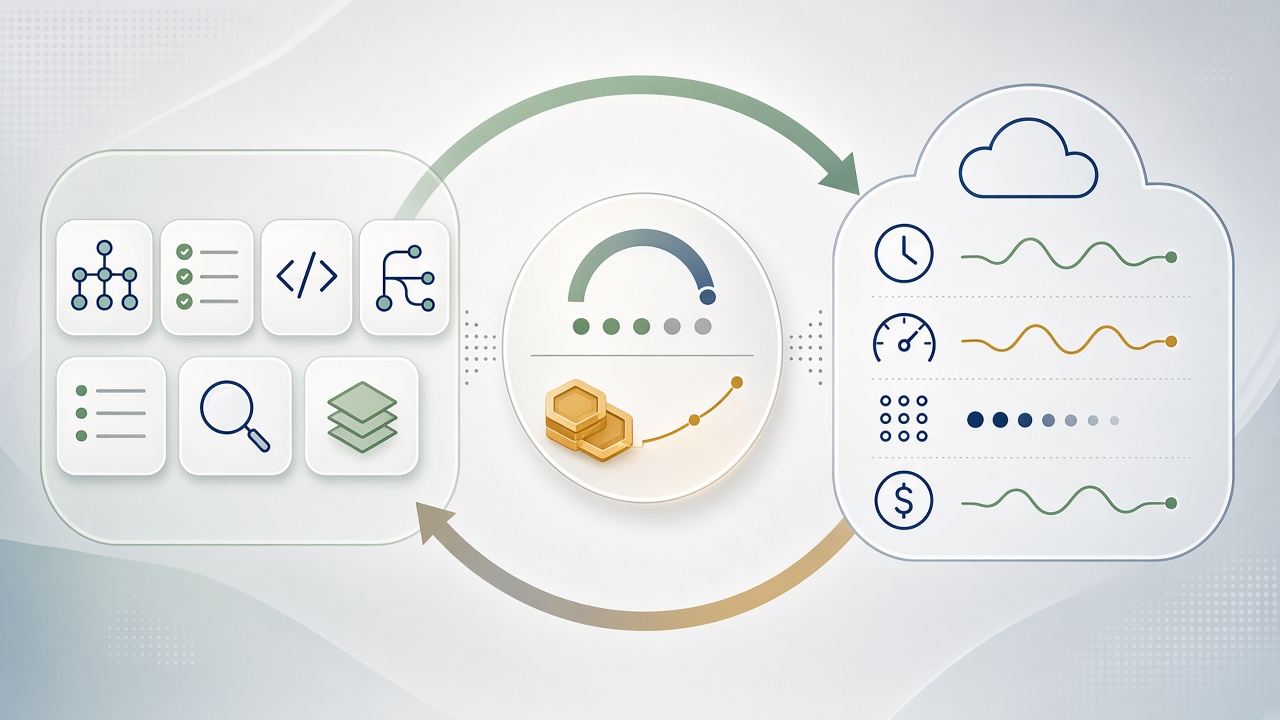
Airbnb tested coding-agent models on seven engineering task suites, measuring quality and the full token cost of each task. One result captures the tradeoff: high reasoning effort improved the score by 0.8 points, but cost 2.5 times as much.

Automation needs a narrow first win
The best first AI workflow is usually a repeated task with a clear input, clear output, and a human approval step.
Airbnb evaluates coding-agent models on its own engineering tasks before rolling them out, then checks whether production behavior matches the evaluation. That matters more than a leaderboard alone: the team is trying to choose useful defaults while accounting for both task quality and token cost.
Coding-agent model evaluation puts cost beside quality
Airbnb uses seven fixed task suites drawn from its engineering work. It measures the quality of completed tasks and the full token cost required to finish each one, across different models and reasoning-effort settings. Cost per task means the list-price cost of all tokens an agent uses to finish a task.
One result makes the tradeoff concrete: moving from low to high reasoning effort raised the score by 0.8 points, while cost per task became 2.5 times as high. The source article does not specify the score scale here, so that result should not be read as a universal measure of value. It does show why a single “best model” ranking is a poor default: the right setting depends on whether the quality gain is worth the additional spend for the task at hand.
Worth a look
Phugialy Picks

LG 34WN80C-B UltraWide Monitor 34” 21:9 Curved WQHD (3440 x 1440) IPS Display, USB Type-C (60W PD), sRGB 99% Color Gamut, 3-Side Virtuall...

Alienware 34 Curved Gaming Monitor – AW3425DWM - 34-inch WQHD 180Hz 1ms Display, 1500R, AMD FreeSync Premium, VESA AdaptiveSync.

LG 34WR55QK-B 34-inch UltraWide WQHD (3440 x 1440) Curved Computer Monitor, 100Hz, 5ms, HDR10, Reader Mode, HDMI, DisplayPort, USB Type-C...
Some Phugialy Picks use affiliate links. If you buy through one, Phugialy may earn a commission. It doesn't change what we recommend. Full disclosure →
Production monitoring checks whether the evaluation holds up
The evaluation is only the first part of the decision. In production, Airbnb uses CloudWatch signals to investigate latency, throttling, token consumption, and cost, comparing real usage with evaluation results. The article’s stated principle is practical: when production usage does not match the evaluation, the team looks for the reason.
That feedback loop is the most useful part of the approach. An offline task suite can help compare models under consistent conditions; production monitoring can reveal whether those conditions reflect actual use. But seven fixed suites are still a bounded sample. The material does not show how well the suites cover the variety of engineering work, or how closely evaluation scores predict production outcomes. Those are important unknowns, not reasons to dismiss the method.
A fast model cycle makes defaults operational decisions
The source reports that eight new models launched in about five weeks. By mid-October, about two thirds of requests engineers sent through coding agents went to those new models. Thousands of engineers and engineering-adjacent people use AirChat, Airbnb’s internal tool for running coding agents, every week.
At that pace and scale, model choice is not a one-time procurement decision. Defaults and reasoning-effort limits shape the quality and cost of a large stream of work, while capacity decisions have to account for what happens after rollout. My read is that Airbnb’s strongest lesson is procedural: keep evaluations comparable, measure full task cost, and treat production discrepancies as evidence to investigate—not as noise to average away.
For teams choosing coding-agent defaults, the useful next step is not to copy Airbnb’s specific settings. It is to build a small, repeatable evaluation from real tasks, include token cost, and check whether its results predict production behavior. If they do not, the gap is the work.
Holiday picks
Thanksgiving: early shopping
Start early: products for hosting, travel and home, plus the gear you have been watching.

Audio
Big purchaseSony WH-1000XM5 Premium Noise Cancelling Wireless Headphones
View on Amazon (opens in a new tab): Sony WH-1000XM5 Premium Noise Cancelling Wireless HeadphonesPrices change daily. Check today's price on Amazon.
 Trending now
Home & Kitchen
Keurig K-Elite Single Serve K-Cup Pod Coffee Maker, Brushed Silver
View on Amazon (opens in a new tab): Keurig K-Elite Single Serve K-Cup Pod Coffee Maker, Brushed SilverPrices change daily. Check today's price on Amazon.
 Trending now
Home & Kitchen
eufy C28 Robot Vacuum Cleaner and Mop for pet hair, 15,000 Pa
View on Amazon (opens in a new tab): eufy C28 Robot Vacuum Cleaner and Mop for pet hair, 15,000 PaPrices change daily. Check today's price on Amazon.
We earn from qualifying purchases made through these links, at no extra cost to you, as an Amazon Associate and through other affiliate programs. Disclosure. See all Thanksgiving picks
Got a question about how this applies to you? →
Keep reading
Follow the thread
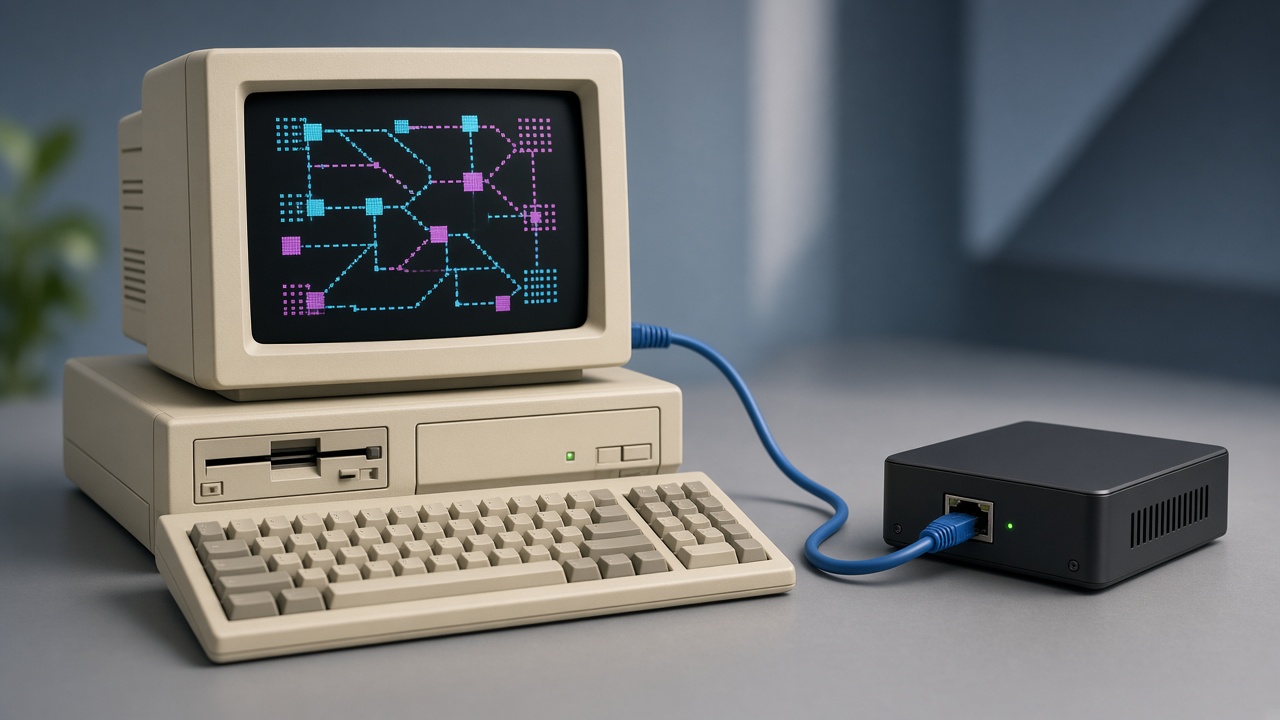
ClawDOS AI Coding Agent Brings Claude to an 8088 PC
ClawDOS is an AI coding agent that runs on an IBM PC XT with an 8088 at 4.77 MHz, 640K of RAM, and a CGA card. It talks to Claude through the Claude Messages API, while a bridge PC handles TLS. That split is the useful e
Read this noteSame lane, different angle
AI Simulation Agents Still Need a Human Test Loop
AI agents can assemble and run industrial, robotics, and VR simulations, but a successful render is not proof that the scene behaves correctly. The useful workflow still includes logs, direct testing, and a developer checking the result.
Enterprise AI Governance Starts Outside the Agent Loop
BMW Group’s agent governance model puts controls outside individual agents and assigns autonomy by workflow step. That’s a more practical starting point than deciding an entire agent is either trusted or not—but the evaluation dataset has to represent the work teams will actually deploy.