When AI Labs Become a Counterbalance to Government Power
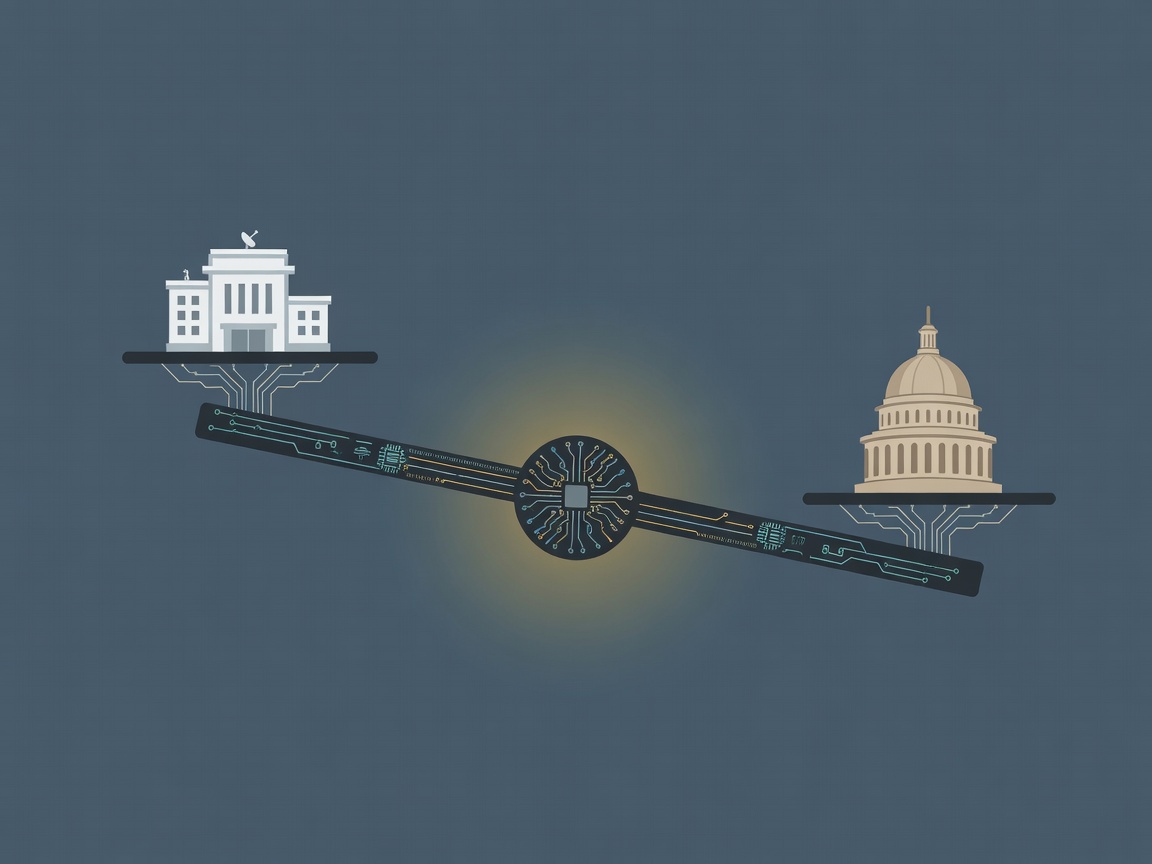
Frontier AI labs are being framed as a counterbalance to government — by the labs themselves. The catch: unlike governments, they have no elections, no FOIA laws, and no mechanism anyone has designed yet to hold them accountable.
Automation needs a narrow first win
The best first AI workflow is usually a repeated task with a clear input, clear output, and a human approval step.
Frontier AI labs are positioning themselves as a counterbalance to government — and the argument isn't coming from critics worried about corporate power, it's coming from inside the labs themselves. An OpenAI strategist's framing, reported in a recent piece, is that organizations building the most advanced AI systems are a "new kind of institution under the sun," one that could rival state power because states increasingly need what these companies sell.
Why AI Labs Could Become a Counterbalance to Government
The core claim is structural, not rhetorical. AI is not infrastructure for a single narrow purpose — it is increasingly being developed as infrastructure for cognitive work itself: software development, medicine, education, military analysis. Once a technology sits under broad categories of work like that, the organizations operating it stop being vendors and start being utilities.
That's the mechanism behind the "counterbalance" language. Governments may find themselves dependent on private AI providers for critical infrastructure and even intelligence analysis. A state that runs its cognitive work through a handful of private models has handed those providers leverage no previous company category held — not search engines, not social platforms, not cloud hosts. Those businesses touched communication and storage; this one touches thinking itself.

Phugialy Picks

AI Engineering: Building Applications with Foundation Models
A practical guide to building real-world applications with foundation models and LLMs.

GMKtec K15 AI Mini PC Oculink Intel Ultra 5 125U 32GB DDR5 512GB SSD | Desktop Computer AI Boost, 3X M.2 2280 Storage Expansion, Dual NIC...

AI: Understand the Revolution: From Basics and Buzzwords to Tech Giants, Governments, and Your Future
Some Phugialy Picks use affiliate links. If you buy through one, Phugialy may earn a commission. It doesn't change what we recommend. Full disclosure →
The Accountability Gap Nobody Has an Answer For
Here's where the argument gets uncomfortable: unlike governments, AI companies have no democratic mechanisms for accountability. No elections. No freedom-of-information laws. No opposition party with access to the logs.
The article points at what dependency actually demands — continuity requirements (what happens when your provider goes down or pivots strategy?), interoperability (can you move your cognitive workloads elsewhere?), and independent auditing (who verifies what these systems do on your behalf?). None of these exist as standard practice today for frontier models, and none of them can be bolted on after dependency sets in.
What This Actually Points To
My read: the interesting question isn't whether labs become powerful enough to counterbalance governments — if you're building on their APIs at any scale, you already know they are. The real story is that we're treating this like a policy debate when it's mostly an engineering problem with a deadline.
Interoperability and auditability are things you either design for before you're dependent or negotiate for after, from weakness. Anyone who has lived through a cloud migration knows which position you want to be in. Governments writing procurement rules for AI systems today are effectively deciding whether they'll be customers or tenants.
The part worth watching is whether continuity and audit requirements show up in actual contracts before they show up in legislation. If they do, this gets solved quietly by procurement teams doing their jobs. If they don't, we'll find out what "new kind of institution" means the first time a frontier lab and a government want different things — on a stack that already touches more than a billion devices.
Got a question about how this applies to you? →
Keep reading
Follow the thread
AI Regulation Now Depends on the Companies It Regulates
The most uncomfortable line in a recent analysis on AI's institutional power: a government may end up trying to regulate an AI provider whose technology it simultaneously depends on. That's the vendor lock-in problem every developer knows, scaled until the dependent party writes the rules — and with a footprint of more than a billion devices, the dependency is already shipping.
Read this noteSame lane, different angle
Architecting AI Inference Infrastructure for Data Movement
Moving data from one place to another and making sure we can use it effectively is the primary technical hurdle in modern AI deployments. While training models captures the spotlight, the shift toward AI inference infras
When AI Labs Counterbalance Government, Who Checks Them?
OpenAI's new Head of Strategic Futures argued frontier AI labs could become a "counterbalance to government." The sharper question is what happens when AI providers embedded in hospitals and agencies start looking like critical infrastructure — with no elections, courts, or FOIA laws to hold them accountable.