The Three Tiers of AI Maturity: Moving Beyond the Chatbot
Phu explores the evolution of AI adoption from reactive chatbots to structured, multi-agent orchestration, emphasizing that reliability in automation comes from deterministic architecture, not just better prompting.

Automation needs a narrow first win
The best first AI workflow is usually a repeated task with a clear input, clear output, and a human approval step.
The Three Tiers of AI Maturity: Moving Beyond the Chatbot
Most businesses are currently stuck in a "chatbot trap." They treat AI as a smarter search engine—a Level 1 tool—and then wonder why it doesn't solve their operational bottlenecks. As an automation engineer, I’ve learned that the jump from "chatting with an LLM" to "deploying an autonomous system" isn't about using a better model; it’s about shifting from probabilistic prompts to deterministic orchestration.
The Problem
We treat LLMs like humans. We give them a vague prompt, hope for the best, and when the output is inconsistent, we blame the model. This is the hallmark of Level 1 adoption. If your workflow relies on a human manually copy-pasting results from ChatGPT into a spreadsheet, you aren't automating; you're just adding a high-tech middleman to a manual process.
Worth a look
Phugialy Picks

GEEKOM IT15 AI Mini PC, Intel Ultra 9 285H(99 Tops), 32GB DDR5, 1TB SSD | The Most Powerful Workstation,Arc 140T GPU,WiFi 7,8K Business D...

AI Engineering: Building Applications with Foundation Models
A practical guide to building real-world applications with foundation models and LLMs.

OMOTON C2 Adjustable Aluminum Phone Stand
We'd buy this if: You want your phone upright on your desk for calls/notifications without a cable getting in the way.
We'd skip this if: You never keep your phone on your desk.
Some Phugialy Picks use affiliate links. If you buy through one, Phugialy may earn a commission. It doesn't change what we recommend. Full disclosure →
The Three Levels of AI Maturity
Level 1: The Chatbot (The 'Search' Replacement)
This is the conversational interface. It’s reactive. You ask, it answers. It’s useful for research, drafting, or quick coding snippets, but it lacks state. It forgets who you are the moment the context window clears.
Level 2: The AI Employee (Task-Based Automation)
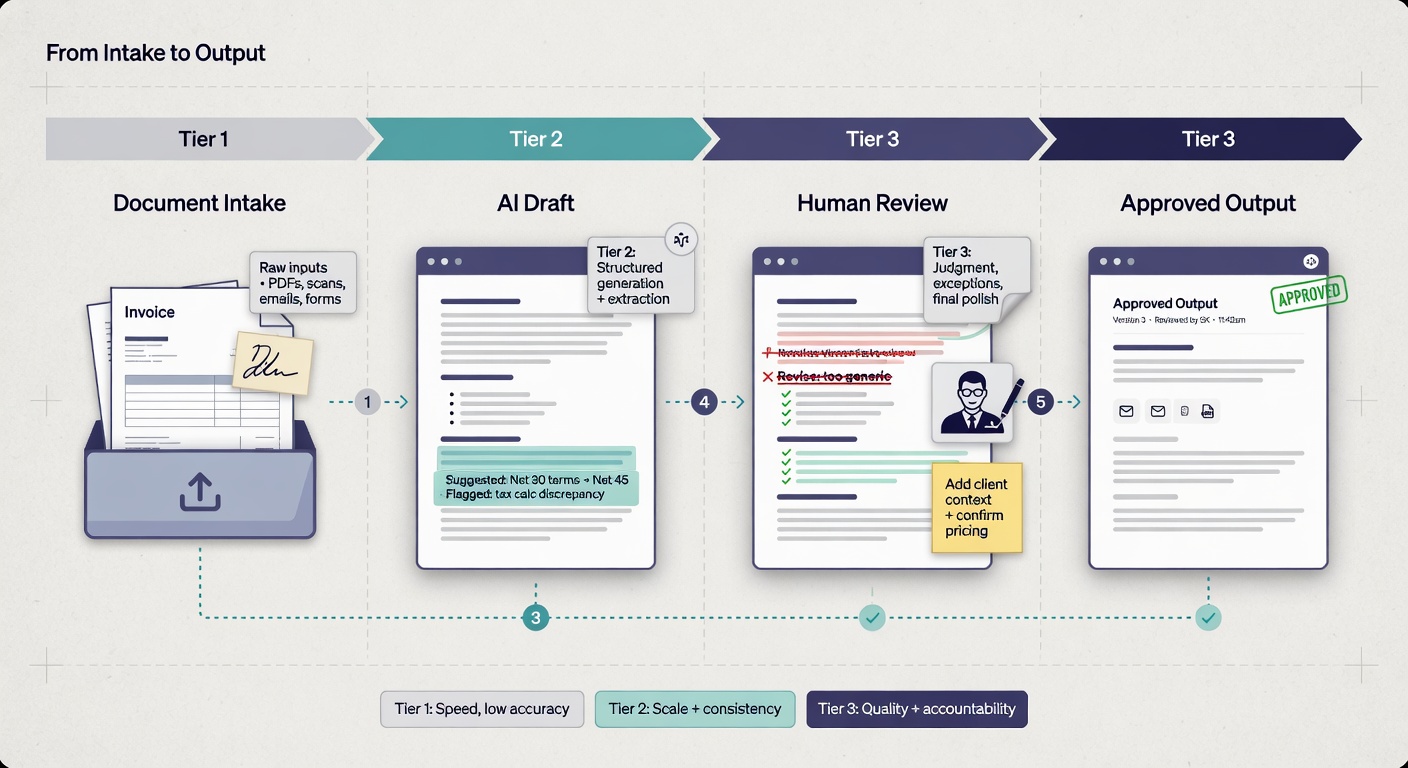
Here, we move to defined workflows. You have an input, a specific transformation, and a reliable output. This is where you implement structured schemas (JSON/Pydantic) to ensure the AI speaks the language your database understands. It’s consistent, repeatable, and integrates with your existing tech stack.
Level 3: The AI Fleet (Agentic Systems)
This is where we move into multi-agent orchestration. Inspired by the frameworks outlined by researchers like Lilian Weng, these systems treat the LLM as a "brain" that manages planning, memory, and reflection. Instead of one prompt doing everything, you have a fleet of specialized agents passing data to one another.
My Working Approach
I stop thinking of AI as a "writer" or "coder" and start thinking of it as a state machine.
- Define the Schema: If I can’t define the output format in a JSON schema, I don’t automate it.
- Isolate the Logic: I build small, single-purpose agents. If an agent tries to do too much, it loses focus and the error rate spikes.
- Implement Review Gates: I add verification steps between agents. If Agent A (Researcher) provides bad data, Agent B (Writer) shouldn't even start.
Practical Example: The Newsletter Fleet
Instead of asking a chatbot to "write a newsletter," I build a three-stage pipeline:
- The Researcher: Scrapes RSS feeds, filters for specific topics, and outputs a structured JSON list of links with summaries.
- The Writer: Takes that JSON, applies a specific brand voice, and drafts the content.
- The Critic: Reviews the draft against a checklist (e.g., "Does it mention X?", "Is the tone too salesy?"). If it fails, it sends feedback back to the Writer.
This is a closed-loop system. It’s not magic; it’s distributed software engineering.
What I Would Avoid
- Selling 'AGI' internally: Don't promise autonomy. Promise reliability. Frame these agents as "scripts that can handle ambiguity."
- Ignoring Error States: If an agent fails to parse JSON, the whole system shouldn't crash. You need fallback logic and logging at every handoff.
- Over-prompting: If you need a 2,000-word prompt to get a task done, your architecture is broken. Break the task into smaller, modular steps.
Try This Next
If you have a recurring task that involves data moving between two apps, stop trying to "prompt" your way to a solution. Draw a flowchart of the process. Identify the handoff points. Replace those handoffs with structured data validation. That’s your first step toward a Level 2, and eventually Level 3, system.
Got a question about how this applies to you? →
Keep reading
Follow the thread

The Architecture of Autonomy: Why Your Workflows Are Brittle
Phu explores the shift from rigid, brittle 'If/Then' automation workflows to resilient, goal-oriented agentic fleets, arguing that the key to scaling business operations is managing failure as an architectural parameter.
Read this noteSame lane, different angle
The Cognitive Debt of AI: Why I'm Restricting My Kids' Access to 'Smart' Assistants
An engineering-based perspective on why AI in education often creates 'cognitive debt' and how to use prompt engineering to force AI to act as a Socratic tutor rather than an answer-generator.
Beyond the Model: Hardening Your AI Workflow
Securing neural networks isn't about protecting the model weights; it's about treating AI as an untrusted software component. I break down how to implement input/output guardrails to prevent injection and data leakage.