The Architecture of Autonomy: Why Your Workflows Are Brittle
Phu explores the shift from rigid, brittle 'If/Then' automation workflows to resilient, goal-oriented agentic fleets, arguing that the key to scaling business operations is managing failure as an architectural parameter.

Positioning AI as a unit of production rather than a feature.
A more resilient system that requires less 'babysitting' and more strategic design.
The Architecture of Autonomy: Why Your Workflows Are Brittle
Most automation in modern businesses is built on a foundation of sand. We call them "workflows," but they are essentially elaborate, rigid trees of If/Then logic. When the input is perfect, the machine purrs. When the input deviates by a single character or a process step shifts, the machine halts, throws an error, and demands a human to come and "fix" the brittle chain.
As an engineer, I’ve spent years building these deterministic systems. They are predictable, easy to debug, and fundamentally incapable of handling the entropy of real-world business. We are hitting an automation ceiling. The cost of maintaining these massive, fragile If/Then trees is now cannibalizing the budget we should be spending on innovation.
The Automation Ceiling
Linear workflows are essentially hard-coded assumptions about how the world works. If you are automating an invoice reconciliation process, you write a script that expects a PDF in a specific format, with specific fields in specific locations. The moment a vendor changes their template, your "automated" process becomes a manual one again.
This is technical debt by design. Every time you add a new edge case to a workflow, you increase the complexity of the graph. Eventually, the system becomes so brittle that the engineer spends more time patching the logic than the system spends saving time. We aren't building productivity; we are building a maintenance trap.
From 'Tool' to 'Colleague': The Shift to Goal-Oriented Design
The transition to agentic fleets is not just a change in technology; it’s a change in the unit of production. Instead of programming a path, we are programming a goal.
Consider a standard customer support chatbot. It is a workflow. It follows a decision tree. If a customer asks about a refund, it follows the "refund" branch. If the customer adds a nuance—like "my refund is for a partial order that arrived broken, but I’d prefer store credit"—the bot usually fails because that branch wasn't explicitly mapped.
An Accountability Agent, by contrast, is given a goal: Maintain customer satisfaction and optimize for retention. It isn't restricted to a script. It can query the account history, check the inventory system, look at the refund policy, and propose a solution that satisfies the goal. It manages its own state and re-plans when the initial path is blocked. It doesn't crash when the input changes; it adapts because the outcome is the anchor, not the path.
The Economics of Resiliency
In deterministic systems, "failure" is an error code. In agentic systems, failure is a parameter to be managed.
When we talk about the "Value of Resiliency," we are talking about the reduction in human-in-the-loop intervention. If a system can self-correct 80% of its own hiccups—by retrying with a different prompt, searching for missing context, or escalating to a human only when it hits a true deadlock—the operational leverage is exponential.
We stop measuring success by "uptime" (which is a binary, fragile metric) and start measuring it by "goal completion rate." The business impact here isn't just speed; it's the ability to scale operations without scaling headcount at the same rate.
Designing for Controlled Failure
If you are building an agentic fleet, you have to abandon the idea of a perfect system. You must design for the reality that agents will hallucinate, loop, or hit dead ends.
- Constraint-Based Governance: You don't give an agent total freedom; you constrain its toolkit. An agent should only be able to trigger specific, audited functions.
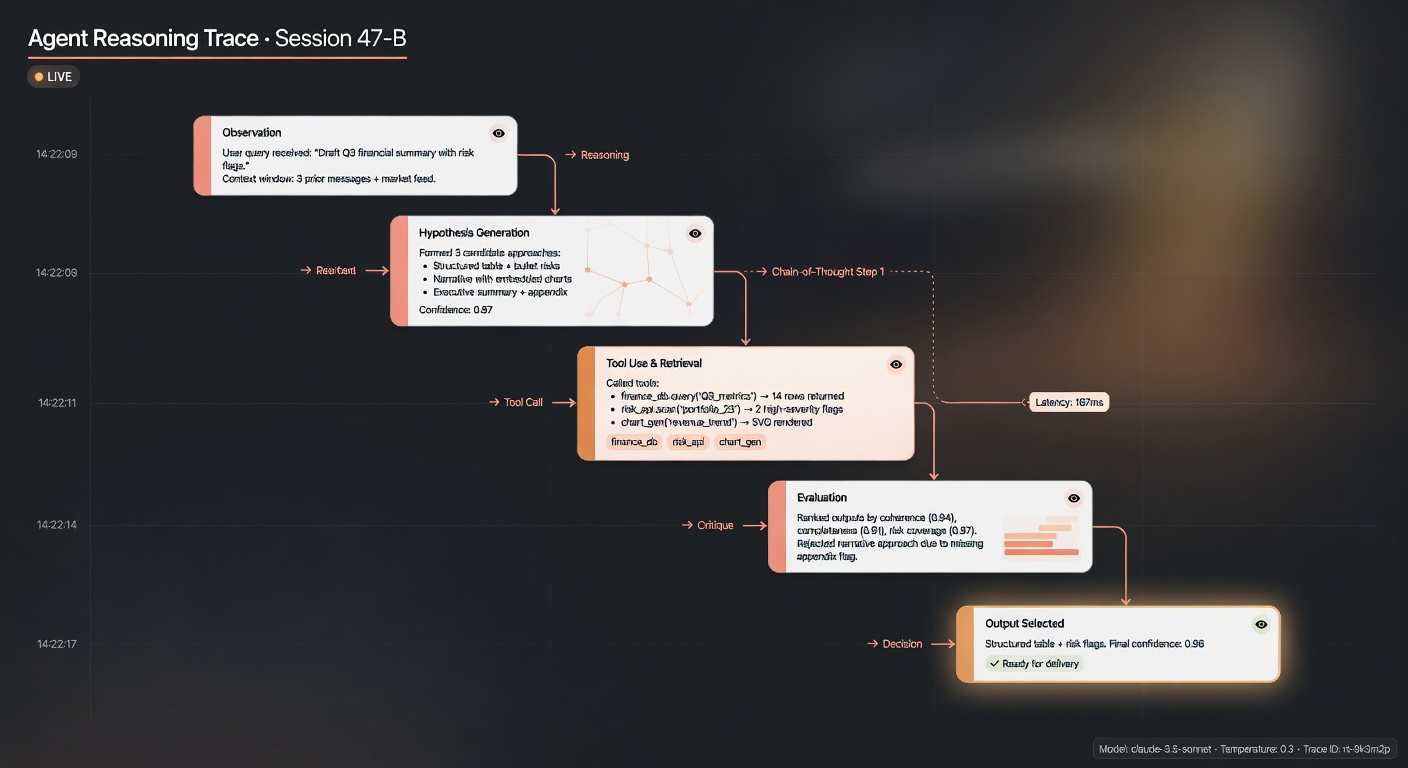
- Human-on-the-loop: This is the evolution of debugging. Instead of stepping through code, you are monitoring the agent’s reasoning trace. You aren't fixing the code; you are refining the constraints or providing better context.
- Cyclic Planning: As seen in frameworks like LangGraph, the ability for an agent to move in cycles—to evaluate its own output and pivot—is what separates a simple tool from an autonomous worker.
The Realization
I’ve realized that the most dangerous assumption we make is that AI agents are just "smarter" chatbots. They aren't. They are a new way to structure software state. If you continue to treat them as a feature to be plugged into a rigid workflow, you will miss the point entirely.
Stop trying to script the perfect process. Start designing the system that can navigate the imperfection of your business. The future of automation isn't about building a faster machine; it's about building a machine that knows when to ask for help and when to keep going.
Worth a look
Phugialy Picks

AI Engineering: Building Applications with Foundation Models
A practical guide to building real-world applications with foundation models and LLMs.

GMKtec K15 AI Mini PC Oculink Intel Ultra 5 125U 32GB DDR5 512GB SSD | Desktop Computer AI Boost, 3X M.2 2280 Storage Expansion, Dual NIC...

GEEKOM IT15 AI Mini PC, Intel Ultra 9 285H(99 Tops), 32GB DDR5, 1TB SSD | The Most Powerful Workstation,Arc 140T GPU,WiFi 7,8K Business D...
Some Phugialy Picks use affiliate links. If you buy through one, Phugialy may earn a commission. It doesn't change what we recommend. Full disclosure →
Got a question about how this applies to you? →
Keep reading
Follow the thread
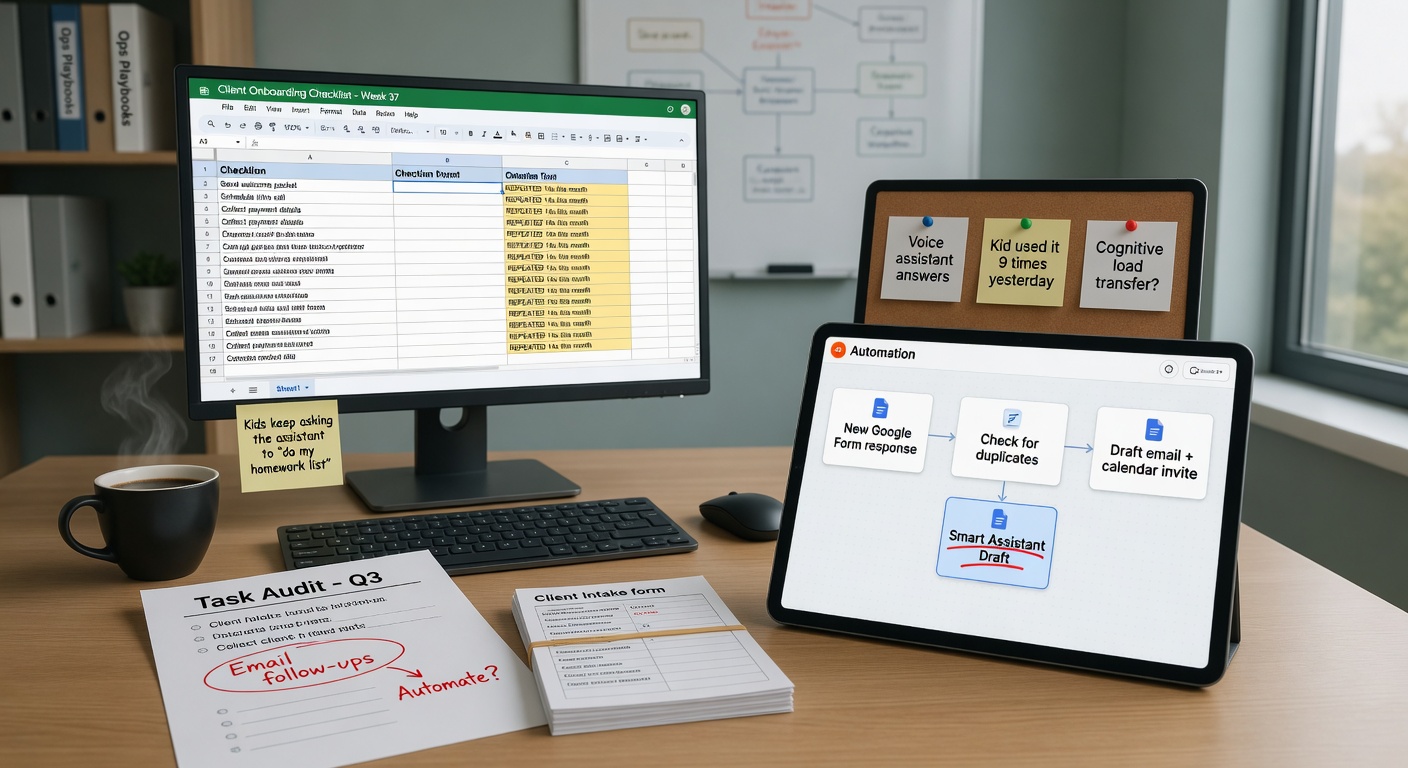
The Cognitive Debt of AI: Why I'm Restricting My Kids' Access to 'Smart' Assistants
An engineering-based perspective on why AI in education often creates 'cognitive debt' and how to use prompt engineering to force AI to act as a Socratic tutor rather than an answer-generator.
Read this noteSame lane, different angle
Beyond the Model: Hardening Your AI Workflow
Securing neural networks isn't about protecting the model weights; it's about treating AI as an untrusted software component. I break down how to implement input/output guardrails to prevent injection and data leakage.
The Prototype Trap: Why AI-Driven Development Needs Guardrails Before Implementation
AI speeds up development, but it also invites logic gaps. By adopting 'Constraint-First Development' using Pydantic and structural guardrails, engineers can treat AI outputs as untrusted inputs, turning ephemeral prototypes into production-ready code.