ReviewCerberus: Moving Beyond the "Chatty" AI Code Review
ReviewCerberus handles git branch diffs and outputs structured reports with severity levels. It includes a Verification Mode to cut down on the AI hallucinations that usually plague automated code reviews.
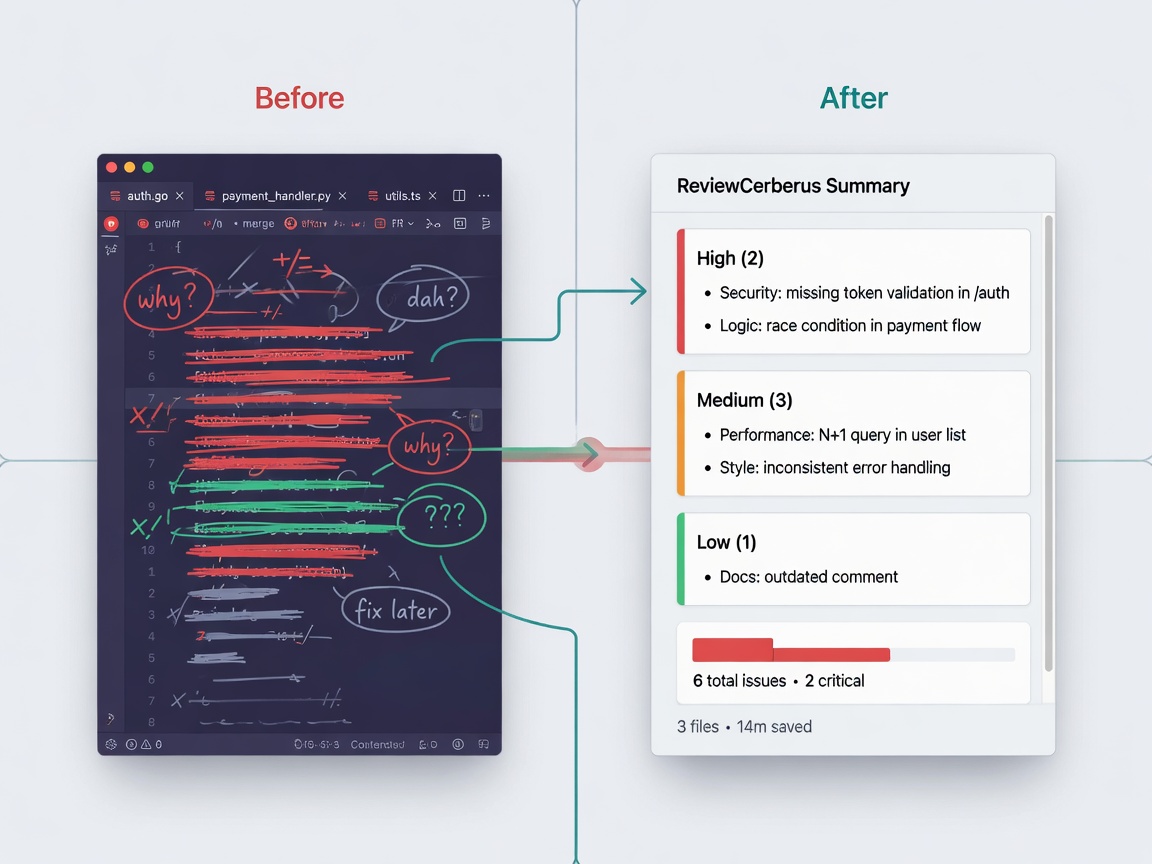
Automation needs a narrow first win
The best first AI workflow is usually a repeated task with a clear input, clear output, and a human approval step.
ReviewCerberus isn't just another wrapper; it’s a tool designed to tackle the primary bottleneck in modern dev cycles: PR fatigue. By analyzing git branch differences and generating structured reports, it aims to move code review from a manual slog to a streamlined, automated process. It evaluates logic, security, performance, and quality across a variety of backend providers, including AWS Bedrock, Anthropic, Ollama, and Moonshot.
Cutting the Noise with CoVe and SAST
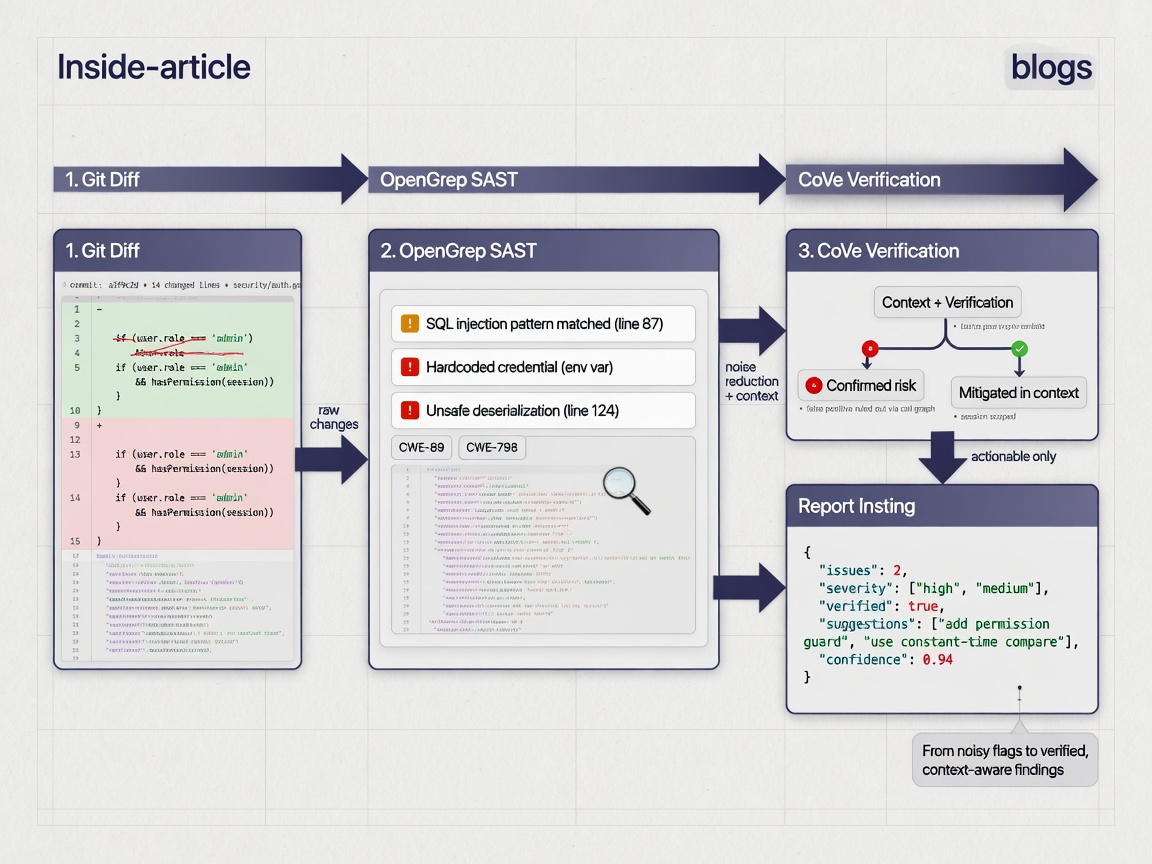
The biggest headache with AI-driven code reviews is the noise—hallucinations or trivial linting errors that waste your time and kill your trust in the tool. ReviewCerberus tackles this head-on by integrating an OpenGrep SAST pre-scan and a Verification Mode using Chain-of-Verification (CoVe).
Think of the SAST pre-scan as the first line of defense; it filters out known static issues before the LLM even sees the code. The CoVe approach is where it gets interesting. It forces the model to verify its own reasoning steps, a standard technique for improving accuracy in multi-step logic tasks. For a builder, this is the difference between a tool that just "guesses" and one that actually "reasons." It means fewer ghost security flaws and more actionable feedback on the bugs that actually matter.
Worth a look
Phugialy Picks

LG 38WN75C-B Monitor 38" 21:9 Curved UltraWide QHD+ (3840 x 1600) IPS Display, HDR 10, sRGB 99% Color Gamut, Tilt/Height Adjustable Stand...

AI Engineering: Building Applications with Foundation Models
A practical guide to building real-world applications with foundation models and LLMs.

Stanley Quencher H2.0 Tumbler 30oz
We'd buy this if: You want a large, well-reviewed insulated tumbler and don't mind it having nothing to do with AI.
We'd skip this if: You'd rather every Pick on this site stay strictly on-topic.
Some Phugialy Picks use affiliate links. If you buy through one, Phugialy may earn a commission. It doesn't change what we recommend. Full disclosure →
Provider Agility and Data Pipelines
One of the most pragmatic features here is the multi-provider support. Whether you’re locked into AWS Bedrock, want the reasoning power of Anthropic, or need to run things locally via Ollama, ReviewCerberus gives you the flexibility to swap models based on the task. You might use a heavy-hitter for complex logic and a faster, cheaper model for style checks.
Furthermore, the tool outputs structured data with clear severity indicators (CRITICAL, HIGH, MEDIUM, LOW). This is a game-changer for automation. It moves the tool from a "chatty assistant" to a structured data source. You can pipe these results into your existing CI/CD notifications or dashboarding tools, allowing your team to react to high-priority issues automatically without digging through a wall of text.
The Reality of Scale vs. Context
Here’s the real story: ReviewCerberus isn't a replacement for your senior dev's brain. The real challenge isn't spotting a bug in a 50-line diff; it's handling a massive refactor involving hundreds of files. While custom review guidelines help, the gap between a clean demo and a messy production environment is real.
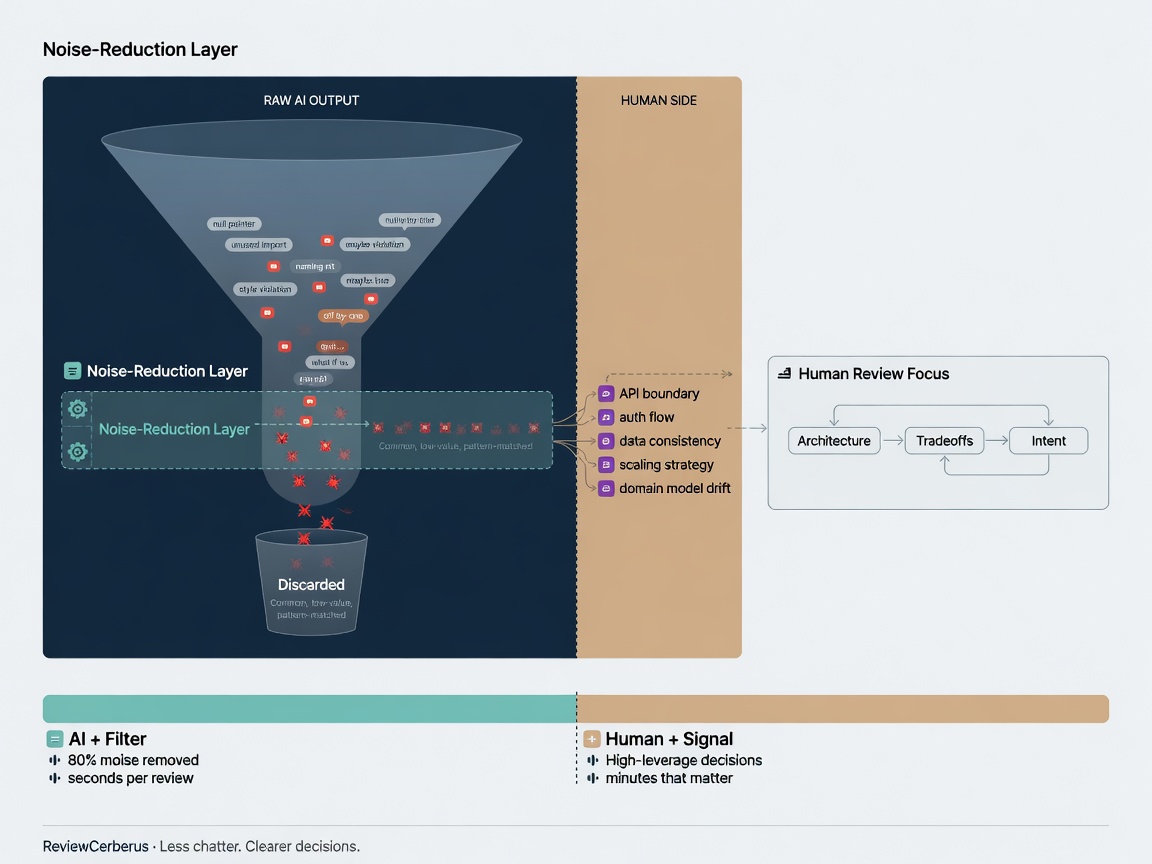
What this tool actually provides is a high-powered noise-reduction layer. It’s designed to clear the "low-hanging fruit"—the obvious security flaws and performance regressions—so your human reviewers can focus on the high-level architectural logic that AI still can't grasp. It’s about reclaiming your time, not replacing your judgment.
Got a question about how this applies to you? →
Keep reading
Follow the thread

The Production Risk of Offloading Reasoning to Deep Research Tools
Deep Research tools from Google and OpenAI are fundamentally shifting the unit economics of information gathering. We’re moving from a world where complex research took days to one where it happens in minutes. For develo
Read this noteSame lane, different angle
SciReasoner: One Model Reasons Across Proteins, Molecules, Crystals
Proteins, molecules, and crystals share almost nothing on the surface - different representations, different tools, different vocabularies entirely. What if one model could reason natively across all three? That's the pr
LLM Heuristics For Planning Tasks Cut Expert Tuning Costs
Classical planning systems have always needed expensive hand-tuned heuristics to work well on your specific problems. A new method has LLMs write them automatically from code-level problem definitions — with state-of-the-art benchmark results.