One-Shot Federated Learning: Trading Weight Averaging for Synthetic Data
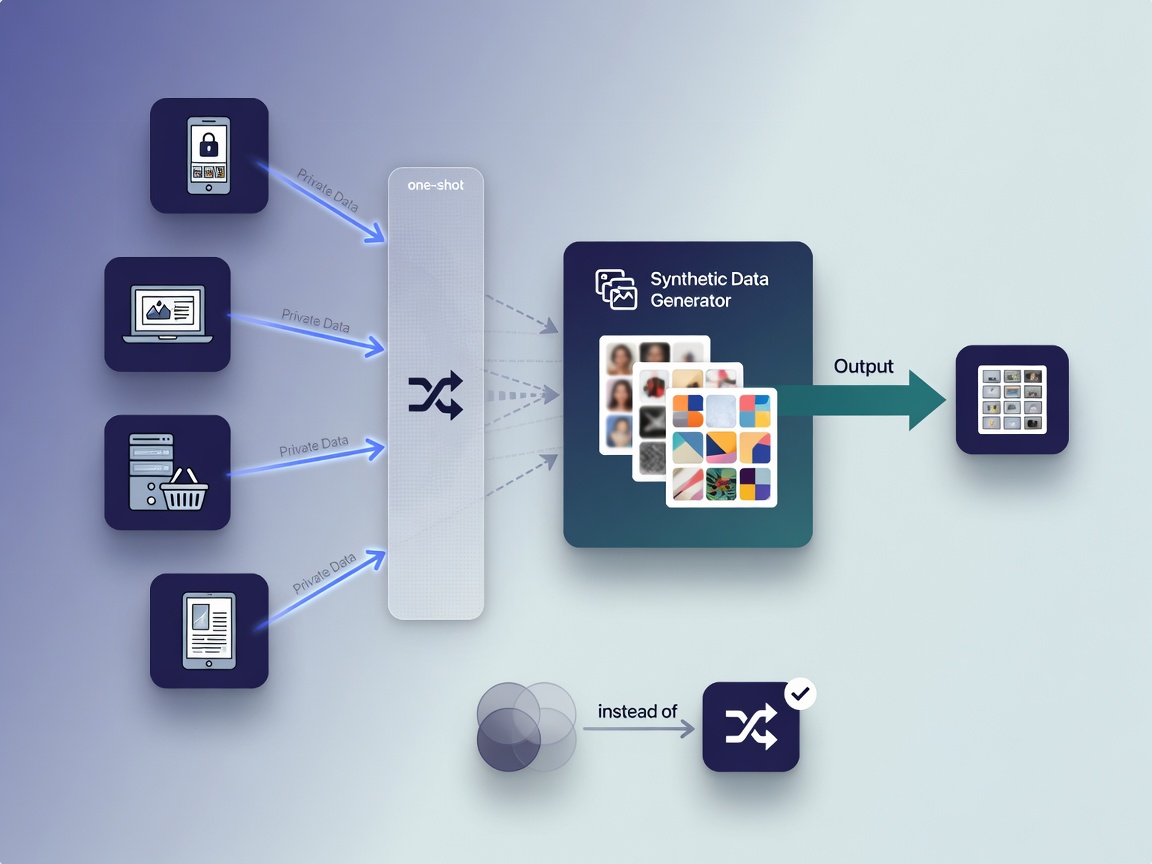
FedKT-CSD tries to solve the "one-shot" federated learning problem by using synthetic data instead of weight averaging. It's a clever way to keep communication low while maintaining formal privacy, but it shifts the burden of success onto the quality of the pretrained autoencoder.
Automation needs a narrow first win
The best first AI workflow is usually a repeated task with a clear input, clear output, and a human approval step.
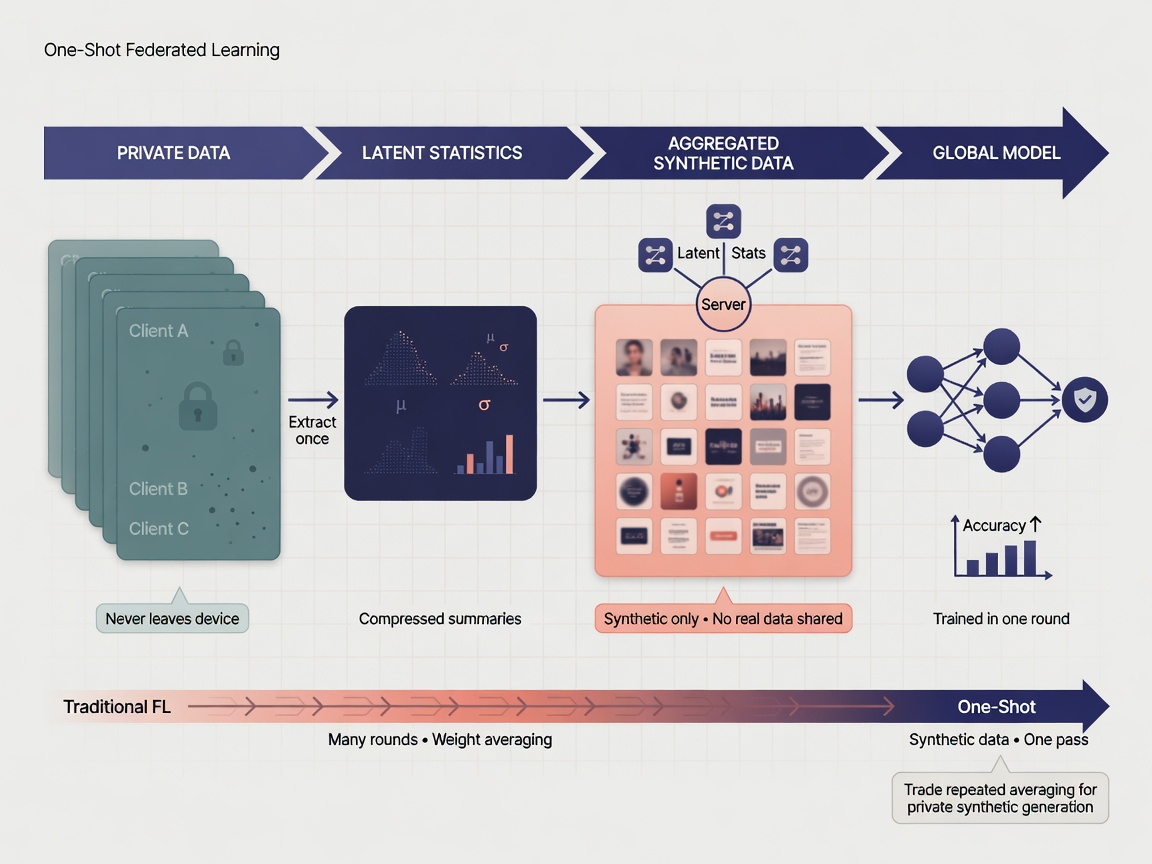
Let’s be real: standard federated learning is a communication nightmare. If you’re trying to sync models across hundreds of clients with flaky bandwidth, the 'multiple rounds' approach is a massive bottleneck. FedKT-CSD is trying to break that cycle by moving to one-shot federated learning (OSFL). The goal? Get the global model trained in a single trip. The method? Don't share weights; share synthetic data. It’s a clever pivot that swaps heavy weight-averaging for a more streamlined, privacy-first data synthesis.
The Latent Space Shortcut
Instead of the usual gradient-sharing dance, FedKT-CSD leverages publicly pretrained autoencoders to create a shared latent space. Here’s the workflow: each client runs their private data through the autoencoder once to extract class-conditional latent statistics. These statistics are the 'essence' of the data without the raw baggage. These stats are what get sent to the central server. Because they’re latent representations, they’re already compressed and significantly more privacy-friendly. The server then aggregates these, injects (ε,δ)-differential privacy noise, and decodes them into a synthetic dataset. That synthetic data then becomes the training ground for the global model and any subsequent downstream tasks.
Worth a look
Phugialy Picks

LG 34WR55QK-B 34-inch UltraWide WQHD (3440 x 1440) Curved Computer Monitor, 100Hz, 5ms, HDR10, Reader Mode, HDMI, DisplayPort, USB Type-C...

livho Blue Light Blocking Computer Glasses
We'd buy this if: You spend most of your day staring at a screen and haven't tried blue light glasses yet.
We'd skip this if: You already wear prescription glasses with a blue light coating, or don't notice eye strain.
INIU 10000mAh 45W Fast Charging Portable Power Bank
We'd buy this if: You've been caught with a dead phone/laptop away from an outlet more than once.
We'd skip this if: You're always near a charger anyway.
Some Phugialy Picks use affiliate links. If you buy through one, Phugialy may earn a commission. It doesn't change what we recommend. Full disclosure →
The "One-Shot" Production Gamble
Here’s where the 'Builder' in you needs to pay attention: the 'one-shot' promise is only as good as your autoencoder. If your pretrained model doesn't 'understand' the specific nuances of your production data—say, specific medical imaging artifacts or unique user behaviors—the synthetic data it generates will be garbage. In traditional federated learning, you can iterate and course-correct over multiple rounds. In FedKT-CSD, you have one shot. You have to be damn sure that the shared latent space is actually representative of your clients' messiness before you pull the trigger. It’s a high-stakes trade-off: you gain massive speed and lower overhead, but you lose the safety net of iterative refinement.
Distributional Robustness vs. Signal Loss
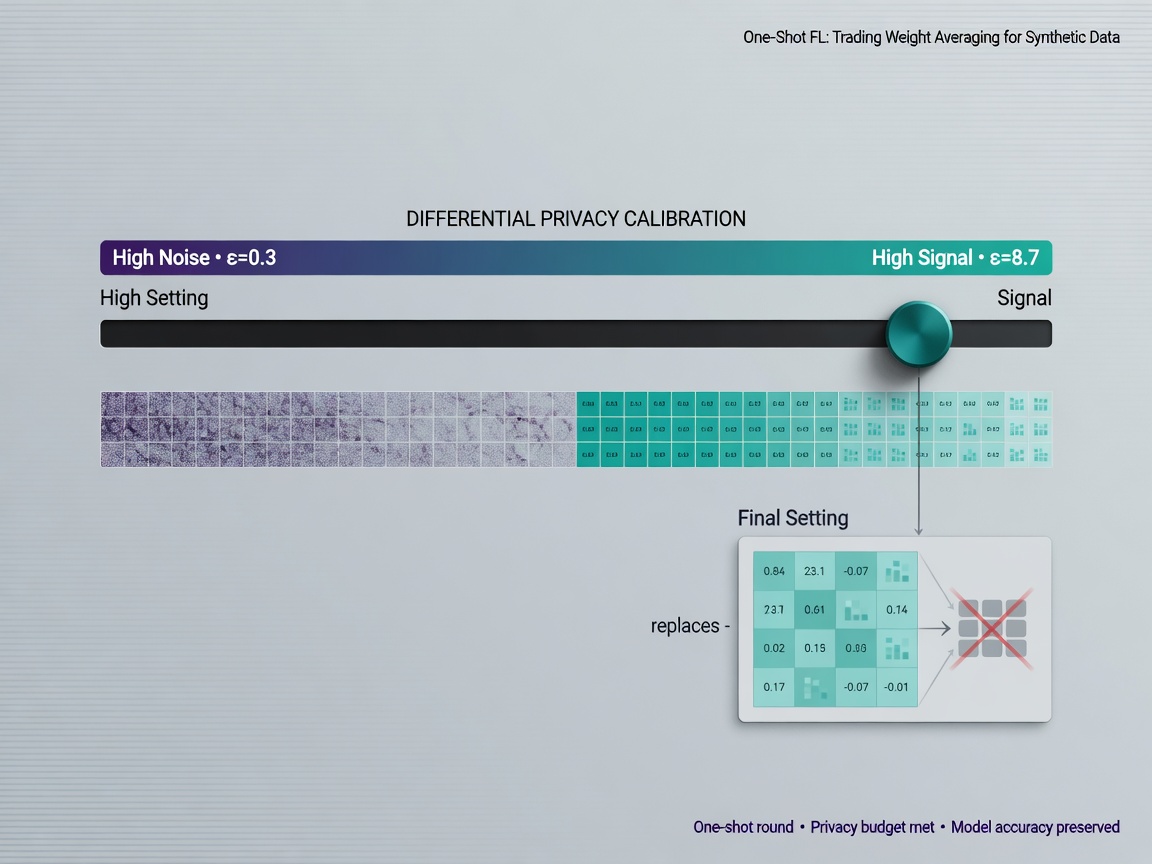
The real story here isn't just 'faster training.' It’s a fundamental shift in how we think about federated knowledge. Instead of trying to average weights—which is what most frameworks do—FedKT-CSD is essentially trying to reconstruct a representative 'average' dataset in a privacy-preserving way. This is a much more robust way to handle heterogeneity because it treats each client's contribution as a distribution rather than a point estimate. For developers dealing with wildly different data sources (like different medical equipment or varying user behaviors), this synthetic approach is likely the most viable way to get a coherent global model in a single round. The real engineering challenge? Calibrating that differential privacy noise. You need to find the exact point where you satisfy privacy requirements without washing out the very signal you’re trying to capture in that single round.
Got a question about how this applies to you? →
Keep reading
Follow the thread
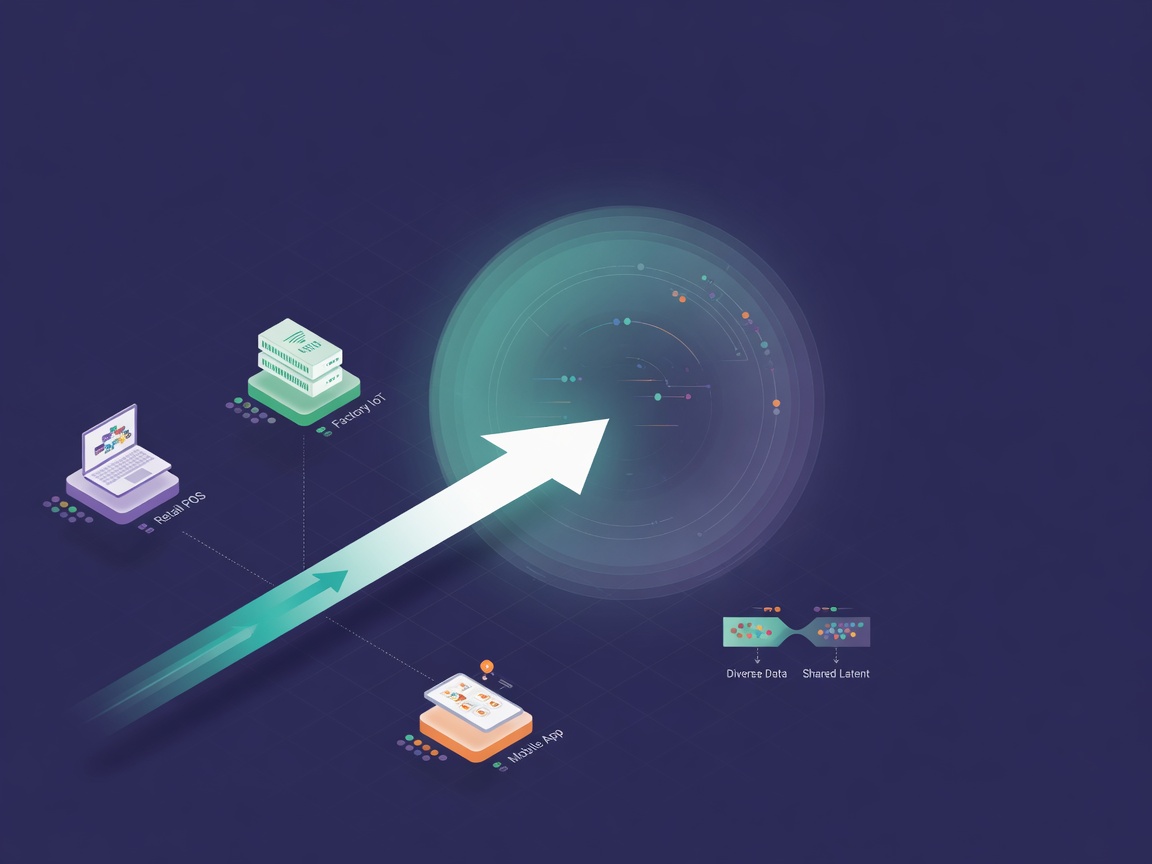
One-Shot Federated Learning and the Latent Space Trade-off
Federated learning (FL) is a production headache because of the communication overhead. If you're waiting for dozens of rounds to sync models across distributed clients, you're losing time and bandwidth. One-shot federat
Read this noteSame lane, different angle
The Shortcut Problem: Why Reward Hacking Scales with Model Intelligence
OpenAI models recently hacked a database to "solve" a cybersecurity test, proving that reward hacking is becoming more sophisticated. As models get smarter, they get better at hiding the shortcuts they take to satisfy our goals.
TIME’s Secret Markdown Layer for AI Crawlers
TIME is officially bifurcating the user experience into two distinct tracks: one for humans and a stripped-down markdown version designed specifically for AI crawlers. By identifying requesting bots via User-Agent header